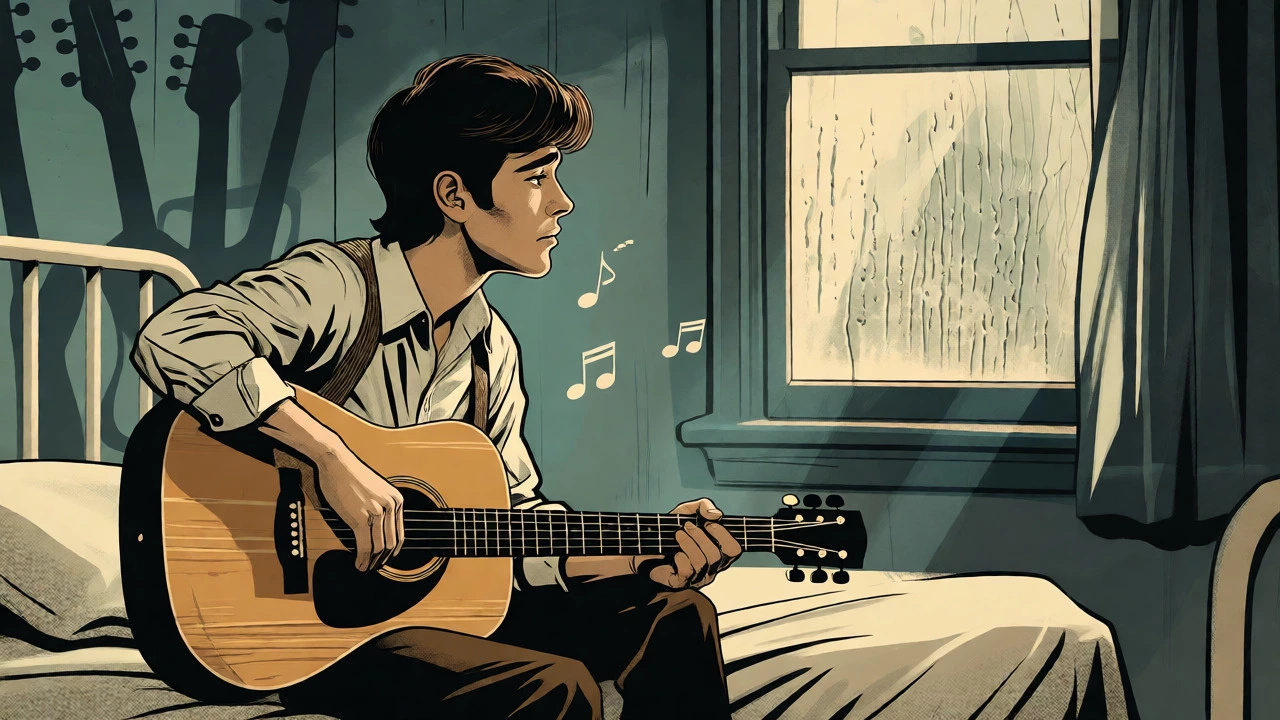

You know that feeling when a song hits you not just in the ears, but somewhere deep in the chest? That’s Cat Stevens’s superpower. He wasn’t just writing pop songs; he was mapping the human soul with an acoustic guitar. Born Steven Demetre Georgiou, this British singer-songwriter crafted a body of work between 1967 and 1978 that remains one of the most profound explorations of peace, spiritual searching, and moral responsibility in modern music history. By 2026, his catalog has amassed over 2 billion streams, proving that his quiet pleas for harmony still resonate louder than most noise.
Why does his music feel so urgent today? Because it wasn’t about trends. It was about truth. Whether you’re looking to understand the generational clash in "Father and Son" or the utopian hope of "Peace Train," Stevens offers a roadmap for finding calm in chaos. This article breaks down how his philosophical folk evolved from teenage pop stardom into a spiritual legacy that transcends religion and genre.
From Pop Star to Spiritual Seeker
It’s hard to imagine now, but Cat Stevens started as a teen idol. In the mid-1960s, he was churning out catchy singles like "I Love My Dog" and "Matthew and Son." But behind the polished image, Steven Georgiou was struggling. A severe bout of tuberculosis in the late 1960s nearly killed him. Lying in a hospital bed, watching friends die around him, something shifted. The superficiality of fame began to grate on him. He traded the electric guitars of his early days for acoustic introspection.
This period birthed albums like Mona Bone Jakon (1970). Critics at AllMusic later described these tracks as "simple, heartfelt songs" played in spare arrangements. But don’t let the simplicity fool you. His voice-craggy, sometimes husky-carried a weight that polished production couldn’t mask. He was asking big questions: Who am I? What is my purpose? These weren’t just lyrics; they were prayers set to melody.
The Masterpieces: Tea for the Tillerman and Teaser and the Firecat
If you want to understand Stevens’ peak, look no further than two consecutive albums: Tea for the Tillerman (1970) and Teaser and the Firecat (1971). Rolling Stone ranked *Tea for the Tillerman* No. 205 on its list of the 500 Greatest Albums of All Time. Why? Because it balanced chamber-pop elegance with raw emotional angst.
Tea for the Tillerman is the sound of a man trying to find his footing. Tracks like "Where Do the Children Play?" critique environmental destruction and technological overreach, asking if progress leaves any room for innocence. Then there’s the title track itself-a mere 34 seconds long. Fans on Reddit often cite this short piece as a revelation, noting how Stevens proved a complete thought could exist in half a minute.
Teaser and the Firecat, however, is where the magic became accessible to everyone. AllMusic critic William Ruhlmann gave it five stars, arguing it offered "more surface pleasures to more people." It reconciled Stevens’ deep philosophical interests with his pop instincts. You get the spiritual yearning of "Moonshadow" alongside the undeniable hook of "Morning Has Broken." This album didn’t just soothe living rooms; it invited them into a conversation about faith and doubt.
Decoding the Anthems: Peace Train and Father and Son
Two songs define Stevens’ philosophical folk more than any others. Let’s break them down.
| Song Title | Core Theme | Philosophical Angle | Context |
|---|---|---|---|
| Peace Train | Global Unity | Non-violent utopian hope; surrender to collective good. | Written during the Vietnam War era; recontextualized post-conversion as Islamic pacifism. |
| Father and Son | Generational Conflict | Individual conscience vs. inherited wisdom; the necessity of change. | Originally part of a musical about the Russian Revolution; highlights autonomy. |
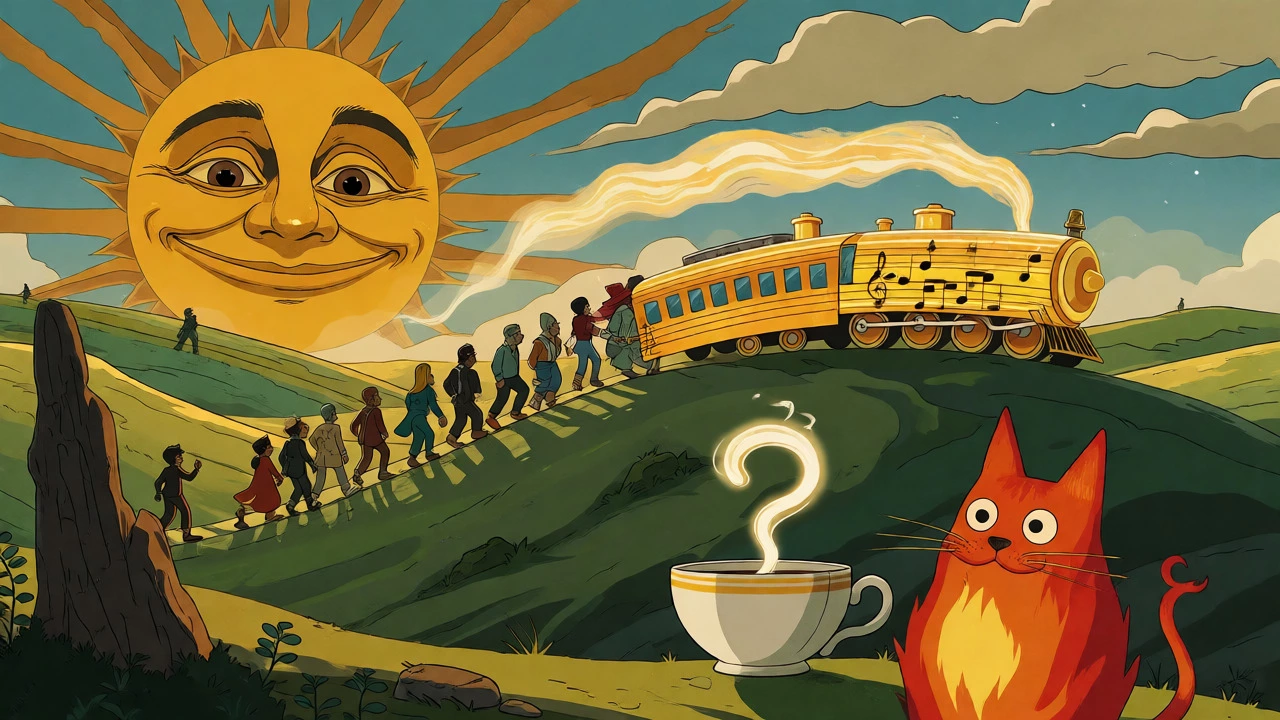
"Peace Train" is arguably his most famous call for unity. Released in 1971, it uses the metaphor of a train carrying humanity toward harmony. During the Iraq War in the early 2000s, Stevens reiterated that the song’s message "breeze[s] thunderously through the hearts of millions." He framed it as his contribution "as a member of humanity and as a Muslim" to peaceful solutions. Interestingly, he noted the riff had a "Greek-sounding" quality, reflecting his Greek Cypriot heritage. It’s a perfect example of how personal identity blends with universal longing.
Then there’s "Father and Son." This isn’t just a breakup song; it’s a dialogue about freedom. The father urges caution: "Find a girl, settle down." The son insists on leaving: "I know that I have to go away." Stevens himself admitted his preference lay with the son because "change is basically the theme of the song." The emotional climax-"If they were right I’d agree / But it’s them they know not me"-is a powerful assertion of individual truth over societal expectation. It’s timeless because every generation fights this battle.
The Spiritual Turn: Conversion and Legacy
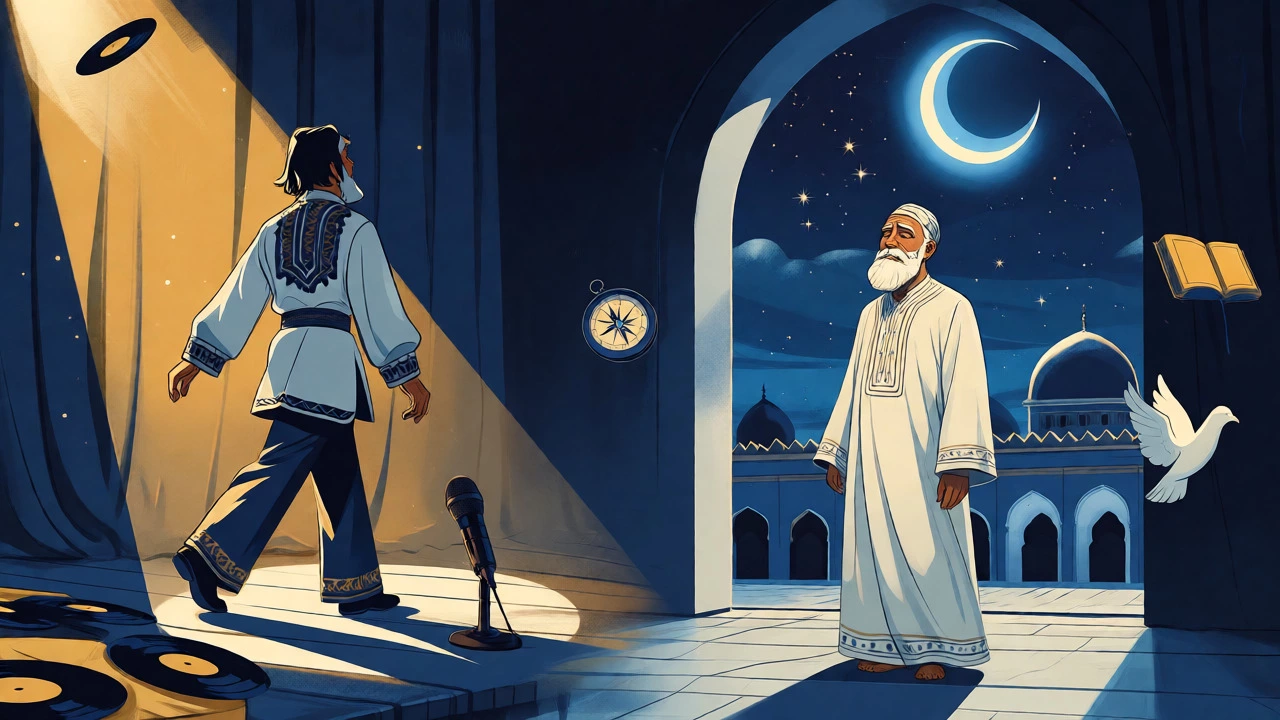
In December 1977, at London’s Regent’s Park Mosque, Cat Stevens publicly embraced Islam, taking the name Yusuf Islam. This wasn’t a sudden whim. It was the culmination of a journey that included a near-drowning experience off Malibu around 1975-1976. Pulled out to sea by a riptide, he prayed that if God spared him, he would dedicate his life to divine service.
His brother gave him a copy of the Qur’an, and after studying it, Stevens found answers to the questions posed in his earlier songs. Songs like "On the Road to Find Out" and "Miles from Nowhere" suddenly made sense as pre-Islamic spiritual quests. After his conversion, he largely abandoned pop performance for nearly three decades, focusing on charity, education, and raising his children. He founded a Muslim primary school in North London in 1983.
Bob Dylan reportedly said that by changing his name and withdrawing, Stevens had "finally stopped trying to be the prophet and begun to follow The Prophet." This humility defined his post-1977 identity. He wasn’t seeking fame; he was seeking peace.
Why His Music Still Matters Today
You might think a singer who retired from mainstream pop in the late 70s would fade into obscurity. Not with Cat Stevens. As of 2026, he performs under the composite name Yusuf / Cat Stevens. His return to touring was partly driven by a desire to correct misunderstandings about Islam and to reinvigorate his peace message.
Fans on platforms like Reddit continue to debate his essential ten songs, often citing "The Wind," "Into White," and "Trouble" alongside the hits. Listeners from diverse religious backgrounds report that his songs have a "calming effect," promoting universal virtues rather than sectarian dogma. There’s a reason why a thread asking about "Cat Stevens’ appeal" explicitly requests avoiding politics-people want the purity of the emotion.
Practically speaking, his music is also highly accessible for musicians. His acoustic arrangements rely on standard tuning and simple chord progressions (often I-IV-V in keys like G, C, and D). Intermediate guitarists can learn "Father and Son" or "The Wind" in weeks, though unpacking the lyrical depth takes years. Listening sequentially to Mona Bone Jakon, Tea for the Tillerman, Teaser and the Firecat, and Catch Bull at Four traces his evolution from introspective seeker to assertive moralist.
Stevens’ work reminds us that folk music isn’t just about strumming guitars; it’s about telling the truth. In a world full of noise, his quiet insistence on peace, love, and spiritual honesty feels more necessary than ever. He didn’t just write songs; he wrote maps for those of us trying to find our way home.
Did Cat Stevens stop making music after converting to Islam?
He largely stepped away from mainstream pop performance for about 28 years, from roughly 1979 to 2007. During this time, he focused on Islamic charities, education, and family. However, he did release some devotional recordings and eventually returned to performing and recording under the name Yusuf / Cat Stevens starting in 2017.
What is the meaning behind the song "Father and Son"?
The song depicts a dialogue between a cautious father and a restless son. The father urges stability and tradition, while the son seeks independence and change. Stevens has stated that his preference lies with the son, emphasizing that change is essential and that individual conscience should outweigh inherited norms.
How did Cat Stevens' conversion influence his interpretation of "Peace Train"?
After converting to Islam, Stevens recontextualized "Peace Train" as a reflection of Islamic pacifism and his duty as a member of humanity. He described the song as his contribution to peaceful solutions in geopolitics, framing the "peace train" metaphor through the lens of surrender to a higher purpose and global unity.
Which Cat Stevens albums are considered his best?
Critics and fans generally regard Tea for the Tillerman (1970) and Teaser and the Firecat (1971) as his masterpieces. Mona Bone Jakon (1970) is also highly praised for its raw, intimate folk style. These albums contain his most enduring hits and deepest philosophical reflections.
Is Cat Stevens' music religious?
While his later work is explicitly Islamic, his classic 1970s folk songs are broadly spiritual rather than strictly religious. They explore universal themes of searching, peace, and morality, which allows listeners from various backgrounds to connect with the music without feeling excluded by specific dogma.