

When you think of North American rock music, you think of California, New York, or Nashville. But one of the most important forces in the genre came from somewhere else: Canada. While the U.S. dominated the charts, it was Canadian artists like Rush and Neil Young who pushed the boundaries of what rock could be-technically, emotionally, and creatively. They didn’t just follow trends; they built new ones, often against the odds.
Rush: The Technical Titans from Toronto
Rush didn’t start as a household name. Formed in Toronto in 1968, the band began as a trio with Alex Lifeson on guitar, Jeff Jones on bass, and John Rutsey on drums. It wasn’t until Geddy Lee replaced Jones and Neil Peart took over drumming in 1974 that Rush found its voice. Peart wasn’t just a drummer-he became the band’s lyricist, thinker, and philosophical engine. His lyrics drew from Ayn Rand, science fiction, and humanism, turning songs into mini-epics. Their debut album, released in 1974, barely cracked the U.S. charts. But they didn’t chase radio hits. Instead, they doubled down on complexity. The 1976 album 2112 changed everything. The 20-minute title track was split into seven parts, with synth-driven melodies, time signature shifts, and a dystopian storyline. It wasn’t just music-it was a concept album that demanded attention. Radio stations didn’t play it. Fans bought it anyway. By the time they released Permanent Waves in 1980, Rush had turned artistic defiance into commercial success. The song Tom Sawyer, co-written with lyricist Pye Dubois, became their signature anthem. Its driving rhythm, poetic lyrics, and layered instrumentation made it a staple on FM radio. What made Rush special wasn’t just their skill-it was their refusal to simplify. They played in odd time signatures, used synthesizers like orchestral tools, and wrote songs that lasted 8, 10, even 15 minutes. And fans loved them for it.Neil Young: The Shape-Shifter from Ontario
While Rush built their identity on precision, Neil Young built his on unpredictability. Born in Toronto in 1945, Young moved to Winnipeg as a teen and started playing in local bands. By 1966, he was in Buffalo Springfield with Stephen Stills and Richie Furay. That band didn’t last long, but it gave Young a platform. His song For What It’s Worth became an anti-war anthem, even though he wrote it after seeing a police crackdown on hippies in Los Angeles. What set Young apart was how quickly he moved. After Buffalo Springfield, he joined Crosby, Stills, Nash & Young. Their 1970 album Déjà Vu was a smash. Young contributed Helpless, a haunting, acoustic-driven song about his childhood in Ontario. But he didn’t stay in the supergroup. He went solo, often with his longtime backing band Crazy Horse, and made music that was raw, messy, and deeply personal. His 1972 album Harvest went to No. 1, thanks to Heart of Gold. But then he turned around and released On the Beach, a dark, feedback-laced record that baffled fans and critics alike. He didn’t care. He followed his instincts. In the 1980s, he experimented with digital synthesizers. In the 1990s, he went grunge with Mirror Ball and Pearl Jam. In the 2000s, he released albums recorded on analog tape, then streamed live concerts from his barn. Young never chased trends. He chased truth. Whether he was singing about environmental destruction, Native American rights, or the loneliness of touring, his voice cracked with honesty. He didn’t need polish-he needed presence.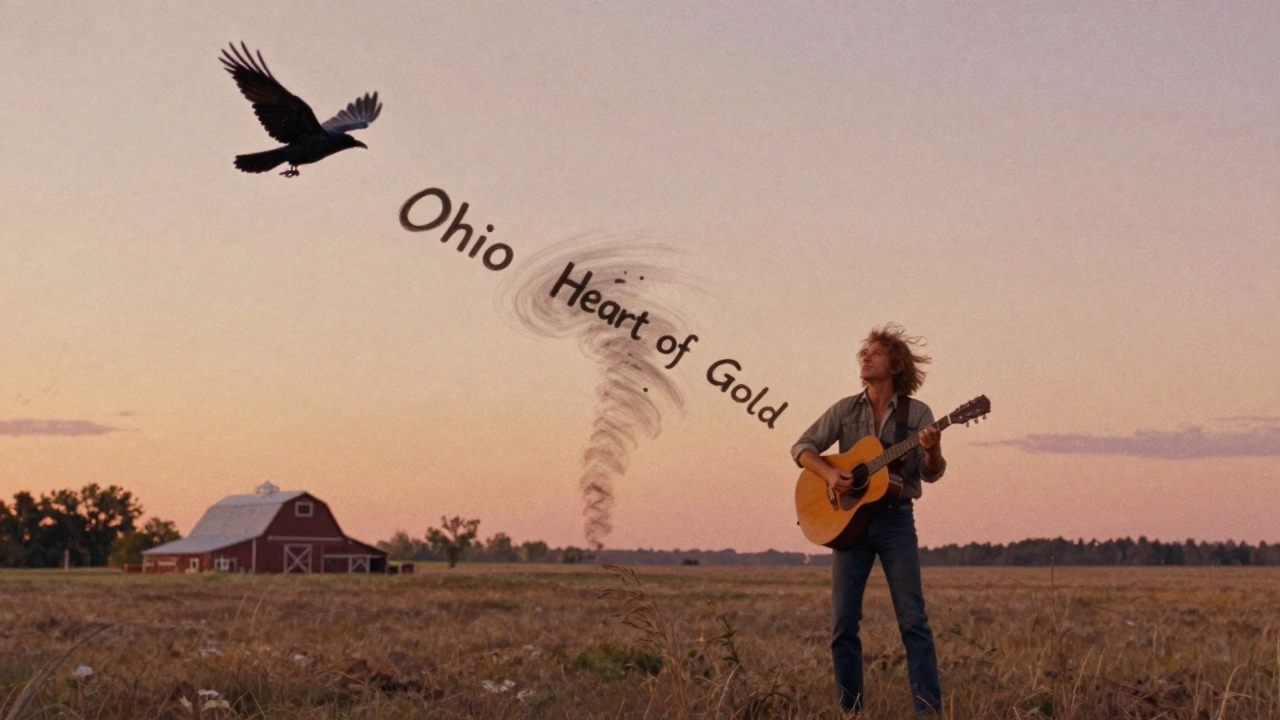
Canada’s Quiet Revolution in Rock
It’s easy to overlook how much Canada contributed to rock music. While the U.S. had its blues-rock bands and British acts dominated the charts, Canada quietly built its own legacy. Rush and Young didn’t just make music-they redefined what it meant to be a rock artist. Rush proved you could be complex and still sell millions. Their albums sold over 40 million copies worldwide. They toured relentlessly, playing sold-out arenas from Toronto to Tokyo. They never changed their sound to fit a trend. Even when MTV pushed for shorter videos, Rush stuck to long-form music. They didn’t need flashy visuals-they had the music. Neil Young showed that authenticity could outlast fame. He’s been inducted into the Rock and Roll Hall of Fame twice-once with Buffalo Springfield, once as a solo artist. He’s played for presidents, protested wars, and released over 40 studio albums. In 2023, he dropped High Flyin’, a live album from a short-lived 1977 band called The Ducks. No one asked for it. He wanted to share it. Together, they proved that Canadian artists didn’t need to sound American to succeed. They didn’t need to chase radio play. They didn’t need to be trendy. They just needed to be honest.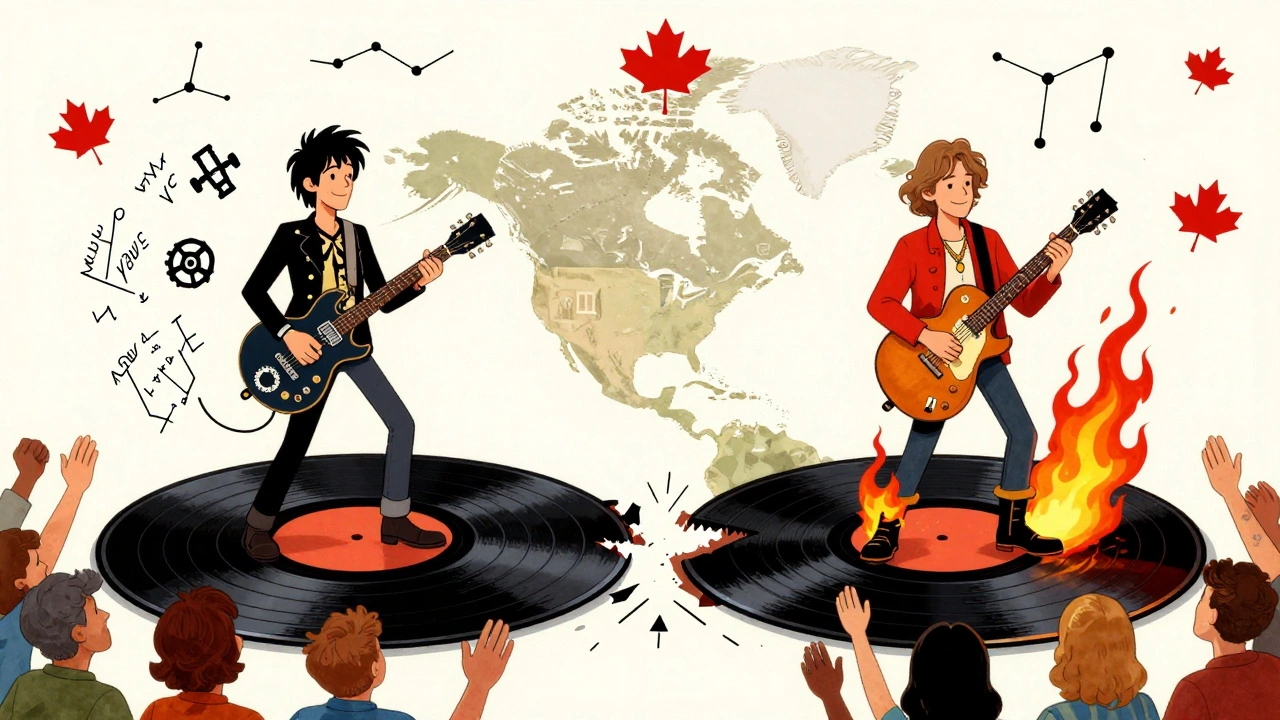
Legacy: Two Paths, One Message
Rush and Neil Young took different roads, but they ended up in the same place: respect. Rush’s music was cerebral, built on layers of skill and structure. Young’s was emotional, built on raw feeling and spontaneity. One used synthesizers and complex time signatures. The other used a broken guitar and a voice that sounded like it had been through hell. But they shared something deeper: control. Both refused to let record labels dictate their sound. Rush turned down producers who wanted them to write radio-friendly songs. Young walked away from major labels when they pressured him to make “marketable” music. They didn’t just make songs-they made statements. Their influence is everywhere. Bands like Tool, Dream Theater, and even modern indie acts owe something to Rush’s ambition. Artists like Arcade Fire, The National, and even Billie Eilish have cited Young’s fearless honesty as inspiration. And Canada? It didn’t just produce two great musicians. It produced two models of artistic integrity.Why Their Music Still Matters Today
In a world where playlists replace albums and algorithms dictate what you hear, Rush and Young remind us that music can be more than background noise. It can be a journey. A challenge. A conversation. Rush’s 2112 isn’t just a song-it’s a rebellion. Young’s Ohio isn’t just a protest song-it’s a cry of conscience. Both artists built careers on depth, not speed. They didn’t release music every six months to stay relevant. They released when they had something to say. Today, younger musicians look to them not for how to get famous, but for how to stay true. Rush’s final album, Power Windows (1985), still sounds futuristic. Young’s 2024 live set still feels urgent. Their work doesn’t age. It evolves.Why is Rush considered a Canadian band if they were popular in the U.S.?
Rush was formed in Toronto in 1968, and all three core members-Geddy Lee, Alex Lifeson, and Neil Peart-were Canadian. They recorded most of their albums in Canada, toured extensively across Canadian cities, and were celebrated as national icons long before they became famous in the U.S. While they had massive success south of the border, they never abandoned their Canadian roots. Their lyrics often referenced Canadian landscapes, history, and philosophy, and they remained deeply connected to Toronto’s music scene.
Did Neil Young ever return to Canada after moving to the U.S.?
Yes. Neil Young frequently returned to Canada throughout his career. He performed at Canadian festivals like the Mariposa Folk Festival and the Winnipeg Folk Festival. In 2007, he headlined the Canadian Music Week in Toronto. He also recorded albums in Canada, including Harvest Moon (1992) at his studio in Ontario. Young has spoken openly about his pride in being Canadian, often referencing his childhood in Ontario and his connection to Canadian nature and culture in interviews.
How did Rush influence progressive rock outside of Canada?
Rush helped redefine progressive rock for a new generation. While bands like Yes and King Crimson were seen as elitist or overly complex, Rush made prog accessible by blending it with hard rock energy and tight songwriting. Their 1976 album 2112 became a blueprint for bands like Dream Theater and Tool. Unlike many prog acts, Rush never lost their sense of rhythm or melody. They proved that technical skill and emotional impact could coexist. By the 1980s, they were one of the few prog bands to consistently sell out arenas worldwide.
Why did Neil Young collaborate with Crazy Horse so often?
Crazy Horse wasn’t just a backing band-they were Neil Young’s musical soulmates. The group, originally formed as The Rockets, had a raw, unpolished sound that matched Young’s emotional intensity. Their loose, feedback-heavy style gave his songs a gritty, almost dangerous edge. Albums like Everybody Knows This Is Nowhere and Rust Never Sleeps only worked because of Crazy Horse’s chemistry. Young trusted them to play freely, even if it meant mistakes. That unpredictability became his signature. He’s said that playing with them felt like "talking to old friends who never judge you."
Did Rush and Neil Young ever perform together?
No, Rush and Neil Young never performed together live. While they were contemporaries and both shaped North American rock, their paths rarely crossed. Rush’s fans were often prog purists who appreciated technical precision, while Young’s audience leaned toward raw, emotional storytelling. However, both artists have publicly praised each other. Geddy Lee once called Young "one of the greatest songwriters of all time," and Young has mentioned Rush as a band that "didn’t compromise," which he deeply respected.


