
Walk into any major city in the UK or North America during summer, and you’ll likely hear the heavy, syncopated thud of a drum machine mixed with steel pan melodies. It’s loud, it’s relentless, and it demands movement. This is Soca, a genre that transformed from a niche fusion experiment in Trinidad and Tobago in the 1970s into the dominant soundtrack for millions of people celebrating Carnival worldwide. But to understand why this music hits so hard today, you have to look back at its parent: Calypso, the witty, storytelling tradition that gave the Caribbean its voice.
These two genres are not just background noise for parades; they are complex cultural artifacts born from centuries of migration, resistance, and innovation. While Calypso served as the "poor man's newspaper" for decades, Soca evolved to meet the physical needs of modern dance floors. Together, they form a musical ecosystem that supports thousands of artists, drives multi-million-dollar tourism economies, and maintains a vibrant connection between diasporic communities and their island roots.
The Roots of Calypso: Storytelling as Resistance
Calypso is an Afro-Caribbean song style characterized by topical lyrics, verbal wit, and call-and-response structures. Its origins are deeply tangled in the history of slavery and emancipation in Trinidad. Enslaved Africans brought West African musical traditions, specifically Kaiso and Canboulay rhythms, to the islands in the 17th century. By the mid-19th century, after emancipation in 1834, these elements crystallized into what we recognize as Calypso. The term itself, derived from the French "chansonnier" (songster), began appearing in records around the early 1800s, but the genre truly found its professional footing in the late 19th and early 20th centuries.
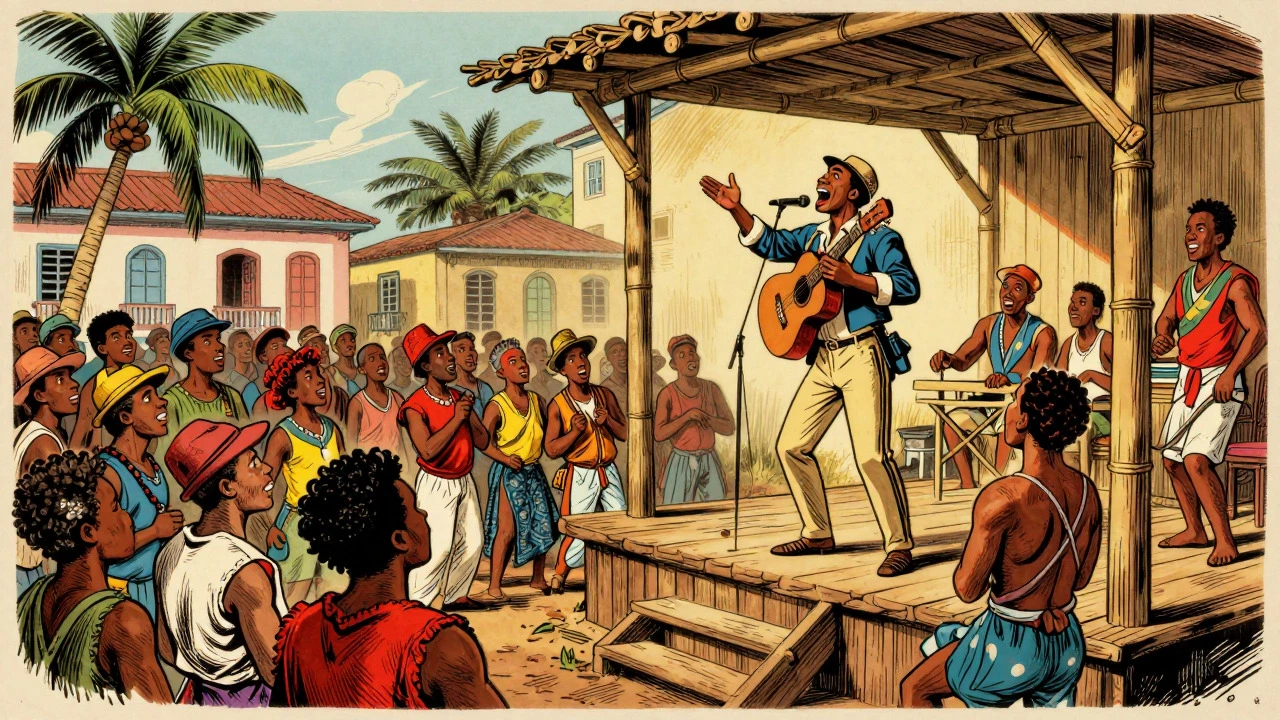
Unlike many popular music forms that focus on romance or abstraction, Calypso was aggressively topical. In an era when literacy rates were lower and colonial authorities controlled official news channels, Calypsonians used their songs to mock politicians, report on social issues, and critique racism. This function earned the genre the title "the poor man's newspaper." The structure relied heavily on a lead singer, known as a Calypsonian, delivering stanzaic lyrics backed by guitars, brass, and eventually the iconic Steel Pan. These performances took place in bamboo shelters called "tents," which became semi-formal venues where new songs were premiered and debated before the main Carnival events.
Born from Fusion: The Creation of Soca
If Calypso was the brain of Caribbean Carnival, Soca became its heart and legs. The genre emerged in the early 1970s, primarily credited to musician Garfield Blackman, also known as Lord Shorty or Ras Shorty I. Blackman sought to rejuvenate Carnival music for a younger audience who found traditional Calypso too slow and lyrically dense. He fused the rhythmic foundation of Calypso with Indian musical elements, reflecting the demographic reality of Trinidad, where large populations of both African and Indo-Trinidadian descent coexisted.
The name "Soca" is an acronym for "Soul of Calypso." Early tracks like "Indrani" (1973) and the massive hit "Endless Vibrations" (1975) established the template: faster tempo, simplified lyrics, and a heavy emphasis on percussion and bass. Blackman incorporated instruments like the dholak and dhantal, blending Bollywood-inspired string arrangements with the insistent beat of Kadan music. This hybridization wasn't just aesthetic; it was a deliberate effort to bridge the cultural divide between the island's two largest ethnic groups, creating a unified sound for national celebration.
From Tents to Stadiums: Musical Evolution
The transition from Calypso to Soca marked a significant shift in how Carnival music was consumed. Calypso was designed for listening and debate; you could sit in a tent, analyze the wordplay, and argue about the accuracy of the political commentary. Soca, however, was designed for continuous dancing. As the genre matured through the 1980s and 1990s, substyles emerged to cater to different moods and times of day.
- Power Soca: Emerged in the 1980s, featuring heavier bass lines and electronic drum machines, designed for high-energy street parties.
- Groovy Soca: A smoother, more melodic variant often played during cooler evening hours, retaining some lyrical depth.
- Chutney Soca: A direct fusion of Soca beats with Chutney music, further highlighting the Indo-Caribbean influence with rapid-fire lyrics and distinct instrumentation.
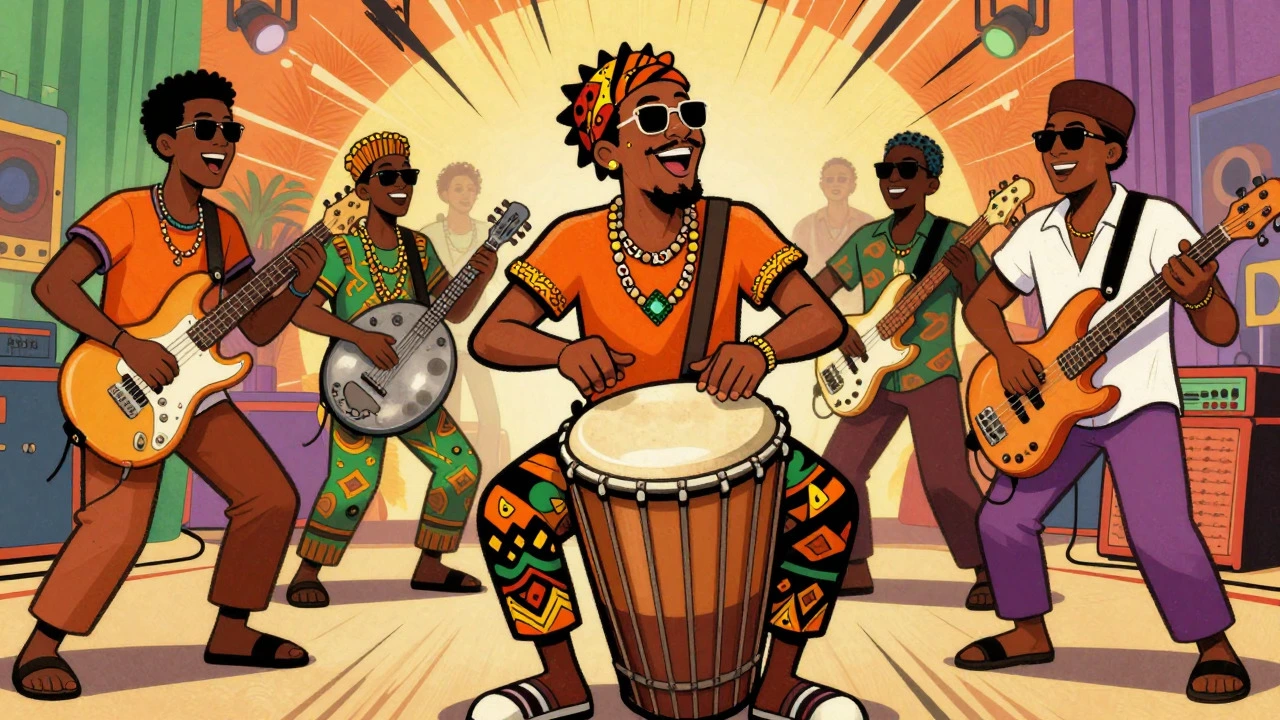
This evolution required technological upgrades. The acoustic ensembles of the Calypso era gave way to amplified sound systems capable of filling open-air spaces with hundreds of thousands of participants. The use of synthesizers and digital production tools allowed producers to craft sounds that cut through the noise of large crowds, ensuring that the rhythm remained dominant even in chaotic environments.
The Economic Engine of Carnival
Carnival is not just a party; it is a massive industrial operation. In Trinidad and Tobago, the festival season runs from January until the two days before Ash Wednesday. During this period, the calypso and soca sectors dominate the local music industry. Data from the early 2000s indicated that approximately 900 recording artists in the country worked primarily in these genres, representing 76% of all recording artists in Trinidad. When including performing artists, the number swells to nearly 3,000 individuals active in Calypso, Soca, Rapso, and Chutney Soca.
The financial scale is substantial. In 1998, the Trinidadian music sector generated roughly US$13 million in revenue, with Carnival-related genres accounting for the majority. Performance fees vary widely based on artist fame and event size, but mid-tier artists can earn between US$300 and US$1,000 per fete, while full bands might command up to US$12,000 for a single show. For a nation with a population under 1.5 million, this represents a high concentration of cultural labor. The ecosystem supports not just musicians, but costume makers, sound engineers, DJs, and logistics teams, creating a self-sustaining economic loop that peaks every year during the pre-Lenten season.
Global Reach: Diaspora and Heritage Recognition
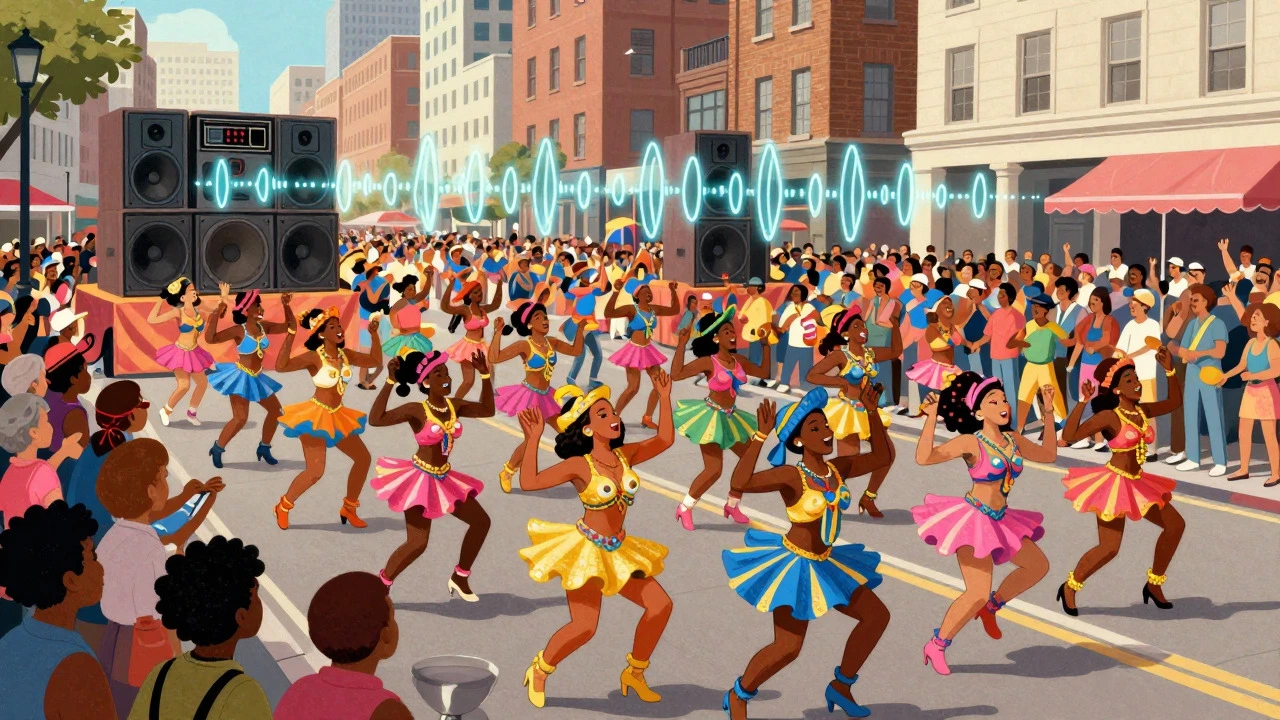
The reach of these rhythms extends far beyond the Caribbean islands. The global spread of Calypso and Soca is inextricably linked to the Caribbean diaspora. As workers migrated to the UK, Canada, and the US in the mid-20th century, they brought their music with them. In London, Notting Hill Carnival became one of the world's largest street festivals, drawing hundreds of thousands of attendees annually and serving as a primary venue for Soca performances outside of Trinidad. Similarly, Toronto and New York host massive Caribbean-style Carnivals where Soca dominates the soundtracks.
This global presence has led to formal recognition by international bodies. UNESCO has inscribed several Carnival-related practices on its Representative List of the Intangible Cultural Heritage of Humanity. While specific Calypso competitions are protected as part of broader Carnival traditions, the influence is evident in places like Barranquilla, Colombia, where the Carnival was inscribed in 2003 and 2008. In Europe, Rotterdam Summer Carnival has been nominated for similar recognition, highlighting how Trinidadian aesthetics and soundtracks have become part of the official heritage framework in Latin America and Europe. Despite this recognition, commercial charts remain dominated by Jamaican Reggae and Dancehall, positioning Soca as the second-largest Caribbean genre in terms of regional market visibility.
| Feature | Calypso | Soca |
|---|---|---|
| Origin Era | Mid-19th Century | Early 1970s |
| Primary Function | Storytelling, Political Commentary | Dance, Physical Release |
| Tempo | Moderate to Slow | Fast to Very Fast |
| Lyrical Density | High (Complex Wordplay) | Low to Medium (Repetitive Hooks) |
| Key Instruments | Guitar, Brass, Steel Pan | Drum Machine, Bass, Synthesizer, Dholak |
| Audience Engagement | Listening, Debate | Continuous Dancing |
Modern Challenges and Future Trajectories
Today, Soca has largely displaced mainstream Calypso as the dominant sound on the Carnival streets, though Calypso persists as a respected competition genre and a symbol of national identity. The challenge for the industry lies in maintaining relevance in a digital age. While Reggae achieved global ubiquity through radio and film, Soca remains primarily embraced by Caribbean diasporic communities. However, cross-genre collaborations and digital distribution platforms are opening new doors. Artists are increasingly mixing Soca with Hip-Hop, R&B, and Electronic Dance Music (EDM), appealing to younger, non-diasporic audiences.
The future of these rhythms depends on balancing heritage with innovation. The core appeal-the communal joy of Carnival-remains unchanged, but the delivery mechanisms are evolving. With continued expansion of diasporic festivals in cities like London, Rotterdam, and Toronto, and ongoing academic interest in these genres as narratives of resistance, the long-term viability of Calypso and Soca appears secure. They are no longer just island music; they are a global cultural language of celebration.
What is the difference between Calypso and Soca?
Calypso is a slower, lyric-heavy genre focused on storytelling and political commentary, originating in the 19th century. Soca, created in the 1970s, is a faster-tempo dance music that fuses Calypso with Indian rhythms, designed specifically for continuous dancing during Carnival.
Who invented Soca music?
Soca is primarily credited to Trinidadian musician Garfield Blackman, also known as Lord Shorty or Ras Shorty I. He began experimenting with the fusion in the early 1970s, with his 1975 hit "Endless Vibrations" helping to establish the genre globally.
Is Soca considered a national symbol of Trinidad and Tobago?
Yes, alongside Calypso and the Steel Pan, Soca is considered a core component of Trinidadian national identity. It is the primary soundtrack for the country's most significant annual event, Carnival, and represents the cultural blend of African and Indian influences in the nation.
How did Calypso become known as the "poor man's newspaper"?
During the early 20th century, when literacy rates were lower and press freedom was limited, Calypsonians used their songs to report news, mock colonial authorities, and discuss social issues. The songs acted as a real-time information source for the working-class population.
Where can I experience Soca and Calypso outside of the Caribbean?
You can experience these genres at major Caribbean-style Carnivals in diaspora hubs such as London (Notting Hill Carnival), Toronto, New York, and Rotterdam. These events feature live bands, DJ sets, and street parades centered around Soca and Calypso music.


