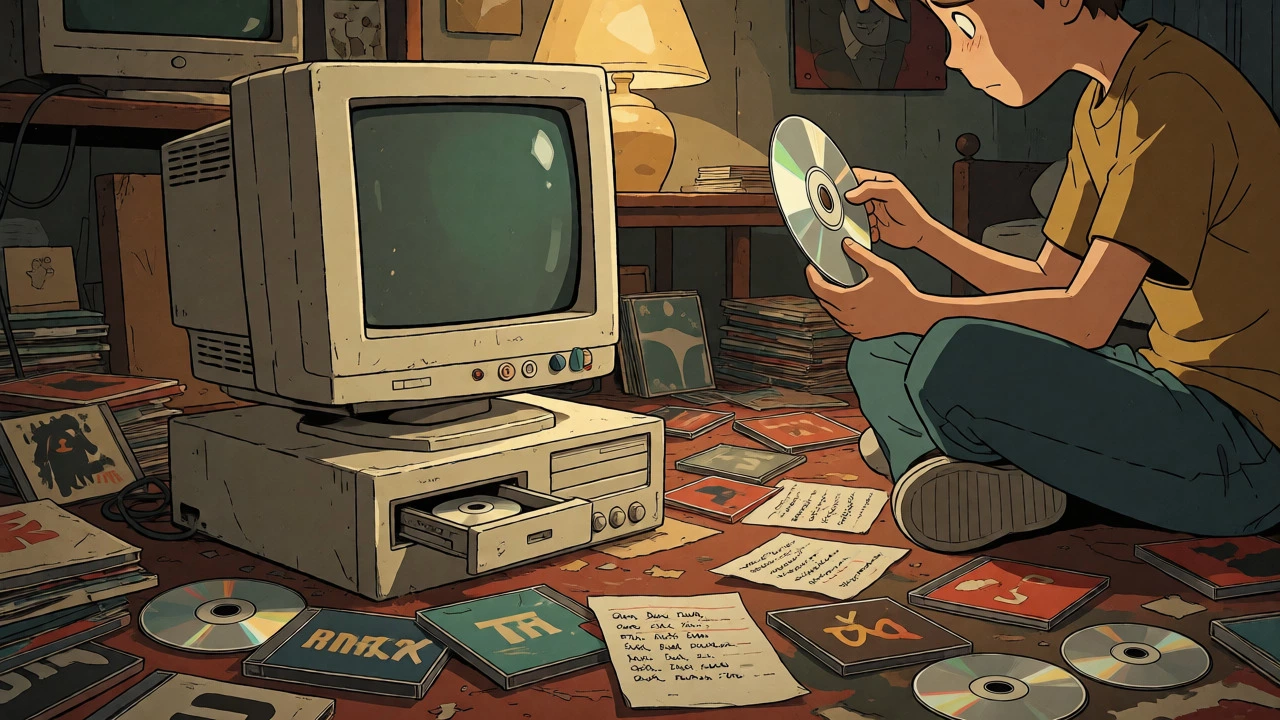

Imagine handing someone a physical object that says, "This is who I am, and these are the songs that define us." No algorithm suggested it. No streaming service auto-played it. You spent hours ripping tracks, arranging them in a specific order, and praying the laser didn’t skip during the final write process. This was the mix CD, a cultural phenomenon of the late 1990s that bridged analog intimacy and digital scalability.
Before Spotify playlists became disposable swipes, burned CDs were high-stakes social artifacts. They weren't just storage; they were gifts, love letters, and identity statements. But they also sparked a massive shift in how we value music, blurring the line between personal sharing and what the industry would later call piracy. Let’s look at why this specific era mattered so much for how we consume media today.
The Tech That Changed Everything
You couldn’t have a mix CD revolution without the hardware. While the concept of recording existed, the CD-R (Compact Disc Recordable) was the game-changer. Developed through the Philips-Sony partnership and standardized by the Orange Book in 1990, early versions were out of reach for most people. A professional system could cost $35,000. Then came the HP 4020i in 1995. Priced at $995, it was the first burner under $1,000, putting the power to create permanent digital copies into suburban garages and college dorm rooms.
The economics shifted rapidly. Blank discs dropped from around $100 in 1990 to roughly $1 by 1999. This price collapse made duplication cheap, but the labor remained high. You needed a computer, software like Nero or Easy CD Creator, and patience. Early drives were slow-sometimes taking eight hours to burn a single disc-and prone to "buffer underruns," where the data flow stopped mid-write, ruining the disc. It wasn’t just copying; it was crafting.
The Art of Curation
Unlike a cassette tape, where you had to record in real-time and risk degrading audio quality with each generation, a CD-R offered perfect digital duplication. But this perfection created new pressures. The format had a hard limit: 74 minutes (later 80). You couldn’t just dump every song you liked. You had to edit.
This constraint forced intentionality. Did you put the upbeat track first to grab attention? Did you save the emotional ballad for the end? Pitchfork writer Marc Hogan noted that while burning was easier than taping, the best mixes still required significant curatorial effort. You chose the order to tell a story. For many, the mix CD was a narrative arc about friendship, romance, or shared taste.
| Feature | Mix CD (1990s) | Streaming Playlist (Today) |
|---|---|---|
| Creation Effort | High (Ripping, Burning, Labeling) | Low (Drag and Drop) |
| Permanence | Write-once (Cannot edit after burn) | Dynamic (Edit anytime) |
| Social Signal | Tangible gift; implies deep effort | Digital link; often casual |
| Limitations | 74-80 min capacity; physical damage | No physical limits; requires internet/device |
Social Norms and Romantic Signaling
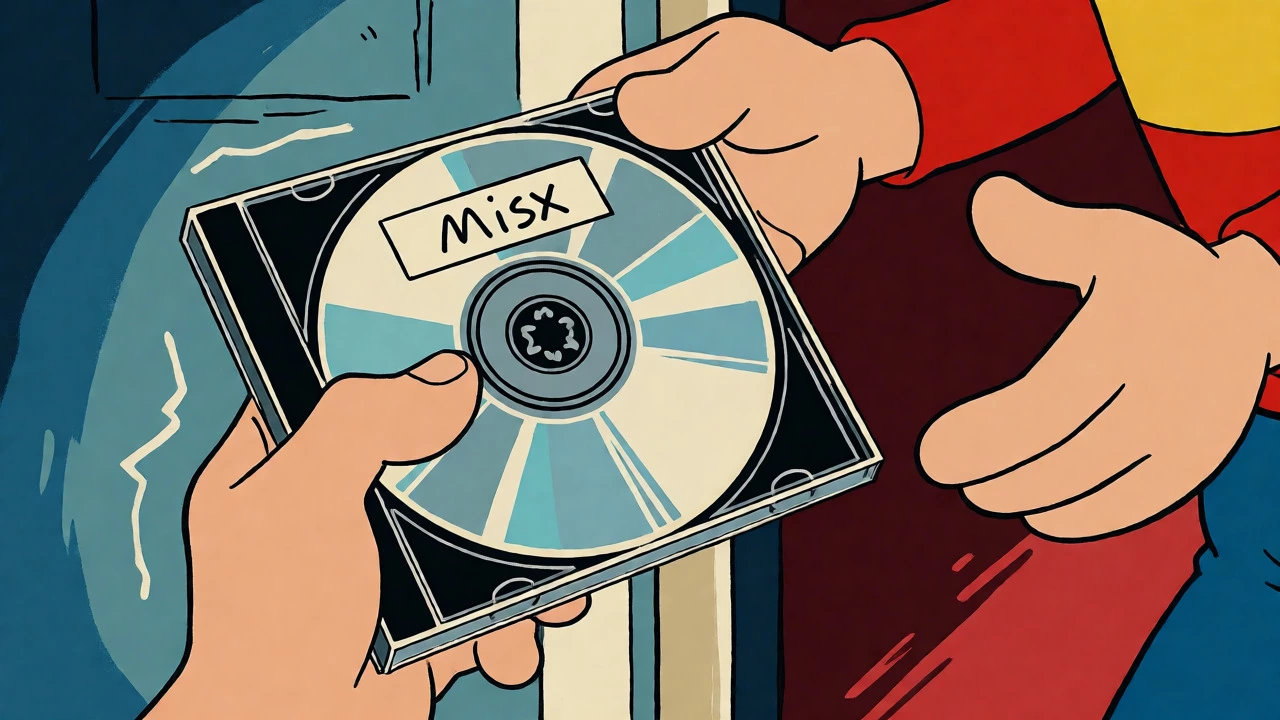
The mix CD was rarely handed over casually. It was a ritual. First-person accounts from the era describe the anxiety of giving one to a crush. Was the sequence right? Did Track 3 say "I like you" too loudly? A 2019 Vice essay described rearranging songs repeatedly until the order communicated the exact desired emotion.
For queer teenagers, as noted in a Complex account, burning a CD was a way to test safety and compatibility. It was vulnerable self-disclosure. You were saying, "Here is my inner world, packaged in plastic." Unlike a text message, which can be ignored, a physical disc demands possession. If you kept it, you kept a piece of the giver.
The norms of sharing were strictly interpersonal. You gave a disc to a friend, a parent for a road trip, or a partner. It wasn’t broadcast to the world. This limited circulation felt safe and intimate. The handwritten tracklist on the jewel case insert added to the perceived value. It proved you cared enough to write it down.
The Gray Zone of Piracy
Here is where things get legally messy. The Audio Home Recording Act of 1992 tried to balance consumer rights with copyright. It allowed noncommercial home recording but didn’t clearly cover computer-based CD burning. Consumers felt a moral distinction between copying a CD for a friend and selling bootlegs.
To the average person, making a mix from their own collection felt like fair use. To the record labels, it looked like lost sales. Industry surveys later showed that nearly 70% of US music downloaders burned files to CD-R, and many admitted buying less music as a result. The tension wasn’t just about money; it was about control. Labels wanted to sell albums; consumers wanted to cherry-pick hits.
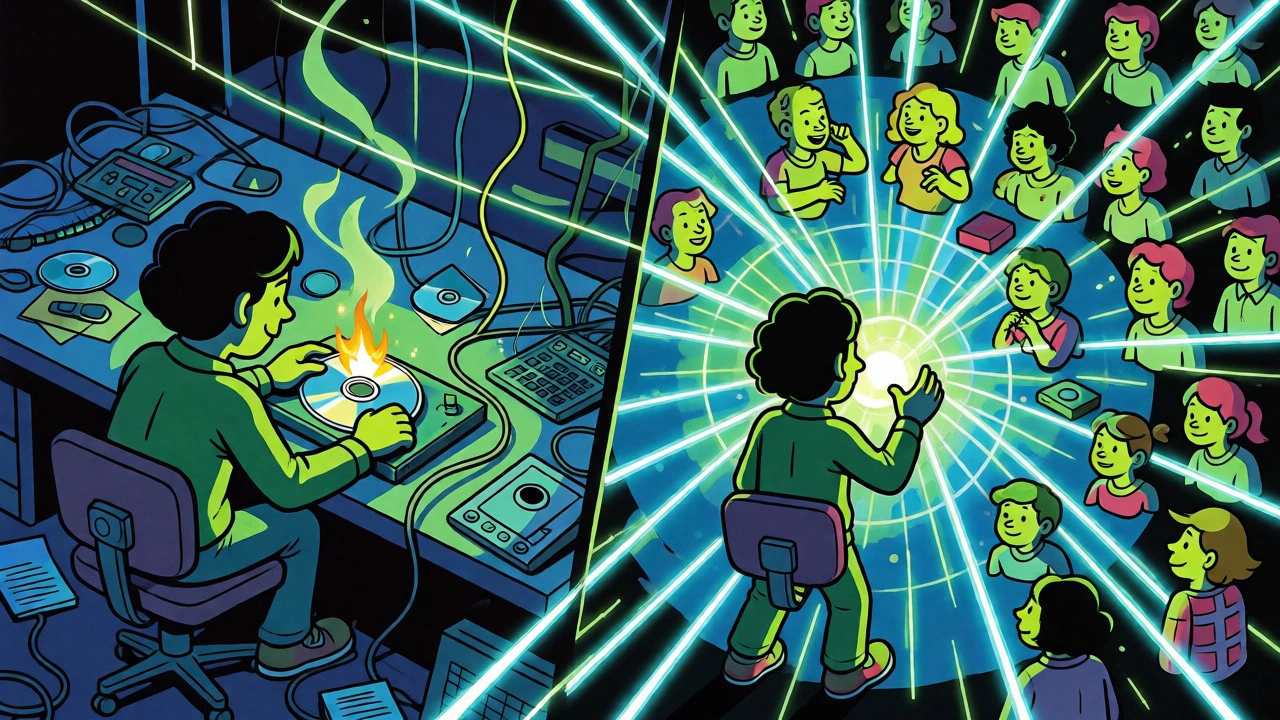
This ambiguity paved the way for Napster. Launched in 1999 by Shawn Fanning, Napster took the local practice of file sharing and scaled it globally. Suddenly, you weren’t just burning a disc for your friend; you were downloading MP3s from strangers. By 2000, 25% of college bandwidth was used for music sharing. The mix CD was the training ground for this new behavior. We learned to rip, organize, and share before we ever hit "download."
Why It Mattered More Than You Think
Critics might dismiss mix CDs as obsolete tech. But they fundamentally changed our relationship with ownership. Before CDs, you owned an album. With burned CDs, you owned a selection. This shift toward curation over consumption is the foundation of modern streaming culture.
Media scholar José van Dijck argues that home-burned CDs turned symbolic gift exchange into part of the software environment. We started seeing music as data to be manipulated, not just art to be received. The mix CD preserved the humanity of the mixtape-the care, the context, the handoff-while introducing the efficiency of digital files.
Today, when you send a Spotify link, you’re doing a diluted version of what happened in 1998. You’re still curating, still signaling taste, still trying to connect. But you’ve lost the friction. And that friction-the time spent waiting for the drive to finish, the fear of a bad burn, the weight of the disc in your hand-is what made the gesture meaningful.
Why did mix CDs stop being popular?
The rise of portable digital players like the iPod in the early 2000s replaced physical custom compilations with editable digital libraries. Smartphones and streaming services further eliminated the need for physical media, making the labor-intensive process of burning CDs seem inefficient compared to instant access.
Was it illegal to burn a mix CD for a friend?
Legally, it was a gray area. The Audio Home Recording Act of 1992 permitted noncommercial home recording, but computer CD burners didn't fit neatly into statutory definitions. Most consumers viewed small-scale sharing as ethical, while rights holders argued it substituted for purchased albums. Large-scale distribution or selling copies was generally considered infringement.
How long did it take to burn a CD in the 1990s?
It varied significantly based on hardware. Early systems in the mid-90s could take up to 8 hours for a full disc. By the late 90s, faster drives reduced this to 15-45 minutes, but users still had to wait for the entire process to complete without interruption to avoid errors.
What was the difference between a mix CD and a mixtape?
A mixtape used analog cassettes, requiring real-time recording and suffering from audio degradation with each copy. A mix CD used digital CD-Rs, offering perfect sound quality, random access (skipping tracks), and faster creation via computers. However, both relied on human curation and served similar social functions of expressing identity and affection.
Did burning CDs hurt the music industry?
Industry reports suggest yes. Surveys indicated that a significant portion of consumers bought fewer albums because they could burn selections from existing collections or downloaded files. This contributed to the decline in album sales that peaked in the late 90s and led to the industry's aggressive legal actions against file-sharing networks like Napster.
