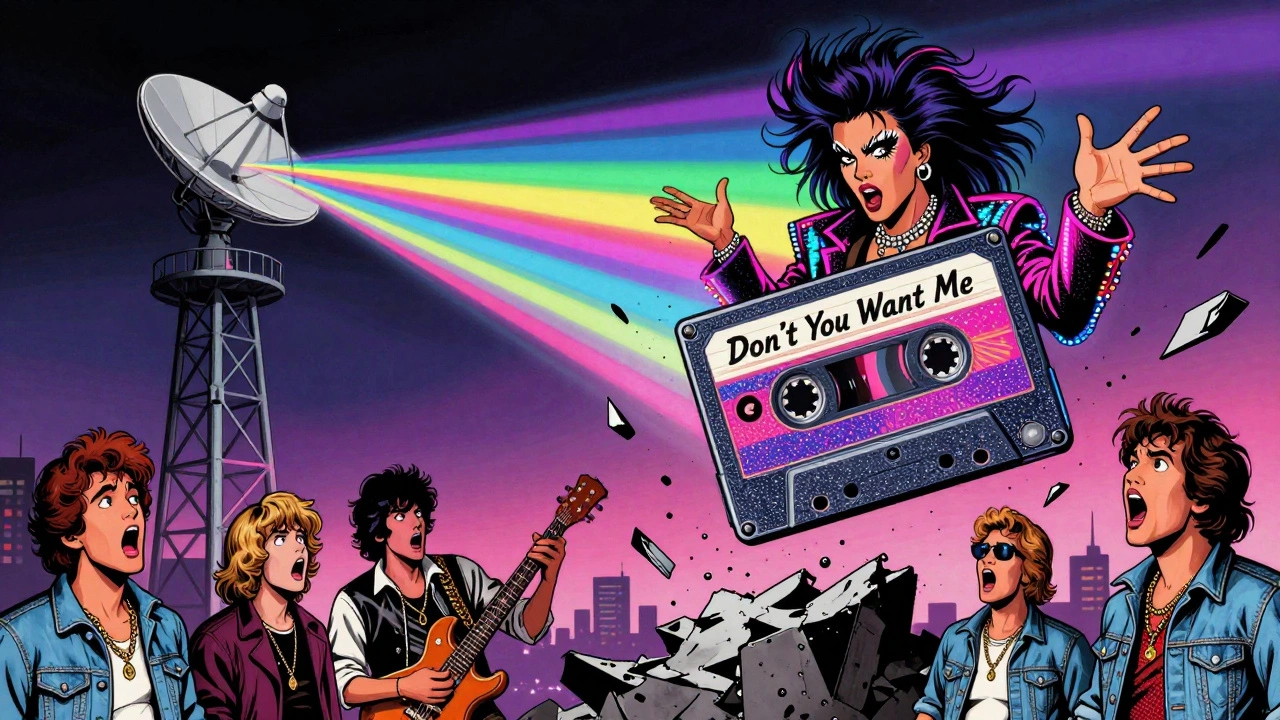

On July 3, 1982, something happened that no one in America saw coming. Don't You Want Me by The Human League hit number one on the Billboard Hot 100. It wasn’t just a hit-it was a signal. The Second British Invasion had officially begun.
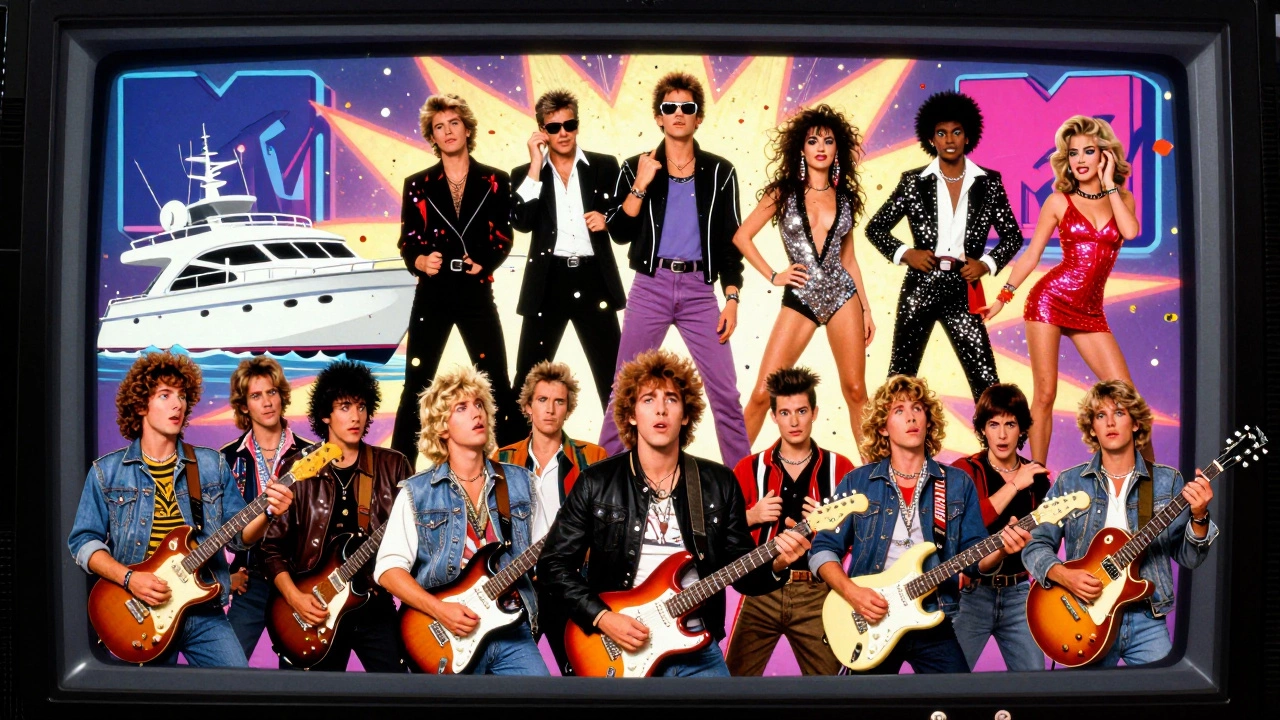
By the time the dust settled in late 1986, British bands had taken over American radio, TV, and teen bedrooms. You couldn’t turn on MTV without seeing Duran Duran in exotic locations, Culture Club’s Boy George in glitter and eyeliner, or Pet Shop Boys staring deadpan into the camera. And it wasn’t just a few songs. At its peak, twenty of the top forty songs on the Billboard Hot 100 were by British artists. That’s more than half the chart. No one had seen numbers like that since The Beatles in 1965.
How MTV Changed Everything
Before 1981, American radio ruled. If a song got played on Top 40 stations, it climbed the charts. But MTV launched in August 1981, and suddenly, music wasn’t just about sound-it was about image. British acts were ready. They had been making bold, cinematic music videos for years. American bands? Most just stood in front of a wall and sang.
Duran Duran’s "Hungry Like the Wolf" didn’t just chart because it was catchy. It charted because the video showed them running through jungles, chasing women, and looking like movie stars. MTV played it constantly. By the time it hit the Hot 100 in December 1982, it had already built a cult following. It peaked at #3 and stayed on the chart for 22 weeks. That’s not luck-that’s strategy.
Same with Culture Club. "Do You Really Wanna Hurt Me" was a soulful pop song. But it was Boy George’s look-long hair, makeup, androgynous style-that made people stop and stare. MTV didn’t just play the video. It made him a symbol. And when MTV plays you, you go platinum.
The Numbers Don’t Lie
Between September 1981 and December 1984, 171 British singles charted on the Billboard Hot 100. That’s more than three per month, every month, for over three years. At the height of it all, on July 16, 1983, British artists held 20 of the top 40 spots. The previous record? 14 in 1965. The British had broken their own record.
And it wasn’t just the top 40. From early 1983 to late 1985, British acts scored nine out of eleven number-one hits. Simple Minds, Dire Straits, Eurythmics, Wham!, The Human League-they all took turns at the top. On May 25, 1985, eight of the top ten songs were British. Eight. That’s not a trend. That’s a takeover.
Duran Duran and Culture Club were the twin engines of this explosion. Duran Duran had three top 10 hits from their album Rio. Culture Club’s debut album Kissing to Be Clever gave them two top 5 singles. Together, they sold millions of records and turned music videos into must-see TV.
The Other Players
It wasn’t just Duran Duran and Culture Club. The Human League kicked it off with "Don’t You Want Me," which spent three weeks at #1. Pet Shop Boys came later, but with "West End Girls," they hit #1 in 1987-just after the peak, proving the movement still had legs.
A Flock of Seagulls? "I Ran (So Far Away)" hit #9. The Police? "Every Little Thing She Does Is Magic" and "Spirits in the Material World" were both top 15 hits. Wham! exploded in 1984 with "Wake Me Up Before You Go-Go," which hit #1 and stayed there for three weeks. Eurythmics, with Annie Lennox’s powerful voice and moody visuals, made "Here Comes the Rain Again" a staple.
Even Madness, a ska band from London, got in on it. "Our House" reached #7 in 1983. It wasn’t a #1, but it was enough to make Americans wonder: "Who are these people?" Geffen Records rushed out a compilation album, and suddenly, British pop wasn’t just a phase-it was a movement.
Why Did This Happen?
It wasn’t just MTV. It wasn’t just good songs. It was a perfect storm.
First, British artists were experimenting. Synth-pop, new wave, and electronic sounds were bubbling up from clubs in Manchester, London, and Birmingham. American pop was still stuck in disco and arena rock. British acts brought something fresh-cold, electronic, emotional, stylish.
Second, they understood visuals. British directors knew how to make videos that told stories. Duran Duran’s "Rio" had them on a yacht in the Caribbean. Pet Shop Boys’ "West End Girls" used black-and-white film and urban decay. These weren’t just ads for songs-they were short films.
Third, American audiences were ready. After the grimness of the late 70s-economic slump, punk anger, disco backlash-young people wanted color, fun, and glamour. British acts gave them all three.
The End of the Invasion
The British takeover didn’t fade quietly. It ended with a bang-and then a shift.
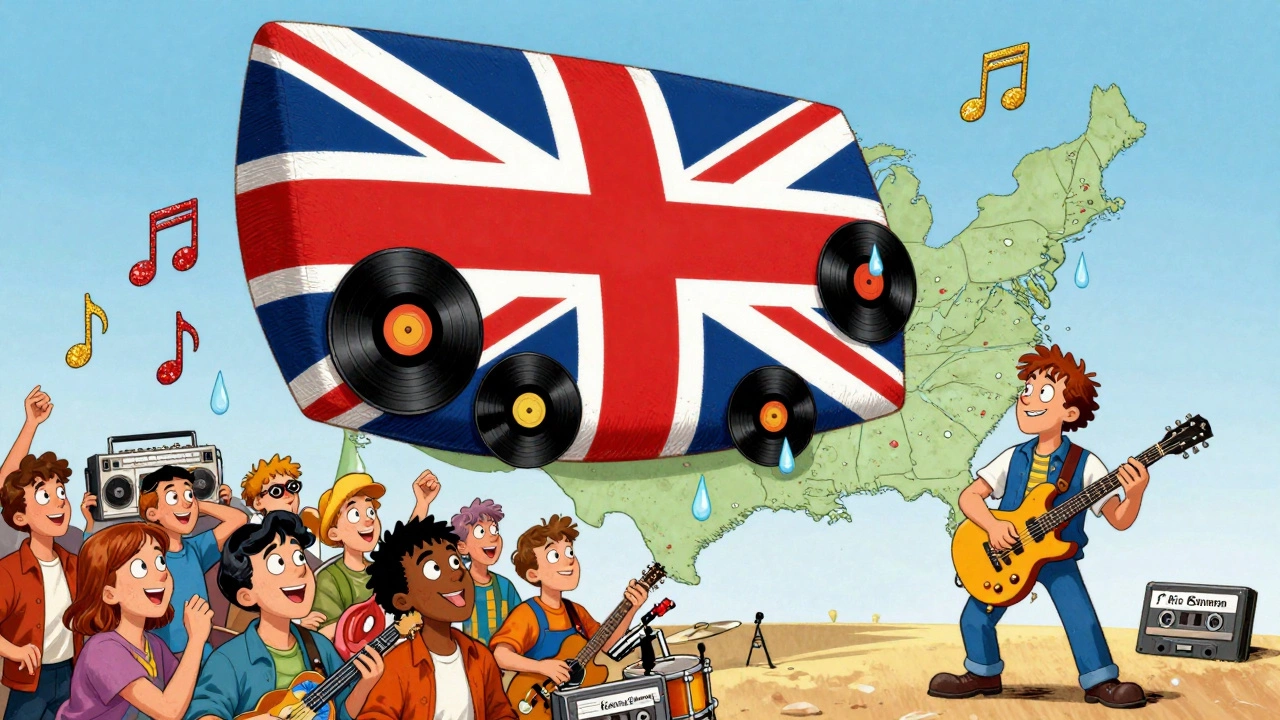
In November 1986, The Human League’s "Human" hit #1. But the next week, Bon Jovi’s "You Give Love a Bad Name" knocked it off. Bon Jovi’s album Slippery When Wet was already #1 on the Billboard 200. Hair metal, American rock, and big drums were back.
It wasn’t that British music disappeared. It was that the landscape changed. MTV started playing more American rock. Radio went back to guitars. The synth-pop sound got absorbed into mainstream pop, but the British wave? It was done.
Still, the damage was done. British acts had proven you could dominate America without ever setting foot on a U.S. tour. You just needed a killer video, a catchy hook, and the right moment.
The Legacy
The Second British Invasion didn’t just change the charts. It changed music forever.
Before 1982, music videos were afterthoughts. After 1986, they were essential. Every artist, from Michael Jackson to Madonna, had to have a video that looked like a movie. That started with Duran Duran and Culture Club.
Electronic music went from underground clubs to top 40 radio. Synths became standard. Look at today’s pop: it’s full of beats and synths that trace back to The Human League and Pet Shop Boys.
And fashion? Boy George’s look inspired a generation. Androgyny, bold colors, glitter-all of it entered the American mainstream because of British artists.
The Second British Invasion was more than a chart phenomenon. It was a cultural reset. And it all started with one song on a summer night in 1982: "Don’t You Want Me."
What was the first song to kick off the Second British Invasion?
The song that officially started the Second British Invasion was "Don’t You Want Me" by The Human League. It hit #1 on the Billboard Hot 100 on July 3, 1982, and stayed there for three weeks. Its success was tied directly to heavy MTV rotation, proving that music videos could drive chart performance in a way radio alone couldn’t.
How many British songs were in the Billboard Top 40 at the peak of the invasion?
At its peak, on July 16, 1983, twenty British songs were in the Billboard Hot 100’s top 40. This broke the previous record of fourteen set during the First British Invasion in 1965. The record was tied again in May-June 1986, showing the lasting impact of the movement.
Which British acts had the most Billboard Hot 100 hits during this period?
Duran Duran and Culture Club were the two biggest forces. Duran Duran had three top 10 hits from Rio, including "Hungry Like the Wolf" (#3) and "Save a Prayer" (#2). Culture Club’s "Do You Really Wanna Hurt Me" peaked at #2 and "Karma Chameleon" hit #1. Pet Shop Boys and Eurythmics also had multiple top 10 hits, with Pet Shop Boys scoring five US top 10 singles overall in the 1980s.
Why did British acts succeed more than American ones on MTV?
British acts had been making innovative, high-budget music videos since the late 70s, often influenced by film, fashion, and art. American acts, by contrast, mostly filmed simple live performances. MTV needed visually compelling content-and British bands delivered. Their videos told stories, used color and symbolism, and looked like mini-movies, which made them perfect for the new 24-hour music channel.
Did any American bands fight back during the British Invasion?
Yes-but not until the end. In 1986, American rock bands like Bon Jovi, Def Leppard, and Mötley Crüe began dominating the charts with hard rock and glam metal. Bon Jovi’s "You Give Love a Bad Name" knocked The Human League off the #1 spot in November 1986, marking the symbolic end of British dominance. The American rock resurgence was fueled by MTV’s shift toward guitar-driven visuals and stadium-sized anthems.


