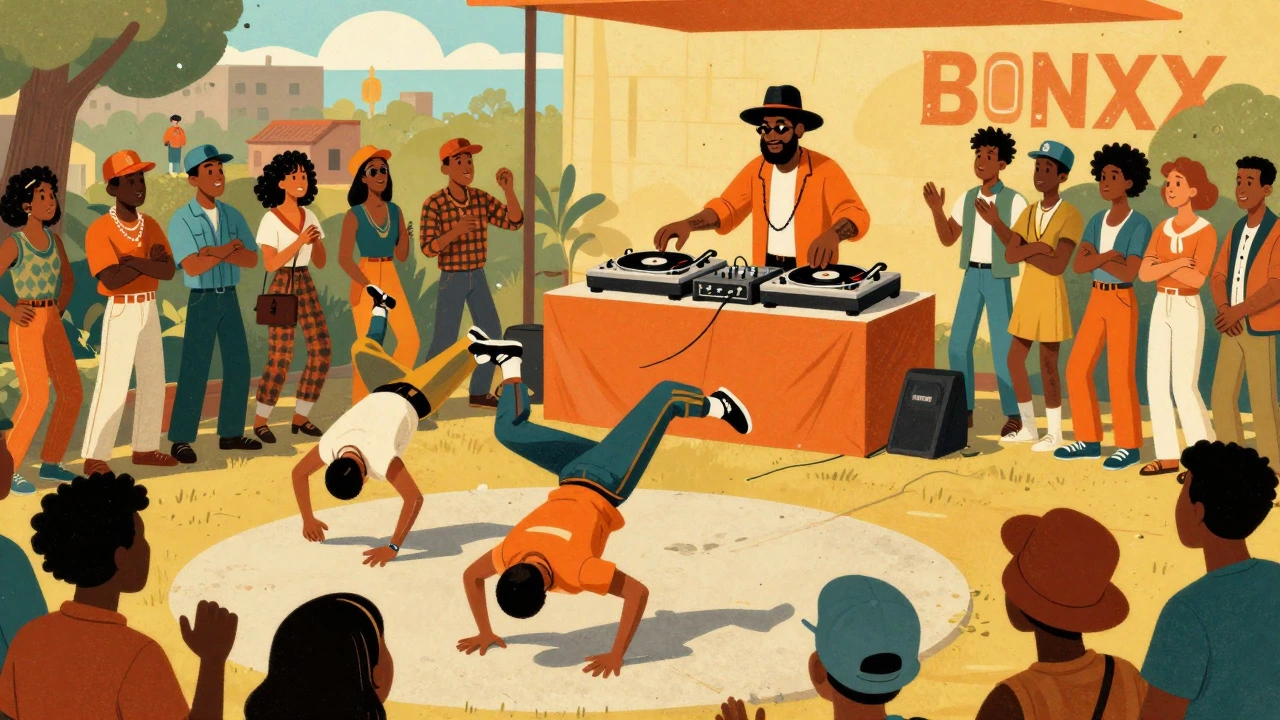

Picture a crowded park in the Bronx on a hot summer day in 1973. A DJ stands behind two turntables, fingers hovering over spinning vinyl. He isn't playing songs from start to finish. Instead, he isolates a five-second drum solo, loops it, and keeps it going for minutes while dancers go wild. This moment didn't just invent a party trick; it created the rhythmic backbone of an entire genre. Those isolated drum sections, known as breaks, were hidden inside funk, soul, and disco records. For decades, these "vinyl crates" held the secret sauce of early hip-hop, long before digital samplers made everything available with a click.
The Birth of the Break at 1520 Sedgwick Avenue
It all started on August 11, 1973. That date is now legendary in music history because it marks the back-to-school party where DJ Kool Herc is the pioneering Jamaican-American DJ who invented the breakbeat technique by extending drum solos using two turntables changed the game. Before this night, DJs played records straight through. If you wanted to dance during the instrumental part-the "break"-you had about eight to sixteen bars before the vocals came back or the song ended.
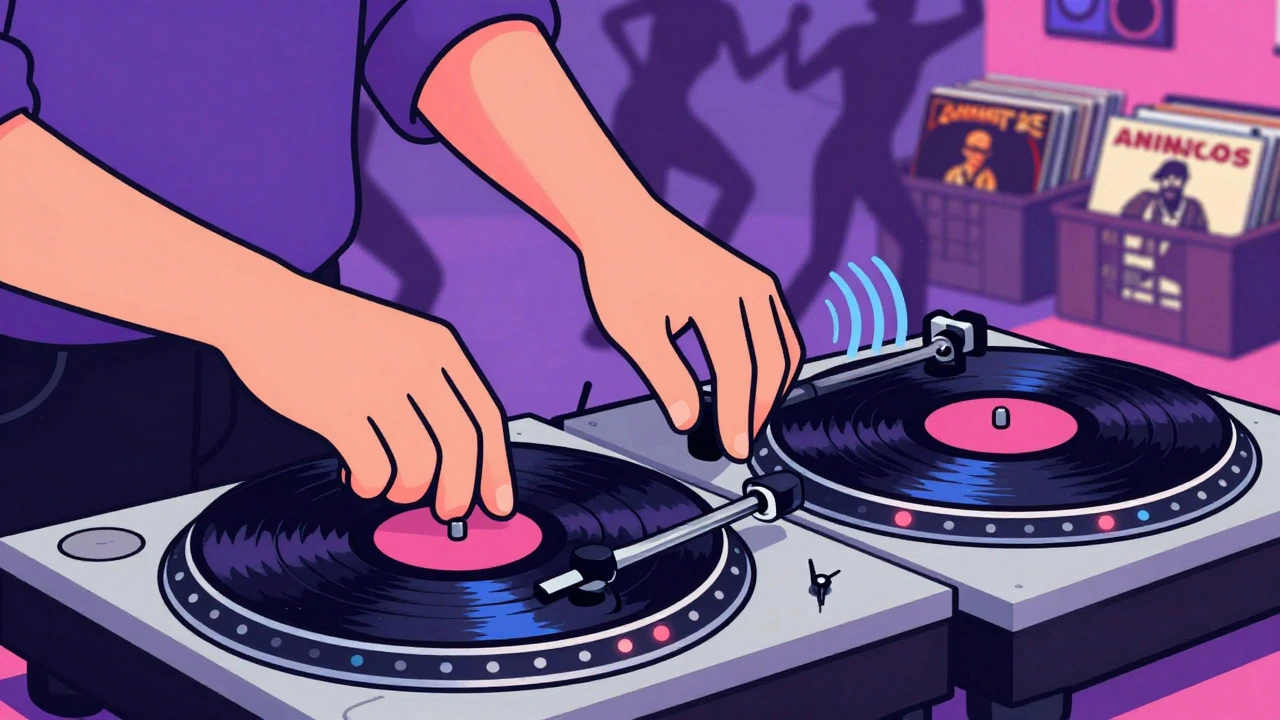
Herc realized that the energy in the room peaked during those percussive breakdowns. So, he used two copies of the same record. As the break approached on Turntable A, he cued up the exact same spot on Turntable B. When the break ended on A, he crossfaded to B, creating a seamless loop. He stretched a short drum fill into a continuous groove lasting thirty to ninety seconds. This technique, later called "merry-go-round" or beat juggling, allowed b-boys and b-girls to showcase their best moves without interruption.
To keep the energy high for hours-long sets, Herc needed more than one or two records. He carried massive crates filled with dozens of LPs. These weren't random albums; they were carefully selected funk and soul records known for having heavy, syncopated drums. Artists like James Brown and Sly & The Family Stone became staples in his collection because their session musicians often recorded complex, driving rhythms that worked perfectly for looping.
The Hunt for the Holy Grail: Iconic Breaks
Not all breaks are created equal. Some drum patterns have such a unique swing and punch that they define genres. The most famous example is the "Amen Break." Recorded by The Winstons is an American R&B band whose 1969 track 'Amen Brother' contains the iconic Amen Break, a six-second drum solo sampled thousands of times in 1969, the track "Amen Brother" features a brief drum solo by Gregory C. Coleman. It lasts only about five seconds, but its impact is colossal.
This specific break has been sampled in countless tracks across hip-hop, jungle, and drum & bass. Its fast, choppy rhythm makes it incredibly versatile when sped up or chopped into smaller pieces. Early hip-hop DJs hunted for these kinds of gems in record stores. They knew that finding a record with a clean, hard-hitting break was like striking gold. Other notable examples include the break from "Funky Drummer" by James Brown and "Apache" by The Incredible Bongo Band. Each of these provided a distinct flavor that producers would later use to build entirely new songs.
| Song Title | Artist | Year | Key Characteristic |
|---|---|---|---|
| Amen Brother | The Winstons | 1969 | Fast, syncopated snare pattern; highly sampleable |
| Funky Drummer | James Brown | 1970 | Heavy kick drum and crisp snare; foundational for boom-bap |
| Apache | The Incredible Bongo Band | 1973 | Bongo-heavy intro; essential for early breakdancing routines |
| Impeach the President | The Honey Drippers | 1973 | Simple, steady four-on-the-floor beat; easy to loop |
From Park Jams to Compilation Series
As hip-hop grew from local block parties to a cultural movement, the demand for these breaks increased. DJs like Grandmaster Flash and Afrika Bambaataa expanded the crate-digging practice, scouring thrift stores and record shops for obscure funk records. However, carrying fifty LPs to every gig was cumbersome. This need led to the first attempts at formalizing breakbeat collections.
In the mid-1970s, Paul Winley released the "Super Disco Brakes" series. While it was one of the first efforts to compile break-heavy tracks, it had significant flaws. Critics noted that the edits were sloppy and not always DJ-friendly. Tracks weren't cleanly isolated around the breaks, and sound quality varied wildly between volumes. Despite its shortcomings, it proved there was a market for pre-selected break records.
Recognizing this gap, Leonard "BreakBeat Lenny" Roberts stepped in during the early 1980s. Roberts, a chauffeur and avid record collector from the Bronx, launched the "Octopus Breaks" series. Unlike Winley's attempt, Roberts focused on sound quality and usability. He understood what DJs needed: clear, punchy drums without excessive noise or poor mixing. The Octopus series served as a bridge between loose, bootleg-style collections and professional DJ tools. These records were pressed in small runs, often under 1,000 copies, making original pressings rare and valuable today.
The Golden Era: Ultimate Breaks & Beats
If there is a holy grail of breakbeat records, it is the Ultimate Breaks & Beats is a 25-volume compilation series released by Street Beat Records between 1986 and 1991, curated by Luis Flores and Leonard Roberts, which became the definitive source for hip-hop producers (UBB) series. Released by Street Beat Records from 1986 to 1991, UBB consisted of twenty-five volumes containing approximately two hundred tracks. It was edited by Luis "BreakBeat Lou" Flores and Leonard "BreakBeat Lenny" Roberts, who combined their expertise to create something unprecedented.
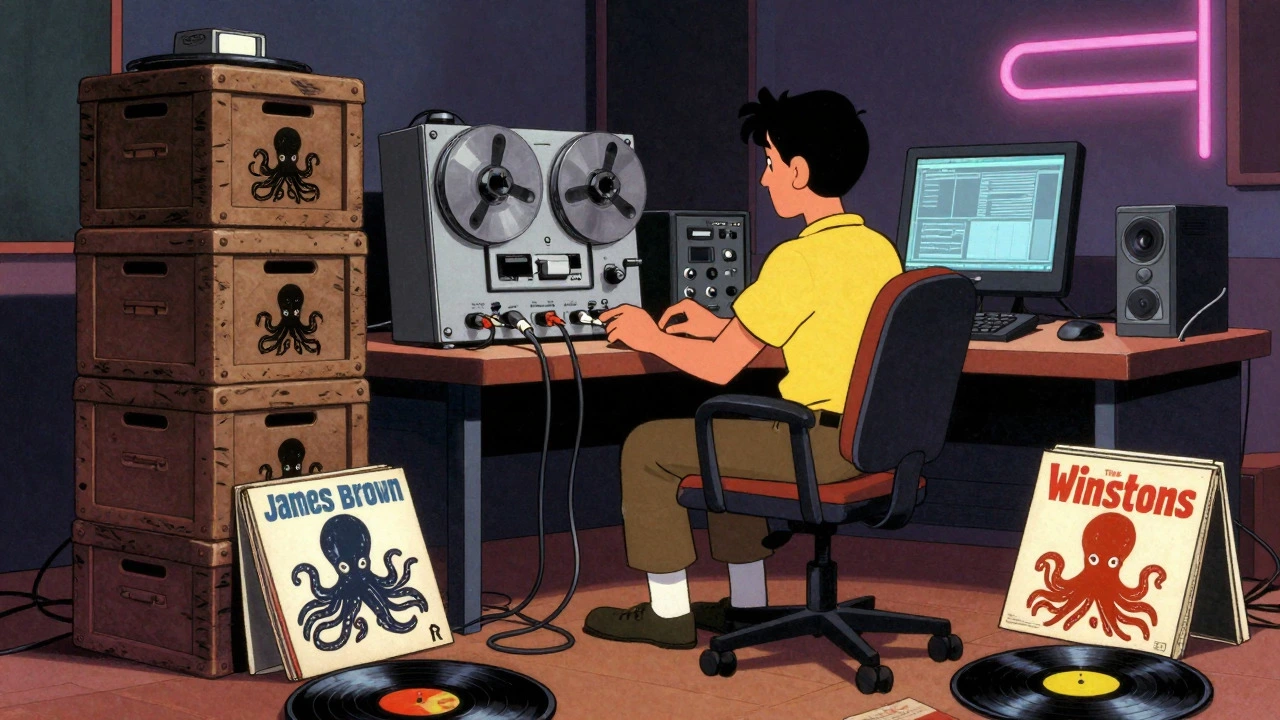
Flores wasn't just a collector; he was a technician. He used 2-inch reel-to-reel tape to extend the break sections beyond their original lengths. Where a studio recording might offer an eight-bar break, Flores could splice and edit it to run sixteen to thirty-two bars. This meant DJs didn't have to rely solely on manual beat juggling; the record itself provided a longer, cleaner loop. The series was meticulously sequenced, with consistent volume levels and high-quality mastering. Each volume featured a distinctive octopus logo, making them instantly recognizable in any crate.
UBB became the blueprint for a generation of producers. In the late 1980s and early 1990s, affordable sampling technology hit the market. Machines like the Akai S950 allowed bedroom producers to digitize audio from vinyl. With UBB, they had immediate access to hundreds of pristine breaks. Producers like Dr. Dre, Nas, and The Notorious B.I.G. built hits using samples sourced directly from these compilations. The series lowered the barrier to entry, allowing newcomers to experiment with rhythm and composition without years of crate-digging experience.
Impact Beyond Hip-Hop: Jungle and Drum & Bass
The influence of breakbeat records extended far beyond New York City. In the early 1990s, UK rave culture embraced these same drum breaks, but with a twist. Producers began speeding them up, chopping them further, and layering them with sub-bass frequencies. This gave birth to jungle and drum & bass, genres characterized by tempos of 160-170 BPM.
The Amen Break, originally a slow, groovy funk solo, became the engine of these high-speed genres. By pitching it up and slicing it into tiny fragments, producers created frantic, intricate rhythms that defined the sound of British electronic music. The UBB series, initially intended for hip-hop DJs, inadvertently provided the raw material for an entirely different musical revolution. This cross-pollination highlights how central these vinyl crates were to global music evolution.
The Legacy of the Crate
Today, the physical act of digging through crates has largely been replaced by digital databases and streaming services. You can find any break with a few keystrokes. Yet, the spirit of the crate digger remains alive. Collectors still hunt for original pressings of UBB and Octopus Breaks, valuing them not just for the music but for their historical significance. These records represent a time when discovery required effort, patience, and deep knowledge.
Luis "BreakBeat Lou" Flores continues to perform and educate audiences about the origins of these beats. His sets highlight the foundation stones of hip-hop, reminding listeners that modern production rests on the shoulders of those early funk and soul recordings. New compilations inspired by UBB appear regularly, keeping the tradition alive for new generations of producers.
The vinyl crates behind early hip-hop sets were more than just storage containers for records. They were libraries of rhythm, archives of innovation, and the primary tools of a creative revolution. From the park jams of the Bronx to the studios of London, breakbeat records shaped the soundscape of contemporary music. They taught us that sometimes, the most powerful moments come from isolating the smallest parts of a whole.
What is a breakbeat record?
A breakbeat record is a vinyl compilation or single that isolates or emphasizes drum breaks-short, percussive sections from funk, soul, or disco songs. These records were designed for DJs to loop and extend these breaks during live performances, forming the rhythmic basis of early hip-hop sets.
Who created the Ultimate Breaks & Beats series?
The Ultimate Breaks & Beats (UBB) series was created by Leonard "BreakBeat Lenny" Roberts and Luis "BreakBeat Lou" Flores. They released 25 volumes through Street Beat Records between 1986 and 1991, curating and editing classic funk and soul breaks for hip-hop DJs and producers.
Why is the Amen Break so important?
The Amen Break, from The Winstons' 1969 song "Amen Brother," is considered one of the most sampled drum breaks in history. Its syncopated rhythm and punchy snare make it highly versatile, influencing genres ranging from hip-hop to jungle and drum & bass. It has been used in thousands of tracks worldwide.
How did DJ Kool Herc change hip-hop?
DJ Kool Herc pioneered the "merry-go-round" technique, using two turntables to loop the drum breaks of funk records. This allowed dancers to move continuously over extended percussion sections, establishing the breakbeat as the core element of hip-hop culture and DJ performance.
What is the difference between Super Disco Brakes and Ultimate Breaks & Beats?
Super Disco Brakes, released in the mid-1970s, was an early attempt at compiling breaks but suffered from poor editing and inconsistent sound quality. Ultimate Breaks & Beats, released in the late 1980s, offered professionally mastered, extended breaks specifically engineered for DJs and producers, making it far more useful and influential.
Did breakbeat records influence genres other than hip-hop?
Yes, breakbeat records significantly influenced jungle and drum & bass in the UK. Producers in these genres took classic hip-hop breaks, sped them up, and chopped them into faster, more complex rhythms, creating entirely new styles of electronic music based on the same foundational samples.
Are original UBB records still available?
Original pressings of Ultimate Breaks & Beats are rare and often expensive due to limited production runs. While no new volumes have been released since 1991, reissues and digital versions are occasionally available. Many collectors seek out original vinyl for both historical value and superior sound quality.
Who was BreakBeat Lou?
Luis "BreakBeat Lou" Flores was a record collector, historian, and co-editor of the Ultimate Breaks & Beats series. He used reel-to-reel tape technology to extend and remix drum breaks, ensuring they were suitable for looping and sampling. He remains active as a DJ and educator, preserving the history of breakbeat culture.