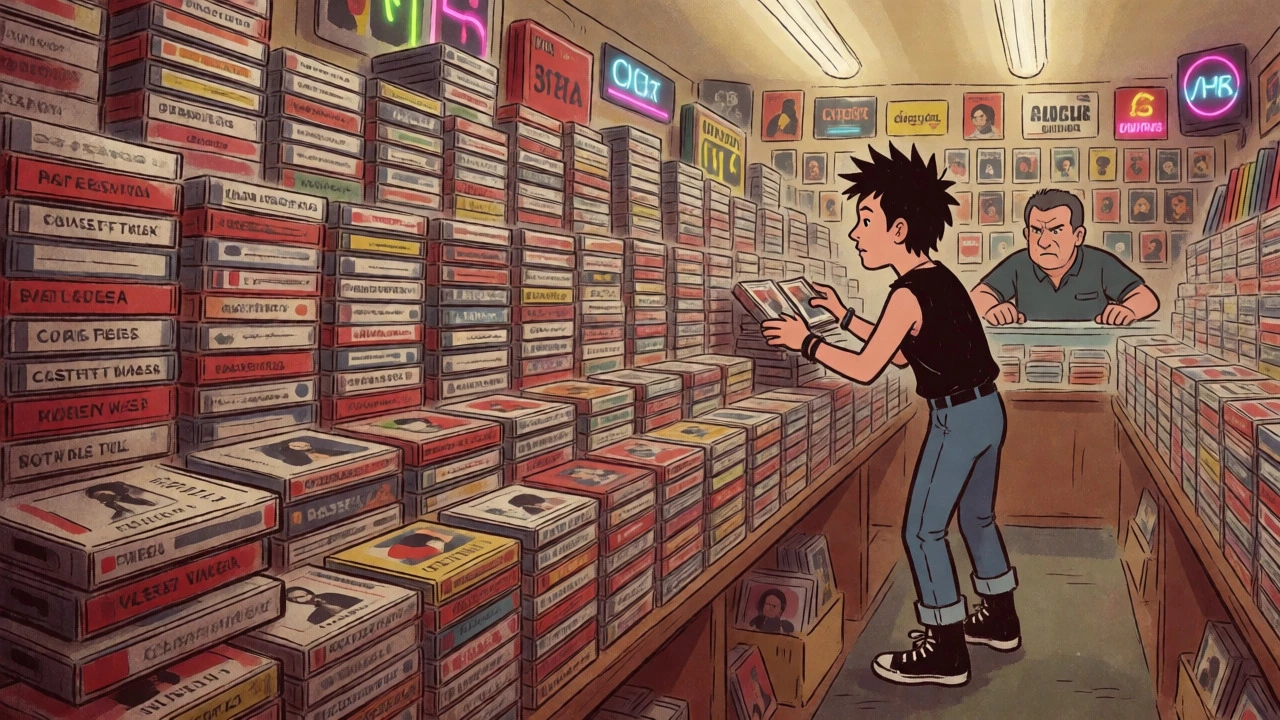

Imagine walking into a record shop in London or Singapore in 1982. You see a stack of cassettes for a fraction of the price of official releases. The packaging looks sketchy, maybe photocopied, but the audio? It’s there. This wasn’t just a glitch in the system; it was a parallel economy that threatened to swallow the global music business whole. While we often look back at the 1980s as the era of glossy MTV videos and synth-pop excess, beneath the surface lay a gritty underground battle over who owned the right to copy sound.
The term "piracy" gets thrown around a lot today, usually referring to illegal downloads or streaming leaks. But in the 1980s, music piracy was physical, tangible, and surprisingly complex. It ranged from high-quality bootleg vinyl records sold to die-hard collectors to millions of cheap, dubbed cassettes flooding street markets in Asia and Europe. For the major labels, this wasn't just annoying-it was an existential crisis. They claimed hundreds of millions of dollars were evaporating because kids with dual-deck tape recorders refused to buy new albums.
The Rise of the Cassette Culture
To understand why this happened, you have to look at the tech. By the early 1980s, the compact cassette had become the dominant format for portable listening. Walkmans were everywhere. But here’s the kicker: these devices didn’t just play tapes; they recorded them. Suddenly, anyone could capture a radio broadcast or dub their friend’s LP onto a blank tape for pennies. This democratized access to music but terrified the industry.
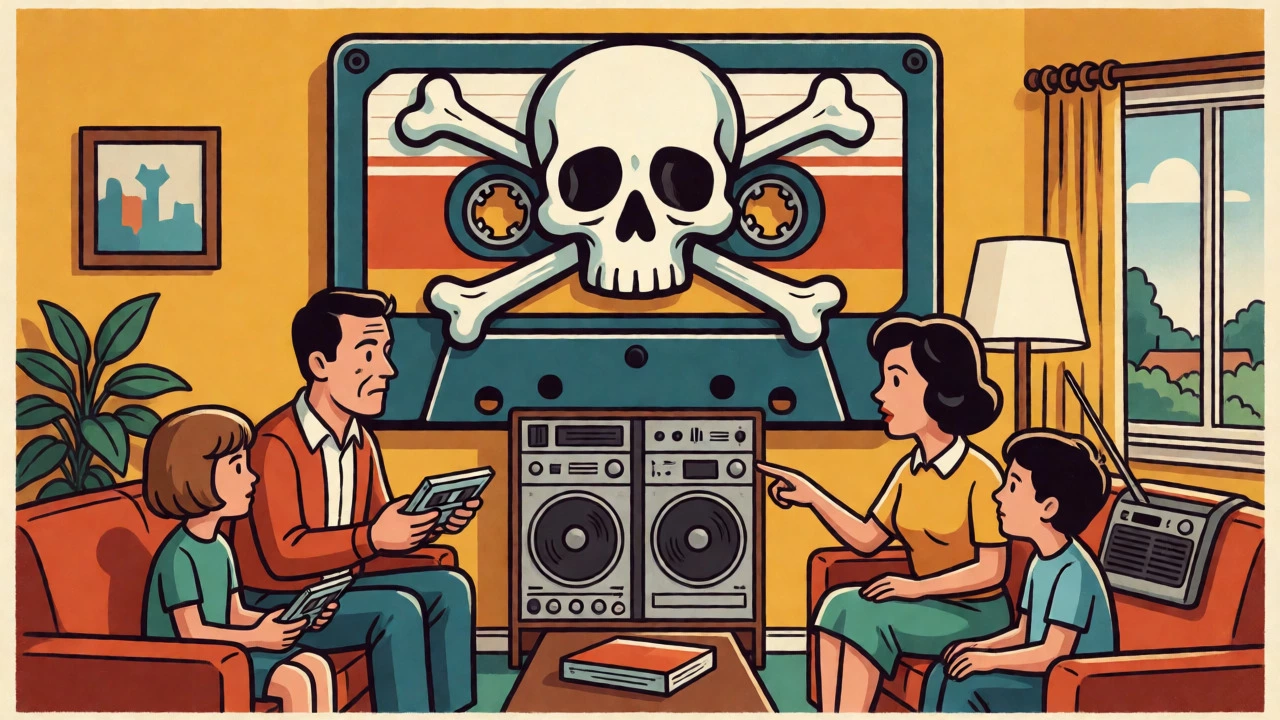
The British Phonographic Industry (BPI), the trade body representing UK record labels, saw this shift as a direct attack on revenue. In October 1981, they launched one of the most infamous marketing campaigns in history: "Home Taping Is Killing Music." The logo featured a cassette tape shaped like a skull and crossbones. It was aggressive, punk-inspired, and designed to make you feel guilty for hitting the "record" button.
Was it true? Did your personal mixtape really kill the industry? Probably not. But the BPI pushed hard for legal changes, including a tax on blank cassettes to compensate artists. They argued that if you copied a song, you stole money from the creator. Critics pointed out that many people who taped songs off the radio never would have bought the album anyway. So, did they actually lose sales, or did they just gain listeners?
Bootlegs vs. Piracy: Not the Same Thing
We tend to lump all unauthorized recordings together, but in the '80s, there was a clear divide between "bootlegging" and "piracy." Think of it as the difference between a boutique sneaker knockoff and a counterfeit handbag sold on a subway platform.
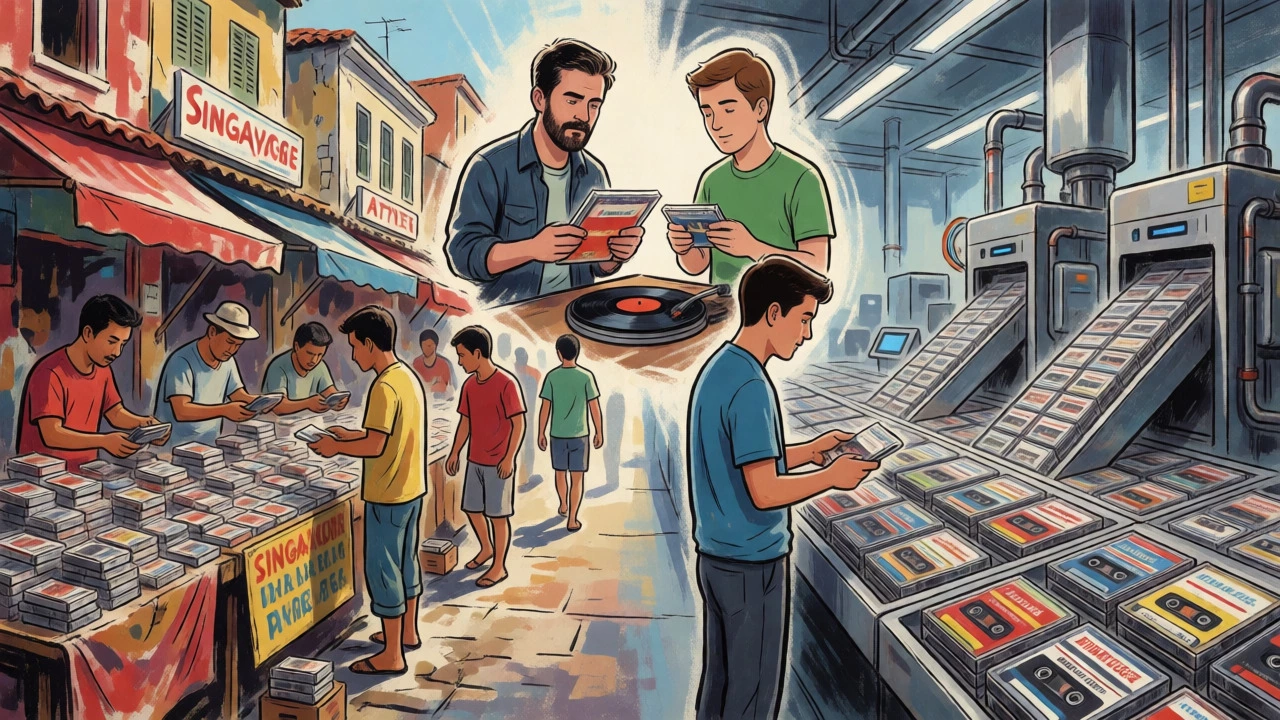
Bootlegging referred to high-quality, often rare recordings-live concerts, studio outtakes, or unreleased demos-that were pressed onto vinyl or cassette by independent, underground labels. These weren't trying to trick you into thinking they were official releases. Instead, they catered to superfans who wanted material the official channels ignored. Labels like The Swingin’ Pig Records became legends in this niche, releasing unauthorized Beatles and Led Zeppelin recordings that circulated among collectors.
| Feature | Bootlegging | Mass Piracy |
|---|---|---|
| Primary Audience | Dedicated collectors and superfans | General consumers looking for cheap deals |
| Product Quality | High (often soundboard recordings) | Variable (often poor quality dubs) |
| Pricing Strategy | Premium pricing for rarity | Low pricing to undercut official sales |
| Distribution | Niche shops, mail order, fan networks | Street markets, small electronics stores |
| Legal Risk | Lower profile, harder to track | High visibility, targeted by police raids |
On the other side of the spectrum was mass piracy. This was volume business. In places like Singapore and Greece, pirate cassettes dominated the market. In Greece, IFPI data suggested that by the early '80s, up to 80% of cassettes sold were unauthorized copies. That’s four out of five tapes! These operations used industrial duplication equipment to churn out thousands of units daily, selling them at prices that legitimate labels couldn't match.
The Global Scale of the Problem
The numbers were staggering. By 1981, the BPI estimated losses from home taping and piracy at $525 million annually in the UK alone. Globally, the International Federation of the Phonographic Industry (IFPI) reported that in some territories, the pirated cassette market dwarfed the legitimate one.
In Singapore, insiders believed pirate production was 40 times higher than legitimate output. A pirate cassette might sell for two Singapore dollars (about $4.40 USD), while imported official LPs cost significantly more. For a teenager with limited pocket money, the choice was obvious. Why pay full price for a sealed album when you could get the same songs for less than half the cost, even if the case was flimsy and the liner notes were missing?
This wasn't just about greed. It was about accessibility. In many developing markets, official distribution networks were sparse or expensive. Piracy filled the gap. If you lived in Athens or Bangkok and wanted to hear Duran Duran, you likely got it via a pirated tape before any official shipment arrived. This created a weird dynamic where pirates acted as unofficial distributors, building demand that sometimes benefited artists in the long run.
The Legal Gray Area
Here’s where things get messy legally. The BPI’s slogan ended with "...and it's illegal." But was it? Media historians like Andrew John Bottomley have pointed out that the law was far from clear. In many jurisdictions, private copying for personal use wasn't explicitly banned. The industry conflated commercial piracy (selling copies) with private copying (making a mixtape for your girlfriend).
Governments were skeptical of the industry’s claims. When the BPI proposed a levy on blank tapes, UK officials rejected it. They argued there was little evidence that taping caused the drop in sales. Remember, the early '80s were also a time of economic recession. People had less money to spend on luxuries, including records. Blaming teenagers with tape decks was easier than admitting the economy was hurting retail sales.
Moreover, the technology itself evolved faster than the law. As digital formats like DAT (Digital Audio Tape) emerged in the late '80s, the RIAA in the US declared war on Japanese manufacturers, fearing perfect digital copies. This set the stage for the battles over MP3s and Napster in the next decade. The arguments hadn't changed much: new tech threatens old business models, so regulate it.
Cultural Backlash and Irony
The "Home Taping Is Killing Music" campaign didn't just fail to stop copying; it became a cultural meme. The skull-and-cassette logo was co-opted by fans and punks as a symbol of rebellion against corporate control. It looked cool, which was probably the last thing the BPI intended.
There was also massive irony within the industry itself. In 1981, Island Records released "One Plus One" cassettes. These contained an album on Side A and a blank Side B for the user to record their own music. Chris Blackwell, Island’s founder, essentially marketed the very behavior the BPI was condemning. He understood that giving users space to create added value, whereas the BPI tried to restrict it.
This contradiction highlighted a fundamental disconnect. Labels wanted to sell products, but consumers wanted flexibility. The cassette era proved that people valued control over their music libraries. They wanted to edit tracks, skip boring intros, and compile best-of lists. Vinyl couldn't do that easily. Cassettes did. And once you give people the power to curate their own audio, you can't take it away.
The Legacy of the Cassette Wars
By the mid-1990s, the landscape had shifted. Compact Discs offered better sound quality and no hiss, gradually replacing cassettes in Western markets. However, piracy didn't disappear; it migrated. The skills learned in the cassette era-dubbing, distributing, evading detection-were repurposed for CD burning and later, file sharing.
IFPI reports show that illegal cassette sales dropped to 1.4 billion units globally by 2000, down from their peak. But this decline coincided with the rise of digital formats. The battle wasn't won; it just moved to a new front. The rhetoric used in the '80s-loss estimates, moral panic, calls for levies-was recycled almost verbatim during the Napster era in the late '90s.
Today, we view the 1980s piracy scene through a nostalgic lens. We collect vintage bootlegs and wear "Home Taping Is Killing Music" t-shirts ironically. But for the musicians and executives of that decade, it was a genuine threat to their livelihoods. It forced the industry to rethink how it distributed music, leading eventually to the subscription models we use now.
So, did home taping kill music? No. It killed the monopoly on passive consumption. It turned listeners into active participants. And while the industry lost some revenue in the short term, it gained a generation of fans who were deeply engaged with the music they loved, often discovering obscure tracks through bootlegs that official releases ignored.
What was the difference between bootlegging and piracy in the 1980s?
Bootlegging typically referred to unauthorized releases of rare or live material, such as concert recordings or studio outtakes, aimed at collectors. Piracy generally described the mass duplication of officially released albums onto cassettes for sale to the general public at lower prices. Bootlegs prioritized rarity and content, while piracy prioritized volume and low cost.
Was home taping actually illegal in the 1980s?
It depended on the country and the context. While commercial sale of unauthorized copies was clearly illegal, private copying for personal use was often in a legal gray area or explicitly permitted under fair use or private copying exceptions in many jurisdictions. The industry’s claim that it was universally illegal was largely a rhetorical tactic rather than a strict legal reality.
Why did the "Home Taping Is Killing Music" campaign fail?
The campaign failed because it alienated consumers who felt entitled to copy music they already owned or heard on the radio. Additionally, governments rejected proposed taxes on blank tapes due to lack of evidence linking taping directly to sales declines, especially during an economic recession. The slogan also became a counter-cultural icon, embraced by fans rather than feared by them.
Which countries had the highest rates of cassette piracy?
Countries with strong informal economies and high demand for Western pop music experienced significant piracy. Greece reported that up to 80% of cassettes were pirated in the early 1980s. Singapore also saw pirate production volumes estimated to be 40 times higher than legitimate output, driven by low-cost duplication and high consumer demand.
Did piracy help or hurt artists in the long run?
It’s mixed. In the short term, it reduced direct sales revenue. However, it expanded audience reach, particularly in regions with poor official distribution. Many artists credit bootlegs and pirated tapes with building cult followings abroad. In the long run, it forced the industry to adapt its business models, leading to innovations in licensing and distribution that benefit both artists and consumers today.


