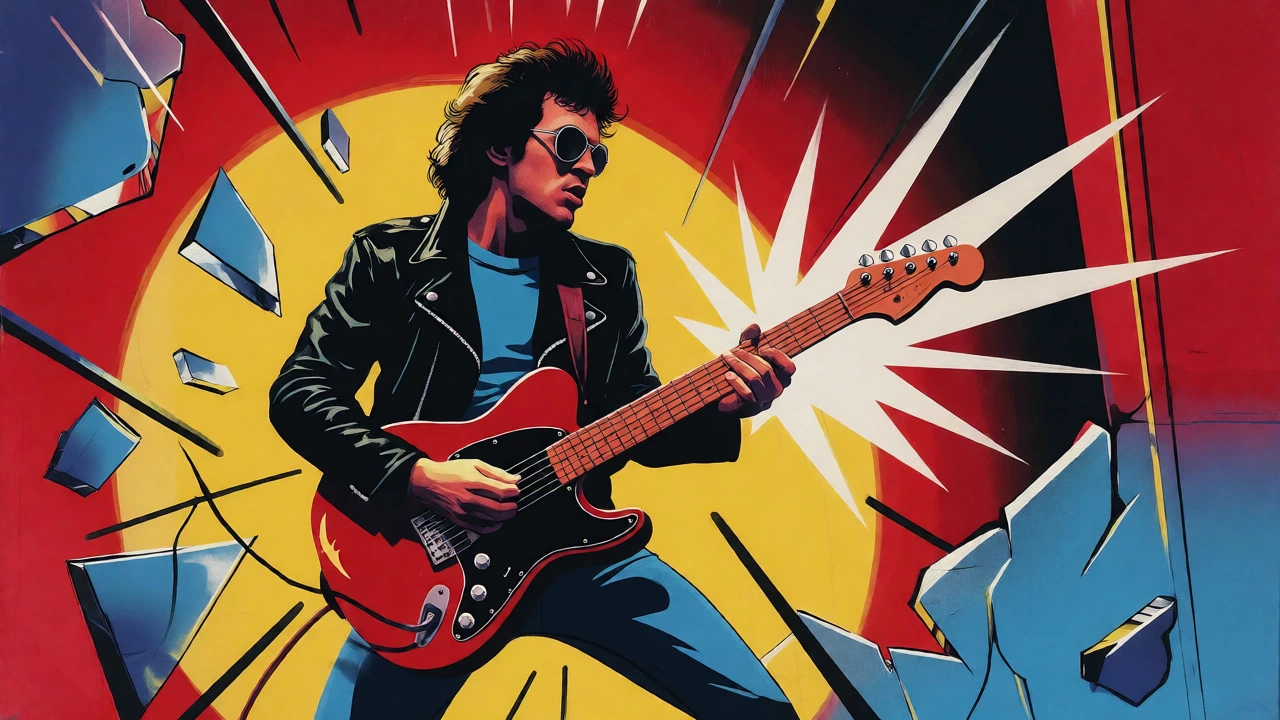

You probably know the hits. You can hum "Uptown Girl" or recite half of "We Didn’t Start the Fire" without thinking. But if you look closely at Billy Joel’s output between 1980 and 1989, you see something more interesting than a greatest-hits machine. This was a decade of reinvention, where he tried on different skins-new wave rocker, Beatles-esque social commentator, doo-wop revivalist, and stadium rock survivor. Ranking these five studio albums isn't just about which one sold the most copies (though that data is wild). It's about figuring out which records actually hold up when you listen past the singles.
Let’s get the sales numbers out of the way first because they set the stage. According to a 2025 study by Accio, this five-album run generated roughly 43.5 million equivalent album sales worldwide. That’s massive. Glass Houses moved about 11 million units, while An Innocent Man crushed it with over 12 million. Even the less-loved The Bridge shifted over 6 million. But here’s the twist: commercial success doesn’t always equal artistic respect. In fact, some of his biggest sellers are often ranked lower by critics who care about lyrical depth and musical innovation. So, how do we rank them? We’re looking at a blend of critical acclaim, fan sentiment from communities like r/BillyJoel, and pure listenability today.
5. The Bridge (1986)
If you ask almost anyone to rank Billy Joel’s catalog, The Bridge usually lands near the bottom. Released in July 1986, it’s the odd child of the 1980s. It feels stuck between two worlds: the polished pop of the early ’80s and the glossy, drum-machine-heavy production of the late ’80s. Critics have been rough on it, with sites like Rock Show Critique placing it ninth out of twelve studio albums, calling it "uneven." Fans aren’t much kinder; Reddit polls often give it the lowest average score among the ’80s records, hovering around 7.3/10.
Why does it struggle? It lacks a cohesive identity. One minute you’re getting a soulful duet with Ray Charles on "Baby Grand," and the next you’re hearing Steve Ray Vaughan shredding guitar on a track that sounds like it belongs on a different record. It’s not bad-it has big hits like "A Matter of Trust" and "Modern Woman"-but it feels like a collection of experiments rather than a statement. If you’re new to Joel, skip this one until you’ve heard the rest. It’s a transitional album, literally bridging his classic era to his later work, but rarely worth the trip back on its own.
4. Storm Front (1989)
Storm Front is the paradox of this list. It hit number one on the Billboard 200, sold over 9 million copies, and gave us "We Didn’t Start the Fire," arguably his most recognizable song since the ’70s. Yet, critically, it sits in the middle-to-lower tier. Why? Because it’s loud. Produced by Mick Jones of Foreigner, the album swaps Phil Ramone’s subtle touch for big, bombastic stadium-rock drums and synths. It works for "I Go to Extremes," but it buries some of Joel’s softer storytelling.
Fans are split on this one. Some love the energy and the sheer ambition of "We Didn’t Start the Fire," a rapid-fire history lesson that became an international phenomenon. Others find the production dated and the album-length experience fatiguing. AlbumReviews.blog gave it a modest 6/10, noting that while the single is iconic, the rest of the record doesn’t quite match its brilliance. Still, you can’t ignore its cultural footprint. It kept Joel relevant as grunge was starting to bubble up underground. It’s a strong closer to the decade, even if it’s not his deepest cut.

3. Glass Houses (1980)
Here is where things get controversial. For years, critics dismissed Glass Houses as a shallow attempt to chase trends. They were wrong. This album is a raw, aggressive pivot away from the jazz-inflected soft rock of 52nd Street. Joel wanted to prove he wasn’t just a balladeer, and he did it with teeth. Tracks like "You May Be Right" and "It’s Still Rock and Roll to Me" are pure adrenaline. The latter hit number one on the Hot 100, proving he could write a rock anthem that stuck.
Time has been very kind to this record. Modern fans, especially those on r/BillyJoel, frequently rank it number one or two in his entire discography. They praise its energy and its refusal to take itself too seriously. The cover art-a brick wall smashing through glass-was a literal metaphor for breaking expectations. While it didn’t sell as well as An Innocent Man, its critical standing has risen dramatically. It’s tight, fast, and fun. If you think Billy Joel is just piano man ballads, start here. It will change your mind.
2. An Innocent Man (1983)
Commercially, this is the giant. With over 12.3 million equivalent sales, An Innocent Man is Joel’s second-best-selling album ever, trailing only The Stranger. It’s a nostalgic love letter to the doo-wop and R&B of his youth, featuring tracks like "Tell Her About It" and "Uptown Girl." The production is slick, the melodies are undeniable, and the videos dominated MTV.
But here’s the catch: some critics find it lightweight. Rock Show Critique ranked it last among his studio albums, arguing that its pastiche approach lacked the substance of his earlier work. Is it deep? Maybe not compared to The Nylon Curtain. But is it perfect pop? Absolutely. The fan consensus backs this up, with Reddit users giving it an average score of 8.99/10, higher than any other ’80s album. It’s accessible, charming, and endlessly replayable. If you want to understand why Billy Joel was the biggest star in America in 1983, this is the proof.
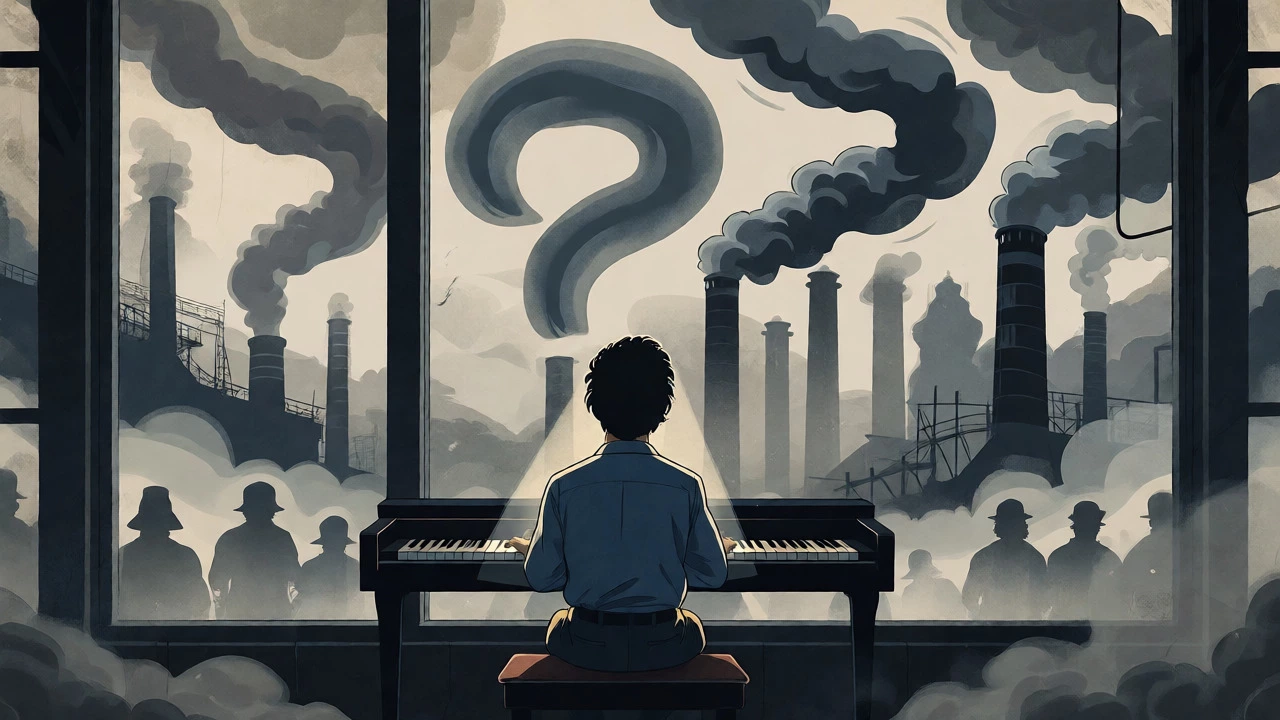
1. The Nylon Curtain (1982)
Taking the top spot is The Nylon Curtain. This is Billy Joel at his most ambitious. Released in September 1982, it’s a concept album grappling with Vietnam veterans, industrial decline, and the disillusionment of the American middle class. Songs like "Allentown" and "Goodnight Saigon" aren’t just catchy; they’re poignant narratives that capture the mood of post-Vietnam America.
Critics adore this record. AlbumReviews.blog scores it an 8.5/10, citing its maturity and complexity. While it didn’t sell as many copies as An Innocent Man (about 4.9 million), it holds up better artistically. The production is dense, influenced heavily by The Beatles’ later work, requiring active listening rather than passive background noise. It rewards you for paying attention. If An Innocent Man is the party album, The Nylon Curtain is the conversation after the party. It’s deeper, darker, and ultimately more satisfying for long-term listeners.
| Album | Release Year | Billboard Peak | Est. Sales (Units) | Fan Rating (Reddit Avg) | Key Track |
|---|---|---|---|---|---|
| The Nylon Curtain | 1982 | #7 | 4,900,000 | 8.64/10 | Allentown |
| An Innocent Man | 1983 | #4 | 12,350,000 | 8.99/10 | Uptown Girl |
| Glass Houses | 1980 | #1 | 11,000,000 | 8.88/10 | It’s Still Rock and Roll to Me |
| Storm Front | 1989 | #1 | 9,150,000 | 8.78/10 | We Didn’t Start the Fire |
| The Bridge | 1986 | Top 10 | 6,150,000 | 7.30/10 | A Matter of Trust |
Where to Start Listening?
So, what should you put on tonight? It depends on your mood. If you want pure joy and nostalgia, drop the needle on An Innocent Man. It’s impossible to be in a bad mood during "Piano Man"-era energy mixed with '50s charm. If you’re feeling introspective or interested in the socio-political landscape of the early '80s, go with The Nylon Curtain. It demands more from you but gives back more in return.
For the rock purists, Glass Houses is non-negotiable. It’s the sound of a superstar refusing to be pigeonholed. And if you’re curious about the end of the decade, Storm Front offers a glimpse into how Joel adapted to the changing times, even if the production hasn’t aged as gracefully. Save The Bridge for a rainy Sunday afternoon when you want to dig for hidden gems like "This Is the Time."
Which Billy Joel album from the 1980s sold the most copies?
An Innocent Man is the best-selling album from this decade, with approximately 12.35 million equivalent album sales worldwide according to 2025 data. It ranks as the second best-selling album of Joel’s entire career, behind only The Stranger.
Is The Nylon Curtain considered Billy Joel’s best album?
Many critics and dedicated fans consider The Nylon Curtain his most artistically ambitious work from the 1980s due to its complex themes regarding Vietnam and industrial America. However, rankings vary significantly between critics, who favor its depth, and general audiences, who often prefer the accessibility of An Innocent Man.
Why is The Bridge ranked so low?
The Bridge often receives lower rankings because it lacks a cohesive stylistic identity, appearing uneven to both critics and fans. Despite featuring collaborations with Ray Charles and Stevie Ray Vaughan, it is frequently viewed as a transitional record that fails to fully commit to either his classic pop style or the emerging late-'80s rock aesthetic.
Did Billy Joel produce all his 1980s albums himself?
No. He worked primarily with producer Phil Ramone through The Bridge (1986). For Storm Front (1989), he switched producers to Mick Jones of Foreigner, which resulted in a heavier, more stadium-oriented sound that marked a significant shift in his sonic direction.
What is the most famous song from Storm Front?
"We Didn’t Start the Fire" is the standout hit from Storm Front. It became an international success, reaching high positions on charts globally and remaining one of Joel’s most recognized songs due to its rapid-fire listing of historical events from 1949 to 1989.

