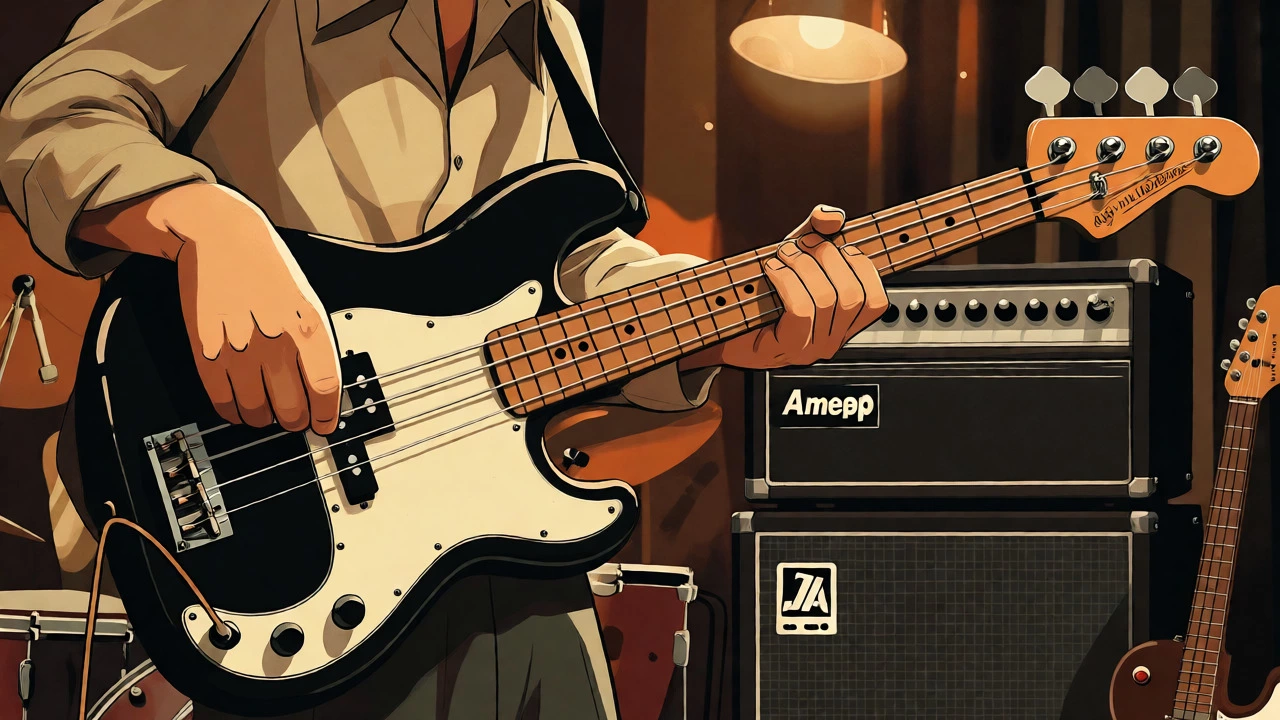

Turn on the radio today and you might hear a guitar solo screaming for attention. But rewind to 1975, and the thing making you hum along wasn’t always the lead singer or the shredding guitarist. It was often the bass. In the golden age of smooth rock, the low end stopped being just a rhythmic anchor and became the melody itself. This shift didn't happen by accident. It was a deliberate musical evolution where bassists stepped out of the shadows to craft the catchy, singable motifs that defined an era.
The Shift from Rhythm Section to Lead Voice
For decades, the bass guitar had one job: keep time and hold down the root notes. Think of early rock and roll or even mid-60s pop-the bass was there, sure, but it wasn't the star. That changed dramatically between 1970 and 1979. Why? Because technology caught up with ambition. The widespread adoption of powerful amplifiers like the Ampeg SVT meant producers could record the bass louder and clearer than ever before. Suddenly, every note was audible. Every nuance mattered.
This technical leap allowed bassists to do more than just thump. They started playing melodies. Writers like Carthur Neal have noted that by the mid-70s, the bass became "almost as important a voice in popular music as the guitar." This wasn't hyperbole; it was a reflection of what listeners were actually hearing. If you listen closely to hits from this period, you'll notice the bass line is often the first thing you remember. It’s the hook. And in smooth rock, where the vocals are gentle and the guitars are polished, that melodic bass line provides the emotional core of the track.
Anatomy of a 1970s Smooth Rock Bass Line
So, what makes a bass line "smooth" and "melodic" rather than just loud? It’s not about speed or complexity for the sake of showing off. It’s about connection. A great 1970s smooth rock bass line acts as a bridge between the drummer’s groove and the singer’s melody. It uses specific techniques to create that laid-back yet catchy feel:
- Stepwise Motion: Instead of jumping around the scale, these lines move in small steps, outlining the chord changes smoothly. It feels natural, like walking up a staircase.
- Legato Phrasing: Notes flow into each other without sharp attacks. This matches the relaxed vocal delivery typical of soft rock artists like Linda Ronstadt or James Taylor.
- Pentatonic and Jazz Influences: Borrowing from R&B and jazz fusion, bassists used passing tones and approach notes. These little embellishments add sophistication without cluttering the mix.
- Steady Eighth-Note Grooves: While funk might use complex syncopation, smooth rock often relies on a steady, hypnotic rhythm that locks in with the hi-hat. It’s a pocket that invites you to sway, not jump.
Think of it as conversational. The drums set the pace, the guitar adds color, but the bass tells the story. It links the harmony together, ensuring that when the chorus hits, the listener feels grounded and uplifted simultaneously.
Iconic Examples That Prove the Point
You don't need to be a musician to recognize these sounds. You’ve likely heard them hundreds of times. Let’s look at a few tracks where the bass isn't just supporting the song-it *is* the song.
| Song & Artist | Bass Characteristic | Why It Works |
|---|---|---|
| Long Train Runnin' - The Doobie Brothers (1973) | Syncopated, repeating motif | It blends funk energy with pop accessibility, driving the riff while remaining incredibly catchy. |
| Walk on the Wild Side - Lou Reed (1972) | Sparse, minimalist loop | A simple two-bar figure creates an atmospheric bed that carries the entire track without overwhelming the vocals. |
| Low Rider - War (1975) | Laid-back, groove-centric | The riff is instantly recognizable and defines the song's relaxed, cool vibe. |
| Sundown - Gordon Lightfoot (1974) | Melodic fills over roots | Demonstrates how subtle embellishments can support a folk-rock structure without stealing focus. |
Take Long Train Runnin'. On paper, it’s a rock song. But listen to the bass. It’s doing something funky, something that makes your head nod involuntarily. It’s not just following the chords; it’s creating a counter-melody that dances around the guitar riff. Or consider Lou Reed’s Walk on the Wild Side. The bass line is barely there, yet it holds the whole piece together. It’s a masterclass in restraint. Steve Hanley, writing for The Wire, cited this track as a prime example of how a sparse motif can carry a song’s atmosphere better than any guitar solo could.
The Motown Connection
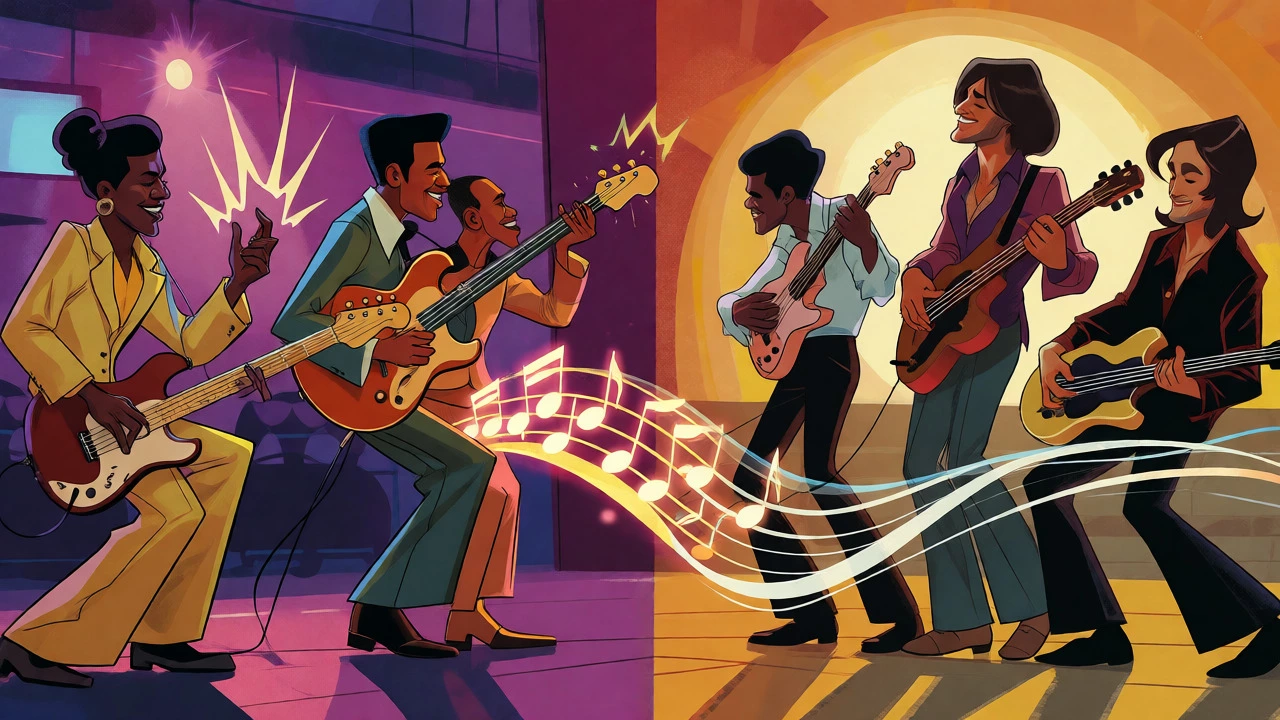
You can’t talk about 1970s rock bass without talking about its ancestor: Motown. Geddy Lee, the legendary bassist of Rush, has explicitly credited Motown players like James Jamerson for shaping his approach. In interviews, Lee has noted that those earlier soul bassists wrote "wonderful melodic and infectious melodies" that people couldn't get out of their heads. He realized that if a bass line could make you dance in a Detroit club, it could make you cry in a Los Angeles studio.
This cross-pollination was key. Smooth rock musicians weren't trying to copy funk exactly; they were adapting its melodic sensibility to a softer, more radio-friendly context. They took the intricate, singing quality of Jamerson’s work and smoothed out the edges. The result was a style that felt sophisticated but remained accessible. It turned the bass from a background instrument into a lead voice that shared the spotlight with the vocalist.
How to Play Like a 70s Pro
If you pick up a bass today and want to nail this style, forget about shredding. Forget about playing as many notes as possible. The goal is tasteful support. Here is a practical workflow derived from community advice and expert analysis:
- Listen to the Drummer First: Don’t start with the chords. Lock in with the kick drum and snare. Feel the backbeat. If you aren’t locked with the drums, your melody won’t matter because the groove will fall apart.
- Identify the Chord Tones: Know where the roots, thirds, and fifths are. These are your safe zones. In smooth rock, staying close to these tones ensures you’re supporting the harmony rather than clashing with it.
- Add Passing Tones: Once you’re comfortable moving between chord tones, add a chromatic passing note or a scale step to connect them. This creates that "walking" effect without needing to play fast.
- Leave Space: Rests are notes too. In tracks like Walk on the Wild Side, the silence between the notes is as important as the notes themselves. Let the vocal breathe.
Beginners often try to replicate the complexity of jazz fusion, but smooth rock rewards simplicity. Try learning Sundown or Blue Bayou. They use mostly quarter and eighth notes with occasional tasteful fills. They teach you how to serve the song rather than your ego.
Why This Style Still Matters
Critics and educators still obsess over these lines because they solved a fundamental problem in production: how to make a slow-tempo song feel engaging. By giving the bass a melodic role, producers created a dual-hook system. You have the vocal hook and the bass hook. This redundancy makes songs stickier in memory. When ClassicRockHistory.com or I Love Classic Rock compile lists of the greatest bass lines, they consistently find that the most memorable ones come from this era.
It’s not just nostalgia. Modern genres like neo-soul and indie pop owe a huge debt to this 1970s innovation. When you hear a modern band with a prominent, tuneful bass line, they are channeling the spirit of Andy Fraser, John Entwistle, and Carol Kaye. The practice proved that the lowest frequency in the mix doesn’t have to be the least interesting. In fact, sometimes, it’s the most human part of the song.
What distinguishes smooth rock bass from funk bass?
While both styles prioritize melodic movement, smooth rock bass tends to be less percussive and more legato. Funk bass often uses slap techniques and aggressive syncopation, whereas smooth rock focuses on flowing lines that complement softer vocals and cleaner guitar tones. The tempo is generally slower, and the dynamic range is narrower to maintain a relaxed vibe.
Who are the key bassists to study for this style?
Key figures include Andy Fraser (Free), who bridged rock and soul; Carol Kaye, whose session work defined the LA sound; and Larry Graham, whose innovations influenced the groove. For pure smooth rock, studying the work of session players on albums by artists like Toto, Steely Dan, and The Doobie Brothers is essential.
Did gear change significantly during this era?
Yes. The introduction of high-power solid-state amplifiers like the Ampeg SVT allowed bassists to play with greater clarity and volume without distortion. Additionally, recording engineers began isolating the bass track more effectively, allowing for the nuanced melodic details to be heard clearly on vinyl and radio broadcasts.
Is this style difficult for beginners to learn?
Not necessarily. Many iconic smooth rock bass lines are technically simple, relying on timing and tone rather than speed. Songs like 'Walk on the Wild Side' or 'Sundown' are excellent entry points because they require good listening skills and a steady hand rather than advanced finger dexterity.
How did Motown influence 1970s rock bass?
Motown established the idea that the bass could carry a melody. Rock bassists adopted this concept, applying it to harder rhythms and different harmonic structures. The emphasis on 'singing' bass lines in soul music directly inspired rock players to write parts that were memorable enough to be hummed, transforming the bass from a rhythmic tool to a compositional element.

