
Most punk albums from the early 1980s are forgotten. They get pressed on cheap vinyl, sold out of car trunks, and then vanish into obscurity as bands break up or burn out. How Could Hell Be Any Worse? is the debut studio album by Bad Religion that defied this fate to become a cornerstone of punk longevity. Released in January 1982, it didn’t just capture the energy of Los Angeles hardcore; it built the infrastructure for an entire industry. Today, nearly forty-five years later, you can stream it instantly, buy remastered editions, or find fan uploads debating audio quality. That kind of staying power isn’t luck. It’s the result of a specific set of choices made by teenagers with very little money but a lot of ambition.
The DIY Blueprint: Financing a Revolution on $3,000
To understand why this album lasts, you have to look at how it was paid for. In 1980, Bad Religion was a group of high school students from suburban North Los Angeles who formed to play fast, aggressive music. The lineup included vocalist Greg Graffin, born November 6, 1964, guitarist Brett Gurewitz, born May 12, 1962, bassist Jay Bentley, and drummer Jay Ziskrout. They weren’t backed by a major label. They didn’t have investors. They had a self-titled EP released in 1981 on their own new label, Epitaph Records, founded by Brett Gurewitz specifically to release Bad Religion's material.
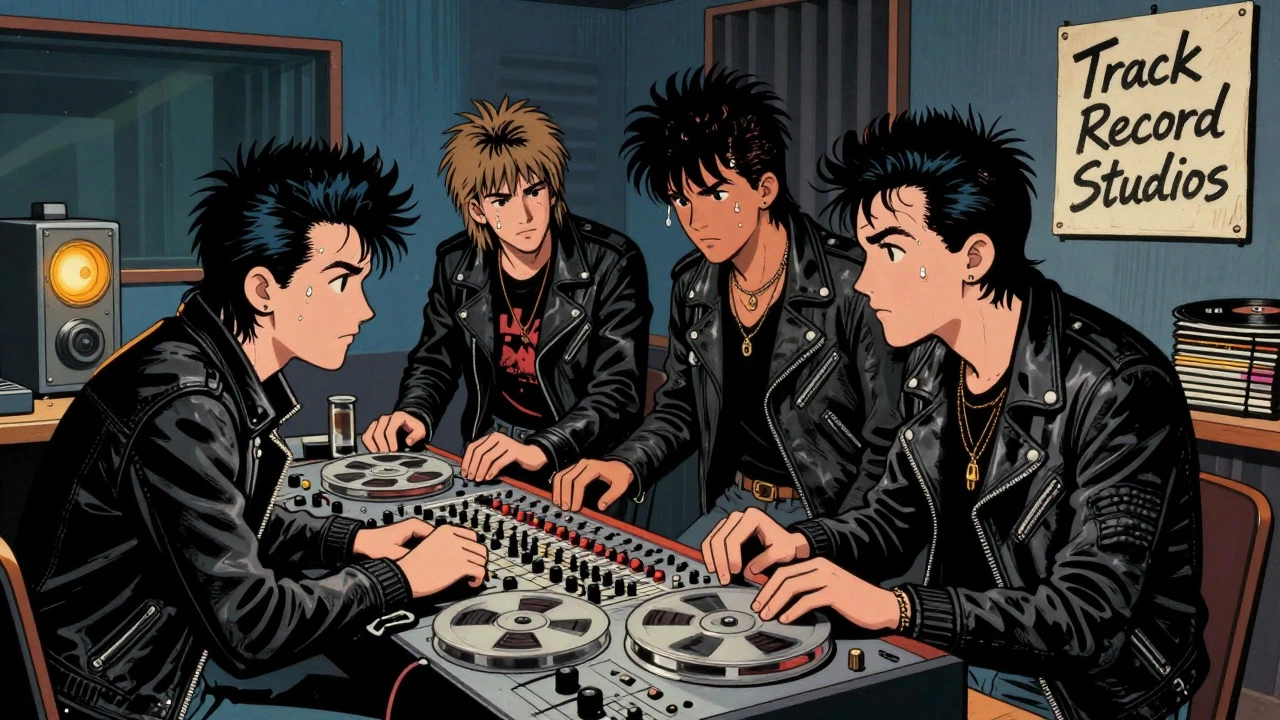
The profits from that 7-inch EP were small. To fund the full-length LP, Gurewitz took a personal loan of $3,000 from his father. Some sources cite a recording cost closer to $1,000, highlighting the messy reality of DIY accounting. Regardless of the exact number, the budget was microscopic. The band recorded at Track Record Studios in North Hollywood over several weekends between October 1980 and January 1981. They couldn’t afford to book the studio for weeks, so they worked in bursts. This constraint forced them to be efficient. There was no time for perfectionism. The result was raw, unpolished, and immediate-a sound that defined the era.
During these sessions, the band faced its first major crisis. Drummer Jay Ziskrout left during recording. He was replaced by Pete Finestone, who finished the tracks. This instability was common in the scene, but Bad Religion managed to keep moving. Engineer Jim Mankey captured the performance on analog tape, preserving the grit without over-processing it. The final product was a document of teenage urgency, not a polished studio creation.
Lyrics That Outlasted the Noise
If the production was simple, the lyrics were surprisingly complex. While many California hardcore bands focused on nihilism, speed, or shock value, Bad Religion introduced intellectual themes. Greg Graffin, only sixteen during much of the writing, drew on his interest in evolutionary biology and skepticism toward organized religion. Songs like "We’re Only Gonna Die" and "Fuck Armageddon… This Is Hell" paired raspy, Sex Pistols-influenced vocals with dense political commentary.
This combination created a unique identity. The music was fast and aggressive, typical of peers like Black Flag and Minor Threat. But the words invited listeners to think. Tracks like "Voice of God Is Government" and "Oligarchy" critiqued authority structures in ways that resonated beyond the club scene. This depth gave the album something to return to. Listeners could enjoy the energy on the first pass, but they found new meaning in the lyrics over decades. This intellectual layer is a key reason the record hasn’t aged poorly. It wasn’t just noise; it was a statement.
Sales That Built an Empire
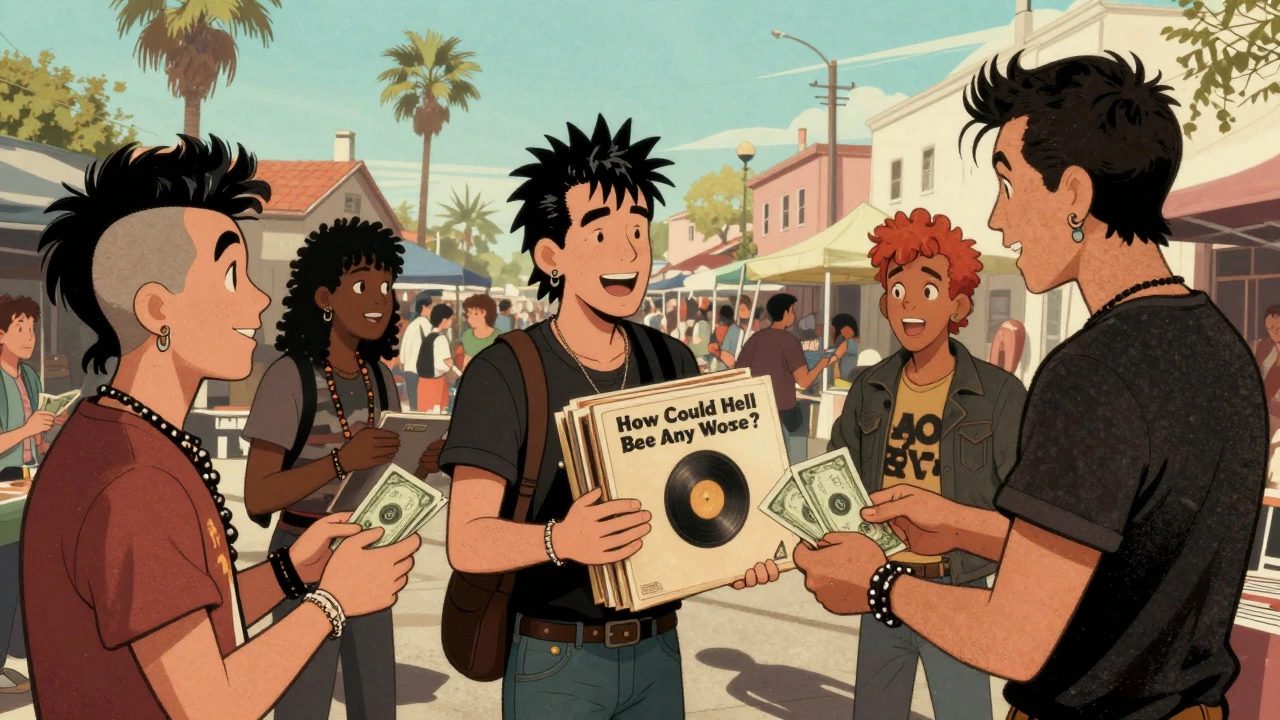
In 1982, selling 10,000 copies of a punk album was a big deal. Selling 12,000 was exceptional. Bad Religion achieved this within the first year of release. For context, most local bands struggled to move 500 records. These sales figures surprised the band, but they also provided a crucial financial foundation. The revenue allowed Epitaph Records to operate independently. It funded subsequent releases and helped stabilize the band’s career during the volatile early days of the hardcore scene.
Distribution was strictly independent. There were no major label deals. No radio promotion. Sales came through direct-to-fan transactions at shows, mail-order catalogs, and small record shops across Southern California. This grassroots approach meant the band owned their masters and their destiny. When other labels collapsed or dropped acts, Epitaph remained because it was profitable enough to survive. This business model became the blueprint for countless indie labels that followed. Bad Religion didn’t just make an album; they proved that a punk band could sustain itself without corporate support.
| Album | Artist | Label | Key Characteristic | Longevity Factor |
|---|---|---|---|---|
| How Could Hell Be Any Worse? | Bad Religion | Epitaph Records | Intellectual lyrics, melodic hooks | Self-owned label, consistent reissues |
| Damaged | Black Flag | SST Records | Raw aggression, evolving style | Cultural icon status, archival releases |
| Out of Step | Minor Threat | Dischord Records | Strict straight-edge ethos | Movement definition, moral clarity |
| Plastic Surgery Disasters | Dead Kennedys | Alternative Tentacles | Political satire, shock tactics | Controversy, activist legacy |
The Reissue Strategy: Keeping It Alive
An album’s longevity depends heavily on availability. If you can’t buy it, you forget it. Bad Religion and Epitaph understood this early. After the original 1982 vinyl run, the material was reissued in 1991 as part of the "80-85" compilation. This CD collection assembled the band’s early work, making it accessible to fans who discovered Bad Religion through their more mainstream 1988-1990 albums like "Suffer" and "No Control."
In 2004, Epitaph released a comprehensive remastered edition. This version expanded the tracklist to 28 songs, including the 1981 self-titled EP and three tracks from the "Public Service" compilation. The total runtime jumped to 55 minutes. However, this release sparked debate among audiophiles. Critics argued the mastering was too loud, causing clipping and reducing dynamic range. In response, fans sought out earlier versions, particularly the "80-85" compilation, which preserved the original master tapes. As recently as January 2026, fans uploaded high-quality versions of these original masters to video platforms, demonstrating ongoing technical engagement with the album.
This cycle of reissues ensures the album remains visible. Each generation of listeners gets access through modern streaming services like Apple Music, while collectors appreciate physical media. The strategy prevents the album from becoming a relic. Instead, it stays part of the active conversation about punk history.
Why It Still Resonates in 2026
Today, Bad Religion is one of the longest-running punk bands in history. Their discography spans four decades. Yet, How Could Hell Be Any Worse? remains the starting point. New listeners often begin here because it captures the raw energy before the band refined their sound. Musicians study it to learn the basics of hardcore structure-fast tempos, simple chord progressions, and driving rhythms. It serves as both inspiration and instruction manual.
The album’s themes remain relevant. Critiques of government, religion, and social conformity haven’t disappeared. If anything, they’ve intensified. Graffin’s lyrics still challenge listeners to question authority. The music still provides an outlet for frustration. This timeless message, combined with the band’s commitment to accessibility, ensures the album won’t fade away. It’s not just a historical artifact; it’s a living piece of culture.
For anyone interested in punk rock, this album is essential. It shows how a group of kids with limited resources could create something lasting. It proves that independence isn’t just a buzzword; it’s a viable path. And it reminds us that great art doesn’t need a big budget-it needs passion, clarity, and a willingness to fight for your voice.
When was How Could Hell Be Any Worse? released?
The album was released in January 1982. Sources vary slightly, citing either January 19 or January 28, 1982, as the exact date.
Who produced the album?
Bad Religion produced the album themselves, with engineering handled by Jim Mankey at Track Record Studios in North Hollywood.
Why is this album important to punk history?
It demonstrated that a punk band could succeed financially and artistically through an independent label (Epitaph Records), setting a precedent for DIY sustainability in the music industry.
What is the difference between the 2004 remaster and the original?
The 2004 remaster includes bonus tracks from the 1981 EP and "Public Service" compilation, totaling 28 songs. However, some fans prefer the earlier "80-85" compilation for its superior dynamic range and lack of loudness war compression.
Did the album chart on the Billboard?
No, the album did not chart on the US Billboard charts. Its success was measured in independent sales and cultural impact rather than mainstream commercial metrics.