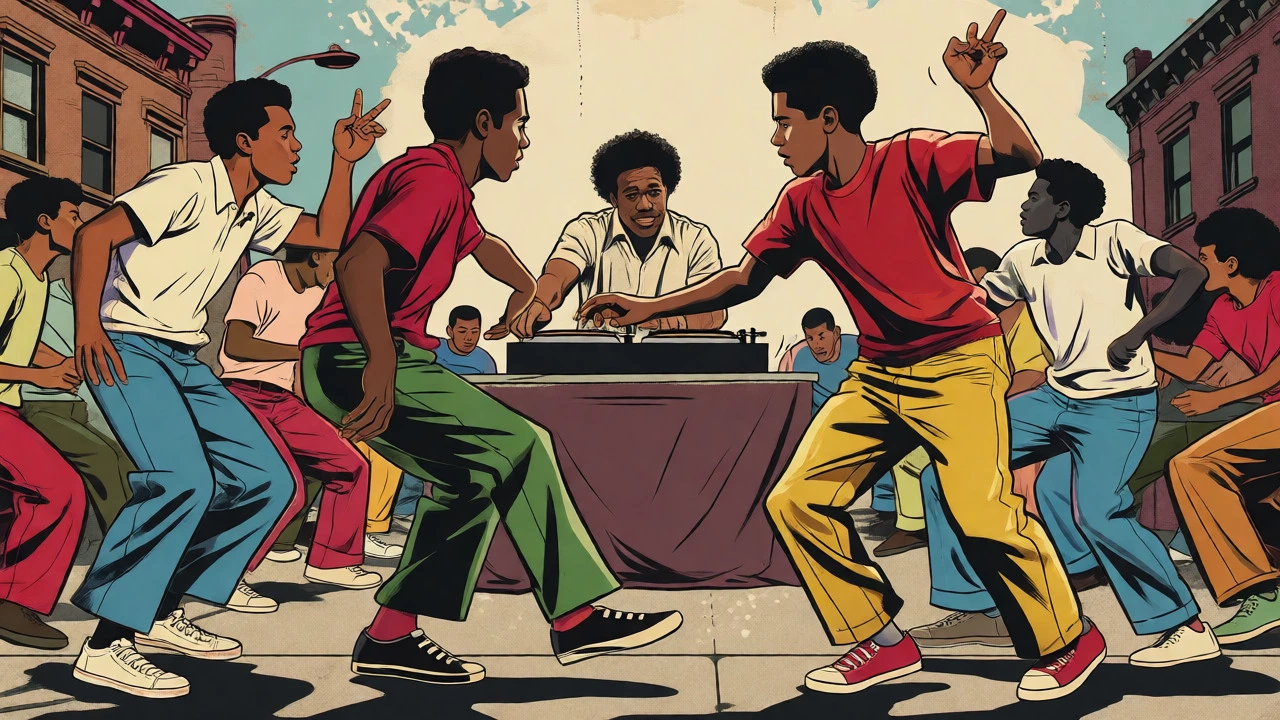

Think you know breaking? Most people picture a guy spinning on his head or doing windmills. But if you strip away the acrobatics, what’s left is the soul of the dance: Toprock, footwork, and freezes. These aren’t just steps; they are the foundational language created by Black and Puerto Rican youth in the Bronx during the early 1970s. Understanding who pioneered these moves isn’t about memorizing names for a trivia night. It’s about respecting the cultural roots that turned a block party into a global movement.
The story starts with DJ Kool Herc. On August 11, 1973, at a party in the Bronx, he isolated the instrumental breaks of funk records. This gave dancers more time to move to the drum beats. From those extended breaks, a new vocabulary emerged. It wasn’t invented by one person. It was built collectively in cyphers, battles, and community centers. Today, as breaking enters the Olympic stage, we need to look back at the architects of the basic grammar: the upright style, the floor patterns, and the static poses that define the form.
The Upright Language: Toprock Origins
Toprock is the standing introduction to a break. It’s where you show your personality before hitting the floor. Think of it as the handshake of breaking. If your toprock is weak, your whole round feels disconnected. Early practitioners didn’t have YouTube tutorials. They watched each other. Influences came from everywhere: Brooklyn uprocking, tap dancing, lindy hop, and salsa. The goal was simple: establish rhythm and attitude while staying upright.
Historical accounts link early toprock to the “two-step” used at Kool Herc’s parties. Dancers would step back and forth to make space before dropping down. This transition, known as the “drop,” became a critical part of the style. It wasn’t just moving from A to B; it was a moment of expression. Who were the key figures here? While no single inventor exists, the Rock Steady Crew, formed in 1977, played a massive role in codifying these styles. Members like Jimmy D and Jo Jo laid the groundwork, but later members brought specific flair to the upright game.
Ken Swift, a Rock Steady legend, developed movements that became essential to the form. His style emphasized precision and musicality. He showed that toprock could be complex without being flashy. By watching Ken Swift, you learn that every arm swing and weight shift should hit the beat. It’s not random flailing. It’s controlled communication with the music and the opponent.
Taking It to the Floor: Footwork Pioneers
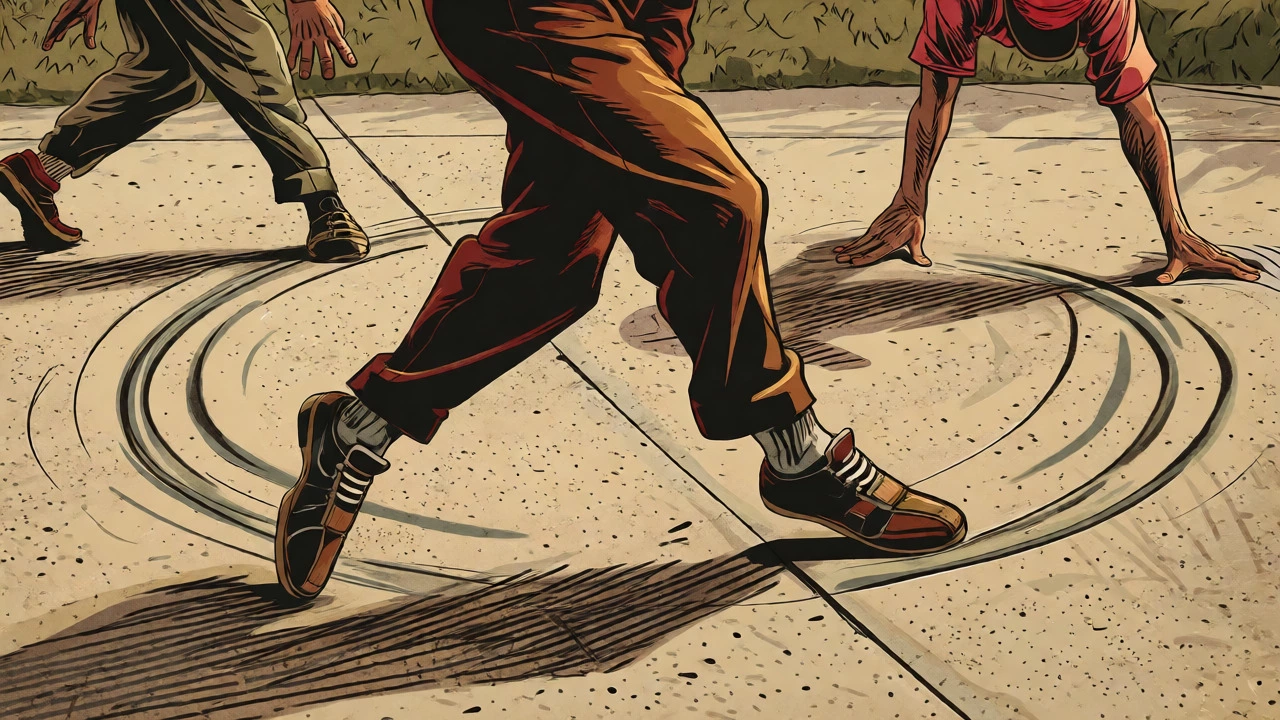
Once you drop, you enter the world of Footwork, also called downrock. This is where the body supports itself on hands while legs travel in intricate patterns. Many beginners think footwork is just practice for power moves. Wrong. Footwork is a standalone art form. It demonstrates control, level changes, and originality. The most famous pattern is the six-step, which circles a central point. But there’s so much more: three-steps, CCs, kick-outs, and sweeps.
Who took breaking to the floor? Historical sources often credit Keith and Kevin Smith, known as the Legendary Twins. Team USA credits them with popularizing extended floorwork at Kool Herc’s parties. They expanded the vocabulary beyond simple steps. However, attribution in hip-hop culture is tricky. Oral histories vary. The Rennie Harris American Street Dance Archive attributes early footwork creation to Spy of the Crazy Commanders. Both claims highlight different strands of evolution. The Twins might have popularized it at major events, while Spy innovated within smaller crew settings.
Other pioneers like Cholly Rock and Pow Wow developed rapid rotations on hands and feet, known as Zulu Spins. These moves added speed and complexity to the floor section. Footwork absorbed influences from martial arts films and gymnastics, too. But at its core, it remained a rhythmic conversation. You’re not just moving your legs; you’re interpreting the breakbeat with your entire lower body.
Stopping Time: The Evolution of Freezes
A Freeze is a deliberate stop. It’s a static pose held against the flow of movement. In the mid-1970s, freezes started appearing as dramatic endings to sets. By the 1980s, breakers began inserting freezes throughout their rounds. They became punctuation marks in the musical sentence. A well-timed freeze can interrupt an opponent’s expectation or highlight a snare hit.
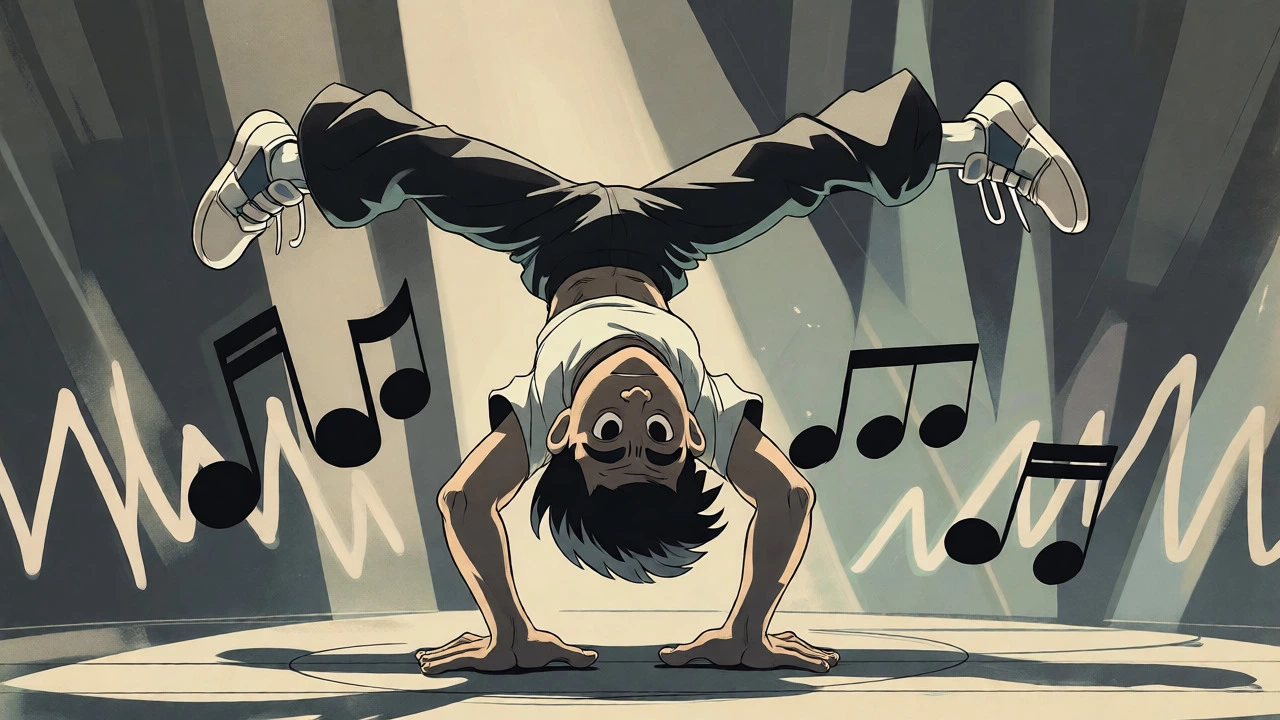
Early freezes were simple balances. Baby freezes, chair freezes, and elbow freezes became staples. One pioneer stands out in this category: Mr. Freeze. As a Rock Steady member, his nickname alone shows how closely identity and technique were linked. He made the freeze a signature element of his style. Later, international innovators pushed the boundaries further. South Korean B-boy Hong 10 is credited with inventing the “Hong 10 freeze,” a variation of the halo freeze. This move involves an inverted position supported by hands and head, showcasing extreme balance.
Freezes evolved from simple stops to complex shapes. They now serve multiple purposes: ending a phrase, transitioning to a new move, or simply showing off strength. But remember, a freeze is only as good as the timing behind it. Holding a pose for ten seconds doesn’t mean anything if it lands on the wrong beat. Musicality always trumps difficulty.
How the Three Categories Interact
Toprock, footwork, and freezes aren’t separate boxes. They flow into each other. A typical round might start with toprock to establish presence. Then, a drop transitions into footwork. From there, a breaker might launch into a power move or resolve into a freeze. The quality of these transitions defines a dancer’s skill. Modern judging criteria emphasize this integration. You’re not just checking off categories; you’re creating a cohesive narrative.
| Element | Primary Function | Key Physical Demand | Notable Pioneers/Contributors |
|---|---|---|---|
| Toprock | Establishes rhythm and personality while standing. | Coordination, balance, expressive gesture. | Ken Swift, Rock Steady Crew members. |
| Footwork | Intricate ground patterns supporting body weight. | Wrist strength, leg coordination, spatial awareness. | Legendary Twins (Keith & Kevin Smith), Spy. |
| Freeze | Static interruption for musical emphasis. | Core stability, joint support, balance. | Mr. Freeze, Hong 10. |
This table highlights the distinct roles of each element. Toprock is communicative. Footwork is intricate. Freezes are punctuating. All three require different physical preparations. Beginners often rush to power moves, skipping the basics. That’s a mistake. Strong footwork requires wrist conditioning. Solid toprock needs rhythmic training. Safe freezes demand shoulder and core strength. Skipping these leads to injury and poor performance.
Cultural Context vs. Commercial Labels
You’ll often hear the term “breakdance.” Practitioners prefer “breaking,” “b-boying,” or “b-girling.” Why? Because “breakdance” sounds like a commercial product. It detaches the movement from its social context. Breaking is a living cultural practice rooted in the experiences of neglected Black and Latinx communities in the Bronx. The Library of Congress emphasizes this social dimension. Mainstream accounts sometimes reduce hip-hop dance to tricks, ignoring the history.
When you study pioneers like Crazy Legs or Ken Swift, you’re studying survivors of urban decay who created beauty through movement. Their innovations weren’t just athletic feats; they were acts of resistance and community building. The Rock Steady Crew’s appearances in films like Flashdance and Beat Street helped export this culture. But the core values remained local and personal. Even today, with breaking in the Olympics, the cypher remains the heart of the practice. Formal competitions standardize rules, but crews continue to generate new styles.
Practical Lessons for Modern Breakers
If you’re learning breaking, focus on the foundations. Don’t try to copy advanced tutorials without preparation. Start with rhythm. Learn basic toprock steps. Practice safe level changes. Master the six-step before attempting flares. Build wrist and shoulder strength gradually. Injury prevention is crucial. High-load positions like headspins or airflares require substantial conditioning. Without it, you risk damaging joints.
Also, seek community. Online videos explain shapes, but they don’t teach etiquette or battle response. Join a class. Attend jams. Watch experienced dancers. Notice how they react to opponents. How do they use space? How do they interpret the music? These nuances come from immersion, not isolation. The pioneers learned from each other in real-time. You should too.
Who invented toprock?
No single person invented toprock. It evolved collectively among Bronx dancers in the early 1970s, influenced by Brooklyn uprocking, tap, and salsa. Key figures like Ken Swift and the Rock Steady Crew helped codify and popularize specific styles.
What is the difference between footwork and downrock?
The terms are often used interchangeably. Generally, "downrock" refers to the entire floor-based section of a break, while "footwork" specifically describes the intricate leg patterns performed while supporting the body on hands.
Who are the Legendary Twins?
Keith and Kevin Smith, known as the Legendary Twins, are credited by sources like Team USA with taking breaking to the floor and developing early extended footwork patterns at Kool Herc's parties.
Why do some people dislike the term "breakdance"?
Many practitioners prefer "breaking" because "breakdance" is seen as a commercial label that strips the dance of its cultural and historical context within Black and Latino communities.
Is breaking an Olympic sport?
Yes, breaking made its senior Olympic debut at Paris 2024. It is governed within the Olympic movement by the World DanceSport Federation, though community traditions remain central to its practice.