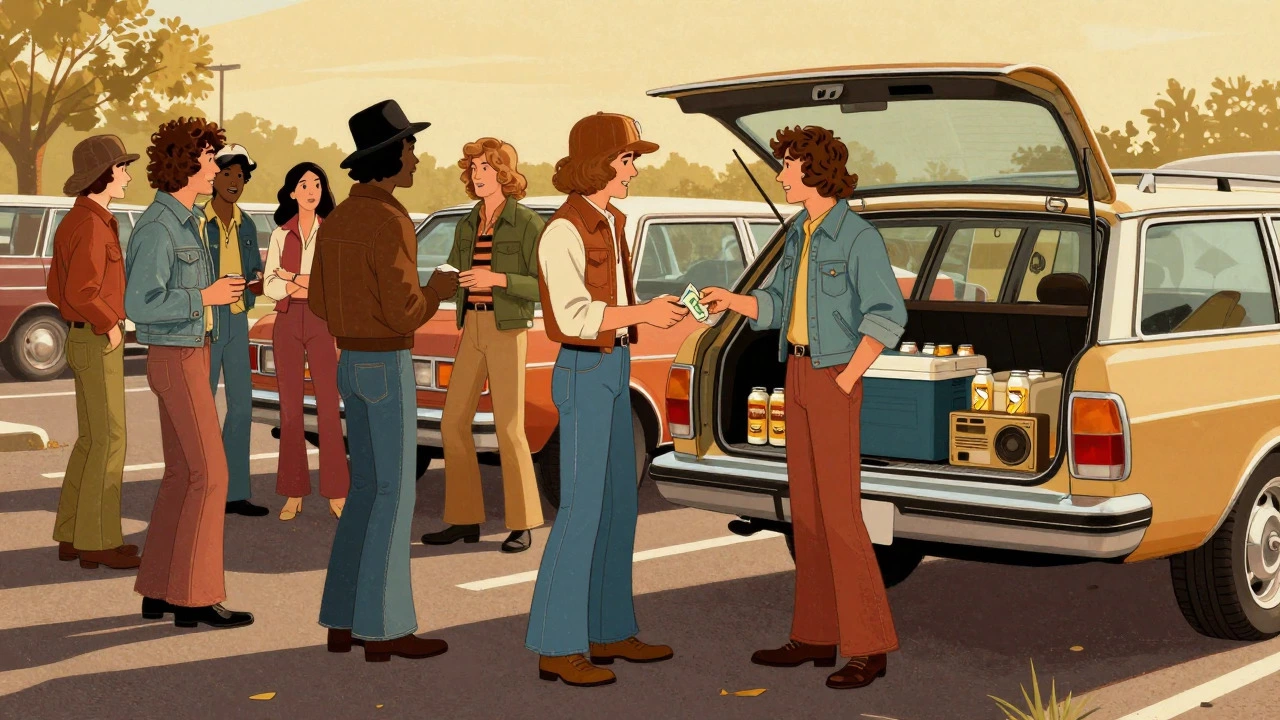

Imagine walking into a stadium in 1976. You hand over a crumpled $7.50 bill for a seat in the nosebleeds. There are no service fees. No dynamic pricing algorithms. Just you, your friends, and a cooler full of cheap beer. When the lights go down, the sound doesn't just hit your ears; it vibrates through your chest. You look around and see 40,000 other people doing exactly what you are doing-watching, shouting, and sweating together. This was the raw, unfiltered reality of 1970s concerts, which offered a unique blend of affordability, massive scale, and communal energy that defined a generation's relationship with live music.
We often romanticize the past, but the sensory details of attending a rock show in the 1970s were distinct from today’s polished, high-security events. The experience was less about comfort and more about immersion. It was louder, dirtier, and significantly cheaper. To understand what it felt like to be there, we have to look beyond the setlists and examine the physical environment, the economic accessibility, and the social rituals that turned these gatherings into cultural touchstones.
The Physical Scale of Arena Rock
The most immediate shock for anyone attending a major show in the 1970s was the sheer size of the venue. Bands were moving out of theaters and into sports arenas and football stadiums. This shift wasn't just logistical; it changed how the audience perceived the music.
Consider Led Zeppelin. In April 1970, they played Roberts Stadium in Evansville, Indiana, for a crowd of 3,400. By May 1973, they were drawing 56,800 fans at Tampa Stadium, breaking records previously held by The Beatles. Then came April 30, 1977, at the Pontiac Silverdome in Michigan, where 76,229 people packed into an indoor space. For the average fan, this meant standing or sitting among tens of thousands of strangers who shared a singular focus.
This scale created a specific type of anonymity and unity. In a club, you might make eye contact with the drummer. In a stadium, you became part of a single organism. The crowd moved as one unit. When the band hit a crescendo, 50,000 people would jump simultaneously. The feeling was less like watching a performance and more like participating in a ritual. The boundary between performer and spectator blurred because the energy flow was bidirectional-the crowd fed off the band, and the band fed off the crowd.
| Event/Venue | Date | Attendance | Type |
|---|---|---|---|
| Led Zeppelin at Roberts Stadium | April 16, 1970 | 3,400 | Outdoor Stadium |
| Led Zeppelin at Tampa Stadium | May 5, 1973 | 56,800 | Football Stadium |
| Led Zeppelin at Pontiac Silverdome | April 30, 1977 | 76,229 | Indoor Dome |
| Bath Festival of Blues | June 1970 | ~700,000 (estimated) | Outdoor Festival Grounds |
Sound as a Physical Force
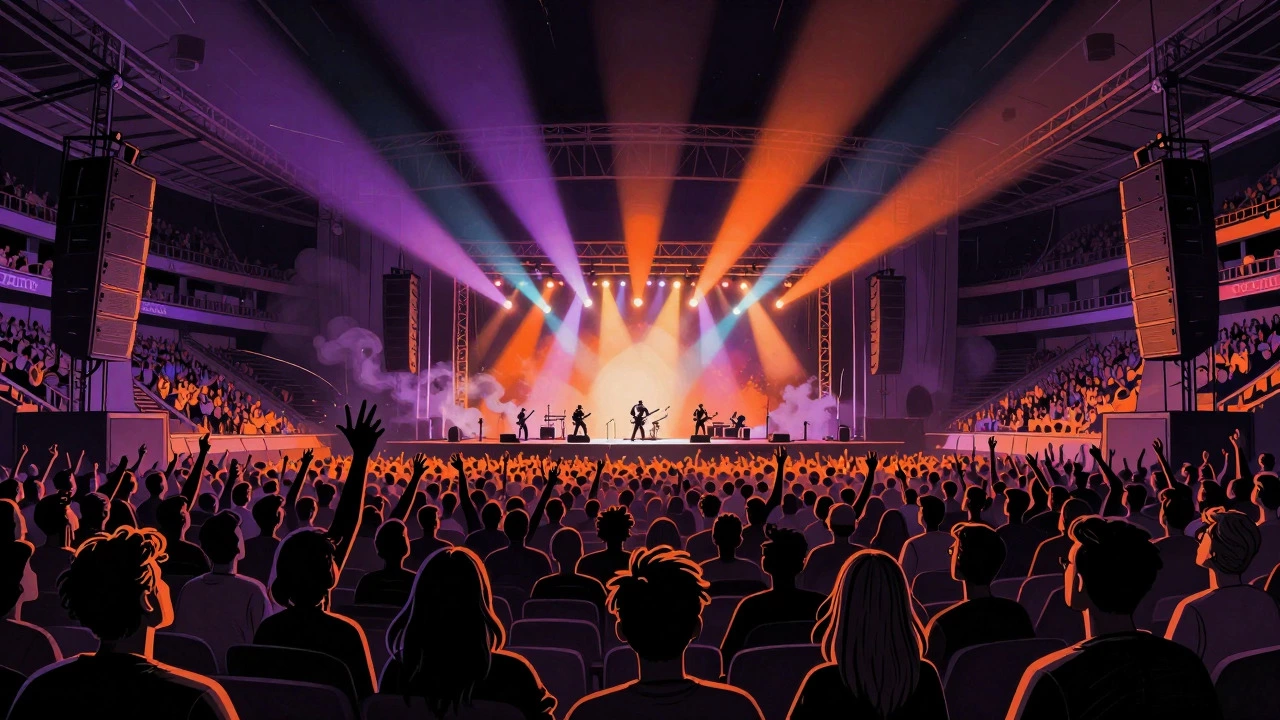
If size was the first impression, volume was the second. The technology of the 1970s allowed bands to project sound across massive spaces without losing clarity. This was a significant upgrade from the 1960s, where fans in the back rows often heard little more than crowd noise.
By the mid-1970s, multi-kilowatt PA rigs and stacked amplifier "mountains" turned guitar riffs into physical vibrations. Fans described the sound hitting their chests before it reached their ears. This wasn't just loudness; it was tactile. The bass frequencies resonated through the ribcage, creating a visceral connection to the music.
Lighting also evolved to match the audio intensity. While primitive by today’s LED standards, the banks of colored lights, smoke machines, and occasional pyrotechnics created a focal point in the haze. From 300 feet away, you couldn't see facial expressions, but you could follow the light beams cutting through the smoke. This visual abstraction added to the mystique. The band became larger than life, illuminated figures in a dark void.
Progressive rock acts like Pink Floyd pushed this further. Their shows in the early 1970s featured continuous suites of music, heartbeat sounds, and spoken-word passages accompanied by experimental lighting and projections. These weren't just concerts; they were immersive art installations. Audiences sat in silence during certain passages, captivated by the atmosphere rather than cheering for hits. This contrasted sharply with the shout-along anthems of arena rock bands like Journey or Boston, whose songs were specifically written so that even the people in the highest seats could sing every word.
The Economics of Access
Perhaps the biggest difference between then and now is cost. In the 1970s, attending a major concert was affordable for the average working-class person. Ticket prices typically ranged from $5 to $10 in nominal dollars.
To put that in perspective, a $7.50 ticket for Bruce Springsteen in 1976 translates to roughly $41 today. A $10 ticket for Elton John in 1975 is about $58 in modern currency. Even top-tier festivals often charged under $20. This affordability meant that fans could attend dozens of shows in a year. It wasn't a rare, expensive event reserved for special occasions; it was a regular part of social life.
Promoters kept prices low because they expected to make money on album sales. The concert was marketing for the record. This business model created a sense of equality among attendees. There was usually one uniform price regardless of seat location. Whether you were in row 7 or row 28, you paid the same amount. This reinforced the rock-and-roll ethos that everyone was equal participants in the event.
- Bruce Springsteen (1976): $7.50 for a seat in the 28th row.
- Elton John (1975): $10 for general admission.
- Queen (1976): Approximately $7.50.
- Day on the Green (Oakland): Around $20 for a full day of multiple bands.
This financial accessibility contributed to the diversity of the crowds. You had students, factory workers, and young professionals all mixing in the same space. The barrier to entry was low, which fostered a genuine community feel.
Social Rituals and Pre-Show Culture
The experience didn't start when the doors opened. It began hours earlier in the parking lots. Fans would arrive in cars packed with four to six friends, stereos blasting the albums they were about to hear live. These lots transformed into impromptu street fairs.
People traded tickets, shared stories, and enjoyed inexpensive beer from coolers. The line between pre-show and show blurred. By the time gates opened, the day already felt like a festival. Inside the venue, security was relatively light compared to today. Pat-downs were modest, and there was minimal visible policing. This allowed fans to move freely, drifting from their seats to the field area to form dense standing crowds near the stage.
Lineups were stacked. A single ticket might get you six or seven hours of music, featuring three or four nationally known bands. Opening acts that would headline arenas today were just warm-ups. Fans felt they were getting immense value for their money, even if it meant sore backs and sunburns from spending the day on hard concrete or worn turf.
The Absence of Screens
One of the most striking aspects of 1970s concerts was the lack of digital mediation. There were no smartphones. No cameras recording every moment. No screens blocking sightlines.
Every single person in the audience was looking at the stage. If you wanted to remember the night, you had to rely on your memory or buy a bootleg tape afterward. This forced presence created a deeper connection to the moment. You couldn't capture the highlight reel; you had to live it.
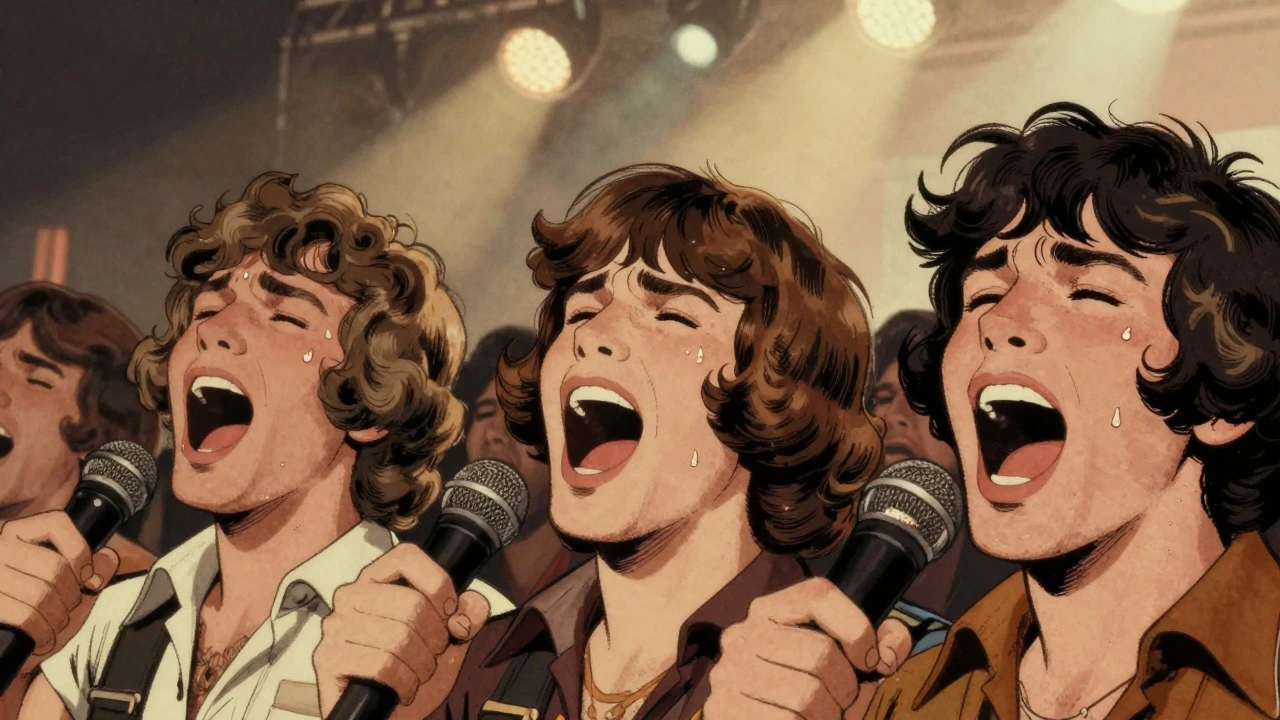
Fans recall leaving shows hoarse, with ringing ears, and completely satisfied. The exhaustion was part of the appeal. It proved you had been there, that you had given everything to the experience. The collective energy of 10,000 to 70,000 people locked into the same song at the same time created a sense of transcendence that is hard to replicate in an age of individualized entertainment.
Different Vibes for Different Bands
Not all concerts felt the same. The genre heavily influenced the crowd behavior. The Grateful Dead, for example, cultivated a party atmosphere. At a small 1970 show, guitarist Bob Weir told the crowd, "this ain’t a show, it’s a party." Their fans, known as Deadheads, traveled with them, creating a nomadic community. Even as they moved into stadiums, the vibe remained communal, though some performers found the scale impersonal.
In contrast, progressive rock bands like Pink Floyd demanded attention. Their complex, continuous pieces required quiet listening. Fans responded by sitting still, absorbing the atmospheric effects. Meanwhile, arena rock bands like KISS, Aerosmith, and Styx encouraged active participation. Their anthemic choruses were designed for sing-alongs. The crowd became a choir, shouting lyrics in unison. This participatory element made the large venues feel intimate, despite the distance.
How much did concert tickets cost in the 1970s?
Ticket prices typically ranged from $5 to $10 in nominal dollars. Adjusted for inflation, this equates to roughly $35 to $75 today. Major artists like Bruce Springsteen charged around $7.50 in 1976, while top-tier festivals might cost up to $20. Service fees were minimal or non-existent.
What was the atmosphere like at 1970s stadium concerts?
The atmosphere was intense and communal. With crowds ranging from 10,000 to over 70,000, fans experienced a sense of unity. Security was lighter, allowing free movement within the venue. The sound was physically powerful, and the absence of smartphones meant everyone focused directly on the performance.
Why were 1970s concerts so affordable?
Promoters relied on album sales for profit, using concerts primarily as marketing tools. This business model allowed them to keep ticket prices low to attract larger audiences. Additionally, there was often a single uniform price for all seats, reinforcing a sense of equality among attendees.
How did sound technology change the concert experience in the 1970s?
Advances in amplification allowed bands to fill stadiums with clear, powerful sound. Multi-kilowatt PA systems projected music so loudly that it became a physical sensation, vibrating through fans' bodies. This enabled detailed hearing of instruments even from distant seats, unlike the muffled sound of earlier decades.
What role did pre-show activities play in the 1970s concert culture?
Pre-show activities were integral to the experience. Fans gathered in parking lot tailgate parties hours before the show, sharing food, drinks, and music. This extended the event into a full-day social gathering, fostering a strong sense of community among attendees before they even entered the venue.


