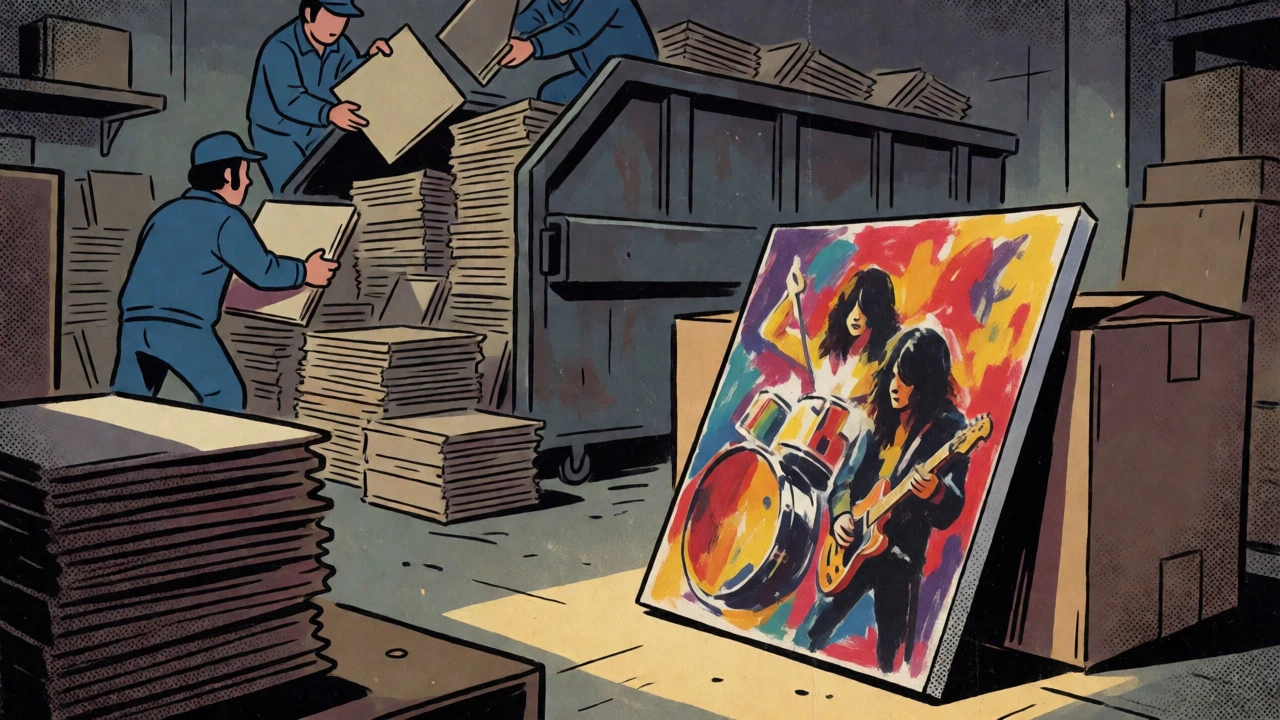

You hold a piece of history that was never meant to last. The original paintings and mechanical layouts used for 1970s album and comic covers are fragile time capsules, caught between industrial disposal and cultural reverence. Unlike the mass-produced jackets you see in thrift stores, these cover masters are unique artifacts of analog design. They represent a turning point where publishers stopped treating art as disposable trash and started seeing it as collectible heritage. If you own one, or manage an archive, your job is to stop the decay before it claims another masterpiece.
The Fragile History of 1970s Cover Masters
The 1970s sit on a precarious threshold in publishing history. Before this decade, publishers routinely threw away original pages and cover art after printing. It was just production waste. By the mid-70s, returning art to artists became standard practice, transforming these objects into valuable originals. But record labels lagged behind. As compact discs emerged in the late 70s and 80s, many labels purged their flat files. Insiders like Los Angeles printer "Jack Jr." have noted that labels often photographed existing vinyl jackets to create smaller CD booklets rather than preserving the large-format original paintings. This means iconic images from bands like KISS or albums like Songs of the Humpback Whale might survive only as scans, while the physical masterboards vanish into landfills or private attics without proper care.
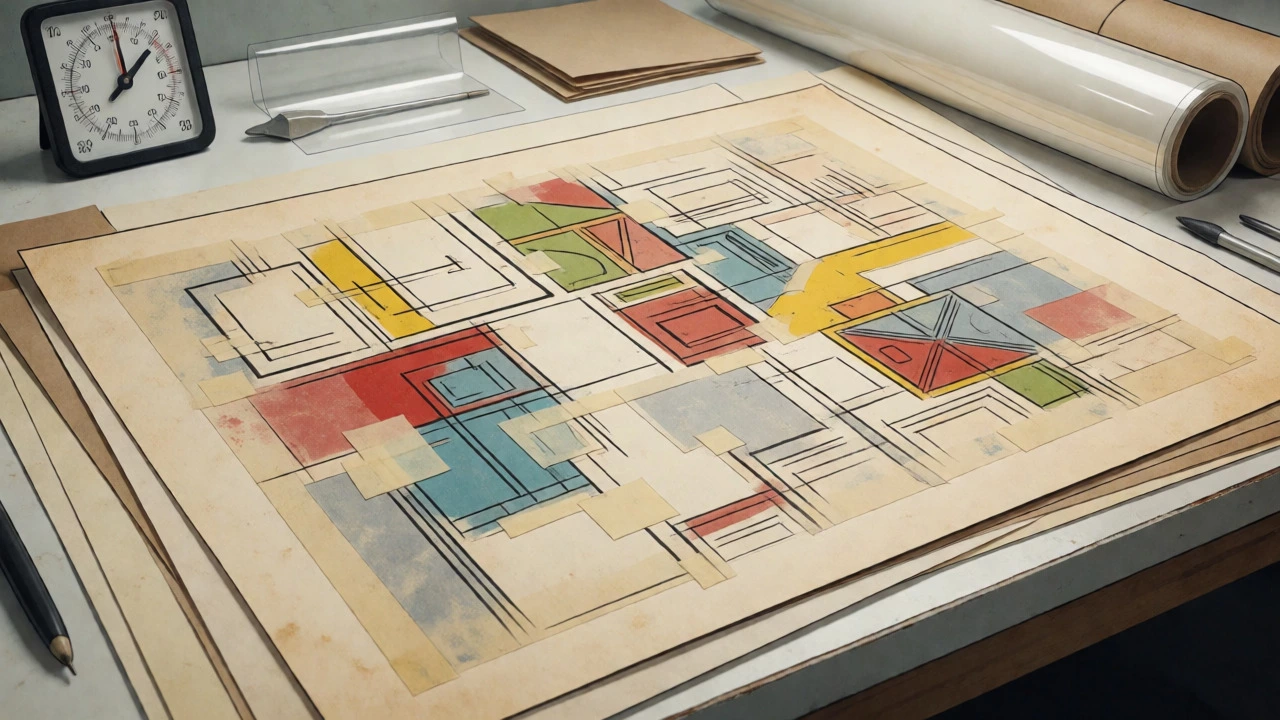
Comic art faced a different trajectory. Artists like Jack Kirby and Gene Colan worked with pre-press mechanicals-collages of paste-up, photocopying, and hand-drawn elements. These were never intended for public display; they were messy, functional mock-ups. Yet today, archives struggle to find systematic collections of these mechanicals because they were considered expendable during production. When you look at a 1977 Tomb of Dracula #55 cover by Gene Colan and Tom Palmer, you are looking at a survivor. Most didn't make it out of the publisher's basement.
Understanding the Materials: Why They Degrade
To save these works, you must understand what they are made of. 1970s cover masters aren't just ink on paper. They are complex hybrids. Comic covers often used Bristol board, which contains lignin that yellows over time. Album covers might be acrylic on canvas or watercolor on heavy stock. Pre-press mechanicals involved adhesives, tape, and photocopied toner, all of which react differently to light and humidity.
The biggest enemies are environmental instability and improper contact materials. Graphite and certain inks used in the 70s require stable conditions. If relative humidity swings wildly, the paper expands and contracts, causing cockling (waving) or cracking. Adhesives used in original mounting often contain acids that migrate into the artwork, causing "foxing" (brown spots) or brittleness. You cannot treat a 1970s original like a modern print. A generic poster frame with acidic matting will destroy a 50-year-old masterboard within a decade.
Conservation Standards: The 30-40% Rule
Practitioners working with collectors, such as those at The Green Room Comic Art, emphasize strict environmental controls. For most paper-based cover masters, aim for a relative humidity between 30% and 40%. This range prevents the growth of mold while keeping the paper fibers flexible enough to avoid snapping. Temperature stability matters too; fluctuations cause condensation on the surface, which can dissolve water-soluble media like pencil or washes.
- Light Exposure: Ultraviolet (UV) light fades pigments rapidly. Never display original art in direct sunlight. Use UV-filtering glass or acrylic glazing for any framed piece.
- Air Quality: Keep art away from kitchens, smoking areas, and heating vents. Airborne grease, smoke particles, and dust settle on the surface and embed themselves in the paper fibers, requiring invasive cleaning later.
- Contact Materials: Avoid PVC plastics, which release gases that degrade paper. Stick to inert polyester films like Mylar D, Melinex 516, or Hostaphan.
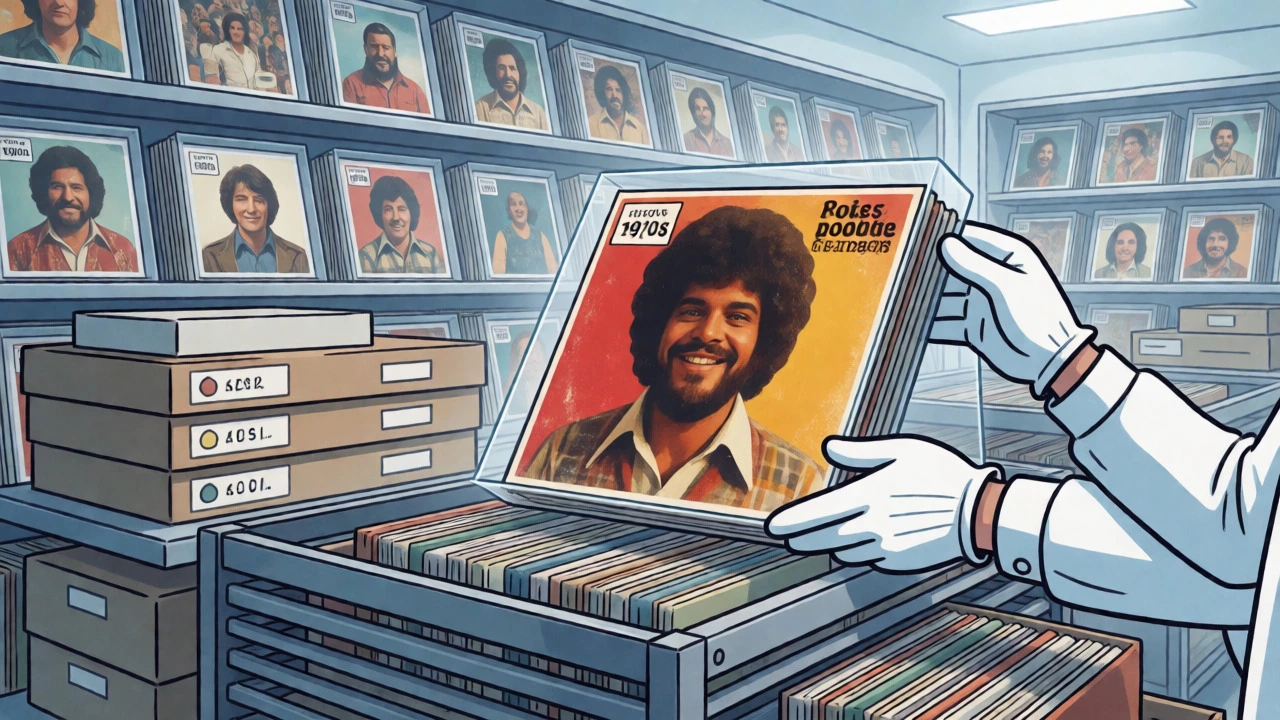
Storage orientation is critical. Store unframed art horizontally in flat files or archival boxes. Vertical storage in folders puts pressure on the corners and edges, leading to tears and warping. Interleave each piece with butter paper (vegetable parchment) to prevent pigment transfer if surfaces touch.
Institutional vs. Private Archiving Models
Who saves these works? Institutions like the Cartoon Art Museum in San Francisco hold over 9,000 pieces of original artwork, providing a model for professional conservation. Their holdings include tear sheets, color roughs, and final covers from the 70s, managed by curators who track provenance meticulously. Similarly, university archives like Washington University’s Nicky Zann Archive formalize access to illustrator careers, linking original 1970 works to published outputs.
Private collectors play an equally vital role. Auction houses like Heritage Auctions list specific 1970s paperback cover paintings with detailed metadata: year, artist, publisher, and medium. Specialist dealers maintain inventories of convention program art and comic covers, effectively creating decentralized archives. However, private ownership carries risk. Without climate control, a collector's attic can become a grave for art. Institutional models offer stability but limited access; private models offer accessibility but variable care.
| Feature | Institutional Archive | Private Collector | Record Label (Historical) |
|---|---|---|---|
| Primary Goal | Research and Preservation | Ownership and Display | Production Efficiency |
| Environmental Control | High (HVAC, UV filtering) | Variable (Home conditions) | Low (Warehouses/Offices) |
| Access | Restricted (Reading rooms) | Exclusive (Owner-dependent) | Internal Only |
| Survival Rate | High | Moderate | Very Low (Post-CD era) |
| Documentation | Detailed Metadata | Personal Records | Minimal (Often lost) |
Building Your Own Archive: A Step-by-Step Guide
If you are starting a collection of 1970s cover masters, don't just buy and stack. Follow a structured workflow to ensure longevity and value retention.
- Inventory and Metadata: Create a digital log for every piece. Record the artist, year, title, publisher/label, medium (e.g., "ink on Bristol board"), and dimensions. Note any visible damage immediately. This mirrors the cataloging standards used by Heritage Auctions and museum finding aids.
- Acquire Proper Housing: Purchase acid-free archival sleeves (Mylar/Melinex) sized slightly larger than the art. Buy pH-neutral backing boards and butter paper. Do not use rubber bands or staples directly on the art.
- Control the Environment: Place your storage area in a room with stable temperature and humidity. Use a hygrometer to monitor levels. If humidity exceeds 50%, consider a dehumidifier. Keep the space dark when not in use.
- Digitize Early: Scan or photograph each piece at high resolution (600 DPI minimum). This creates a reference image for insurance and research, allowing you to handle the physical object less frequently. Platforms like Cover Browser show how vast the digital corpus is; your digitized file should link back to the physical location.
- Mount Carefully for Display: If displaying, use archival corner mounts secured with water-soluble adhesive. Never glue the art down. Use UV-filtering glazing. Rotate displayed pieces every few months to limit cumulative light exposure.
The Cultural Value of Mechanicals
Why bother saving these "ugly" mechanicals? Scholars argue that pre-press originals are documents of industrial barbarism-they reveal the labor and decision-making behind the polished product. A Jack Kirby mechanical shows his process: the collage of textures, the handwritten notes, the taped-down photos. It is a blueprint of creativity. In contrast, a finished album painting like David Dushkin’s Songs of the Humpback Whale offers aesthetic beauty but hides the commercial constraints. Both are essential to understanding 1970s visual culture.
The market reflects this growing appreciation. While digital repositories index hundreds of thousands of printed covers, the number of surviving originals is tiny. The Cartoon Art Museum holds roughly 2% of the volume found in digital indexes like Cover Browser, highlighting the scarcity. As academic interest grows, so does the responsibility to preserve these unique nodes of pop culture history.
Frequently Asked Questions
Can I clean dirty 1970s cover art myself?
Generally, no. Paper from the 1970s is often brittle or sensitive. Using erasers or wet cloths can lift graphite, smear ink, or tear the fibers. Surface dirt can sometimes be gently removed with a soft, natural hair brush, but for significant stains or foxing, consult a professional conservator. Improper cleaning often reduces the value more than the dirt itself.
Is it safe to display original art in a regular picture frame?
No, not for long-term display. Standard frames use acidic mat boards and non-UV glass. Acid migrates from the mat to the art, causing yellowing and brittleness. Non-UV glass allows fading. Always use acid-free matting, pH-neutral backing, and UV-filtering glass or acrylic. Additionally, mount the art using archival corners rather than adhesive tapes or glues.
What is the difference between a cover master and a proof?
A cover master is the original artwork created by the artist, such as a painting or ink drawing on board. A proof is a printed test sheet used to check colors and registration before mass production. Proofs are usually paper prints and lack the texture and uniqueness of the master. Masters are one-of-a-kind; proofs may exist in multiple copies. Masters hold significantly higher archival and monetary value.
How do I verify the authenticity of a 1970s comic cover original?
Look for publisher stamps, copyright marks, and issue numbers on the reverse side. Check for consistent aging of the paper and materials appropriate for the era (e.g., Bristol board types used in the 70s). Provenance documentation, such as auction records from Heritage Auctions or dealer invoices, is crucial. Be wary of reproductions printed on high-quality cardstock; examine the surface under magnification for halftone dots, which indicate a print rather than original art.
Why did record labels discard so much original art?
The shift to CDs in the late 1970s and 1980s changed packaging needs. Labels needed smaller images for CD booklets. Instead of retrieving original large-format paintings from flat files, many companies simply photographed existing vinyl jackets and reduced them digitally or optically. This process saved money and space but led to the loss of the physical masters, which were often discarded as obsolete inventory.


