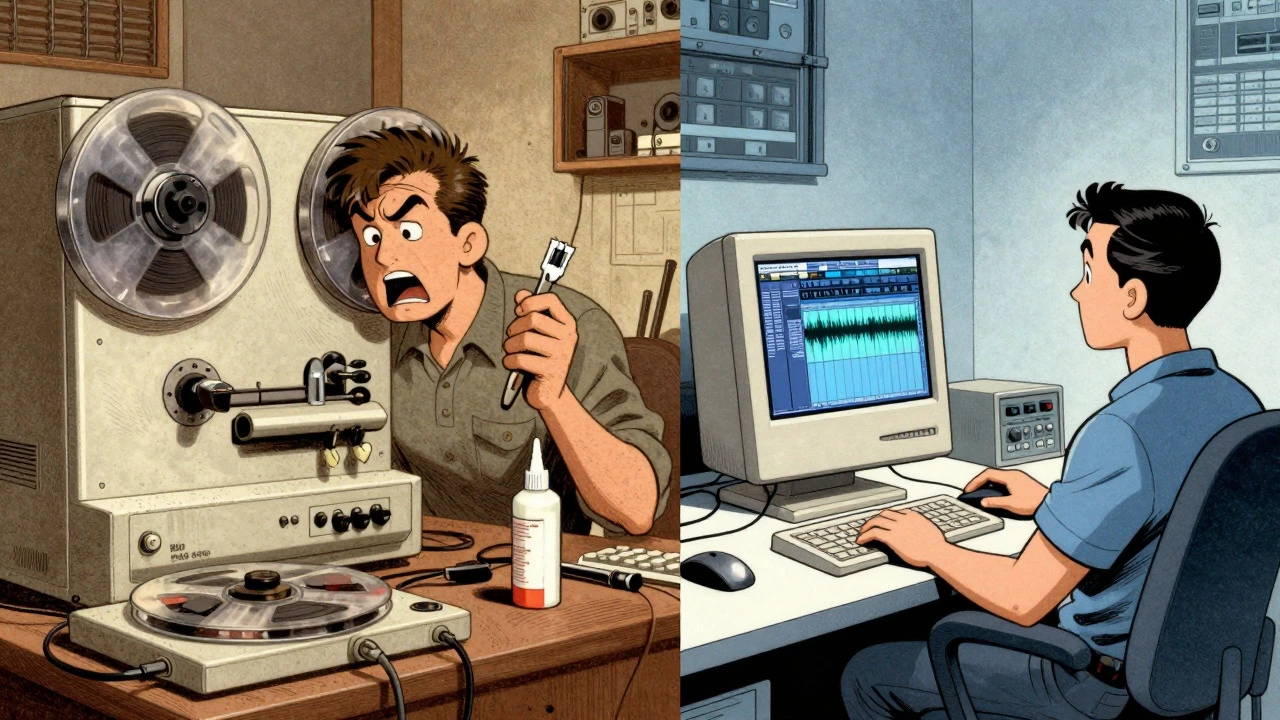

Remember that specific, crisp sheen of a mid-90s pop record? The drums hit with surgical precision, the vocals float without a hint of room noise, and every note lands exactly on the grid. That sound wasn't just luck; it was the direct result of a massive technological shift. In the early 1990s, the music industry moved away from heavy reel-to-reel tape machines toward digital systems like Pro Tools is a computer-based digital audio workstation that allows for non-destructive editing, multitrack recording, and mixing on a Macintosh or PC platform. This transition didn't just change how engineers worked; it fundamentally altered what music sounded like and who could make it.
The End of Tape Hiss and the Rise of Digital Clarity
Before the 90s, recording music meant dealing with the physical limitations of magnetic tape. You had hiss, wow and flutter (the slight pitch wobble caused by tape speed variations), and limited track counts. If you made a mistake, you had to splice the tape together with razor blades and cement. It was permanent. One bad cut, and the take was gone forever. Then came ADAT is an eight-track digital audio tape recorder introduced by Alesis in 1992 that records 16-bit audio onto S-VHS video cassettes.. Released in 1992, ADAT allowed musicians to record eight tracks of CD-quality audio (16-bit at 44.1 kHz) onto cheap VHS tapes. By linking multiple units, bands could get 16, 24, or even 32 tracks without the cost of a massive studio console. The aesthetic impact was immediate: recordings became cleaner, quieter, and more detailed. The "warmth" of tape was replaced by the transparency of digital PCM, creating a brighter, sharper sonic signature that defined much of the decade's commercial releases.
Pro Tools: The Computer Takes Over the Console
While ADAT democratized multitrack recording, Digidesign Pro Tools is a professional digital audio workstation software first released in 1991 that integrated multitrack recording, editing, and mixing into a single computer application. changed the workflow entirely. Launched in 1991, Pro Tools 1.0 ran on Apple Macintosh computers and offered something unprecedented: visual editing. Engineers no longer had to listen through entire takes to find the right phrase. They could see the waveform on screen, zoom in, cut, paste, and move clips around with a mouse. This feature, known as non-linear editing, encouraged a new approach to performance. Instead of capturing a band playing live in a room, producers started building songs piece by piece. Vocals were "comped"-assembled from the best parts of ten different takes. Drums were tightened to fit a quantized grid. The result was a hyper-polished sound where human imperfection was edited out, leading to the tight, mechanical feel associated with late-90s rock and pop.
| Feature | Analog Reel-to-Reel (Pre-90s) | Digital Systems (ADAT/Pro Tools) |
|---|---|---|
| Recording Medium | Magnetic Tape | S-VHS Tapes / Hard Disks |
| Noise Floor | Audible Hiss and Flutter | Near-Silent / Low Noise |
| Editing Method | Physical Splicing (Permanent) | Visual/Digital Editing (Non-Destructive) |
| Track Capacity | Typically 24 Tracks Max | 8-32+ Tracks (Expandable) |
| Cost Barrier | High (Studio Exclusive) | Moderate to High (Project Studio Accessible) |
| Aesthetic Impact | Warm, Organic, Imperfect | Clean, Precise, Polished |
The Hybrid Workflow: Keeping the Warmth, Gaining the Control
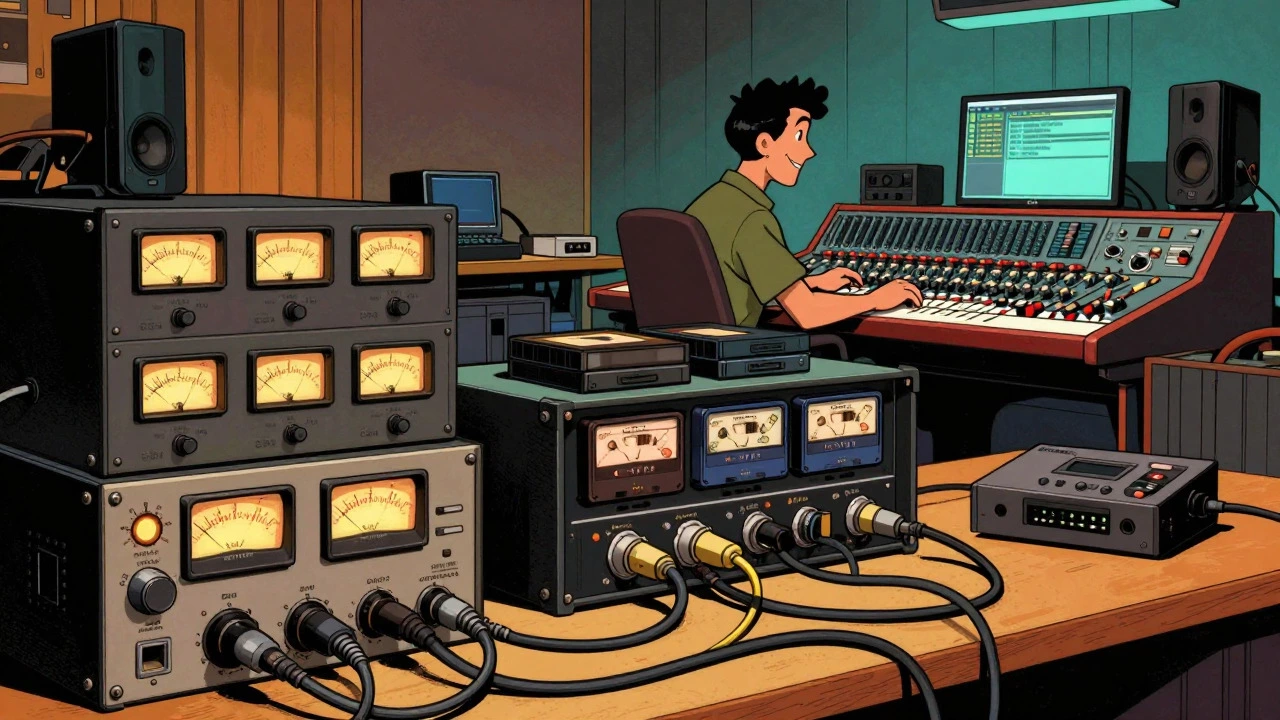
It’s a common misconception that the 90s were purely digital. In reality, most major studios used a hybrid approach. Engineers would record instruments through high-end analog preamps and compressors, often printing the signal to tape or using analog outboard gear to add harmonic saturation. They then transferred these tracks into Pro Tools for editing and mixing. Why keep the analog front end? Because early 16-bit digital converters could sound clinical or harsh if fed too clean a signal. By adding subtle compression and saturation before digitizing, producers maintained a sense of musicality while enjoying the benefits of digital recall and precision. This workflow created the distinctive 90s sound: it had the low noise floor and bright highs of digital recording, but retained the dynamic punch and body of analog processing. It was a compromise that satisfied both purists and modernists.
Democratization and the DIY Aesthetic
Perhaps the biggest cultural shift wasn't in the major studios, but in the bedrooms and basements. Before ADAT, making an album required renting expensive studio time. With ADAT, a punk band or an indie artist could buy two or three units, link them up, and record a full-length LP at home. This accessibility gave rise to new genres and subcultures. Lo-fi hip-hop, bedroom pop, and indie rock thrived because artists could experiment freely without the pressure of expensive studio clocks ticking down. The aesthetic here was different from the polished major-label sound. DIY producers often embraced the limitations of their gear, resulting in rawer, more personal recordings. However, even these independent acts benefited from the digital standard; their records still sounded cleaner than their cassette-tape predecessors, bridging the gap between underground authenticity and professional clarity.
Machine Aesthetics and the Birth of Glitch
As DAWs like Pro Tools, Cubes Audio, and Logic Audio matured throughout the decade, they enabled new forms of composition. Musicians began to treat the computer itself as an instrument. Quantization, which aligns notes to a strict rhythmic grid, became a stylistic choice rather than just a correction tool. In electronic music, this led to the "machine aesthetic," where the cold, precise nature of digital timing was celebrated. Producers started experimenting with glitches, bit-crushing, and granular synthesis-artifacts that were impossible or difficult to achieve with analog hardware. These techniques, rooted in the capabilities of 90s digital workstations, laid the groundwork for later genres like IDM and glitch hop. The line between error and art blurred, and the "mistake" became a feature.
Long-Term Legacy: The Sound We Still Hear Today
The transition of the 1990s didn't just pass; it set the template for modern music production. Every DAW used today, from Ableton Live to FL Studio, inherits the logic established by Pro Tools: non-destructive editing, plugin processing, and sample-accurate timing. The expectation for clean, loud, and precise mixes that dominated the 90s evolved into the "loudness war" of the 2000s. Even in genres that claim to be organic, the underlying structure is often built in a digital environment. The 90s taught us that technology doesn't just capture sound; it shapes taste. When you hear a perfectly aligned drum beat or a vocal comp that sounds too perfect to be real, you are hearing the legacy of the analog-to-digital shift. It changed not only how we make music but how we expect to hear it.
What was the main difference between ADAT and Pro Tools in the 1990s?
ADAT was a hardware-based tape recorder that stored audio on S-VHS cassettes, offering a familiar transport interface but requiring physical media management. Pro Tools was a software-based DAW that stored audio on hard drives, allowing for non-linear visual editing, instant undo, and complex mixing within a computer environment. ADAT was cheaper and more accessible for project studios, while Pro Tools became the industry standard for large-scale commercial production due to its flexibility and power.
Did the 1990s completely eliminate analog recording?
No, analog recording did not disappear. Most professional studios adopted a hybrid workflow, using analog preamps, compressors, and sometimes tape for tracking to add warmth and character, before transferring the audio to digital systems like Pro Tools for editing and mixing. This combination allowed producers to retain the desirable sonic qualities of analog gear while benefiting from the precision and convenience of digital tools.
How did digital editing change vocal production in the 90s?
Digital editing enabled "vocal comping," where producers could select the best phrases from multiple takes and stitch them together seamlessly. This resulted in vocals that were technically flawless, with consistent pitch and timing, unlike earlier eras where a single continuous take was often used. This technique contributed to the highly polished and controlled vocal style characteristic of 1990s pop and rock music.
Why did ADAT use VHS tapes instead of hard drives?
In the early 1990s, hard drive storage was extremely expensive and slow for large audio files. S-VHS video tapes were inexpensive, widely available, and capable of storing enough data for eight tracks of CD-quality audio. Using consumer-grade video media made multitrack digital recording affordable for small studios and hobbyists, whereas hard-drive-based systems like early Pro Tools configurations remained costly investments for professional facilities.
What is the "machine aesthetic" in music?
The machine aesthetic refers to a musical style that embraces the characteristics of digital production, such as quantized timing, repetitive loops, and synthetic textures. Emerging in the 90s with the spread of DAWs, this aesthetic celebrates the precision and artificiality of computer-generated sound, contrasting with the organic, imperfect nature of traditional analog recordings. It influenced genres like electronic dance music, trip-hop, and experimental rock.


