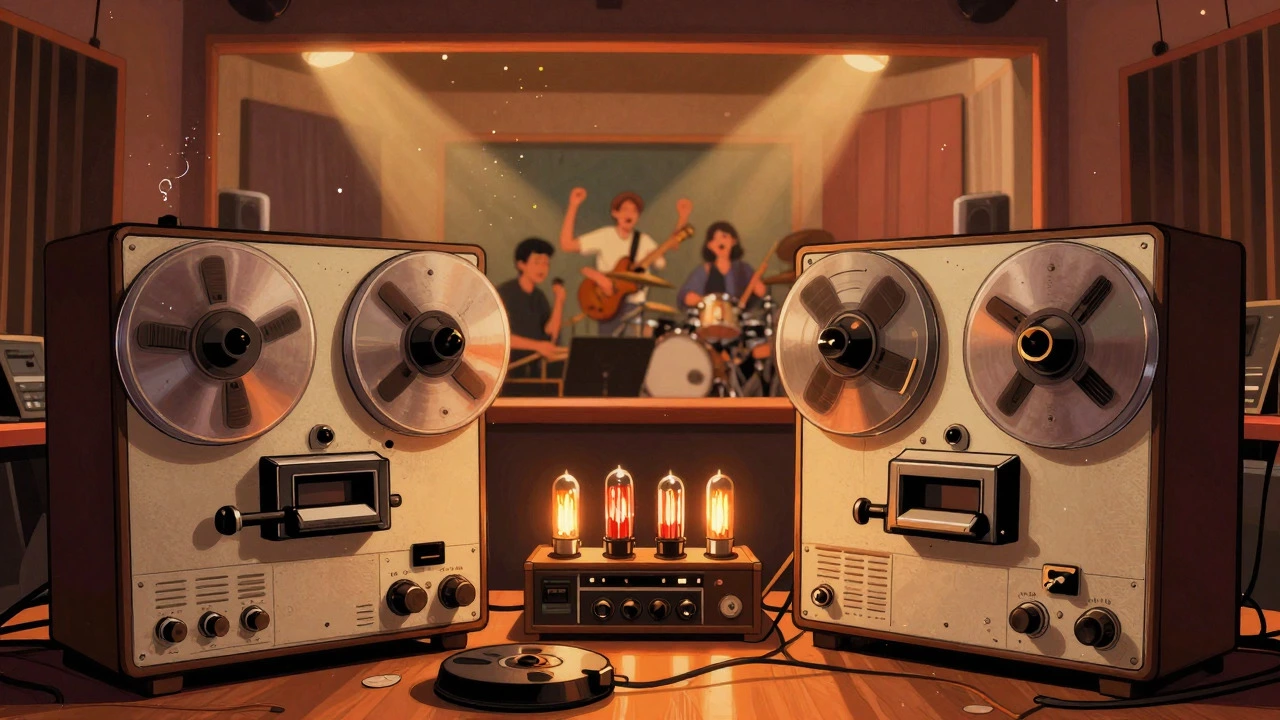

There is a distinct smell to an analog revival studio. It’s the scent of warm vacuum tubes, ozone from high-voltage power supplies, and the faint, dusty aroma of magnetic tape baking in a machine that hasn’t been opened since the Carter administration. You walk into places like Radar Sounds in Los Angeles or Old Carpet Factory Studio in Greece, and you are instantly transported back to a time when mistakes were expensive, recall was impossible, and the sound had weight.
This isn’t just nostalgia for the sake of it. We are seeing a massive resurgence in facilities dedicated to recreating the sonic aesthetics, workflows, and limitations of 1970s production using original hardware. But here is the twist: these aren’t museums. They are fully operational, modern businesses that blend 50-year-old gear with Apple M4 Macs and Pro Tools sessions. So, how do they pull this off? And why does a band recording a punk album in 2026 care about a Studer tape machine built in 1978?
The Core Philosophy: Limitations as Creative Tools
In the digital world, we have infinite tracks, perfect pitch correction, and zero noise floor. It’s convenient, but it can also lead to a sterile, over-polished sound that lacks character. Analog revival studios operate on a different principle: limitation breeds creativity. When you are tracking to a 2-inch, 24-track Studer A800 tape machine, you cannot just add another track if you run out. You have to commit. You have to make decisions about microphone placement and gain staging before you hit record because there is no "undo" button that fixes a bad performance without degrading the signal further.
This approach forces musicians to play together. It encourages engineers to listen critically to the room acoustics rather than relying on plugins to fix issues later. The goal is to capture the energy of a performance, not just the data of the notes. As Radar Sounds explicitly ties its modern operations to iconic 1970s British production heritage by using a Studer A800 formerly used at Abbey Road Studios, the intent is clear: the gear itself carries a history and a tonal signature that software struggles to replicate authentically.
The Gear That Defines the Sound
To recreate the 1970s sound, you need the specific tools that created it. This isn’t about buying generic "vintage-style" gear; it’s about sourcing specific models known for their unique coloration. Let’s look at what actually sits in these control rooms.
| Equipment Type | Iconic Models Used | Sonic Characteristic |
|---|---|---|
| Tape Machines | Studer A800 MK3, Ampex 350 | Natural compression, harmonic saturation, smooth high-end roll-off |
| Consoles | Neve BCM 10/2, Neve 5116 (Baby V) | Transformer-based warmth, aggressive midrange presence, punchy low end |
| Microphones | Neumann U47, RCA 44 BX, Shure SM57 | Tube condenser richness, ribbon mic smoothness, rugged dynamic reliability |
| Outboard Processing | Teletronix LA-2A, Universal Audio 1176, EMT 140 Plate Reverb | Optical leveling, fast attack compression, lush ambient space |
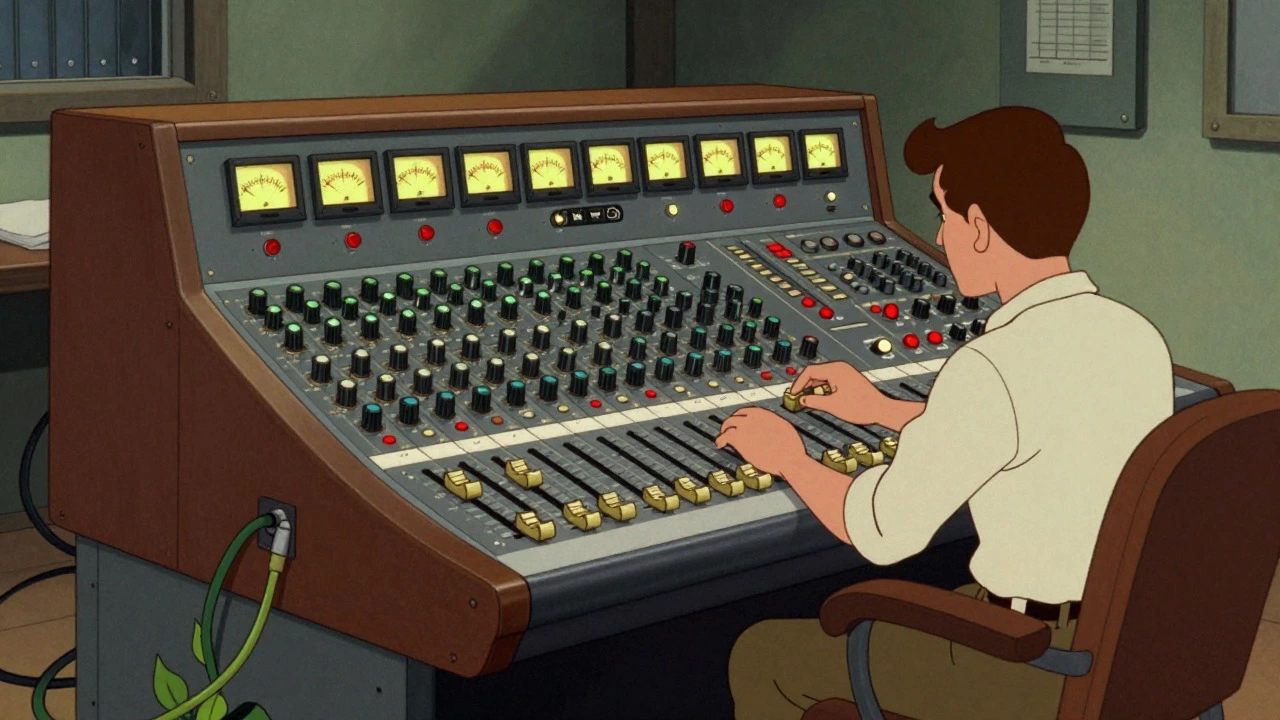
Take the console. Many of these studios, like Old Carpet Factory, use the Neve BCM 10/2. Originally derived from broadcast consoles in the 1960s and repurposed for music in the 70s, these desks feature discrete Class-A circuitry. This means the signal path remains linear and clean until it hits the transformers, which then impart a pleasing distortion when pushed hard. It’s a physical characteristic you can feel in your chest when monitoring drums.
Then there are the microphones. AV Studio in the UK lists RCA 44 BX ribbons from 1955 and Shure 355s from 1959. These aren’t just old mics; they are specific tools chosen for how they reject harsh frequencies naturally. A Neumann U87 from the late 1960s sounds different than a new one due to the aging of the capsule and the electronics. Engineers in these studios know exactly which serial numbers offer the best vocal tone, replicating setups used on classic albums.
The Hybrid Workflow: Best of Both Worlds
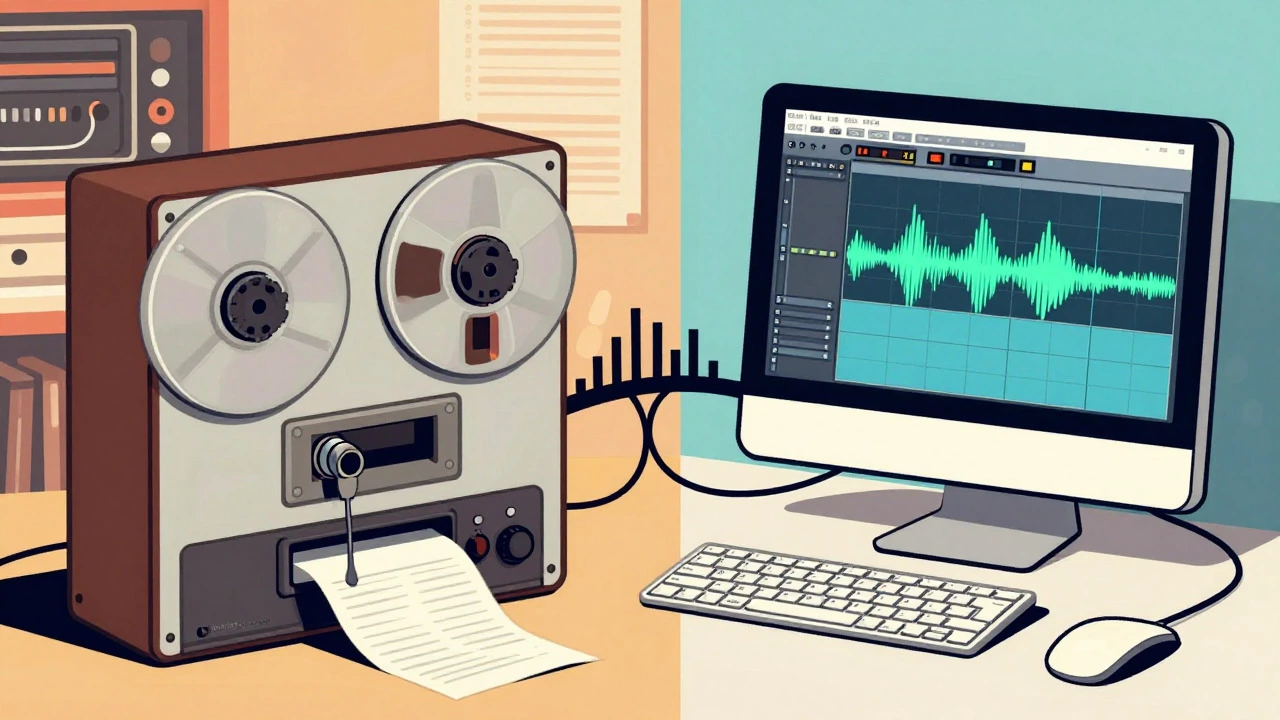
If these studios were purely analog, they would be impractical for most modern clients. You couldn’t send stems to a producer in Tokyo, and you couldn’t easily edit a vocal phrase. That’s where the "revival" aspect becomes technical innovation. These facilities are hybrids.
IJland Studio in the Netherlands exemplifies this perfectly. They combine vintage analog recording gear with Universal Audio Apollo interfaces and Apple M2/M4 Macs. Here’s how it works in practice:
- Capture: The band plays live into vintage preamps and compressors. The signal goes through the analog chain, getting saturated and colored by the hardware.
- Conversion: High-quality AD/DA converters (like the IZ ADA II used at Radar Sounds) digitize the signal at 24-bit/96kHz or higher.
- Storage: The audio lands in a DAW (Pro Tools, Nuendo, Logic). This allows for non-destructive editing, automation, and plugin processing if needed.
- Recall: Unlike pure analog, where you’d have to write down every knob setting, the digital session saves the mix state. However, the core tone is already baked into the audio file from the analog stage.
Why Tape Still Matters
You might wonder, "Can’t we just use a plugin to emulate tape?" Yes, you can. But plugins simulate the mathematical model of tape. They don’t replicate the physical wear, the slight speed fluctuations (wow and flutter), or the way magnetic particles saturate under extreme pressure. When you record to a Studer A800 2-inch tape machine, you are dealing with a physical medium. If you push the levels too hot, the tape compresses the signal naturally. This acts as a glue that holds the mix together. Digital clipping is harsh and brittle; tape clipping is musical and warm. Studios like Radar Sounds advertise "100% free tape use" to encourage clients to embrace this workflow, bundling the cost of the expensive 2-inch stock into the day rate because the creative benefit outweighs the material cost.
The Economic Reality of Vintage Gear
Maintaining this gear is not cheap. A Neve console requires regular calibration of its equalizer bands and compressor thresholds. Tape machines need bias adjustments and head cleaning weekly. This is why the ecosystem around analog revival studios has grown so robust. Manufacturers like Warm Audio and Stam Audio have emerged to fill the gap. They build hardware recreations of classic 1960s-1970s microphones, preamps, and compressors. Warm Audio focuses on "authentic warmth and modern reliability," meaning you get the sonic profile of a 1073 preamp with a warranty and updated components. Stam Audio offers "zero compromise" gear that is "light on the wallet." For smaller studios that can’t afford a $50,000 vintage Neve desk, these modern recreations allow them to approximate the 1970s tone. Meanwhile, archival platforms like VintageDigital document the history of this technology, helping engineers understand exactly how a specific unit from 1972 should behave. This supply chain ensures that the analog revival isn’t just for the ultra-rich; it’s becoming accessible to mid-tier producers who want that specific aesthetic.
Is It Worth It for Your Project?
So, should you book an analog revival studio? It depends on your goals. If you are making hyper-edited pop music that relies on quantized grids and pristine vocals, a fully digital project studio might be faster and more cost-effective. But if you are playing rock, jazz, folk, or any genre where the human feel and organic texture are paramount, the analog route offers something digital simply cannot match. The process slows you down, which is often the point. It forces collaboration. It makes the recording process an event rather than a task. And when you hear that final mix, with its natural dynamics and cohesive soundstage, you realize that the limitations of the 1970s weren’t bugs-they were features.
What is the difference between analog and digital recording?
Analog recording captures sound as continuous electrical signals onto physical media like magnetic tape, introducing natural saturation and compression. Digital recording converts sound into binary code (1s and 0s), offering precision, easy editing, and zero noise floor, but potentially lacking the harmonic warmth associated with analog hardware.
Do analog revival studios still use computers?
Yes, almost all modern analog revival studios use a hybrid workflow. They record through vintage analog gear (preamps, tape machines, consoles) but convert the signal to digital via high-end AD/DA converters to store it in a DAW like Pro Tools. This combines the tone of analog with the convenience and recallability of digital.
Why do people prefer 1970s recording equipment?
1970s equipment, such as Neve consoles and Studer tape machines, is prized for its "musical" imperfections. Transformers and tape saturation add pleasant harmonic distortion and compression that glue mixes together. Additionally, the limitation of track counts forced better performance and arrangement choices, leading to more energetic recordings.
How much does it cost to record in an analog revival studio?
Rates vary significantly by location and gear rarity. Premium studios with rare Neve consoles and Studer tape machines can charge $1,000 to $3,000+ per day. Smaller studios using modern recreations from brands like Warm Audio may charge less. Costs often include engineer fees, tape costs, and maintenance overheads.
Can I achieve an analog sound at home?
You can approximate it. Using high-quality analog preamps and compressors (even modern clones) before your audio interface will add color. Software emulations of tape and tube gear are also highly effective. However, the full experience of tracking to multitrack tape and mixing on a large-format console requires a professional studio environment.


