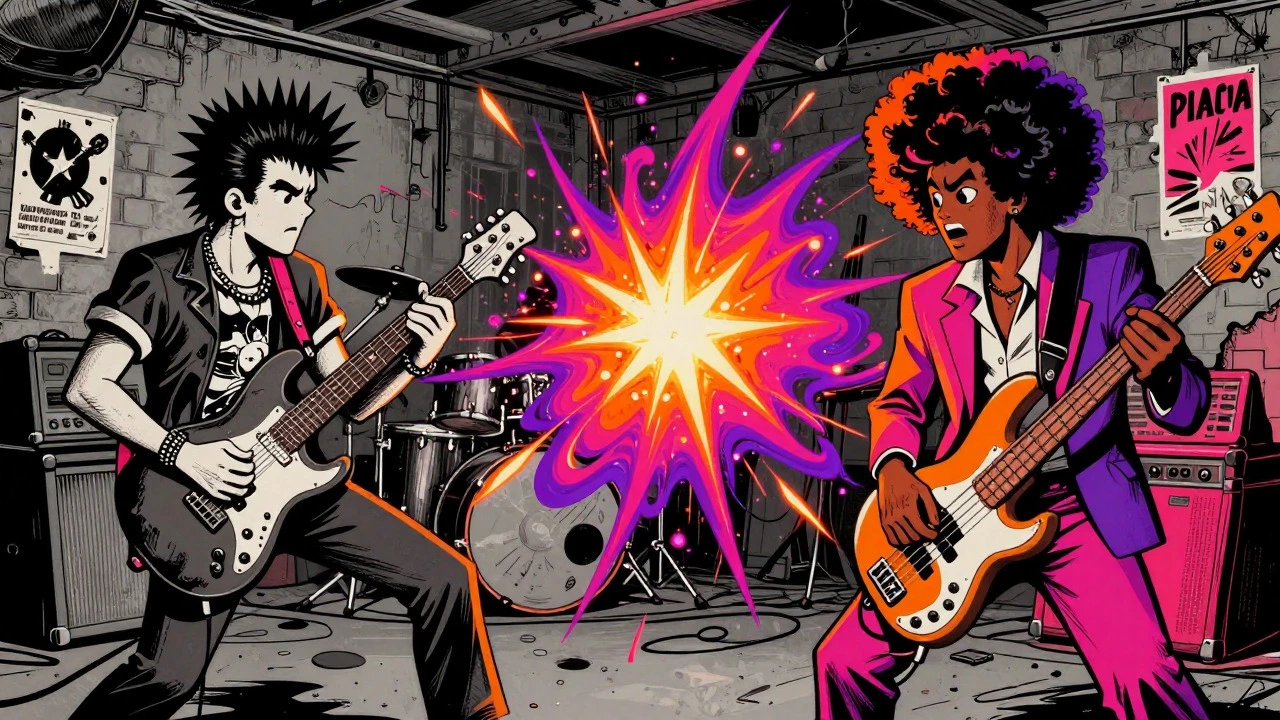

Walk into a garage band practice in the early 1980s, and you’d likely hear two distinct sounds. On one side, there was the aggressive, fast-paced drumming and distorted guitars of punk rock. On the other, you had the tight, syncopated grooves of funk music. Most bands stayed in their lane. But a small group of musicians decided to smash those lanes together. They took the raw energy of punk and fused it with the heavy, rhythmic basslines of funk. This collision created some of the most memorable moments in alternative rock history.
We aren't just talking about background noise here. We are talking about the basslines that drove entire songs and the drum breaks that made audiences move. These "funk moments" didn't just add flavor; they changed how alternative rock sounded. Bands like Red Hot Chili Peppers is an American rock band formed in Los Angeles in 1983 that pioneered the fusion of funk, punk, and rap, Faith No More, and even post-punk acts like The Smiths used these techniques to break musical rules. If you want to understand where modern alt-rock gets its groove, you have to look back at these specific years.
The Birth of Funk-Punk in Los Angeles
To understand this sound, we need to look at Los Angeles in the early 1980s. Punk rock was everywhere, but it was often repetitive. It relied on simple chords and fast tempos. Meanwhile, funk music from the 1970s, led by artists like George Clinton is a pioneering funk musician and producer known for leading Parliament-Funkadelic, offered complex rhythms and deep bass grooves. Musicians started asking why they couldn't mix the two.
The Red Hot Chili Peppers became the face of this movement. Formed in 1983, the band wasn't just trying to play rock or funk. They were trying to create something new. Vocalist Anthony Kiedis and bassist Flea (Michael Balzary) saw punk as the past, funk as the present, and rap as the future. They wanted to blend all three. Their debut album, released in 1984, was pure adrenaline. Tracks like "Get Up and Jump" featured Flea using slap bass techniques-where you snap the string against the fretboard-to create percussive sounds that matched the speed of hardcore punk.
This wasn't a subtle addition. The bass wasn't just keeping time; it was leading the song. The drums weren't just hitting the snare; they were creating breaks that let the bass shine. This approach made their music feel hyperactive and off-kilter. It was chaotic, but it had a groove. That combination attracted college radio stations and MTV, setting the stage for alternative rock's mainstream rise.
Post-Punk’s Hidden Groove
While the Chili Peppers were loud and obvious, other bands were integrating funk elements more subtly. Post-punk, a genre that emerged from the ashes of punk, already emphasized bass and rhythm over guitar solos. Artists like Joy Division and The Cure used basslines that were melodic and driving. But some of these lines had a quasi-funk feel due to their syncopation and repetition.
Consider The Smiths' track "Barbarism Begins at Home." While not a funk song, the bassline by Andy Rourke features long vamps and melodic hooks that foreground the rhythm section. Fans and musicians often cite this as having a funk-like quality because it makes you move, even if the mood is dark. Similarly, tracks by Siouxsie and the Banshees, such as "Israel," use bass patterns that lock tightly with the drums, creating a pocket similar to funk music.
This shows that the influence of funk wasn't limited to bands explicitly labeled "funk-rock." It seeped into the broader alternative landscape. Bassists in post-punk bands began studying funk players to learn how to make their instruments sing. They adopted techniques like ghost notes and syncopated accents, which added depth to their atmospheric soundscapes. The result was a richer, more dynamic form of rock music that prioritized groove alongside melody.
Production and the P-Funk Connection
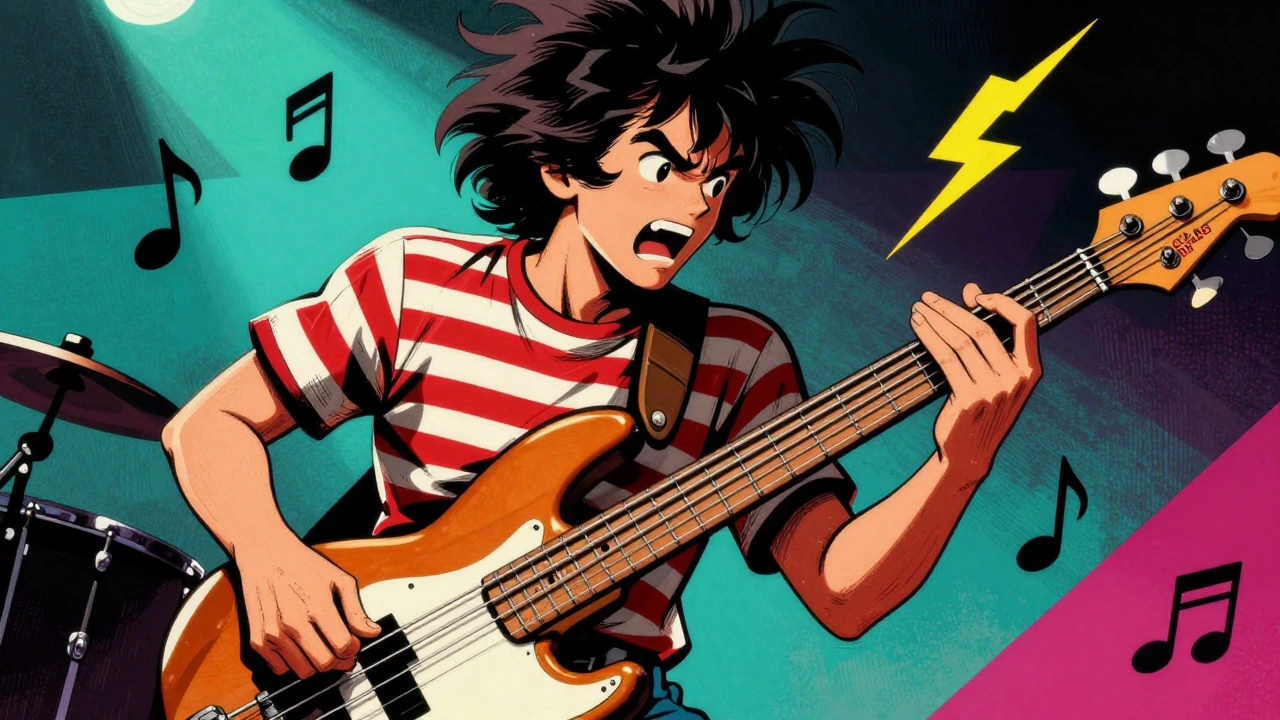
A key moment in this timeline came in 1985 when the Red Hot Chili Peppers worked with George Clinton on their second album, Freaky Styley. Clinton was a legend in the funk world, having produced iconic records for Parliament and Funkadelic. His involvement anchored the band's sound firmly in 1970s P-Funk traditions.
Clinton taught them how to structure breaks and extend grooves. He showed them that a song didn't always need a verse-chorus-verse format. Sometimes, you just needed a solid four-bar loop that got tighter and more intense. This production style influenced how alternative rock was recorded. Producers started leaving more space for the bass and drums to breathe. They stopped overdubbing every instrument, allowing the natural interplay between the rhythm section to drive the track.
This shift was crucial. It meant that the "breaks"-those moments where the guitar drops out and only bass and drums remain-became central to the song's identity. In funk, these breaks are essential for dancing. In alternative rock, they became moments of tension and release. Bands learned that stripping away the layers could be more powerful than adding more distortion.
Funk Metal and the Alt-Metal Crossover
As the decade progressed, the fusion evolved again. Some bands added heavier guitar tones to the funk foundation, creating what we now call funk metal. Faith No More is a prime example. Songs like "Falling to Pieces" and "Epic" combine complex, syncopated basslines with aggressive, distorted guitars. This style bridged the gap between alternative rock and metal, appealing to fans who wanted both groove and power.
Jane’s Addiction also played a significant role here. Their hit "Been Caught Stealing" features a staccato, funky bassline that locks in with sharp snare hits. The guitar work is heavy, but it serves the rhythm rather than dominating it. This approach influenced a generation of musicians who saw no contradiction between being "heavy" and being "groovy."
| Band | Key Album | Funk Element Used | Rock/Punk Element |
|---|---|---|---|
| Red Hot Chili Peppers | Freaky Styley (1985) | Slap bass, syncopated grooves | Punk tempo, raw vocals |
| Faith No More | The Real Thing (1989) | Complex rhythmic phrasing | Heavy guitar distortion |
| Jane’s Addiction | Ritual de lo Habitual (1989) | Staccato bass lines | Alt-metal aggression |
| Talking Heads | Remain in Light (1980) | Polyrhythmic percussion | New wave art-rock structures |
Why These Moments Matter Today
You might wonder why we still talk about these 1980s experiments. The answer is simple: they expanded the vocabulary of rock music. Before this era, rock basslines were often root-note driven, simply following the guitar chords. These bands proved that the bass could be a lead instrument, capable of carrying melodies and rhythms independently.
Today's alternative rock, indie, and even pop music owe a debt to this period. When you hear a bassline that drives a song forward without relying on lyrics or guitar riffs, you're hearing the legacy of these 1980s funk moments. Musicians continue to study these tracks to learn how to balance energy with groove. Forums and video platforms are filled with tutorials analyzing these bass parts, showing that the interest hasn't faded.
Moreover, these moments challenged racial and genre boundaries. Funk was historically rooted in Black American culture, while punk and alternative rock were largely white-dominated scenes. By embracing funk, these bands acknowledged and celebrated that heritage. They brought those rhythms to a wider audience, fostering a more inclusive musical landscape.
Which band is considered the pioneer of 1980s funk-rock?
The Red Hot Chili Peppers are widely regarded as the pioneers of 1980s funk-rock. Formed in 1983, they combined punk rock's speed with funk's bass-heavy grooves, creating a unique style that defined the era.
How did George Clinton influence alternative rock?
George Clinton, a funk legend, produced the Red Hot Chili Peppers' 1985 album Freaky Styley. He taught them how to structure grooves and use breaks effectively, anchoring their sound in P-Funk traditions while maintaining punk energy.
What is the difference between funk-rock and funk-metal?
Funk-rock typically emphasizes lighter guitar tones and party-oriented vibes, as seen in early Red Hot Chili Peppers tracks. Funk-metal, exemplified by Faith No More and Jane’s Addiction, incorporates heavier, distorted guitars and more aggressive drumming while retaining complex funk rhythms.
Did post-punk bands use funk elements?
Yes, many post-punk bands like The Smiths and Siouxsie and the Banshees used basslines with syncopated, melodic qualities that shared DNA with funk. These lines often foregrounded the rhythm section, creating a groove-driven atmosphere.
Why are bass breaks important in these songs?
Bass breaks allow the rhythm section to take center stage, creating tension and release. In funk-infused alternative rock, these breaks highlight the technical skill of the bassist and provide a dynamic shift that keeps listeners engaged.


