

Imagine being the biggest band in America, then watching your career dissolve into a haze of heroin and broken promises. That was Aerosmith’s reality in the early 1980s. By 1984, the Boston hard rock legends were a cautionary tale, their classic lineup fractured by addiction and internal conflict. Yet, within five years, they didn’t just return; they became bigger than ever, headlining stadiums and bridging the gap between rock and hip-hop. How did a band on the brink of extinction pull off one of rock’s most dramatic resurrections? It wasn’t magic. It was a brutal combination of forced sobriety, strategic label intervention, and a collaboration that changed music history.
The Slow Fade: From Heroes to Has-Bens
To understand the comeback, you have to look at the crash. In the 1970s, Aerosmith was unstoppable. Albums like Toys in the Attic (1975) and Rocks (1976) defined hard rock, with "Walk This Way" climbing to No. 10 on the Billboard Hot 100. But success came with a price tag paid in substances. Vocalist Steven Tyler and guitarist Joe Perry descended into severe heroin and cocaine addiction. The chaos spilled onto stage and into the studio. Joe Perry left in 1979, followed by rhythm guitarist Brad Whitford in 1981. The resulting album, Rock in a Hard Place (1982), flopped. By 1984, critics weren’t asking if Aerosmith would make it back-they were writing their obituaries. They were playing smaller venues, losing money, and struggling to even secure a record deal.
The Reunion and the False Start
Hope flickered when Perry and Whitford rejoined the band in 1984. They signed with Geffen Records, hoping for a fresh start. The result was Done with Mirrors in 1985. On paper, it looked like a reunion victory lap. In practice, it was a disaster. The band members were still using heavily, and the album lacked focus. It barely charted, reinforcing the industry’s belief that Aerosmith was a relic of a bygone era. Guitarist Joe Perry later recalled that despite the reunion, the band "couldn't even get a record deal" earlier in the decade, and industry insiders remained skeptical even after this attempt. The problem wasn’t talent; it was stability.
Forced Sobriety: The Turning Point
What saved Aerosmith wasn’t inspiration-it was an ultimatum. Manager Tim Collins and Geffen Records realized that without change, the band was dead weight. In 1986, they orchestrated what Louder magazine calls a "harrowing collective rehab." This wasn’t a voluntary wellness retreat. It was a hard-line move. The label laid down the law: get clean or lose the contract. For Steven Tyler and Joe Perry, this meant confronting decades of dependency. They entered treatment together, supported by each other but driven by necessity. This period of enforced sobriety is often cited as the single most critical factor in their revival. As Britannica notes, the band "converted to sobriety" before releasing their multiplatinum hits, linking their renewed discipline directly to commercial success.
Breaking Walls: The Run-D.M.C. Collaboration
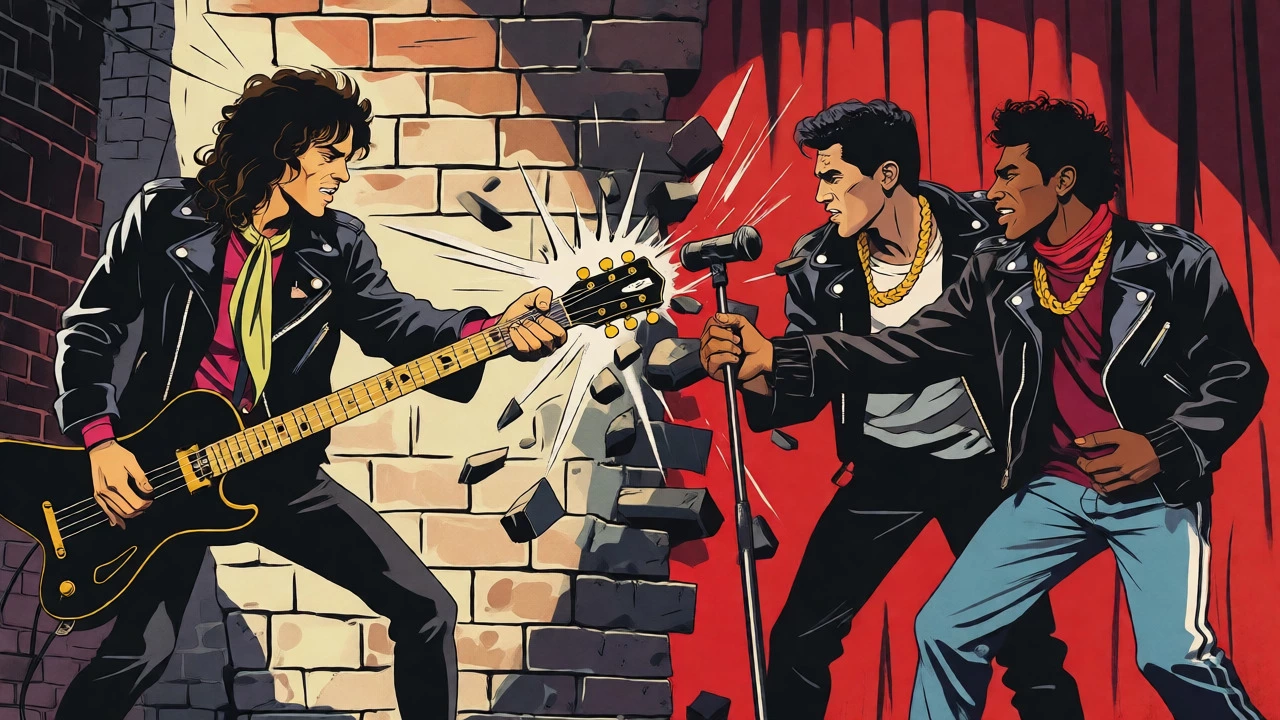
While the band cleaned up, they needed visibility. Enter Run-D.M.C., the hip-hop pioneers who wanted to cover "Walk This Way." Originally written by Tyler and Perry in 1975, the song had become a rock staple. But in 1986, hip-hop and rock existed in separate universes. Radio stations played one or the other; MTV showed one or the other. Producer Rick Rubin suggested a collaboration. Tyler and Perry agreed, recording vocals and guitar parts for the track in March 1986. Released as a single on July 4, 1986, the video literally showed the two groups breaking down a wall between them. The result was explosive. The single hit No. 4 on the Billboard Hot 100, introducing Aerosmith to a generation that only knew them from old vinyl crates. The Guardian argues this collaboration "saved Aerosmith’s career," proving that relevance could be borrowed through innovation.
| Year | Event/Release | Impact |
|---|---|---|
| 1984 | Perry & Whitford Return | Restored classic lineup; set stage for new deal. |
| 1985 | Done with Mirrors | Commercial disappointment; highlighted ongoing addiction issues. |
| 1986 | Collective Rehab | Mandated sobriety; stabilized band dynamics. |
| 1986 | "Walk This Way" w/ Run-D.M.C. | Crossover hit; reintroduced band to mainstream audience. |
| 1987 | Permanent Vacation | First multiplatinum album in a decade; established new sound. |
| 1989 | Pump | Peak commercial success; won Grammy; global expansion. |
Polishing the Sound: Permanent Vacation
Sobriety and exposure weren’t enough. Aerosmith needed a product that fit the MTV era. For Permanent Vacation (1987), Geffen insisted on outside help. They brought in producer Bruce Fairbairn and hired professional songwriters like Desmond Child. This was controversial among purists who loved the raw, bluesy grit of the 70s albums. But it worked. Tracks like "Dude (Looks Like a Lady)" and "Angel" were polished, radio-ready anthems. The album reached the top 10 in the US and sold over a million copies-the first time since the mid-70s. The tour that followed was strategic, focusing on North America to consolidate their fanbase before tackling Europe. It proved that Aerosmith could compete with younger hair metal acts like Mötley Crüe and Bon Jovi.

The Peak: Pump and Global Domination
If Permanent Vacation was the comeback, Pump (1989) was the coronation. Working again with Fairbairn, the band delivered their most cohesive album yet. Singles like "Love in an Elevator," "Janie’s Got a Gun," and "What It Takes" dominated airwaves. "Janie’s Got a Gun" earned them their first Grammy Award for Best Rock Performance by a Duo or Group With Vocal. Sales skyrocketed, with Pump eventually moving over 10 million copies worldwide. Crucially, this success finally broke open the UK market, leading to their first European tours since the 1970s. They weren’t just surviving; they were headlining arenas globally, outperforming their 70s peak in many metrics.
Why It Matters: More Than Just Nostalgia
Aerosmith’s story isn’t just about a band getting high and then sober. It’s a case study in adaptation. They survived because they accepted help-whether it was medical rehab, managerial tough love, or external songwriting. They embraced cross-genre collaboration when others clung to purity. Today, we see echoes of this strategy everywhere, from legacy artists featuring pop stars to bands rebranding for streaming playlists. Their 1980s resurgence demonstrated that longevity in rock requires evolution, not just endurance. They transformed from a cautionary tale of excess into icons of resilience, proving that a second act can be louder than the first.
Why did Aerosmith break up in the late 1970s?
The band fractured primarily due to severe drug and alcohol addiction, particularly involving vocalist Steven Tyler and guitarist Joe Perry. This led to erratic behavior, failed tours, and internal conflicts, causing Perry to leave in 1979 and Whitford in 1981.
How did the collaboration with Run-D.M.C. help Aerosmith?
The 1986 remix of "Walk This Way" crossed over from rock to hip-hop audiences, receiving heavy rotation on MTV. It reintroduced Aerosmith to a younger demographic and revitalized their career at a critical moment when they were considered obsolete.
Which Aerosmith album marked their true commercial comeback?
Permanent Vacation (1987) is widely regarded as the album that launched their successful comeback. It produced hit singles like "Dude (Looks Like a Lady)" and "Angel" and became their first multiplatinum album in a decade.
Did Aerosmith win any awards during their 1980s comeback?
Yes. In 1990, they won their first Grammy Award for Best Rock Performance by a Duo or Group With Vocal for the song "Janie’s Got a Gun" from the album Pump.
Was the 1980s comeback purely musical?
No. It involved significant management intervention, including mandatory group rehabilitation in 1986 and the hiring of external producers and songwriters to modernize their sound for the MTV era.