
Think about the biggest rock, pop, and hip-hop records of the 1990s. Now, picture the person behind the mixing console. For decades, that image was almost exclusively male. But look closer at the credits of albums like Tool’s Undertow, Sheryl Crow’s The Globe Sessions, or Janet Jackson’s janet.. You’ll find names that changed the sonic landscape of a decade. These weren’t just assistants; they were producers, engineers, and creative directors who defined what major records sounded like.
This isn’t just a list of "firsts." It’s an investigation into how women navigated a rigid industry to seize technical authority. From the gritty distortion of alternative metal to the futuristic beats of R&B, these figures didn’t just participate-they shaped the output. Let’s look at who they were, what they did, and why their work still matters today.
Sylvia Massy and the Art of Imperfection
If you want to understand the raw power of 1990s alternative rock, you have to talk about Sylvia Massy. She wasn’t just an engineer; she was a producer who believed that perfection was boring. Her breakthrough came with Tool’s 1993 debut album, Undertow. While many producers were trying to polish rock bands into radio-friendly shapes, Massy pushed them to be louder, messier, and more human.
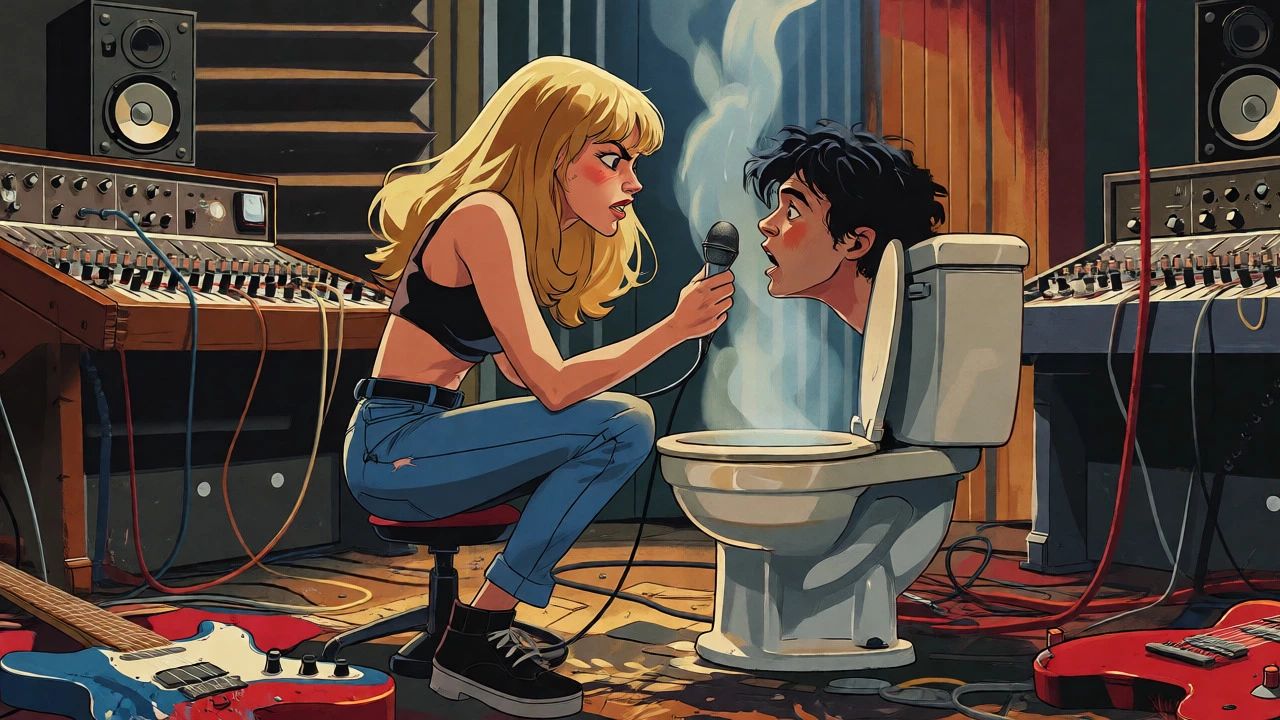
Massy’s approach was physical. She reportedly used unconventional techniques, such as recording vocals through a toilet bowl or smashing instruments, to capture a visceral intensity. This method helped Tool achieve multiplatinum status, proving that experimental engineering could drive commercial success. Her work on Undertow is a masterclass in preserving the energy of a live performance rather than sanitizing it for mass consumption.
Her influence extended far beyond metal. Throughout the 1990s, Massy worked with legends like Johnny Cash, Prince, and Tom Petty. She contributed to Johnny Cash’s Unchained (1996), part of the American Recordings series that won a Grammy for Best Country Album. By moving between heavy rock and roots music, Massy demonstrated that technical expertise wasn’t genre-bound. She turned down early opportunities with Prince to focus on Tool, a decision that highlighted her commitment to artistic vision over star power.
Trina Shoemaker Breaks the Glass Ceiling
In 1999, the Grammy Awards recognized a shift in the industry’s hierarchy. Trina Shoemaker became the first woman to win the award for Best Engineered Album, Non-Classical. She shared this honor with Tchad Blake and Andy Wallace for Sheryl Crow’s The Globe Sessions. This wasn’t a symbolic gesture; it was a validation of high-level technical skill in a category that had existed for nearly forty years without honoring a woman.
Shoemaker’s career illustrates the pipeline from assistant engineer to chief architect. Before her big win, she served as the chief engineer at Daniel Lanois’s Kingsway studio, working with artists like Emmylou Harris and Iggy Pop. On The Globe Sessions, she handled critical tracking and mixing duties, shaping the album’s crisp, organic sound. The recognition signaled that women could hold top-tier technical responsibility in mainstream rock and pop.
Her victory also highlighted a broader issue: visibility. Despite winning, Shoemaker noted that women engineers often remained invisible in popular narratives. Yet, her four Grammy wins and six nominations by the mid-2000s proved that excellence was undeniable. She paved the way for others, showing that technical authority could coexist with artistic collaboration.
Janet Jackson and Mariah Carey: Artist as Producer
While Massy and Shoemaker worked behind the scenes, other women claimed authority from the microphone. Janet Jackson took control of her 1993 album, janet.. Unlike many pop stars who relied entirely on production teams, Jackson co-produced every track, wrote every lyric, and co-wrote the arrangements. This level of involvement challenged the notion that female pop stars were merely vessels for male producers’ ideas.
Jackson’s collaboration with Jimmy Jam and Terry Lewis was powerful, but her authorship was structural. She directed the album’s thematic arc, vocal performances, and sequencing. This model normalized the idea of the female artist as a creative director, not just a performer.
Mariah Carey faced similar tensions. In 1991, she became only the second woman nominated for Producer of the Year, Non-Classical, for her work on Emotions. Although she initially faced pressure to defer to established producers, her demo tapes secured her record deal. Her story reflects the negotiation women often faced: possessing demonstrable songwriting and arranging skills while fighting for formal credit.
Missy Elliott and the Producer-Performer Hybrid
Late-1990s hip-hop saw a radical redefinition of the producer role through Missy Elliott. Working closely with Timbaland, Elliott didn’t just rap; she crafted entire sonic worlds. Her 1997 debut, Supa Dupa Fly, introduced a futuristic, percussive style that dominated charts and clubs.
Elliott’s production style was distinct: unconventional rhythmic spaces, heavily edited vocal effects, and cartoonish low-end frequencies. She blurred the lines between rapper, singer, songwriter, and producer. Her influence extended to hits for Aaliyah and Destiny’s Child, where her input shaped the vocal arrangements and beat structures.
By making production visible within her public identity, Elliott changed expectations. The producer wasn’t a shadowy figure in the back room; they were the star, the arranger, and the visual architect. This hybrid model empowered a generation of women to view technical creation as an extension of their artistic persona.
Lauryn Hill and Cross-Genre Authorship
Lauryn Hill demonstrated how album-level authorship could transcend genres. Her 1998 solo debut, The Miseducation of Lauryn Hill, won five Grammys, including Album of the Year. It was the first album by a woman to debut at No. 1 on the Billboard 200.
Hill’s work integrated sampled hip-hop techniques with live band instrumentation and soulful melodies. She controlled the vocal arrangements, lyrical perspective, and musical direction. This cross-genre approach showed that a woman could occupy the center of rap-group authorship while maintaining distinct artistic integrity. Her earlier work with The Fugees on The Score (1996) laid the groundwork, proving that female voices could lead complex, layered productions.
Madonna, Björk, and Electronic Innovation
The late 1990s also saw women driving electronic pop reinvention. Madonna partnered with William Orbit for Ray of Light (1998). While Orbit handled much of the programming, Madonna’s artistic direction transformed her sonic identity. Grammy records list both as producers, highlighting a collaborative model where the artist drove the conceptual framework.
Similarly, Björk composed, arranged, and produced her own material. Her 1997 album Homogenic merged electronic beats with orchestral strings, requiring precise integration of digital and acoustic elements. Björk’s role involved vocal direction and arrangement decisions that defied conventional pop structures. Both artists used technology not just as a tool, but as a compositional partner, asserting control over the final texture of their records.
Leslie Ann Jones: The Institutional Pioneer
None of these breakthroughs happened in a vacuum. Leslie Ann Jones provides essential context. Hired as the first woman assistant engineer at ABC Studios in Los Angeles in 1975, she built a career spanning decades. Her 1990s credits include Alice in Chains’ Facelift and Dee Dee Bridgewater’s Grammy-winning Dear Ella.
Jones’s mentorship of Sylvia Massy illustrates how professional transmission between women expanded access to high-profile sessions. Her career demonstrates that the 1990s surge wasn’t spontaneous; it was the result of women developing technical expertise through long-term institutional employment and independent recording. She proved that persistence in the face of exclusion could yield lasting influence.
| Name | Primary Role | Major Work | Impact |
|---|---|---|---|
| Sylvia Massy | Producer/Engineer | Tool - Undertow | Defined aggressive, experimental rock sound |
| Trina Shoemaker | Engineer/Mixer | Sheryl Crow - The Globe Sessions | First woman to win Grammy for Best Engineered Album |
| Janet Jackson | Artist/Co-Producer | janet. | Asserted full album-level creative control |
| Missy Elliott | Producer/Rapper | Supa Dupa Fly | Pioneered futuristic hip-hop production |
| Lauryn Hill | Artist/Producer | The Miseducation of Lauryn Hill | Cross-genre album authorship |
| Leslie Ann Jones | Engineer/Executive | Alice in Chains - Facelift | Institutional pioneer and mentor |
Frequently Asked Questions
Who was the first woman to win a Grammy for Best Engineered Album?
Trina Shoemaker was the first woman to win the Grammy Award for Best Engineered Album, Non-Classical. She won in 1999 for her work on Sheryl Crow's The Globe Sessions, sharing the award with Tchad Blake and Andy Wallace.
Did Sylvia Massy produce Tool's Undertow?
Yes, Sylvia Massy is credited as the producer of Tool's debut album Undertow (1993). Her unconventional recording methods helped create the album's intense, authentic sound, contributing to its triple-platinum status.
How did Janet Jackson exercise production authority?
On her 1993 album janet., Janet Jackson co-produced every track, wrote every lyric, and co-wrote the arrangements. This gave her significant creative control over the album's direction, distinguishing her role from artists who simply performed pre-written material.
What was unique about Missy Elliott's production style?
Missy Elliott combined roles as rapper, singer, and producer. Her style featured futuristic textures, unconventional rhythmic spaces, and heavily edited vocal effects. She made production authorship a visible part of her public identity, influencing hip-hop and R&B significantly.
Why are women engineers often overlooked in music history?
Women engineers faced gendered barriers to technical credibility and were often absent from award histories despite significant contributions. Credit ambiguity also played a role, where women exercised production authority through co-production or arrangement but received less prominent formal credits than male collaborators.