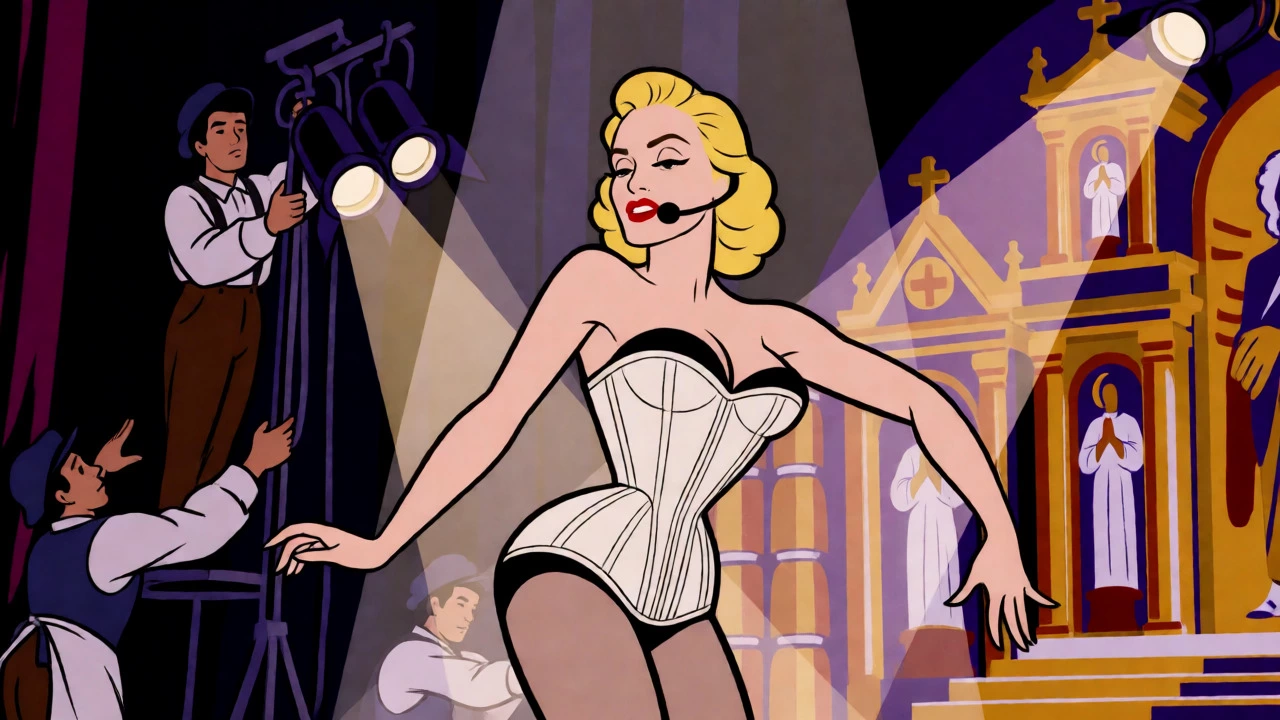

Think about the last time you saw a stadium tour with narrative arcs, haute couture costumes, and wireless headset microphones. You might think it started with Beyoncé or Taylor Swift, but the blueprint was actually drawn in the 1990s. This decade marked a seismic shift where women-led tours stopped being secondary acts and became the biggest productions on the planet. Artists like Madonna, Janet Jackson, and Celine Dion didn't just sing; they built empires of light, sound, and fashion that redefined what a concert could be.
The Blueprint for Modern Spectacle
If you want to understand how modern pop concerts work, look no further than Madonna’s Blond Ambition World Tour. Running from April to August 1990, this wasn't just a series of gigs; it was a theatrical event. Madonna worked with choreographer Vincent Patterson and art director Christopher Ciccone at Walt Disney Studios in Burbank, rehearsing for hours daily. The result? A show that blended Catholic imagery, cinematic sets, and Jean-Paul Gaultier's iconic conical corsets.
But here is the technical detail that changed everything: the "Madonna mic." Before this, singers held microphones. Madonna used a radio-frequency hands-free headset, allowing her to dance violently while maintaining vocal clarity. This single piece of tech, developed for her tour, became the industry standard for every dancing pop star who followed. It proved that a female artist could drive technological innovation in live sound engineering, not just follow trends set by male rock bands.
Narrative Depth and Social Commentary
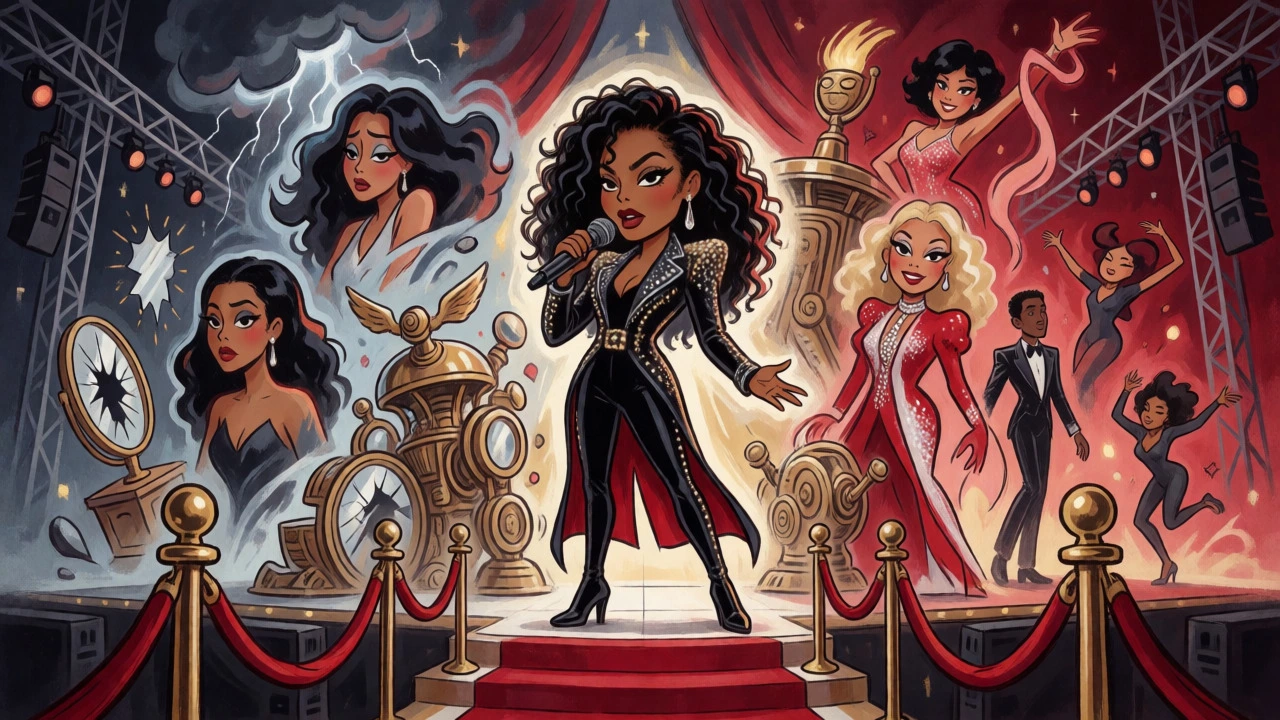
While Madonna focused on visual shock, Janet Jackson’s The Velvet Rope Tour (1998-1999) brought psychological depth to the stage. Supporting her album *The Velvet Rope*, the tour tackled themes of depression, sexuality, and domestic violence. Rolling Stone called it a "Vegas-style extravagance," noting that the special effects rivaled blockbuster films.
This tour spanned six legs and 125 shows across five continents. The logistics were insane: moving staging, lighting trusses, and wardrobe between North America, Europe, Africa, Oceania, and Asia. The set list wasn't random; it was a curated career retrospective mixed with new conceptual material. Songs like "Got 'til It's Gone" flowed into hits like "Nasty," creating a seamless narrative. This approach showed that R&B and pop artists could command the same creative ambition as progressive rock operas, using the stage to discuss social issues rather than just entertain.
Vocal Powerhouses and Global Reach
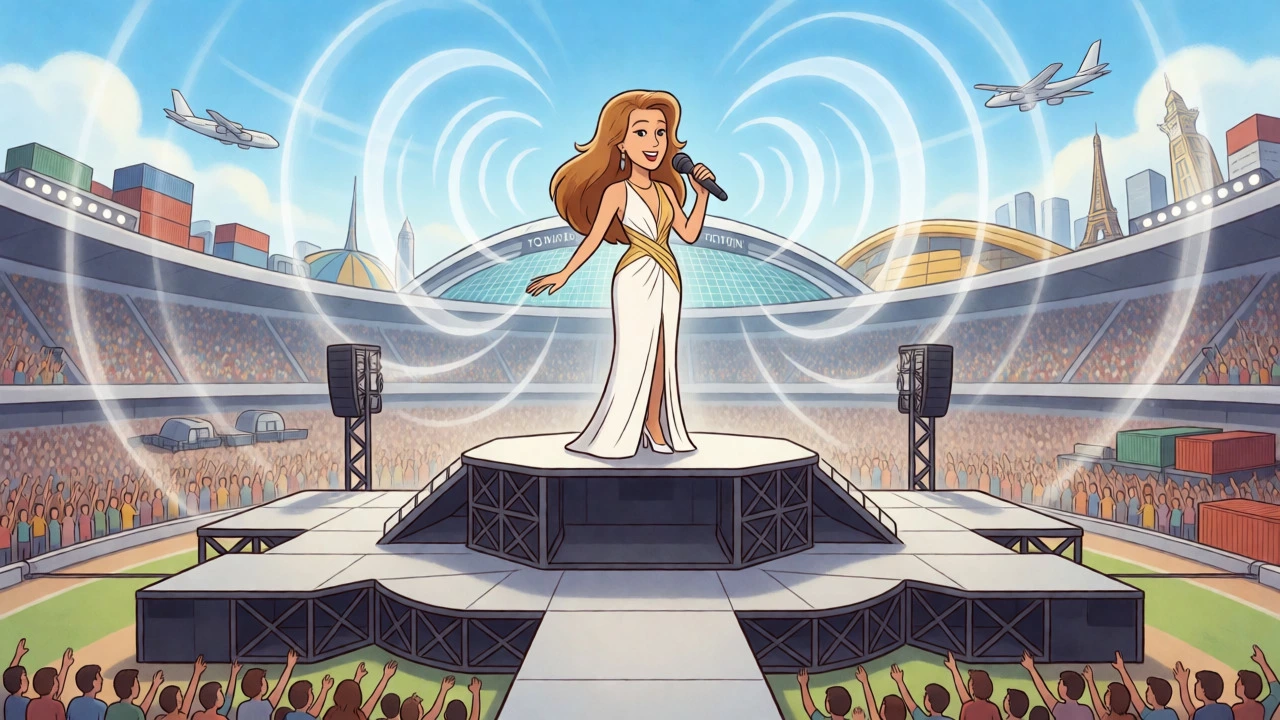
Not all 1990s diva tours relied on controversial imagery. Some, like Celine Dion’s Falling Into You Tour, proved that sheer vocal power and massive scale could dominate the market. This tour ran for over a year, covering more than 148 shows in at least 18 countries. In Canada alone, she played multiple dates at venues like Montreal’s Molson Centre, drawing crowds of around 15,000 per night.
Dion’s production was less about narrative theater and more about scalable elegance. Her team designed modular stages that could adapt to arenas ranging from 10,000 to 15,000 seats. This flexibility allowed her to maintain high production values without the heavy logistical burden of complex mechanical sets. It demonstrated that consistency and vocal excellence were viable strategies for global domination, appealing to audiences who wanted powerful ballads delivered with precision.
The Stadium Scale and Asian Markets
Let’s talk numbers. In 1996, Mariah Carey performed at the Tokyo Dome before 50,000 fans. This wasn't a fluke; it highlighted Japan's critical role in the global music economy. Carey’s Daydream World Tour concentrated heavily on Asia, recognizing that international markets could sustain careers better than domestic ones alone. The concert was filmed and later released as *Live at the Tokyo Dome*, showcasing a set list packed with hits like "Fantasy" and "Hero."
Similarly, Tina Turner’s Wildest Dreams Tour (1996-1997) ran for nearly 16 months. Turner, already a veteran, proved that mature female rock artists could compete directly with male counterparts in stadium-scale touring. Her ability to fill large venues across Europe and North America challenged the lingering industry bias that only young male rockers could sell out stadiums. These tours weren't just concerts; they were economic engines that generated tens of millions in revenue through ticket sales, merchandise, and broadcast rights.
Production Complexity and Logistics
Behind the glamour lay brutal logistics. Mounting these tours required months of pre-production. For Blond Ambition, rehearsals involved intense physical training and costume fittings. For The Velvet Rope, coordinating freight shipments of staging equipment across oceans required sophisticated supply chain management. Crews had to adapt "Vegas-style" lighting rigs to diverse venue acoustics, from European cathedrals to American arenas.
Departmental roles became codified during this era. You had tour managers, production managers, lighting designers like Peter Morse, and specialized makeup teams. This professionalization meant that future tours could adopt best practices from these 1990s benchmarks. The complexity ensured that even if a singer lost their voice, the production machinery kept running smoothly, protecting the investment.
| Artist/Tour | Duration & Shows | Key Innovation | Audience Scale |
|---|---|---|---|
| Madonna: Blond Ambition | Apr-Aug 1990 (39 shows) | Wireless headset mic; Narrative structure | Stadiums (up to 30k+) |
| Janet Jackson: Velvet Rope | Apr 1998-Jan 1999 (125 shows) | Social commentary; Vegas-style effects | Arenas (Global routing) |
| Celine Dion: Falling Into You | Mar 1996-Jun 1997 (148+ shows) | Modular stage design; Vocal focus | Arenas (10k-15k capacity) |
| Mariah Carey: Daydream | 1996 (Japan Focus) | Asian market dominance; TV broadcast | Stadiums (50k at Tokyo Dome) |
| Tina Turner: Wildest Dreams | May 1996-Aug 1997 | Mature rock appeal; Long-haul endurance | Stadiums/Arenas |
Legacy and Cultural Impact
Why does this matter today? Because the 1990s shattered the glass ceiling of live performance economics. Before this decade, large-scale touring was seen as a male domain. Female artists were often booked as opening acts or limited to smaller theaters. By the late 90s, women were headlining multi-continent circuits, commanding budgets comparable to U2 or the Rolling Stones.
The legacy is visible in every major tour since. Beyoncé’s theatrical narratives echo Janet Jackson’s Velvet Rope. Taylor Swift’s stadium spectacles borrow from Madonna’s integration of fashion and storytelling. These 1990s pioneers didn't just sell tickets; they institutionalized high-concept production as a requirement for top-tier pop stardom. They proved that women could lead technically complex, financially massive, and culturally significant live events.
What made Madonna's Blond Ambition tour so revolutionary?
It introduced the widespread use of the wireless headset microphone, known as the "Madonna mic," which allowed performers to dance while singing clearly. It also integrated high-fashion costumes by Jean-Paul Gaultier and a narrative structure inspired by theater, setting a new standard for pop concerts.
How did Janet Jackson's Velvet Rope Tour differ from other 1990s tours?
Unlike tours focused solely on hits or visuals, The Velvet Rope Tour incorporated serious social themes like depression, sexuality, and domestic violence. It was described as a "Vegas-style extravagance" with complex narrative sequences and medleys that functioned as a psychological journey rather than just a concert.
Did Celine Dion use complex stage effects in her Falling Into You Tour?
Dion's production was less about theatrical narrative and more about scalable elegance. She used modular stage designs adaptable to various arena sizes, focusing on high-quality sound and vocal performance rather than controversial imagery or complex mechanical sets.
Why was the Tokyo Dome important for Mariah Carey's career?
The 1996 Tokyo Dome concert drew 50,000 fans and highlighted Japan's importance as a key market for Western pop stars. The event was televised and recorded, cementing Carey's status in Asia and demonstrating the financial viability of targeting specific international regions.
How did 1990s women-led tours change the music industry?
They proved that female artists could headline multi-continent, high-grossing tours with technical complexity equal to male superstars. This shifted industry perception, making large-scale touring a viable and expected part of a female pop star's career trajectory.


