
Imagine spending $250,000 to record an album in 1989, only to watch the industry standard drop to $175,000 just two years later. That wasn't a recession; it was a revolution in how music got made. The 1990s studio economics defined a decade where the monopoly of million-dollar commercial facilities cracked under the weight of affordable digital technology. For artists and producers, this meant a choice that didn't exist before: pay for prestige and power, or buy your own gear and keep the change.
The High Cost of Prestige
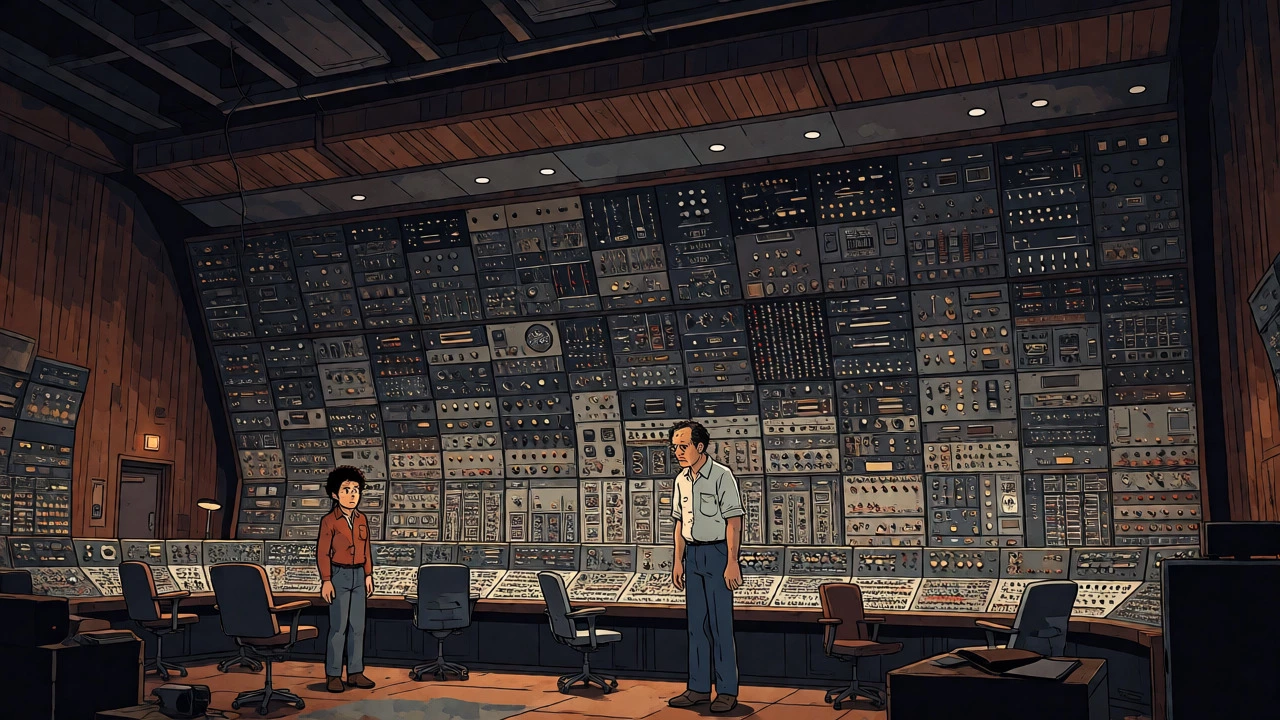
Before the mid-90s, if you wanted a professional record, you went to a major facility. These weren't just rooms with microphones; they were capital-intensive machines. Building a replica of the famous Record Plant in Los Angeles would have cost around $1.5 million in 1990 dollars, covering construction, acoustics, and equipment. A single 32-track digital recorder could set you back $140,000. Even a standard 24-track machine ranged from $25,000 to $90,000.
To survive, these places needed high occupancy rates and premium hourly fees. But here’s the catch: high overhead doesn’t care if the phone rings. In late 1990, London’s Power Plant and Maison Rouge were fully booked, yet their parent company entered receivership because debt financing collapsed. Being busy wasn’t enough when interest payments and staff salaries ate up every dollar. The model relied on labels having deep pockets, assuming albums would always cost six figures.
The ADAT Revolution
Then came the device that changed everything: the Alesis ADAT. This wasn't just another tape machine; it was a game-changer. For less than $14,000, you could get three ADAT units and a remote controller, giving you 24 tracks of digital audio. Compare that to the hundreds of thousands required for a traditional 24-track setup, and the math becomes obvious.
The ADAT recorded eight discrete tracks at 16-bit resolution without compression, offering sound quality that was surprisingly close to expensive digital formats. Suddenly, a bedroom producer could build a credible system for a fraction of the cost. You didn't need a console the size of a dining table. You didn't need a dedicated engineer on payroll. You just needed a desk, some cables, and the drive to create.
Budget Rooms vs. Major Facilities: The Numbers Game
Let’s look at the actual money involved. This wasn't theoretical; these were real prices from trade magazines like Mix and Billboard.
| Cost Factor | Major Facility (Commercial) | Budget/Project Studio |
|---|---|---|
| Initial Investment | $500,000 - $1.5M+ (Construction + Gear) | $13,000 - $20,000 (Core Digital Gear) |
| Hourly Rate | $20 - $190 per hour (Varied by room/console) | N/A (Owner-operated, zero hourly fee) |
| Equipment Rental | Included in high rates | ADAT rental: ~$175/week |
| Album Budget Trend | Dropped from $250k to $175k (1989-1991) | Enabled sub-$100k productions |
Notice the rate spread. In 1995, some top-tier LA studios charged $190 an hour. Meanwhile, smaller rooms offered 24-track time for as little as $20 an hour. If you owned your own ADAT rig, you paid $0 per hour after the initial purchase. For an artist working slowly-writing, tweaking, re-recording vocals ten times-that difference is massive. Commercial studios charge for time; budget rooms charge for access.
Why Artists Switched Sides
It wasn't just about saving money. It was about control. When you rent a $150/hour room, every minute of indecision costs you cash. You rush performances. You skip experiments. You compromise because the clock is ticking.
With a home studio, you work at your own pace. You can program MIDI synths all night and wake up fresh to track vocals. You can try weird guitar pedals for three hours without worrying about the bill. This freedom led to a surge in creativity. Indie bands like Nirvana proved you didn't need a polished, expensive sound to connect with millions. They used grit and immediacy, things often lost in the sterile perfection of high-end rooms.
However, budget rooms had limits. They couldn't easily record a full drum kit with proper isolation. They lacked large live rooms for orchestras or big bands. And let's be honest, most bedrooms don't have acoustic treatment worth a damn. So, a hybrid workflow emerged. Artists wrote and demoed at home, then booked a major facility just for drums, final vocals, or mixing. They reserved the expensive time for what truly mattered.
The Survival of the Fittest Studios
Did major facilities die? No. But they had to adapt. The ones that survived stopped selling "access to tracks" and started selling "experience." They marketed their vintage consoles, their legendary engineers, and their unique vibe. Places like Tiny Telephone in San Francisco stayed booked not because they were cheap, but because they offered something you couldn't buy off the shelf: character.
Meanwhile, many new project studios popped up and vanished quickly. Low barriers to entry meant anyone could start one, but low business durability meant most failed within a few years. Running a studio isn't just about owning gear; it's about client acquisition, maintenance, and keeping the lights on. The market flooded with options, driving prices down further and squeezing margins for everyone.
What This Means Today
The 1990s established the modern music economy. We still see the same dynamic: high-end boutique studios catering to elite projects, and countless home setups handling the bulk of production. The democratization of tools lowered the barrier to entry but raised the bar for skill. Everyone has access to pro-sounding gear now, so the differentiator is no longer the equipment-it's the ear, the idea, and the hustle.
If you're looking back at this era, remember that the shift wasn't instant. It was a messy, uneven transition where some legends thrived by pivoting, and others folded under the weight of their own mortgages. The lesson? Technology changes fast, but value comes from solving problems, whether that's providing a great room or providing total creative freedom.
How much did it cost to build a home studio in the 1990s?
A basic core setup using digital multitrackers like the Alesis ADAT typically cost between $13,000 and $20,000. This included the recorders, mixer, and necessary cabling. Adding acoustic treatment and better microphones could push this higher, but it remained far cheaper than commercial alternatives.
Why did major studio rates vary so widely?
Rates depended on the console type (SSL vs. Neve), track count (24 vs. 48), room size, and reputation. In 1990, rates ranged from $20/hour for small rooms to $190/hour for flagship facilities. Location also played a huge role, with LA and New York commanding higher premiums than regional markets.
Did home studios replace professional engineers?
Not entirely. While artists gained more autonomy, complex mixes and specialized recordings still required expert ears. Many artists handled pre-production at home but hired freelance engineers for final tracking or mixing, blending DIY efficiency with professional polish.
What was the biggest financial risk for major studios?
High fixed overhead combined with declining album budgets. Even when rooms were fully booked, debt servicing and staffing costs could bankrupt a facility, as seen with the Scarlett Group in 1990. They needed consistent high-volume work to cover investments that often exceeded $1 million.
How did the Alesis ADAT impact the industry?
It democratized multi-track recording by providing 24 tracks of digital quality for under $14,000. This allowed independent artists to produce radio-ready demos and albums without renting expensive commercial time, directly causing the decline in demand for mid-tier commercial studios.

