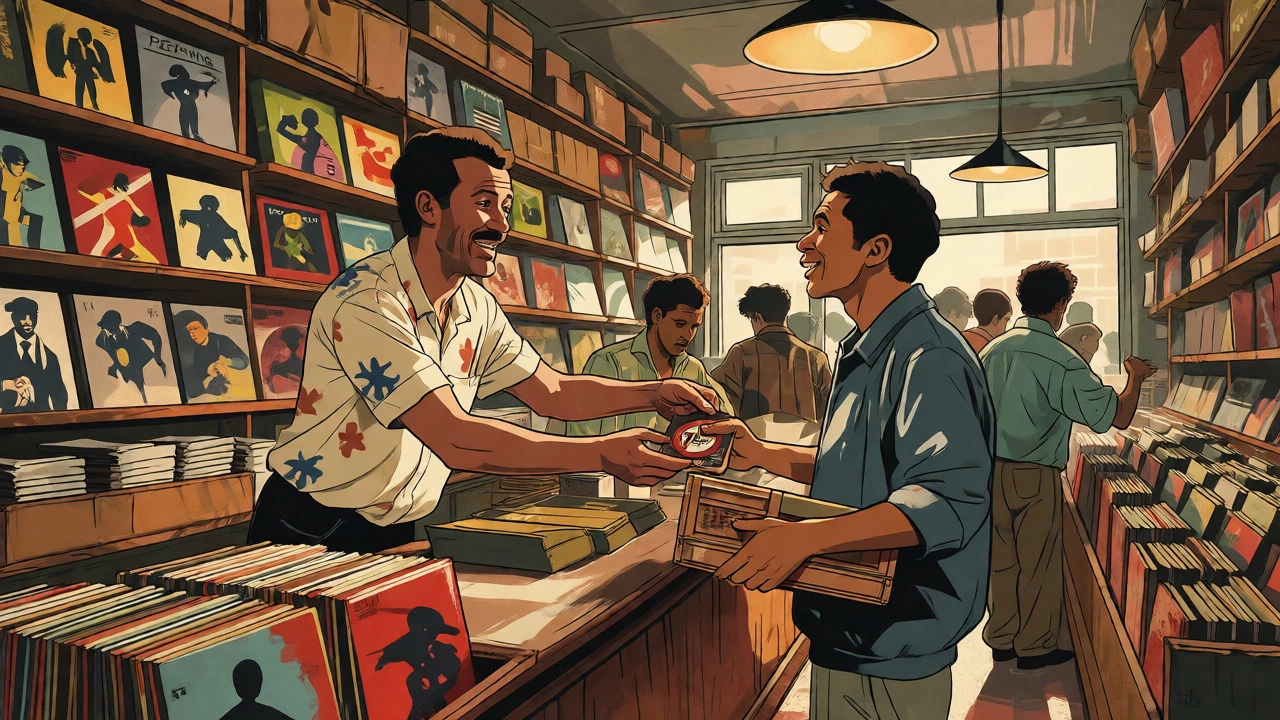

You think you know how music gets from a studio in Kingston to your speakers? In the 1990s, it wasn't an algorithm deciding what you heard. It was a guy named George Price opening his shop doors in Shepherd's Bush, or a crate-digger in Tokyo flying to Jamaica just to cut a dubplate. The 1990s reggae distribution network was a messy, physical, high-stakes web of independent shops, direct imports, and cultural exchange that defied the logic of mainstream retail. If you were a selector in London, Manchester, or Yokohama, your entire musical identity depended on which records landed on the shelf at Peckings or Supertone that week.
This wasn't just about buying vinyl. It was about access. While major chains took weeks to stock niche genres, independent reggae shops operated on a seven-day turnaround cycle. Records flew from Kingston pressing plants to London counters faster than most people could plan their weekend plans. This speed created a global feedback loop where Japanese sound systems influenced Jamaican dances, and UK labels like Ital Records launched careers that never touched American radio. Let’s look at how this intricate machine actually worked, who ran it, and why its collapse changed everything for reggae fans today.
The London Hub: Where the World Came to Buy
If Kingston was the heart of reggae, London was its lungs. By the late 1980s, the capital had grown from a handful of outlets to "dozens" of specialist shops, according to historical records. These weren't just stores; they were command centers. You couldn't talk about 1990s distribution without talking about the big three: Peckings, Dub Vendor, and Supertone.
Peckings, founded by George "Peckings" Price in Shepherd's Bush around 1973-1974, holds the title of Britain’s first shop to import records directly from Kingston. Located at 142 Askew Road, it advertised itself as specialists in imports, selling albums starting at £2 in its early days. But by the 1990s, Peckings was more than a price point; it was a curator. Selectors didn't just browse; they interrogated the staff. Did Channel One press enough copies? Is this Studio One reissue authentic? The shop’s reputation rested on these answers.
Then there was Dub Vendor. Founded in 1976 with a flagship store opening in Clapham Junction in 1982, Dub Vendor became the premier source for new Jamaican releases. The Museum of London notes that Dub Vendor’s success hinged on obtaining new Jamaican releases "only a week after their release." That seven-day window is critical. It meant a track released in Kingston on Friday could be played in a London dancehall the following Saturday. This immediacy allowed UK selectors to stay in sync with the island’s latest trends, something mainstream distributors simply couldn't match.
Supertone Records in Brixton adds another layer. Sources disagree slightly on its founding-some say 1983, others 1984-but everyone agrees it evolved from a soundsystem launched in 1969. By the 1990s, Supertone was described by Time Out as "one of the world’s foremost reggae record traders," stocking everything from ancient ska to fresh dancehall cuts. It served both the hardcore collector hunting for a rare rocksteady 45 and the DJ needing the latest digital ragga hit. These shops formed a dense local network. A buyer might visit Daddy Kool in Soho for dubplates, then head to Peckings for roots, and finish at Supertone for the new stuff. This multi-shop circuit ensured that no single retailer held all the power, keeping the market competitive and diverse.
The Seven-Day Cycle: How Imports Actually Moved
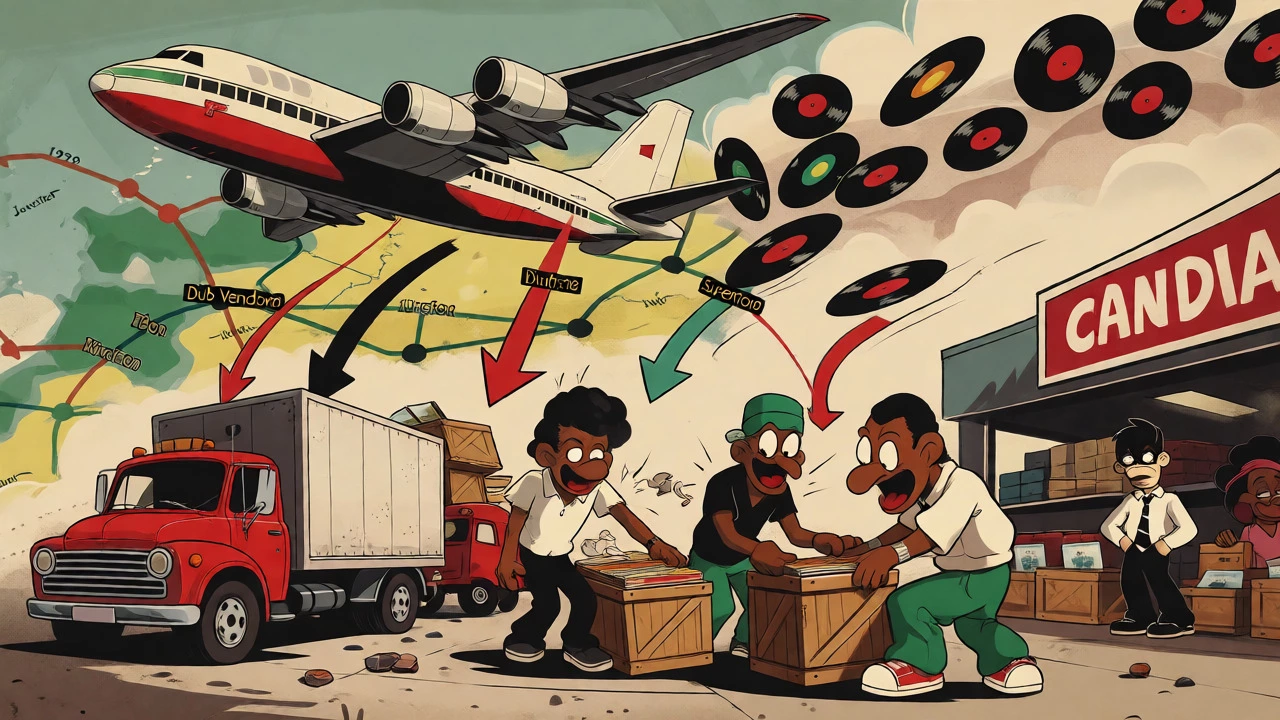
How did a record get from a pressing plant in Kingston to a shelf in West London in under a week? It wasn't magic; it was logistics. The 1990s relied on direct relationships between Jamaican producers and UK shop owners. There was no central warehouse in New York holding inventory for months. Instead, shipments of 7-inch singles and 12-inch maxis were flown or shipped weekly.
This rapid turnover required trust. Shop owners like those at Dub Vendor had to know exactly what was coming before it arrived. They communicated with producers via phone or fax, placing orders based on buzz from the streets of Kingston. If a particular artist like Shabba Ranks or Buju Banton was dominating the local dances, the order went out immediately. This system minimized risk but maximized reward. If you guessed right, you sold out by Monday. If you guessed wrong, you sat on crates of unsold vinyl.
The impact of this speed cannot be overstated. Mainstream chain stores, reliant on larger national distributors, often took two to four weeks to add niche imports to their shelves. This gave independent outlets a one-to-three-week advantage. For a DJ, playing a track before anyone else was social currency. It established credibility. It proved you had connections. This competitive edge kept the indie shops alive despite lower volume than the giants like HMV or Virgin. They weren't competing on breadth; they were competing on freshness and specificity.
Beyond London: The Regional Network
While London dominated, it wasn't the only player. The 1990s saw the rise of regional hubs that served specific communities and reduced reliance on the capital. Birmingham, Manchester, Leicester, and Essex all developed their own micro-economies of reggae distribution.
In Birmingham, Black Wax Records on Lozells Road, run by Keith Thornton, operated as a triple threat: a retail shop, a record label, and a distributor. Black Wax handled its own catalogues plus those of other labels like K&B and Locks. This model turned a single storefront into a regional distribution hub. DJs from across the Midlands didn't need to travel to London; they could source exclusive tracks locally. This decentralization helped sustain the culture outside the M25 ring road.
Manchester’s Fat City Records, opened in Afflecks Palace in 1993, catered to a broader underground taste, mixing hip hop, funk, jazz, soul, and reggae. Its presence in a famous indoor market brought reggae to audiences who might not have walked into a dedicated "dub shack." Similarly, Leicester’s 2Funky Records, opened in 1997, specialized in rap, reggae, and dance music, serving the East Midlands until the end of the decade. These shops adjusted their stock based on weekly customer demand, effectively crowdsourcing their inventory. If customers asked for lovers rock, the owner sourced it. If they wanted digital dancehall, that came next. This responsiveness made them indispensable to local scenes.
The Japan Connection: Importers, Archivists, and Exporters
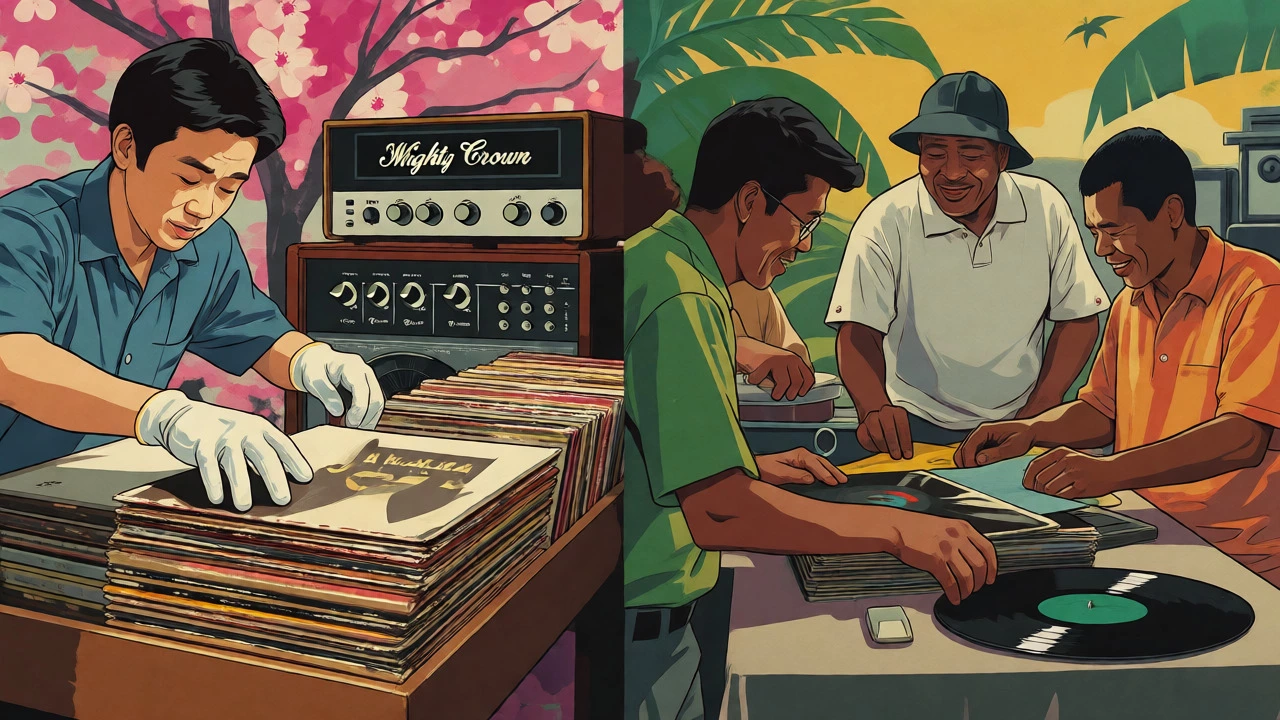
Here is where the story gets interesting. Japan wasn't just a consumer market; it was a partner in preservation and innovation. By the 1990s, Japanese collectors had developed a reputation for serious archiving. As noted by the Jamaica Music Atlas, Japanese buyers purchased Jamaican vinyl "seriously and stored it well." This care preserved thousands of titles that might have otherwise been discarded in Jamaica due to humidity or lack of interest.
Dub Store Records in Tokyo emerged as a key player, praised for reissuing original Jamaican singles with precision. They didn't just resell old stock; they remastered and documented hundreds of titles, shipping them back to Europe and North America. This created a bidirectional flow. Records left Jamaica for Japan, got archived, and returned to the global market as high-quality reissues.
The cultural exchange went deeper than commerce. Sound systems like Mighty Crown, formed in 1991, flew to Kingston to cut custom dubplates. They booked Jamaican artists for festivals in Yokohama and sent their selectors back to Jamaican dances, where they were judged by locals. This loop validated Japanese involvement in the culture. Artists like Pushim, Fireball, and Rankin Taxi recorded in both Japanese and Patois, creating bilingual products that circulated through Japanese shops and overseas outlets. Japan became a custodian of the genre, ensuring that obscure roots titles remained available long after they vanished from Jamaican shelves.
Labels Within Shops: The Indie Model
A unique feature of 1990s distribution was the blurring of lines between retailer and manufacturer. Many shops ran their own labels, turning a single address into a full-service industry node. Take Ital Records in Hackney. Located on Stoke Newington High Street, it primarily sold reggae but also housed the Ital Records label, specializing in Lovers Rock by UK artists like Jean Adebambo and Trevor Walters. This allowed local Black British artists to reach audiences through in-store sales and targeted distribution to other shops.
This model bypassed the gatekeepers of major labels. An artist could record a song, press 500 to 1,000 copies, and sell them directly through the shop. If it caught on, the shop distributed it to partners like Peckings or Dub Vendor. It was a low-risk, high-reward ecosystem. Another example is Lion Vibes, which started as a physical operation and later transitioned to a hybrid online-physical model, illustrating the shift toward digital while maintaining the indie spirit. These shop-label hybrids ensured that niche genres like Lovers Rock or dub poetry survived, even if they never charted on Billboard.
The Decline and Legacy
The 1990s marked the peak of physical reggae shop density. Today, only about ten specialist shops remain in London, down from dozens-a reduction of nearly 60% over three decades. Digital formats and online stores supplanted much of the physical demand. Yet, the infrastructure built in the 1990s persists. Online outlets like ReggaeCollector and Lion Vibes rely on the collector culture established then. The Japanese archives continue to feed the global market with reissues.
The legacy isn't just in the records still circulating; it's in the knowledge. The curation standards set by Peckings and Dub Vendor taught generations how to listen. The direct import routes proved that niche markets could sustain themselves without major corporate backing. And the Japanese connection showed that preservation is a form of participation. When you buy a reissue today, you're likely benefiting from a network that started with a flight from Kingston to Heathrow in 1992.
| Shop/Entity | Location | Primary Role | Key Feature |
|---|---|---|---|
| Peckings | London (Shepherd's Bush) | Retail & Import | First direct importer from Kingston; curated selection |
| Dub Vendor | London (Clapham Junction) | Retail & Distribution | 7-day turnaround for new Jamaican releases |
| Supertone | London (Brixton) | Retail & Soundsystem | Stock range from ancient ska to current dancehall |
| Black Wax | Birmingham | Retail, Label & Distributor | Regional hub handling multiple indie labels |
| Dub Store Records | Tokyo, Japan | Reissue & Archivist | Precision remastering; bidirectional export/import |
Why were independent reggae shops faster than mainstream retailers?
Independent shops like Dub Vendor had direct relationships with Jamaican producers and pressing plants, allowing them to fly or ship records within a week of release. Mainstream chains relied on larger national distributors who added niche imports on slower schedules, often taking 2-4 weeks, giving indies a significant speed advantage for new tracks.
What role did Japan play in 1990s reggae distribution?
Japan acted as both a major importer and a preserver. Japanese collectors bought and carefully stored Jamaican vinyl, preserving titles that might have been lost. Labels like Dub Store Records reissued these archives with high precision, exporting them back to global markets. Additionally, Japanese sound systems like Mighty Crown engaged in cultural exchange by cutting dubplates in Kingston and hosting Jamaican artists.
Did record shops in the 1990s operate as record labels too?
Yes, many did. Shops like Ital Records in London and Black Wax in Birmingham combined retail with label operations. They signed local artists, manufactured small runs of records (often 500-1,000 copies), and distributed them through their own stores and partner networks, bypassing major label gatekeepers.
How many reggae specialty shops existed in London during the 1990s?
By the late 1980s, London had grown from fewer than five specialist shops in the 1960s to "dozens" (estimated at least 24) of reggae-focused outlets. This density supported a vibrant local scene and allowed for frequent comparison shopping among different curators.
What happened to the physical reggae shops after the 1990s?
The number of physical shops declined significantly, dropping from dozens to around ten in London by the early 2020s. This was driven by the rise of digital downloads, streaming, and online mail-order services. However, the collecting culture and archival efforts from the 1990s, particularly in Japan, continue to influence how reggae music is discovered and preserved today.