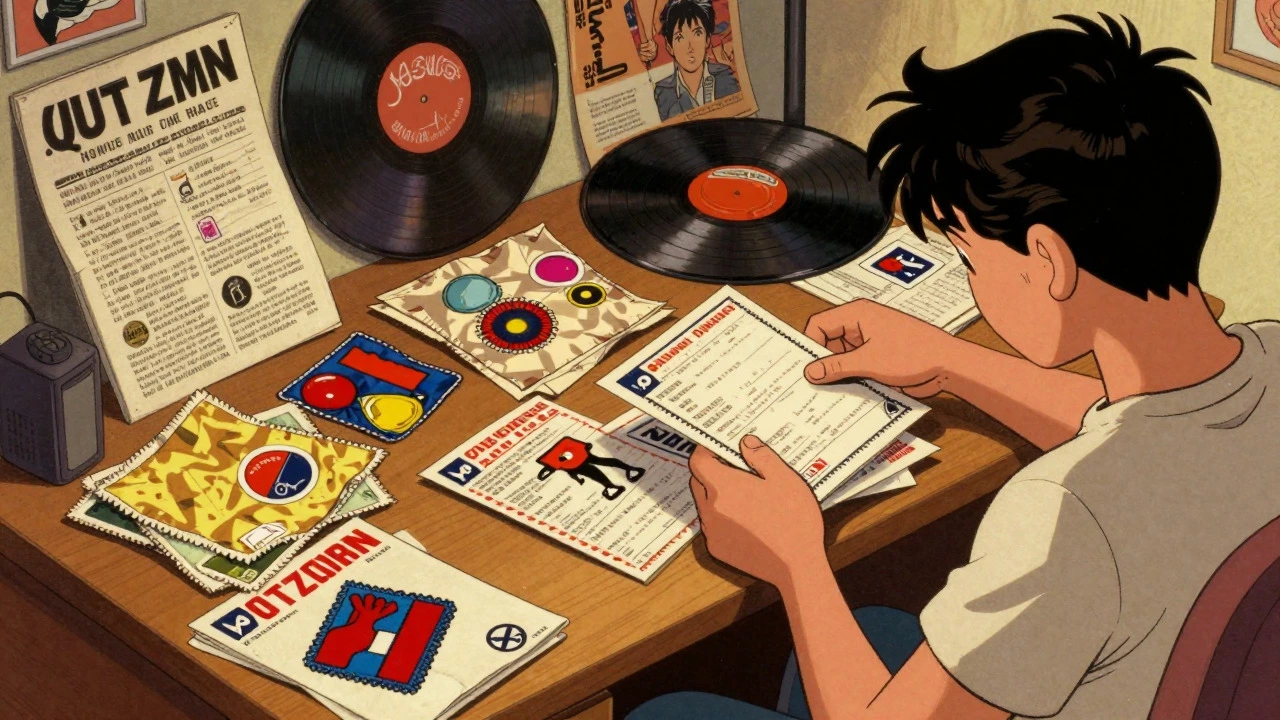

You didn't need a credit card to belong to the scene in the 1990s. You needed a few dollars, a self-addressed stamped envelope, and a willingness to wait weeks for a package filled with photocopied paper, vinyl records, and cloth squares. This was the era of the zine bundle, a low-cost collection of printed matter, stickers, and patches that served as the lifeblood of underground music communities. While modern fans stream music instantly, the tactile culture of the 1990s relied on physical artifacts to build identity, spread political messages, and support bands like Rancid, Bikini Kill, and Bad Brains.
This guide breaks down how these merch bundles worked, why they mattered, and what you can still find from that decade today. We’ll look at the economics of mailorder distros, the craft of making patches, and the role of stickers in riot grrrl culture.
The Anatomy of a Mailorder Bundle
In the mid-1990s, if you wanted to discover new music or read about local shows, you turned to the back pages of magazines like Punk Planet or Maximum Rocknroll. These publications were filled with ads for "distros"-distribution networks run by individuals out of their bedrooms or basements.
A typical order might look like this:
- One copy of a local punk zine ($2.00-$3.00)
- A 7-inch single from an independent label ($3.00-$4.00)
- A handful of band stickers (free or $0.50)
- A screen-printed patch ($2.00-$5.00)
Total cost? Around $10.00 plus postage. According to academic research from Ohio State University on 1990s zine distribution, prices typically ranged between $0.50 and $2.50 per zine when bought through distros, though mainstream review listings in 1997 showed prices up to $6.00. The most common price point was $3.00. This affordability allowed kids with little money to participate fully in the culture. You weren’t just buying a product; you were funding a community infrastructure that operated on razor-thin margins.
Distros like Very Distribution in Philadelphia or Mutant Pop acted as hubs. They didn’t just sell one thing. They bundled zines, flyers, and small merch items together. If you ordered from a West Coast label via a fax number listed in a 1995 catalog, you’d receive a packet that felt like a treasure chest. It included not just the music, but the visual language of the scene: the logos, the slogans, the art.
Patches: The Visual Language of Rebellion
If zines were the voice of the scene, patches were its skin. By the 1990s, the tradition of decorating jackets with band imagery had evolved from the 1970s metal and punk scenes into a standardized practice. Fans wore denim vests or leather jackets covered in cloth squares featuring band logos, political statements, or abstract art.
Most patches used in the 90s were made from sturdy canvas or cotton fabric. Designs were applied using screen-printing ink, which required a mesh screen, emulsion, and ink-a process many bands learned to do themselves. However, the true DIY spirit often meant simpler methods. Many punks drew directly onto light-colored fabric using permanent markers like Sharpies. As noted by participants in scene interviews, this low-capital approach meant anyone could create a patch for their favorite local band.
| Method | Materials Needed | Cost Estimate (1990s) | Durability |
|---|---|---|---|
| Screen Printing | Canvas, ink, mesh screen, squeegee | $10-$30 initial setup | High (professional finish) |
| Hand-Drawn | Fabric scraps, permanent markers | <$5 | Medium (fades with washing) |
| Iron-On Transfer | Transfer paper, printer, iron | $5-$10 | Low (peels over time) |
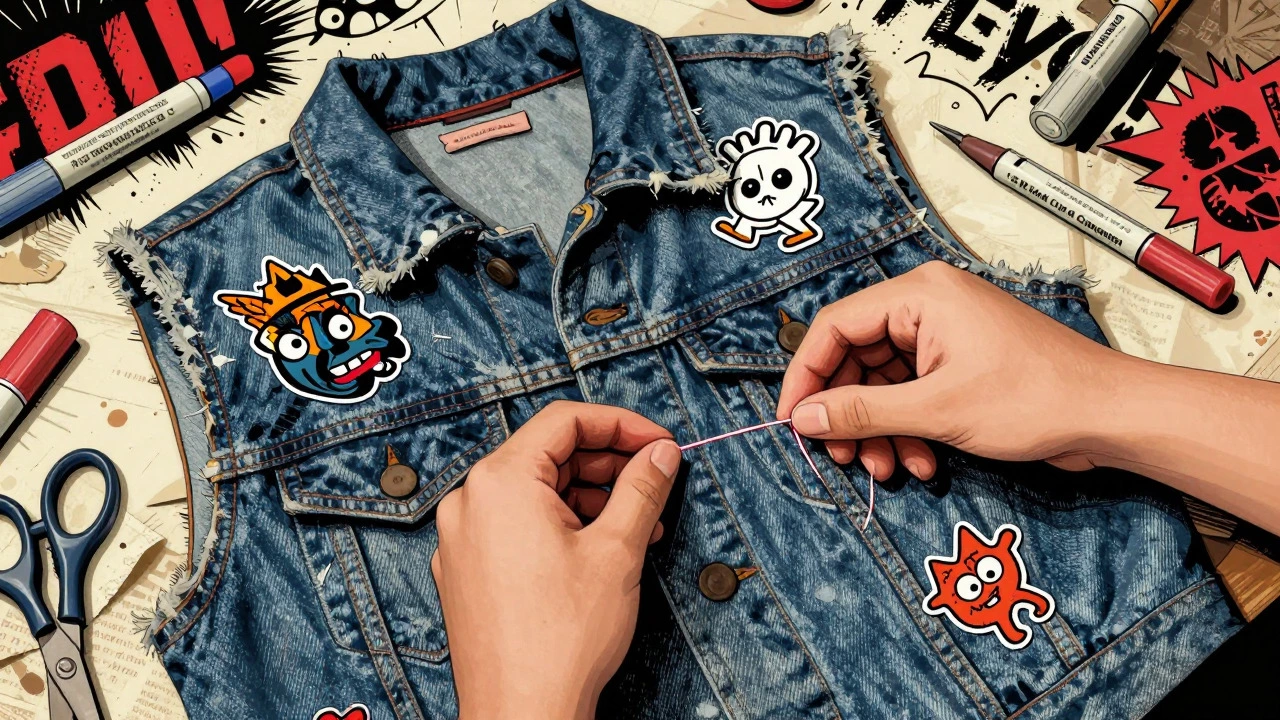
Attaching these patches was part of the ritual. Sewing them on was preferred for durability. A common trick shared among punks was using dental floss instead of standard thread because it is stronger and resists breaking. Some patches had cut edges that were folded inward before sewing, while others came with a heat-sealed border. Bands like Rancid and Bad Brains became iconic through their logos appearing on thousands of jackets worldwide. Even grunge acts like Nirvana contributed to this aesthetic with their "Mr. Yuck" smiley face patch, which crossed over from alternative rock into punk wardrobes.
Stickers and Riot Grrrl Imagery
While patches decorated clothing, stickers decorated everything else: skateboards, laptops, lockers, and zine covers. In the 1990s, stickers were often bundled with zines or tapes as free extras. They were cheap to produce and easy to distribute through mail.
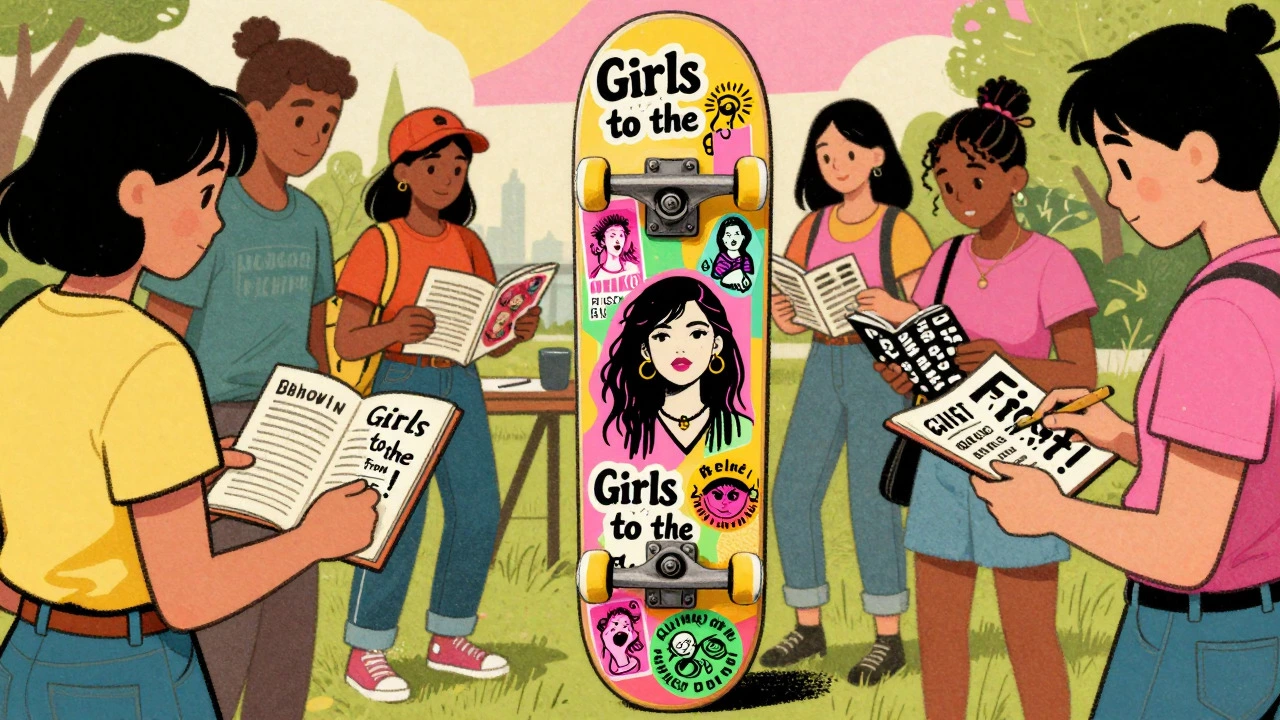
The riot grrrl movement, centered around bands like Bikini Kill, Le Tigre, and Sleater-Kinney, placed heavy emphasis on visual communication. Stickers carried feminist slogans, call-to-action phrases like "Girls to the Front!", and raw, hand-drawn art. Archival collections at institutions like NYU and Barnard College preserve these stickers alongside zines, proving they were considered valuable cultural artifacts, not just disposable packaging.
Today, you can still find reprints of these designs on platforms like Etsy, priced around $1.79-$2.99 each. But in the 90s, they were often given away. A sticker pack slipped into a zine envelope created a personal connection between the creator and the reader. It was a way to spread ideas quickly. If you saw a sticker on a friend’s skateboard, you knew where they got their info. It was grassroots marketing at its most effective.
How Distros Kept the Scene Alive
The term "distro" originated in punk record culture but expanded to include zines and merch by the late 1990s. These operations were vital because there were no major retail chains selling underground content. You couldn’t buy a copy of Die Right Now or Duhhh at a bookstore. You had to know someone who ran a distro.
Distribution channels included:
- Mailorder Catalogs: Printed lists sent via PO Box. Readers would send cash (often concealed in envelopes) and stamps to request more catalogs or place orders.
- Record Stores: Shops like Destroy All Music in Los Angeles or No Life Records carried zines and stickers alongside records.
- Zine Fests: Local gatherings where creators sold their work directly to fans.
- Infoshops: Community centers that hosted meetings and sold radical literature and merch.
Running a distro was financially precarious. Leah, the owner of Secluded Universe Fanzine Mailorder, stated in interviews that she charged only wholesale price plus postage, with no markup. This model ensured accessibility but left little room for profit. Despite this, distros like Microcosm Publishing in Portland, Oregon, grew into long-running institutions. They proved that a network of small, passionate operators could sustain a global subculture without corporate backing.
Collecting 1990s Punk Merch Today
Thirty years later, the value of 1990s punk merch has shifted dramatically. Original T-shirts from bands like Agnostic Front or Gorilla Biscuits now sell for hundreds of dollars on eBay and vintage sites. However, smaller items like patches, stickers, and zines remain relatively affordable, making them accessible to new collectors.
Here’s what to look for if you’re hunting for authentic 90s pieces:
- Vintage Zines: Look for specific issue dates (e.g., May 1995) and subject tags like "Punk" or "Riot Grrrl." Archives at Duke University and Hampshire College have digitized many titles, helping identify rare issues.
- Original Patches: Check the backing. Vintage patches often have frayed edges or distinct stitching patterns. Avoid mass-produced reproductions unless specified.
- Sticker Packs: Unmounted stickers in original sleeves are prized. Look for worn edges or residue from old surfaces.
Prices for vintage patches range from $10 to $20 each, depending on rarity. Zines can go for $5 to $50, with early riot grrrl issues commanding higher prices. The key is authenticity. Did it come from a show? Was it mailed from a distro? Provenance matters to collectors.
Why This Culture Still Matters
The 1990s punk merch ecosystem wasn’t just about commerce. It was about participation. Making a zine, sewing a patch, or trading stickers required effort. That effort created ownership. When you wore a jacket you helped decorate, you embodied the message. When you read a zine you paid for with your own labor, you engaged with the politics.
Today, digital streaming makes music consumption passive. You click play, and the algorithm suggests the next song. There’s no friction. But the 1990s model thrived on friction. You had to write a letter, count your change, and wait. That delay built anticipation and community. It forced people to talk to each other, share addresses, and trust strangers across the country.
As we move further into the 2020s, interest in physical media is rising again. Vinyl sales are up, and cassette tapes have seen a resurgence. Alongside this, DIY zine culture is experiencing a revival, particularly among younger generations seeking alternatives to social media. Understanding the mechanics of 1990s punk merch helps us appreciate how sustainable, community-driven economies can exist outside mainstream systems.
What was a typical price for a punk zine in the 1990s?
Most punk zines sold through distros cost between $0.50 and $2.50. Mainstream review listings in 1997 showed prices ranging from $1.00 to $6.00, with $3.00 being the most common price point. This low cost made them accessible to teenagers and young adults with limited income.
How did people order merch from distros?
Orders were placed via mail. Buyers would fill out an order form from a catalog, send cash (often hidden in an envelope to avoid theft), and include a self-addressed stamped envelope for the return shipment. Some distros also accepted checks, but cash was preferred due to bank fees.
Why were patches sewn with dental floss?
Dental floss is stronger and more resistant to breaking than standard sewing thread. Since punk jackets were often worn heavily and subjected to rough conditions, using floss ensured that patches stayed attached longer. It was a practical hack widely shared within the scene.
What is the difference between a distro and a record label?
A record label produces and releases music, while a distro distributes products. In the 1990s punk scene, many labels also operated as distros, selling their own records along with zines, patches, and shirts from other artists. However, some distros, like Very Distribution, focused solely on distributing items from multiple labels and zine creators.
Are 1990s punk zines available online today?
Yes, many 1990s zines have been digitized and archived. Institutions like NYU, Duke University, and Open Culture offer free downloads of historic titles. Additionally, vintage physical copies are available on platforms like Etsy and eBay, though prices vary based on rarity and condition.
How can I make my own 1990s-style patch?
You can start with simple materials: light-colored fabric, permanent markers, and scissors. Draw your design directly onto the fabric, let it dry, and cut it out. For a more durable finish, use screen-printing ink on canvas. Attach the patch to your jacket by folding the edges inward and sewing it with strong thread or dental floss.


