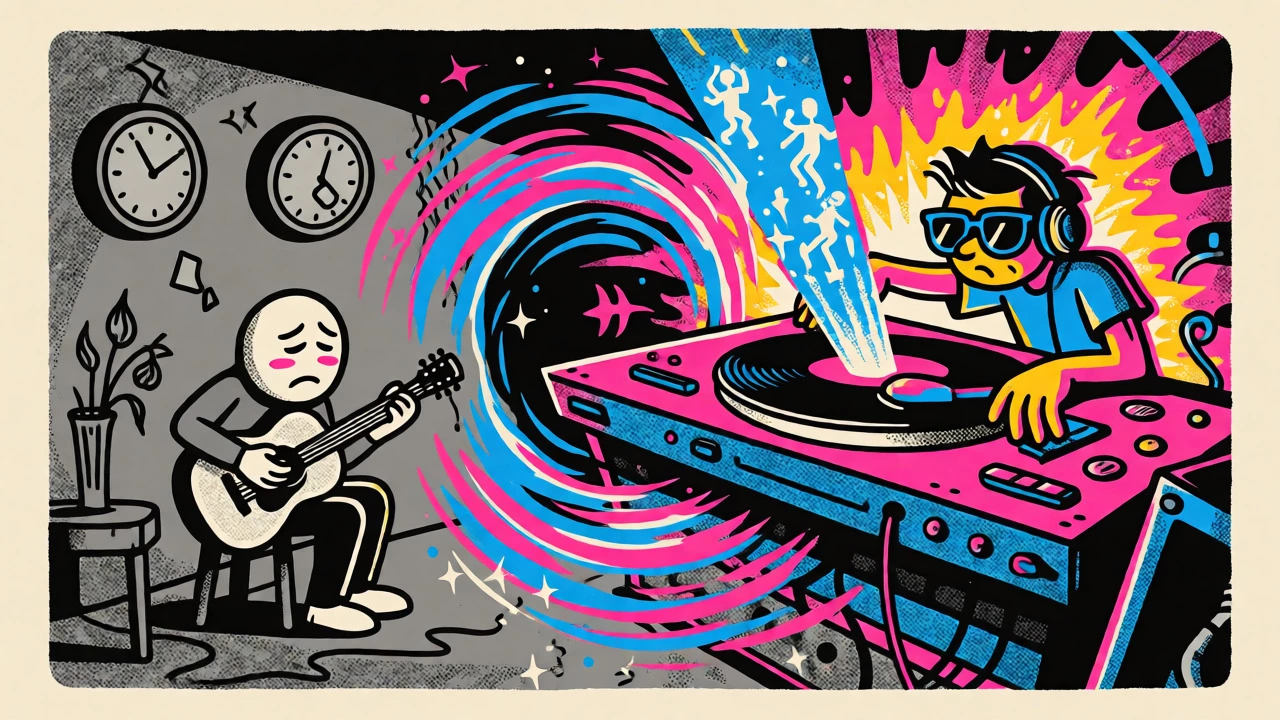

Imagine a song that flopped. It barely cracked the UK Top 70, vanished from radio rotation, and looked like a career dead-end for the artist. Then, a DJ in New York takes that same vocal track, strips away the acoustic guitar, slaps on a four-on-the-floor beat, and suddenly it’s playing in every club from London to Los Angeles. That isn’t just a lucky break; it’s the defining mechanism of 1990s pop remixes. This era wasn’t just about making songs longer; it was about rebuilding them to bridge the gap between underground nightlife and mainstream MTV.
If you grew up in the 90s, you know the feeling of hearing a "radio edit" that sounded nothing like the version you heard at the mall or the club. The remix became a distinct product, a separate piece of art that could save an artist’s career or launch a producer into stardom. We’re talking about how tracks by Everything But the Girl, Tori Amos, and Cornershop went from niche observations to global anthems. Why did this work? Because record labels realized that if they couldn’t force radio stations to play a weird indie track, they could make DJs play a house version until the demand forced radio’s hand. It was a backdoor entry into pop culture, and it changed everything.
The Anatomy of a 90s Club Hit
Before we look at the hits, let’s talk about what actually happened to the music. In the 1980s, a remix was often just an extended mix-more drum beats, less vocal, designed so a DJ wouldn’t have to change records as often. By the 1990s, thanks to affordable digital sampling and new synthesizer tech, producers started tearing songs apart. They weren’t just extending; they were reconstructing.
A typical club version kept the most recognizable element-the hook or the lead vocal-and replaced the rest. If the original was a melancholy ballad, the remix might add a driving bassline and a soulful house groove. The goal was specific: create a six-to-twelve-minute track with long intros and breakdowns so DJs could mix one song into another seamlessly. This structure made the song physically useful on the dance floor while keeping it familiar enough for casual listeners.
This shift turned producers like Todd Terry, Armand van Helden, and Fatboy Slim into household names. Their names on the sleeve mattered almost as much as the artist’s. A label could take a mediocre single and commission a hot producer to rework it, effectively betting that the producer’s brand would drive sales. It was a gamble, but when it paid off, the returns were massive.
Case Study: Everything But the Girl’s “Missing”
No example illustrates this power better than Everything But the Girl’s “Missing.” Released in 1994, the original version was a quiet, piano-driven ballad. It peaked at No. 69 on the UK Singles Chart-a polite nod, not a hit. Tracey Thorn’s voice was beautiful, but the arrangement felt dated to the rave generation.
Then came Todd Terry. His “Todd Terry Club Mix” didn’t change Thorn’s vocals; he kept her intimate, breathy delivery intact. What he changed was the foundation. He added a propulsive, soulful house beat and a deep bassline that gave the song urgency. The result? The remix hit No. 3 in the UK and No. 2 on the US Billboard Hot 100. It spent 56 weeks in the UK Dance Top 100.
| Song / Artist | Original Release Peak (UK) | Remix Release Peak (UK) | Key Remixer |
|---|---|---|---|
| “Missing” / EBTG | No. 69 (1994) | No. 3 (1995) | Todd Terry |
| “Professional Widow” / Tori Amos | No. 20 (1996) | No. 1 (1997) | Armand van Helden |
| “Brimful of Asha” / Cornershop | N/A (Indie release) | No. 1 (1998) | Fatboy Slim |
This wasn’t just a chart blip. It redirected the entire career of Ben Watt and Tracey Thorn toward electronic music. Watt later became a respected DJ himself. The remix proved that you didn’t need to be a pop star to get pop success; you just needed the right context.

From Alternative Rock to Dance Floor Dominance
You might think this strategy only worked for synth-pop or R&B. Wrong. Some of the biggest crossovers came from alternative rock bands who had no business being in a nightclub. Take Tori Amos. Her song “Professional Widow” was originally a harpsichord-led alt-rock track. It reached No. 20 in the UK, respectable but not huge.
Armand van Helden took the vocal and built a “Star Trunk Funkin’ Mix” around it. He stripped out the baroque instrumentation and replaced it with a funky, hip-hop-infused house beat. Clubs ate it up. Once the dance floor validated the track, radio followed. The edited version hit No. 1 in the UK in January 1997, giving Amos her first number-one single there. It showed that even the most cerebral singer-songwriter could become a dance anthem if the rhythm section was right.
Then there’s Cornershop and “Brimful of Asha.” Originally an indie track with South Asian influences, it was catchy but niche. Fatboy Slim (Norman Cook) remixed it, adding a glossy, high-energy production that appealed to everyone from teenagers to grandparents. It hit No. 1 in the UK in February 1998. This was crucial because it proved that cultural specificity didn’t prevent mass appeal. The remix acted as a universal translator, turning a quirky indie song into a global party starter.
The Infrastructure Behind the Boom
How did these tracks move from underground clubs to MTV? It wasn’t magic; it was infrastructure. The 1990s saw the rise of specialized charts like Billboard’s Dance Club Songs chart. This gave labels a measurable way to test a song’s potential before spending money on national TV ads.
The process usually followed three steps:
- The White Label Test: Labels would press unmarked vinyl copies of a remix and send them to key DJs in cities like New York, London, and Chicago. If the crowd reacted, the label knew they had something.
- The Maxi-Single: A commercial CD or vinyl release would follow, featuring the club mix, a radio edit, and maybe an instrumental. This allowed fans to buy the version they heard in stores or clubs.
- Radio Adoption: Programmers watched the dance charts. If a song was climbing there, they’d add the shorter radio edit to their rotation. By the time it hit the Top 40, the audience already associated the song with energy and fun.
This ecosystem empowered DJs. For decades, DJs were just jukebox operators. In the 90s, they became curators and kingmakers. If a DJ like Frankie Knuckles or David Morales championed a track, it had a fighting chance. This democratized taste-making, allowing genres like house, garage, and trance to influence mainstream pop more than ever before.

Cultural Impact and Criticism
It’s worth noting that this trend wasn’t without controversy. Critics argued that commercializing club culture appropriated innovations from Black and gay communities. Much of the house and techno sound originated in marginalized spaces, yet white, mainstream artists often reaped the financial rewards of the remixes. However, others argue that the visibility helped validate these musical forms in the eyes of the broader public.
There was also the issue of artistic control. Sometimes, artists hated the remixes. They felt their emotional intent was lost in the pursuit of a beat. Yet, commercially, the remix was often the only thing keeping a band relevant. For groups like Primal Scream, Andrew Weatherall’s remix of “I’m Losing More Than I’ll Ever Have” (titled “Loaded”) saved them from obscurity, turning a ballad into a rave classic.
By the late 90s, the formula became predictable. Every major pop star-from Madonna to Michael Jackson-had a stable of remixers. Mariah Carey alone had multiple David Morales mixes for a single song. It became standard practice. But the peak was undeniable: for a brief window, the club was the most powerful tastemaker in the world.
Why It Matters Today
We don’t really have “remix singles” in the same physical sense anymore. Streaming algorithms do some of the heavy lifting now. But the DNA of modern pop is still 1990s club culture. When you hear a TikTok snippet sped up to fit a dance challenge, you’re seeing the echo of the 12-inch single. The idea that a song’s identity can be fluid-that it can be sad in headphones and euphoric in a club-is a direct legacy of this era.
The strongest lesson from the 90s is that a remix isn’t a secondary product. It’s an independent composition. It requires its own creative vision, marketing strategy, and audience connection. Artists today who collaborate with EDM producers are essentially following the playbook written by Todd Terry and Armand van Helden thirty years ago.
What is the difference between a remix and an extended mix?
An extended mix usually just adds intro/outro sections or repeats parts of the original recording without changing the core arrangement. A remix, especially in the 1990s context, involves significant reconstruction, such as new drums, basslines, samples, and structural changes to suit a dance floor environment.
Did all 1990s pop songs have club remixes?
Not all, but the vast majority of major label releases did. It became a standard industry expectation for any single with potential. Even country and adult contemporary artists like Shania Twain and Faith Hill commissioned club versions to broaden their appeal.
Who was the most famous remixer of the 1990s?
While there were many stars, figures like Todd Terry, David Morales, Hex Hector, and Fatboy Slim were among the most influential. Their names on a record cover often guaranteed club play and sometimes radio interest, acting as a seal of quality for DJs.
Why did “Missing” by Everything But the Girl fail initially?
The original 1994 version was a quiet, acoustic-based ballad that didn't fit the prevailing radio formats of the mid-90s, which favored either grunge, Britpop, or high-energy dance. It lacked the rhythmic drive needed for clubs and the edginess needed for rock radio, leaving it in a commercial limbo until the remix provided a clear genre home.
How did club charts influence mainstream radio?
Radio programmers used dance charts as a low-risk testing ground. If a song climbed the Billboard Dance Club Songs chart, it indicated proven consumer engagement and energy. Programmers would then add the shorter radio edit to their playlists, confident that the club audience had already validated the song's catchiness.