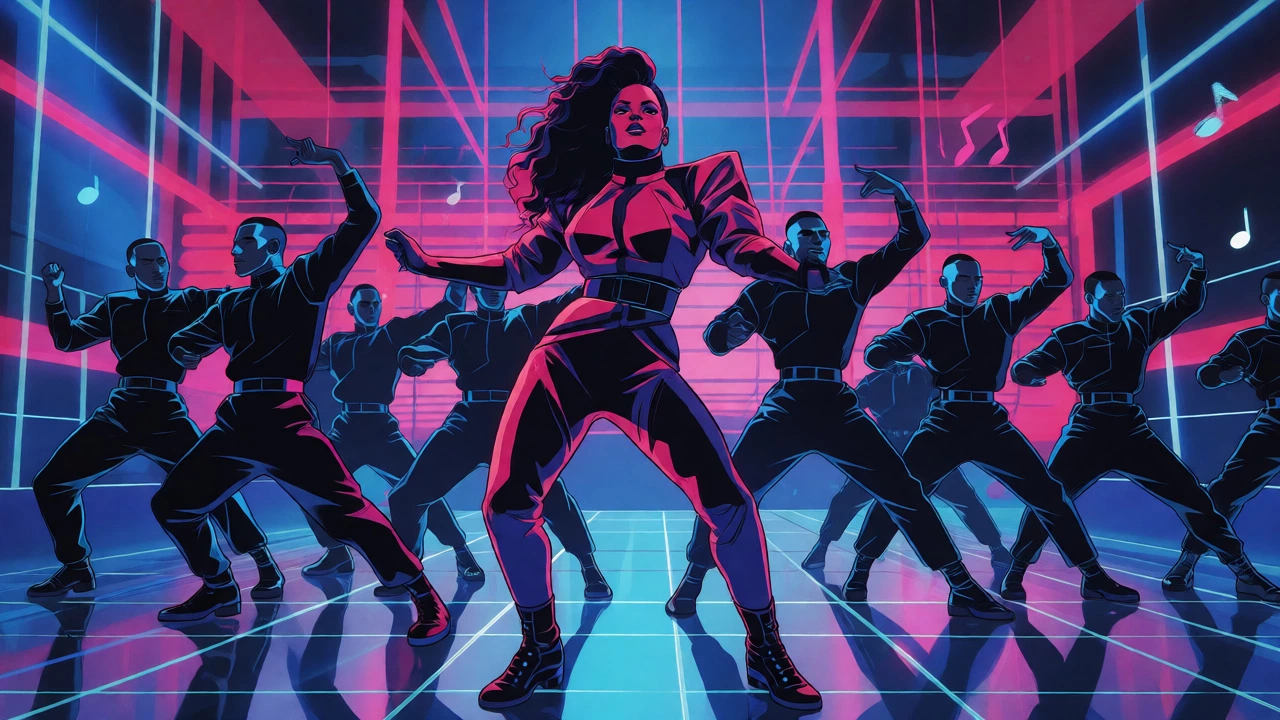

You probably remember the moves. You might even try them at a wedding or in your living room today. But do you know who actually invented them? In the 1990s, pop dance routines weren't just background noise; they were the primary branding tool for global superstars. While artists like Britney Spears and Janet Jackson got the magazine covers, it was a tight-knit group of choreographers who designed the visual language of the decade. These professionals turned three-minute singles into cultural phenomena through precise, repeatable movement.
This wasn't accidental. As MTV became the dominant force in music consumption, labels realized that a catchy hook needed a matching physical hook. If you could copy the arm wave from a video, you owned a piece of that artist's identity. This article breaks down the specific creators behind those iconic sequences, explaining how their technical choices shaped the way we see pop performance today.
The Architects of Precision: Janet Jackson and Tina Landon
If there is one central hub for 1990s choreography, it is Janet Jackson. She didn't just hire dancers; she collaborated with top-tier choreographers to build a persona based on control and power. Her work with Tina Landon set the gold standard for what commercial dance could look like.
Landon, born in 1963, transitioned from performer to lead choreographer during this era. Her collaboration with Jackson on videos like "If" (1993) and later works demonstrated a style defined by intricate group phrasing and tight musical detail. Unlike earlier eras where dance might have been loose or improvisational, Landon’s routines required absolute unison. Every footstep hit the beat exactly. This precision made the performances feel athletic and disciplined, bridging the gap between street dance aesthetics and high-pop polish.
The impact was immediate. When Jackson performed "Rhythm Nation," the militaristic formations created by Jackson and Anthony Thomas won the first-ever MTV Video Music Award for Best Choreography in 1990. This award signaled a shift: choreography was no longer a secondary element. It was the main event. Landon’s subsequent work with Michael and Janet Jackson on "Scream" (1995) further cemented her status, winning another VMA and proving that complex, synchronized movement could drive massive video rotation.
Paula Abdul: From Lakers Cheerleader to Pop Icon
Before she had her own hits, Paula Abdul was already shaping the industry. She started as a cheerleader for the Los Angeles Lakers and moved into choreographing for acts like The Jacksons. By the time she launched her solo career, she had normalized the idea that a pop star could also be a working choreographer.
Abdul’s influence went beyond her own songs like "Straight Up" and "Opposites Attract." She helped establish a model where the artist’s image, music, and dance were inseparable. Her routine for "Opposites Attract" was nominated for a VMA in 1990, placing her alongside giants like Janet Jackson and Madonna. Abdul’s style often incorporated elements of jazz and social dance, making her routines accessible enough for fans to learn but stylish enough to remain aspirational.
Her legacy lies in integration. Before Abdul, dance was often something you watched. After Abdul, dance was something you joined. Her background in professional sports cheerleading gave her an understanding of large-scale formation changes, which she translated into pop videos. This approach influenced countless artists who followed, ensuring that every gesture served the song’s narrative.
The Boy Band Blueprint: Darrin Henson
While Jackson and Abdul dominated the female pop sphere, Darrin Henson defined the look of male vocal groups. Born in 1972, Henson specialized in choreography for boy bands like *NSYNC, Backstreet Boys, and New Kids on the Block. His challenge was unique: these singers had to deliver live vocals while executing complex movements.
Henson’s solution was clever. He focused on syncopated arm patterns and body isolations rather than continuous floor work. This allowed the singers to maintain breath control while still looking dynamic on camera. For groups like *NSYNC, Henson designed traveling formations-lines shifting to circles, diagonals breaking into pairs-that created visual interest without exhausting the performers.
Time magazine identified Henson, along with Tina Landon and Fatima Robinson, as the three major movers of the late 1990s. His work ensured that teen pop wasn’t just about pretty faces; it was about coordinated spectacle. When you watch a Backstreet Boys video from 1998, the sharp, angular movements are likely his signature. He proved that harmony could be visual as well as auditory.
Bringing Street Credibility: Fatima Robinson
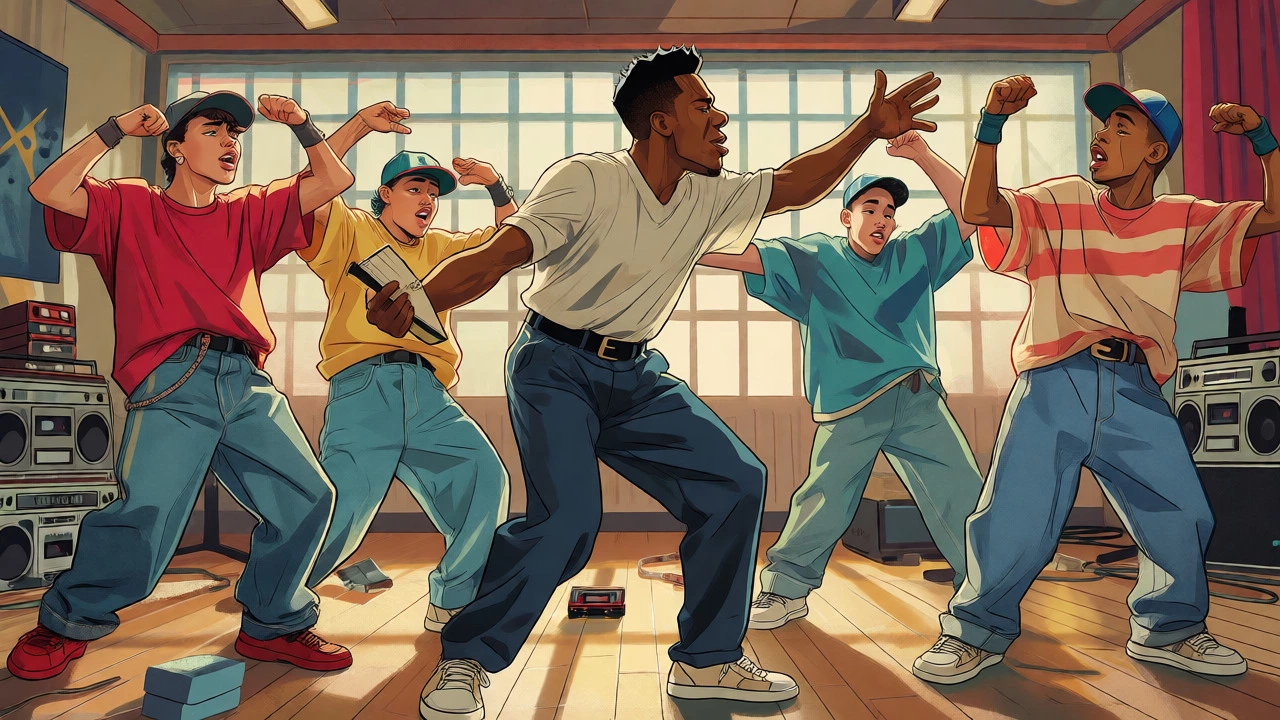
As hip-hop culture permeated mainstream radio, choreographers needed to adapt. Fatima Robinson emerged as a key figure in bringing grounded, groove-based movement into pop videos. Working with artists like Aaliyah and Brandy, Robinson introduced a more relaxed, yet technically proficient, street-dance sensibility.
Robinson’s choreography for Brandy’s "Baby" earned her a VMA nomination in 1995. Her style contrasted sharply with the rigid precision of Landon’s work. Instead of military-style unison, Robinson used fluid hip movements and rhythmic bounces that reflected the R&B influences in the music. This made the performances feel authentic and connected to the roots of the genre.
She also worked with the Backstreet Boys, helping them incorporate more urban elements into their polished pop image. Robinson’s contribution was vital in expanding the vocabulary of pop dance. She showed that you didn’t need to be a trained ballet dancer to command attention; you just needed rhythm and attitude. This opened doors for future generations of performers who came from non-traditional dance backgrounds.
The Late-90s Explosion: Randy Connor and Britney Spears
No discussion of 1990s pop dance is complete without mentioning Randy Connor and the creation of the most famous schoolgirl routine in history. Connor choreographed Britney Spears’ debut single, "...Baby One More Time," which debuted on MTV’s Total Request Live in 1998.
Connor described his approach as "soulful" choreography, mixing jazz-modern movement with pop accessibility. He built specific hand gestures around the lyric "Hit me baby one more time," using body isolations to add emotional weight to a bubblegum track. The result was instantly recognizable. Within weeks, millions of teenagers were attempting the shoulder rolls and finger snaps.
There is some debate about authorship. Spears has claimed credit for the concept and look in later interviews, illustrating the collaborative tension common in pop production. However, industry records credit Connor as the primary choreographer. Regardless of the dispute, the routine remains a masterclass in designing movement for mass imitation. It was simple enough to learn but distinctive enough to define an era.
| Choreographer | Primary Artists | Signature Style Elements | Notable Works |
|---|---|---|---|
| Tina Landon | Janet Jackson, Ricky Martin, Britney Spears | Precision unison, intricate group phrasing, controlled sensuality | "If", "Scream", "Livin' La Vida Loca" |
| Paula Abdul | Paula Abdul, Janet Jackson (early) | Jazz fusion, accessible social dance, integrated branding | "Straight Up", "Opposites Attract" |
| Darrin Henson | *NSYNC, Backstreet Boys, 98 Degrees | Syncopated arms, traveling formations, vocal-friendly movement | "Bye Bye Bye", "I Want It That Way" |
| Fatima Robinson | Aaliyah, Brandy, Backstreet Boys | Street-dance grooves, hip isolations, grounded rhythms | "Baby", "Are You That Somebody?" |
| Randy Connor | Britney Spears, Salt-N-Pepa | Gesture-based storytelling, jazz-modern hybrid, hook-driven moves | "...Baby One More Time", "Whatta Man" |

Beyond the Mainstream: European and Alternative Influences
While Los Angeles dominated the conversation, other regions contributed distinct flavors. In the UK, groups like Steps and S Club 7 relied on choreographers like Paul Roberts to create highly codified line dances. These routines were designed for television appearances and touring circuits, emphasizing clear, repetitive structures that audiences could follow easily.
Meanwhile, alternative pop offered a counter-narrative. Karole Armitage’s work on Fatboy Slim’s "Praise You" (1999) deliberately rejected the polished perfection of mainstream pop. Using a fictional community dance group, Armitage framed amateurish, voguing-inspired movement as art. This challenged the notion that choreography had to be flawless to be effective. It suggested that energy and participation could outweigh technical precision.
These diverse approaches show that 1990s pop dance wasn't a monolith. It ranged from the military strictness of Janet Jackson to the chaotic joy of Fatboy Slim. Yet, all these styles shared a common goal: creating a visual identity that transcended audio. Whether through rigorous training or deliberate imperfection, choreographers provided the physical grammar for the decade’s biggest hits.
Why These Routines Still Matter
Today, when you see a TikTok dance trend, you are seeing the descendants of 1990s choreography. The principle remains the same: a short, repeatable movement sequence drives engagement. Choreographers like Landon, Henson, and Robinson established the framework for this interaction between viewer and performer.
They taught the industry that dance is not optional. It is essential to branding. They proved that complex movement could be made accessible. And they demonstrated that choreographers are co-authors of a hit song, not just employees. Next time you catch yourself mimicking a move from a classic video, remember the hands that designed it. The steps may seem simple now, but they were engineered with precision to capture lightning in a bottle.
Who choreographed Britney Spears' ...Baby One More Time?
Randy Connor is credited as the primary choreographer for the original music video. He designed the routine to mix jazz-modern movement with pop accessibility, focusing on hand gestures that emphasized the song's lyrics. Although Britney Spears has mentioned her involvement in the creative direction, industry records attribute the choreographic design to Connor.
What was the first MTV Video Music Award for Best Choreography?
The first award was given in 1990 to Janet Jackson and Anthony Thomas for their work on "Rhythm Nation." This win marked a significant moment in pop culture, officially recognizing choreography as a critical component of a music video's success and artistic merit.
How did Darrin Henson differ from other choreographers of the 90s?
Darrin Henson specialized in boy bands like *NSYNC and Backstreet Boys. His style prioritized upper-body isolation and traveling formations over heavy footwork. This allowed singers to maintain vocal stability during live performances while still delivering visually dynamic, synchronized group movements.
Did Paula Abdul choreograph for other artists before becoming a star?
Yes. Before launching her solo career, Paula Abdul choreographed for the Los Angeles Lakers cheerleaders and worked with acts like The Jacksons. Her experience in professional sports and early pop collaborations helped her develop a style that blended athletic precision with accessible social dance, which she later applied to her own hits.
What role did Fatima Robinson play in 90s pop dance?
Fatima Robinson brought hip-hop and street-dance aesthetics into mainstream pop. She choreographed for R&B artists like Aaliyah and Brandy, introducing grounded, groove-based movements that contrasted with the rigid precision of traditional pop choreography. Her work helped bridge the gap between urban dance culture and pop radio.


