
Imagine standing in a crowded, sweat-soaked basement in downtown Los Angeles in 1999. You’re watching Norwegian black metal band Emperor play their first-ever California show, backed by Swedish thrashers Witchery and local death metallers Sadistic Intent. It’s a bizarre cultural collision: symphonic frost from Oslo meeting the sun-bleached grit of SoCal. But how did we get here? The 1990s didn’t just change what metal sounded like; it completely rewired where it lived. This wasn’t a monolith. It was a fractured map of three distinct ecosystems: the collapsing glamour of Los Angeles, the gritty urban grind of New York City, and the specialized, studio-driven hubs of Europe. Understanding this decade means looking at zip codes, not just tracklists.
The Sunset Strip Hangover and the Rise of LA Thrash
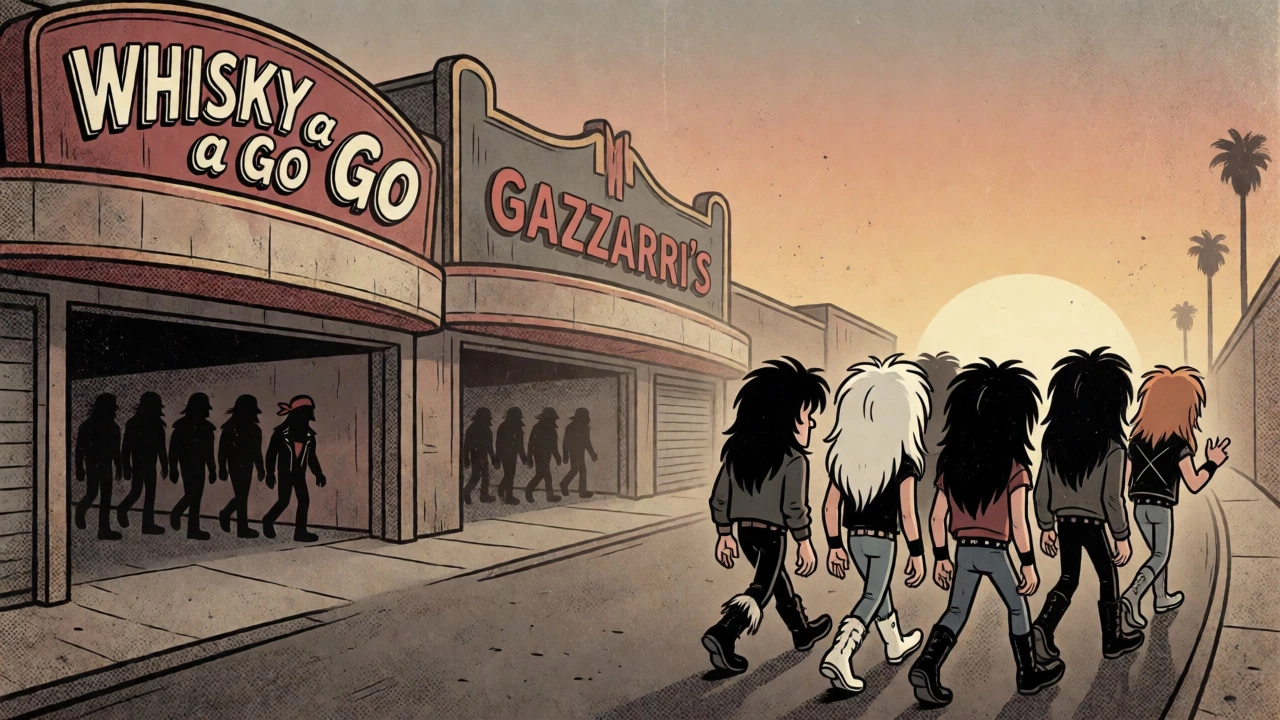
Los Angeles entered the 1990s wearing the heavy crown of 1980s glam metal. For nearly a decade, the Sunset Strip had been the global epicenter of hair metal, powered by venues like the Whisky a Go Go and Gazzarri’s. Bands like Mötley Crüe and Guns N’ Roses made the city synonymous with excess. But by 1991, that party was over. The release of Nirvana’s "Nevermind" shifted major label attention away from spandex and hairspray toward flannel and apathy. As scene historian Brian Nalbandian noted, the allure of the Strip began to decline in the early to mid-’90s, leaving a vacuum that local musicians scrambled to fill.
While mainstream glam died, Los Angeles quietly reclaimed its roots as the true birthplace of thrash metal. While San Francisco often gets credit for the Big Four, Megadeth, formed in Los Angeles by Dave Mustaine in 1983, kept the thrash flame burning locally through the early ’90s. Alongside them, bands like Ugly Kid Joe-starting as a Black Sabbath cover band called Suburban Alcoholic White Trash-bridged the gap between old-school heaviness and the new alternative wave. The geography shifted too. The center of gravity moved from the tourist-heavy Strip to underground spaces in the Valley and Orange County, where rehearsal rooms doubled as incubators for a darker, more progressive sound.
This era gave us Tool, whose debut album "Undertow" (1993) and follow-up "Ænima" (1996) defined a crunchier, louder side of LA rock. They weren’t playing for the tourists on Hollywood Boulevard; they were playing for a crowd that wanted complexity. By the late ’90s, an underground extreme metal scene had taken root, connecting local acts with international touring bands. The Variety Arts Center became a crucial node, hosting bills that mixed Norwegian avant-garde with LA death metal, proving that even after the commercial collapse, the city remained a vital hub for heavy music innovation.
New York’s Urban Metal: Hardcore Roots and Gritty Groove
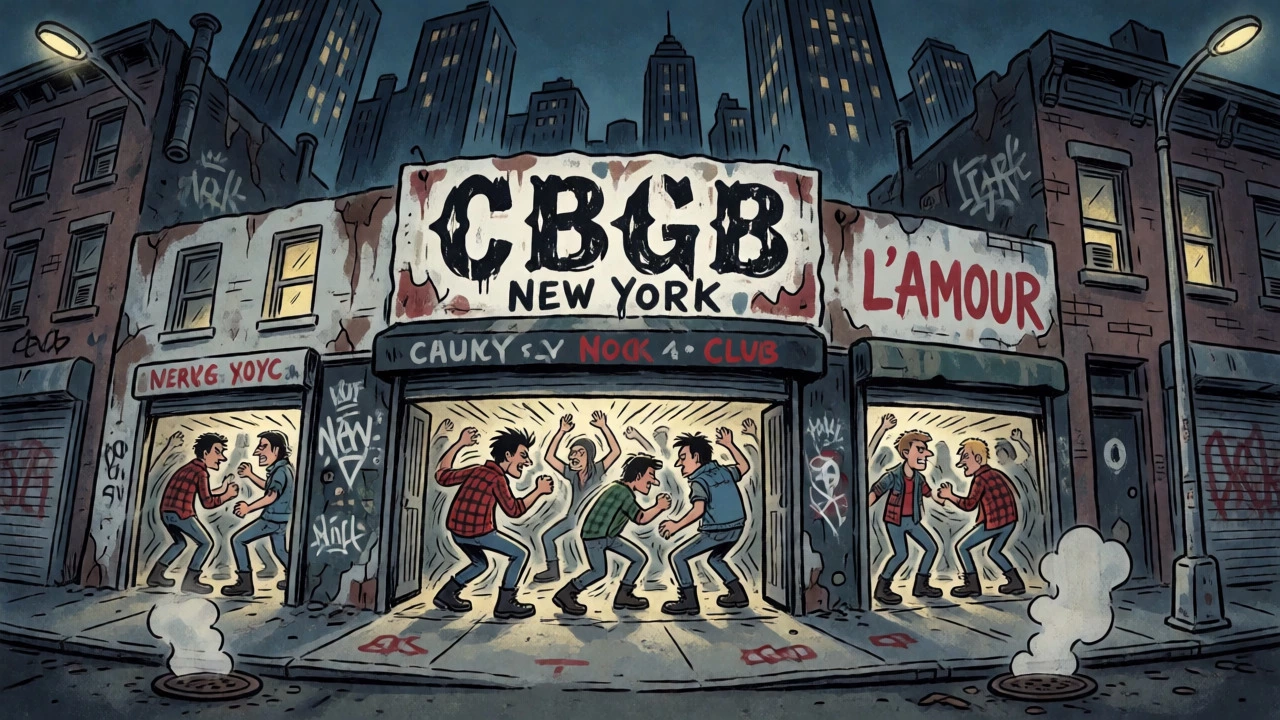
If Los Angeles was about image and industry shifts, New York City was about survival. The NYC metal scene of the 1990s didn’t emerge from a desire to be famous; it grew out of the hardcore punk explosion of the late 1980s. Clubs like CBGB, L’Amour in Brooklyn, and ABC No Rio on the Lower East Side became battlegrounds where punks and metalheads collided. This wasn’t the polished production of LA; it was raw, aggressive, and deeply tied to the socioeconomic tension of the city.
Bands like Agnostic Front and Cro-Mags laid the groundwork, but it was the next wave that defined the decade. Unsane dominated the noise-rock-metal crossover space, while White Zombie brought psychedelic industrial voodoo to the forefront. Life of Agony, emerging from Brooklyn, introduced a moodier, emotionally intense style that blended heavy riffs with alternative sensibilities. Meanwhile, Prong delivered military-precision groove that essentially paved the way for nu metal. As one oral history put it, while LA bands chased women and handed out flyers, New York bands looked for fights.
This "urban metal" was geographically specific. It thrived in working-class neighborhoods and industrial parts of Manhattan where rent was cheap enough to support DIY venues. However, this very success led to its demise. Starting around 1994, aggressive gentrification policies began eating up the Lower East Side and Brooklyn. Developers squeezed out the artists and low-income residents who sustained the scene. By the late ’90s, many iconic venues closed or changed ownership, marking the end of NYC’s most innovative metal phase. The city hadn’t lost its taste for heavy music, but it had lost the physical spaces that allowed the scene to breathe.
European Hubs: Specialization and Studio Culture
Across the Atlantic, European metal scenes operated differently. Instead of broad, multi-genre cities like LA or NYC, Europe developed highly specialized hubs centered around specific studios and producers. In Sweden, two cities dominated: Stockholm and Gothenburg. Stockholm’s death metal scene revolved around Sunlight Studio, where producer Tomas Skogsberg crafted the infamous "buzzsaw" guitar tone used by Entombed and Dismember. This sound was so distinctive it became a subgenre unto itself.
In contrast, Gothenburg developed the melodic death metal sound. Centered on Studio Fredman and bands like At the Gates, In Flames, and Dark Tranquillity, this movement combined the aggression of death metal with the harmonies of traditional heavy metal. Their releases between 1994 and 1996 defined the "Gothenburg sound," which would later influence countless American metalcore bands.
| Region/City | Dominant Genre | Key Infrastructure | Defining Characteristic |
|---|---|---|---|
| Los Angeles, USA | Thrash / Alternative Metal | Sunset Strip clubs, Valley rehearsal spaces | Transition from Glam to Progressive/Underground |
| New York City, USA | Groove / Crossover Metal | CBGB, L’Amour, ABC No Rio | Hardcore Punk Influence, Urban Decay/Gentrification |
| Stockholm, Sweden | Death Metal | Sunlight Studio, Earache Records | "Buzzsaw" Guitar Tone, Industrial Production |
| Oslo/Bergen, Norway | Black Metal | Helvete Shop, Small Rehearsal Circles | Second Wave Ideology, Church Burnings, Tape Trading |
| London/Birmingham, UK | Doom / Extreme Metal | Independent Labels, Festivals | Gothic Aesthetics, Atmospheric Heaviness |
Norway’s contribution was perhaps the most dramatic. Oslo and Bergen became the epicenters of second-wave black metal. Unlike the club-based scenes in the US, the Norwegian scene was built around small, tightly knit circles, independent record shops like Helvete, and controversial ideological conflicts. Bands like Mayhem, Emperor, and Burzum created a sound that was lo-fi, atmospheric, and fiercely anti-commercial. This isolation allowed for rapid artistic evolution, resulting in complex, symphonic structures that would eventually captivate audiences worldwide.
The UK maintained its legacy with doom and extreme metal. London and Birmingham hosted bands like Paradise Lost and My Dying Bride, who bridged gothic aesthetics with crushing heaviness. Finland also emerged as a powerhouse, with Helsinki and Tampere fostering melodic and symphonic metal acts like Amorphis, blending local folk elements with power metal traditions.
The Global Convergence: How These Scenes Connected
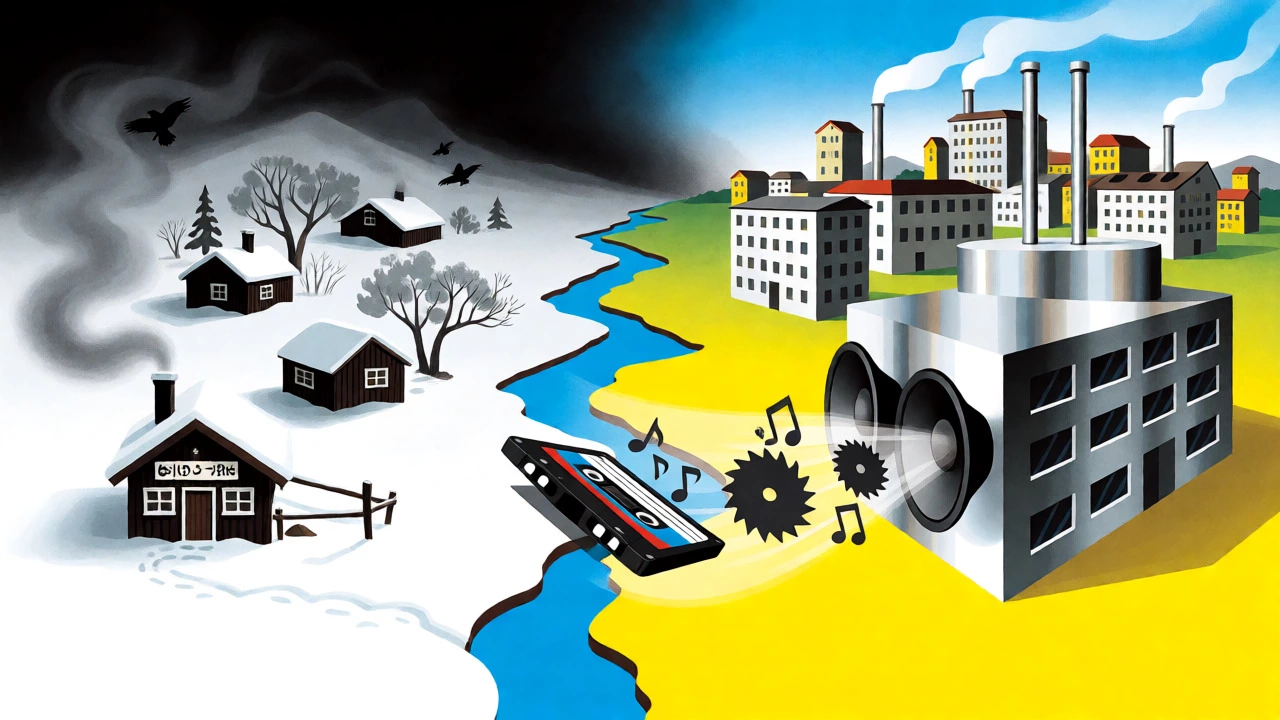
By the late 1990s, these isolated geographic bubbles began to burst. Touring networks and tape trading connected fans and musicians across continents. The aforementioned Emperor show in Los Angeles is a perfect example. A Norwegian band playing symphonic black metal in a city known for glam and thrash illustrates how the barriers between scenes had dissolved. Fans in LA were no longer limited to what major labels pushed; they were importing sounds from Scandinavia via mail-order catalogs and early internet forums.
This cross-pollination changed the DNA of metal globally. American bands started incorporating the melodic structures of Gothenburg death metal, while European acts adopted the groove-oriented rhythms pioneered in New York. The strict geographic boundaries of the early ’90s gave way to a globalized network. However, the local infrastructure still mattered. You couldn’t replicate the Swedish sound without access to Sunlight-style production, nor could you capture the NYC energy without the pressure cooker of its underground venues.
Legacy and Long-Term Viability
Today, the 1990s metal geography is largely historical. The vibrant, chaotic scenes of LA and NYC have transformed. The Sunset Strip is now a tourist trap, and NYC’s legendary clubs are either gone or heavily sanitized. Yet, the musical legacies remain intact. The thrash and alternative sounds of LA influenced the nu metal boom of the late ’90s and early 2000s. NYC’s groove metal directly fed into the mainstream success of bands like Korn and Limp Bizkit.
Europe, however, has retained more of its structural advantages. Countries like Sweden and Norway continue to produce world-class metal, supported by state-funded arts programs and robust festival circuits. The specialization that defined the ’90s European hubs-where specific studios produced specific sounds-has evolved into a global export model. Today, a teenager in Portland can listen to a band recorded in a basement in Bergen, streamed instantly, without ever setting foot in Europe. But understanding the geography of the 1990s helps explain why those sounds exist in the first place. It wasn’t random; it was a product of place, policy, and community.
Why did the Los Angeles metal scene decline in the early 1990s?
The decline was primarily due to the rise of grunge and alternative rock, which shifted major label focus away from glam metal. Additionally, the homogeneity of the glam scene led to audience fatigue, causing a contraction in club activity and investment between 1990 and 1993.
What characterized the New York City metal scene compared to Los Angeles?
NYC metal was rooted in hardcore punk and urban struggle, resulting in a grittier, more aggressive "groove" sound. Unlike LA's industry-driven glam scene, NYC's scene relied on DIY venues like CBGB and L'Amour, and was heavily impacted by gentrification rather than just changing musical tastes.
How did European metal hubs differ from US scenes?
European hubs were more specialized by subgenre and centered around specific recording studios and producers. For example, Stockholm focused on death metal via Sunlight Studio, while Gothenburg developed melodic death metal. These scenes were driven by indie labels and tape trading networks rather than major corporate labels.
Did the 1990s metal scenes connect with each other?
Yes, especially in the late 1990s. Touring routes and media distribution allowed European bands like Emperor to perform in US cities, and American fans accessed European recordings through import stores and early internet communities, creating a globalized metal culture.
Is there still a vibrant metal scene in Los Angeles today?
While the massive, mainstream scene of the 1980s and early 1990s has faded, smaller underground communities persist. However, the specific configuration of the Sunset Strip glam and thrash era is considered a historical reference point rather than an active mainstream force.


