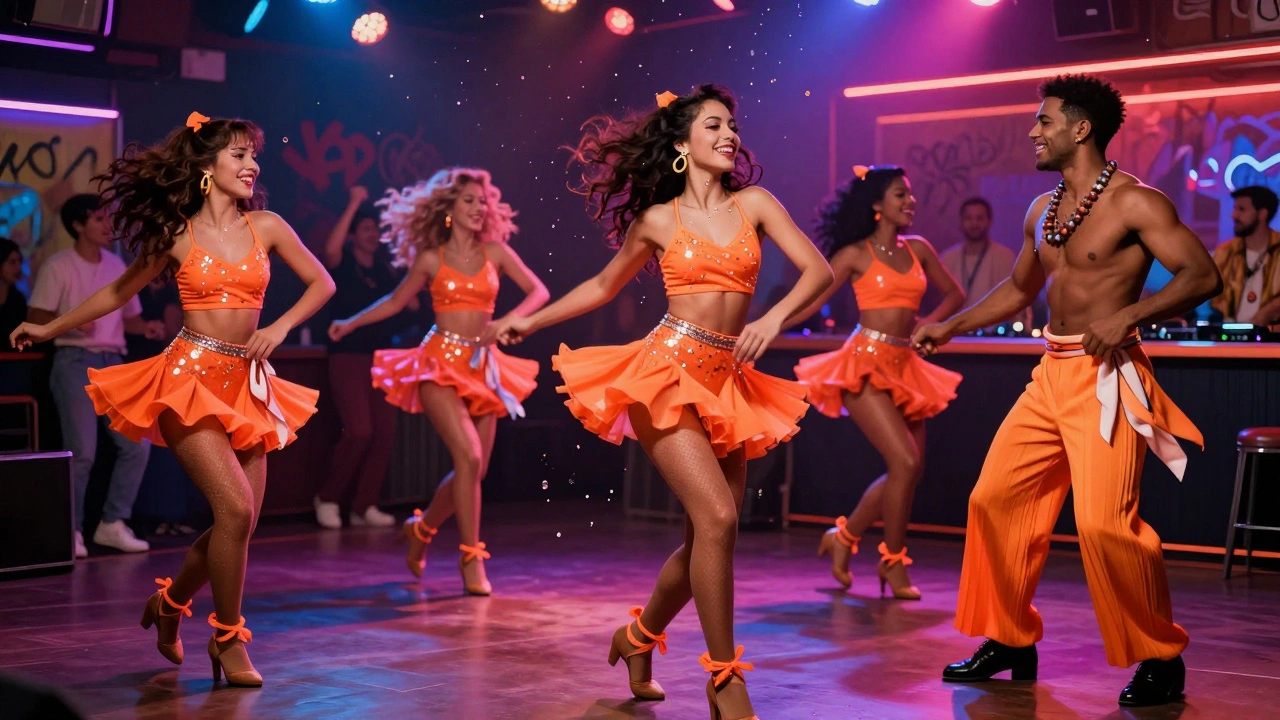

When you think of 1990s dance music, you probably picture grunge flannel or hip-hop hoodies. But in the backyards of East Los Angeles and the clubs of Hollywood, something else was burning bright: Latin pop fashion. It wasn’t just about music-it was about movement, identity, and clothes that moved like water under neon lights. This was the decade when dance troupes turned street corners into runways, and stagewear became a language all its own.
The Lambada Explosion: Color, Skin, and Spinning Skirts
Before Madonna brought voguing to MTV, before salsa clubs became trendy in New York, there was the Lambada. It hit Los Angeles in early 1990, thanks to a night at the Spice Club on Hollywood Boulevard. Kaoma’s hit "Lambada" played on repeat, and dancers showed up wearing clothes designed for one thing: to catch the light as they spun.
Women wore short, flippy miniskirts in electric orange, lime green, or hot pink. Underneath? Sometimes nothing but a thong bikini, hidden under sheer tights that lifted just right during a deep backbend. The key was the reveal. A twist. A dip. A flick of the hip. The outfit wasn’t just fashion-it was choreography. Stretch bustiers hugged torsos, and ribbons tied around ankles caught the air like streamers. Men matched with wide pleated pants, loose shirts, and belts so thick they looked like they were borrowed from a 1940s movie star. Some even wore scarves around their waist, nodding to Fred Astaire’s old-school Latin flair.
Designer Eduardo Nieto started making custom Lambada outfits, but most dancers made their own. A girl from Guatemala might pair her skirt with a hand-painted serape. A guy from Mexico added beads that clinked with every step. It wasn’t about brand names-it was about belonging. And for a few hours every weekend, the dance floor was the only place that mattered.
From Street to Stage: The Rise of the Sparkle
While Lambada danced its way into the spotlight, other Latin dances were getting a glow-up. Salsa, merengue, tango-they all started in living rooms, bars, and neighborhood plazas. By the 1990s, they were on TV, in music videos, and in international competitions. And with that came a whole new kind of costume.
Women’s dresses got shorter. Higher thigh splits. More sequins. More fringe. Feathered hemlines fluttered with every turn. The goal? To make every movement visible. A merengue hip sway had to catch the spotlight. A salsa spin had to look like a whirlwind. So designers stopped sewing-they started gluing. Rhinestones, metallic threads, lace overlays. Everything was engineered for motion. Heels? Thin, high, and with no grip. Rubber soles would stop a spin dead. Dancers needed to slide, pivot, and glide like ice.
Men’s outfits got sleeker. Sleek pantsuits in satin. Sleeveless shirts that showed off arms. No jackets. No covers. Just skin, shine, and sweat. The male dancer’s job? To guide, not hide. His outfit had to let the woman shine-because she was the star.
This wasn’t just performance. It was pride. These costumes carried history. The tango’s slit dress? A nod to Buenos Aires’ underground dance halls. The merengue’s glitter belt? A tribute to Dominican street carnivals. The costumes didn’t just look good-they told stories.
The Latin Rave Scene: Where House Music Met Chicano Identity
But not all Latin dance fashion in the 1990s happened on stage. In fact, the most radical stuff happened in backyards.
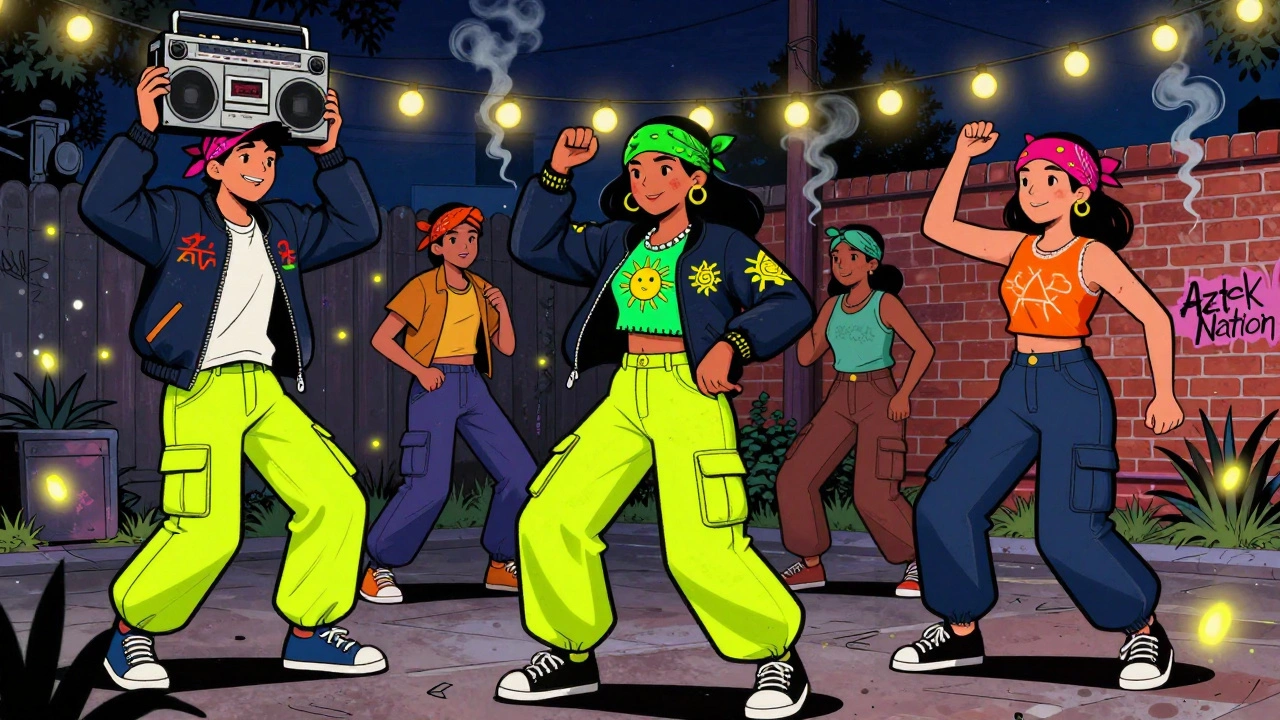
While the mainstream saw Lambada and salsa, a younger generation in East LA, South Central, and Orange County was throwing parties to house music. DJs like Trajic spun tracks like "Pants R Sagging" under string lights. No adults. No bouncers. Just teens, boomboxes, and outfits no one had ever seen before.
Photographer Guadalupe Rosales called it "the most creative fashion movement I’ve ever documented." Kids wore oversized cargo pants in neon purple. Bucket hats stitched with patches of their crew’s name. Bomber jackets covered in hand-painted graffiti. Some wore sweatpants with one leg cut off. Others tied bandanas around their heads like warriors. It wasn’t about looking like a dancer. It was about looking like yourself.
These weren’t just parties. They were safe spaces. For kids who didn’t fit into gang culture or quinceañera traditions, this was identity-building. Crews like East Los Angeles Aztek Nation didn’t just dance-they designed flyers, made their own music, and coded their fashion as resistance. A girl in a crop top with a stitched Aztec sun? That wasn’t a costume. That was a declaration.
By 1995, there were over 500 of these crews. No one in the industry noticed. But the fashion? It was everywhere. You saw it in lowrider magazines. In underground zines. In the way teens walked down Whittier Boulevard, shoulders back, heads high.
Madonna, Voguing, and the Cost of Fame
Then came Madonna.
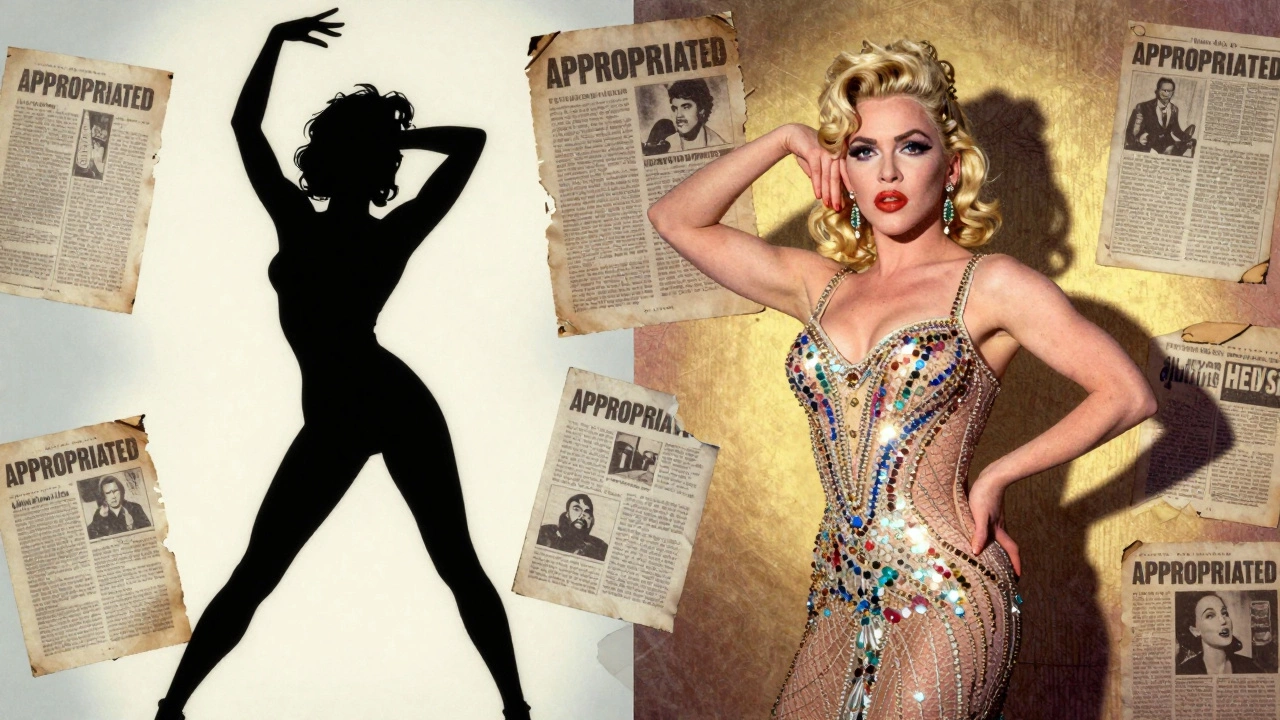
In 1990, her "Vogue" video exploded. The moves. The poses. The attitude. It was dazzling. But it wasn’t new. The dance came from Harlem ballrooms, where Black and Latino LGBTQ+ communities had been voguing since the 1960s. The fashion? The sharp lines, the gloves, the floor sweeps-it all came from houses like Xtravaganza.
Madonna didn’t invent it. She borrowed it. And she got rich. Meanwhile, the dancers who created it? They stayed underground. Critics called it appropriation. Supporters called it exposure. Either way, it changed everything.
After "Vogue," suddenly, every pop star wanted a Latin dance number. Every music video needed a twirl. Every brand wanted "authentic" Latin flair. But authenticity? It got diluted. Suddenly, cheap sequin dresses were sold in mall stores, labeled "Latin Dance Wear," with no connection to the culture behind them. The real designers? The ones who hand-sewed costumes for decades? They were still working out of garages.
Branding Through Movement
By the late 90s, Latin pop fashion had become a brand. Not just for companies, but for communities.
Dance troupes started wearing matching outfits with their crew’s name stitched on the back. Party crews printed their logos on T-shirts and flyers. Even the Lambada nights at the Spice Club had branded flyers-hand-drawn, photocopied, passed out like gospel.
This was the first time Latin dance culture used fashion as a tool of identity, not just decoration. It wasn’t about selling a product. It was about saying: "This is us. This is our sound. This is our skin. We made this. We own this."
And that’s the real legacy of 1990s Latin pop fashion. It wasn’t just about what people wore. It was about what they refused to hide.
Legacy: When Clothes Become Culture
Today, you can still see traces of it. The thigh-high splits in modern salsa competitions? That’s 1990s. The neon crop tops at Latin music festivals? That’s East LA rave culture. The way dancers still tie ribbons around their ankles? That’s Lambada.
But most of all, it’s the attitude. The confidence. The belief that what you wear while you dance is just as important as the steps themselves. That fashion isn’t separate from movement-it’s part of it.
Back then, you didn’t need a designer label to be stylish. You just needed rhythm, guts, and a skirt that flew.
What made 1990s Latin pop fashion different from earlier decades?
Earlier Latin dance costumes were modest and practical-designed for social dancing in bars or community halls. In the 1990s, costumes became theatrical. They were engineered for stage lighting, camera angles, and movement speed. Sequins, feathers, and sheer fabrics replaced cotton and wool. The goal shifted from comfort to spectacle, turning dancers into visual icons.
Did men’s fashion in Latin dance change during the 1990s?
Yes. Men’s outfits went from simple button-ups and slacks to sleek, fitted pantsuits, sleeveless shirts, and high-waisted pants that emphasized line and posture. The focus shifted from covering the body to highlighting control and strength. Scarves, wide belts, and bare torsos became symbols of confidence, not just style.
How did the Latin rave scene influence mainstream fashion?
The Latin rave scene introduced bold color mixing, DIY customization, and oversized silhouettes into mainstream youth culture. Elements like cropped tops, painted jackets, and bandana headwear later appeared in urban streetwear brands. Though mainstream media ignored it at the time, the aesthetic directly influenced 2000s hip-hop and rave fashion trends.
Why were non-rubber soles important in Latin dance shoes?
Rubber soles create too much grip, which stops spins and slides. Latin dances like salsa, merengue, and Lambada require smooth, fluid turns. Non-rubber soles-often leather or suede-let dancers pivot, glide, and change direction without breaking momentum. This was so critical that many dancers custom-made their shoes with soles scraped down for the perfect slip.
Was the Lambada fashion trend limited to women?
No. While women’s outfits got the most attention, men’s fashion was just as intentional. Wide pleated pants, loose shirts, and waist scarves were designed to accentuate hip movement and create visual rhythm with the partner. Some men even wore thigh-high socks or ankle chains to echo the women’s ribbons. The look was a duet-not a solo.


