
Imagine standing in a field of 50,000 people in 1994. The sun is beating down, the air smells like sunscreen and stale beer, and you’re waiting for The Smashing Pumpkins to take the stage. You know "Bullet with Butterfly Wings" because it’s been on MTV all summer. But do you want them to play that again? Or do you want the band to prove they aren’t just a one-hit wonder by digging into their B-sides? This tension-between giving the crowd what they expect and challenging them with something new-defined the art of the 1990s festival setlist. It wasn’t just about picking songs; it was about curating an experience for massive, often transient crowds.
If you’ve ever wondered why some bands bombed at festivals while others became legends, look no further than how they balanced hits against deep cuts. In the pre-streaming era, where radio and MTV dictated popularity, festivals like Lollapalooza were the ultimate testing ground. Let’s break down how artists navigated this high-stakes game, using real data from the golden age of alternative rock.
The Anatomy of a 1990s Festival Set
Before we judge the choices, let’s look at the constraints. A typical main-stage slot at Lollapalooza between 1991 and 1997 lasted 45 to 90 minutes. That sounds generous until you realize you have to account for gear changes, banter, and the sheer physical exhaustion of playing to tens of thousands. Bands usually played 12 to 20 songs. If you only played your three biggest singles, you’d be done in ten minutes. If you played only obscure album tracks, half the crowd might walk away to find a better view of the side stage.
The most successful sets followed a loose formula. They opened with a recognizable but not necessarily the biggest hit-a track that signaled "we are here" without exhausting the audience’s patience immediately. Then, they moved into the middle third, which was often dominated by deep cuts or newer material that hadn’t yet saturated the airwaves. Finally, they closed with two or three undeniable anthems. This structure kept energy levels high while rewarding long-time fans who knew every lyric to the non-single tracks.
Consider the Red Hot Chili Peppers during their 1992 tour. By then, Blood Sugar Sex Magik had exploded. Their sets included heavy rotation staples like "Under the Bridge" and "Give It Away," but they also leaned heavily on funkier, less polished tracks from earlier albums. Why? Because the RHCP brand was built on musical prowess, not just pop hooks. Ignoring the deep cuts would have felt like a betrayal of their core identity, even if the casual fan didn’t care.
Lollapalooza: The Laboratory of Live Performance
You can’t talk about 1990s setlists without talking about Lollapalooza. Founded by Perry Farrell in 1991, it started as a farewell tour for Jane’s Addiction but quickly evolved into a traveling circus of alternative culture. Each year featured a rotating lineup of 7-10 main-stage acts and over 20 side-stage performers. This structure forced a unique dynamic: headliners had to justify their top billing with hits, while support acts used deep cuts to build credibility.
| Year | Key Headliners | Dominant Vibe | Estimated Hit Ratio |
|---|---|---|---|
| 1991 | Jane’s Addiction, Siouxsie and the Banshees | Cult Credibility & Underground Roots | ~30% |
| 1992 | Red Hot Chili Peppers, Pearl Jam, Soundgarden | Mainstream Explosion & Grunge Peak | ~60% |
| 1994 | The Smashing Pumpkins, Beastie Boys, George Clinton | MTV Dominance & Genre Blending | ~50% |
| 1996 | Metallica, Ramones, Rancid | Legacy Acts & Punk Revival | ~70% |
In 1991, few acts had multiple top-40 singles. The crowd was there for the scene, not just the charts. Jane’s Addiction could stretch out on "Jane Says" or dive into experimental noise because the audience was self-selected. Fast forward to 1992, and suddenly you had Pearl Jam and Soundgarden drawing massive mainstream crowds. These bands had to pivot. Pearl Jam, for instance, started including more singles from Ten to satisfy the new fans flooding the festival grounds, even if Eddie Vedder preferred the grittier, less polished tracks.
The Psychology of the Crowd
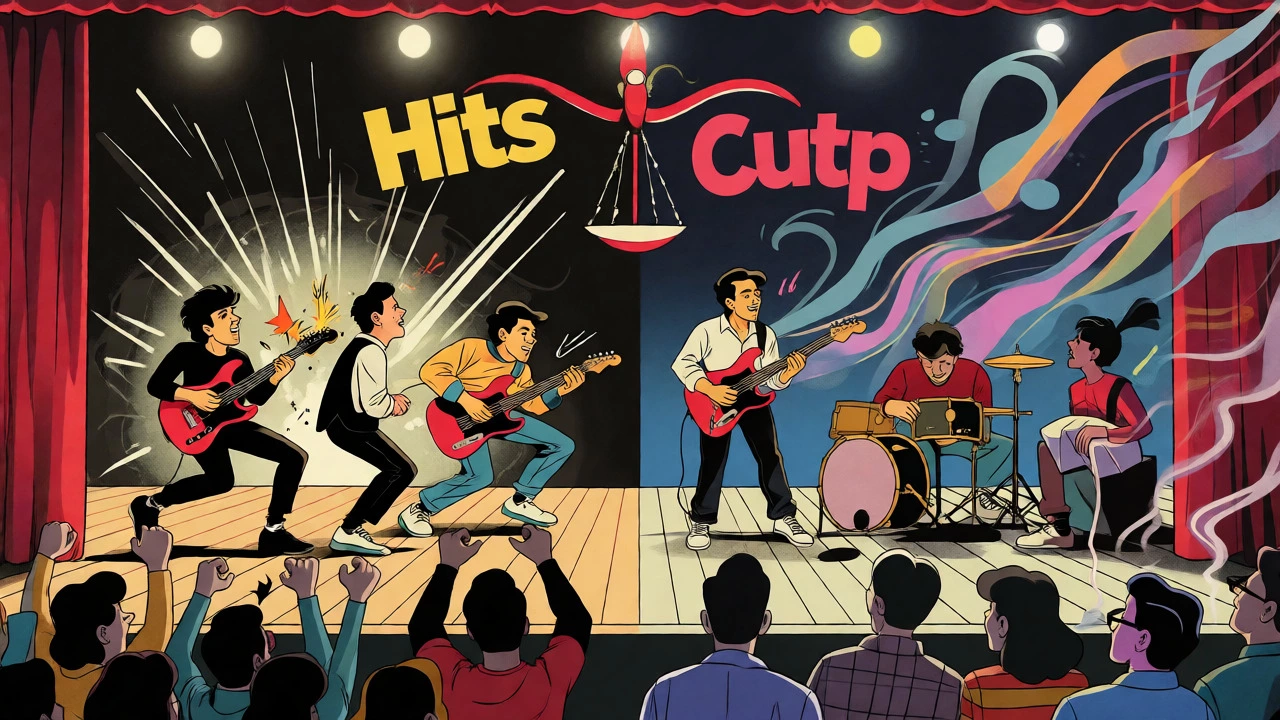
Why does this matter? Because a festival crowd is different from a club crowd. At a club, everyone knows the lyrics. At a festival, you have a mix of die-hard fans, curious passersby, and people who just bought tickets because their friend did. If a band plays five obscure tracks in a row, the casual listener tunes out. They check their phone (well, they smoke a cigarette and look around), lose interest, and move to another stage.
Nine Inch Nails mastered this balance early on. Trent Reznor understood that industrial music could alienate mainstream listeners if it was too abrasive. So, his sets mixed the accessible, rhythmic drive of "Head Like a Hole" with the atmospheric, slower burns of deeper cuts. He gave the crowd a hook, then pulled the rug out, keeping them engaged through contrast rather than repetition.
Conversely, bands that failed to adapt often struggled. If a punk band with one minor hit played twenty fast, identical-sounding tracks, the crowd couldn’t latch onto anything. Compare this to The Ramones in 1996. Despite having dozens of famous songs, they curated a tight set of their most iconic, short, punchy tracks. They didn’t try to surprise the crowd with rarities; they delivered exactly what the massive audience expected: speed, volume, and recognition.
Case Study: The 1994 Lineup and the "Murderer’s Row"
The 1994 Lollapalooza tour is often cited as the peak of the festival’s cultural influence. The bill included The Smashing Pumpkins, Beastie Boys, George Clinton & The P-Funk All Stars, and A Tribe Called Quest. This was a genre-diverse lineup, which made setlist construction even trickier. How do you keep a hip-hop fan engaged when a guitar-heavy alt-rock band takes the stage?
The answer was cross-over appeal. The Smashing Pumpkins’ Billy Corgan knew he had to deliver "Today" and "Disarm" because those songs transcended the alternative niche. But he also included tracks from Pisces Iscariot to remind the crowd of the band’s roots. Meanwhile, A Tribe Called Quest focused on their most melodic, sample-heavy hits like "Can I Kick It?" rather than their harder, jazz-influenced deep cuts. They understood that in a multi-genre environment, accessibility wins.
This era highlighted a critical lesson: in a diverse lineup, your setlist must speak a universal language. Deep cuts work best when they share sonic DNA with your hits. If your deep cut sounds nothing like your single, you risk losing the room entirely.
Practical Takeaways for Modern Festivals
While we’re looking back, these strategies still apply today. Modern festivals like Coachella or Bonnarro inherit the blueprint laid down in the 1990s. Here’s what current artists can learn from the hits-vs.-deep-cuts debate:
- Anchor Your Set: Always bookend your performance with your strongest, most recognizable material. This creates a safe space for experimentation in the middle.
- Read the Slot: Afternoon slots allow for more deep cuts because the crowd is smaller and more attentive. Evening slots demand higher energy and familiarity.
- Context Matters: If you’re sharing a stage with genres far removed from yours, lean into your most accessible hits. If you’re on a genre-specific stage, you have more freedom to explore.
- Visuals Help: In the 1990s, lighting and stage presence helped bridge the gap between unknown songs and known ones. Today, visual production serves the same purpose, keeping eyes on the stage even when the song isn’t familiar.
Fans today obsess over setlists on apps like Setlist.fm, much like they did in zines back in the day. We want to know if our favorite obscure track got played. But for the artist, the goal isn’t just to please the superfan-it’s to convert the casual observer. The 1990s taught us that the perfect setlist isn’t about playing everything; it’s about playing the right things at the right time.
What defines a "deep cut" in the context of 1990s festivals?
A deep cut is typically an album track that never received significant radio airplay or video rotation. Unlike singles, these songs rely on existing fan knowledge or strong live performance to engage a broad festival audience. In the 1990s, this often meant B-sides, intro tracks, or experimental pieces that showcased an artist's range beyond their commercial hits.
Did Lollapalooza dictate setlists, or did artists choose freely?
Artists generally chose their own setlists, though promoters sometimes influenced decisions based on time limits and stage transitions. However, the pressure to perform well in front of massive, diverse crowds naturally encouraged artists to include a higher proportion of hits. Organizers like Perry Farrell curated lineups to ensure variety, but the actual song selection remained largely in the hands of the performers.
How did genre diversity affect setlist choices in the mid-90s?
Multi-genre bills like the 1994 Lollapalooza tour forced artists to prioritize accessibility. Hip-hop acts, rock bands, and electronic artists had to find common ground to keep the audience engaged throughout the day. This often led to headliners playing their most crossover-friendly hits, while niche acts on side stages retained more freedom to play deep cuts for dedicated subcultures.
Were there penalties for playing too many deep cuts?
There were no official penalties, but social consequences existed. Bands that ignored crowd expectations risked losing momentum, facing quiet audiences, or being overshadowed by neighboring stages. For emerging artists, a poorly received set could hinder future bookings. Established acts had more leeway, but even they faced criticism from fans who felt they were phoning it in or ignoring the event's celebratory nature.
How has streaming changed the definition of a hit for festival sets?
Streaming has fragmented attention spans and accelerated the lifecycle of songs. Today, a "hit" might be a viral TikTok snippet rather than a radio staple. This makes setlist curation harder because artists can't rely on decades-long recognition. Modern festivals often see artists balancing legacy hits with recent viral moments, creating a hybrid strategy that mirrors the 1990s balance but with faster turnover.