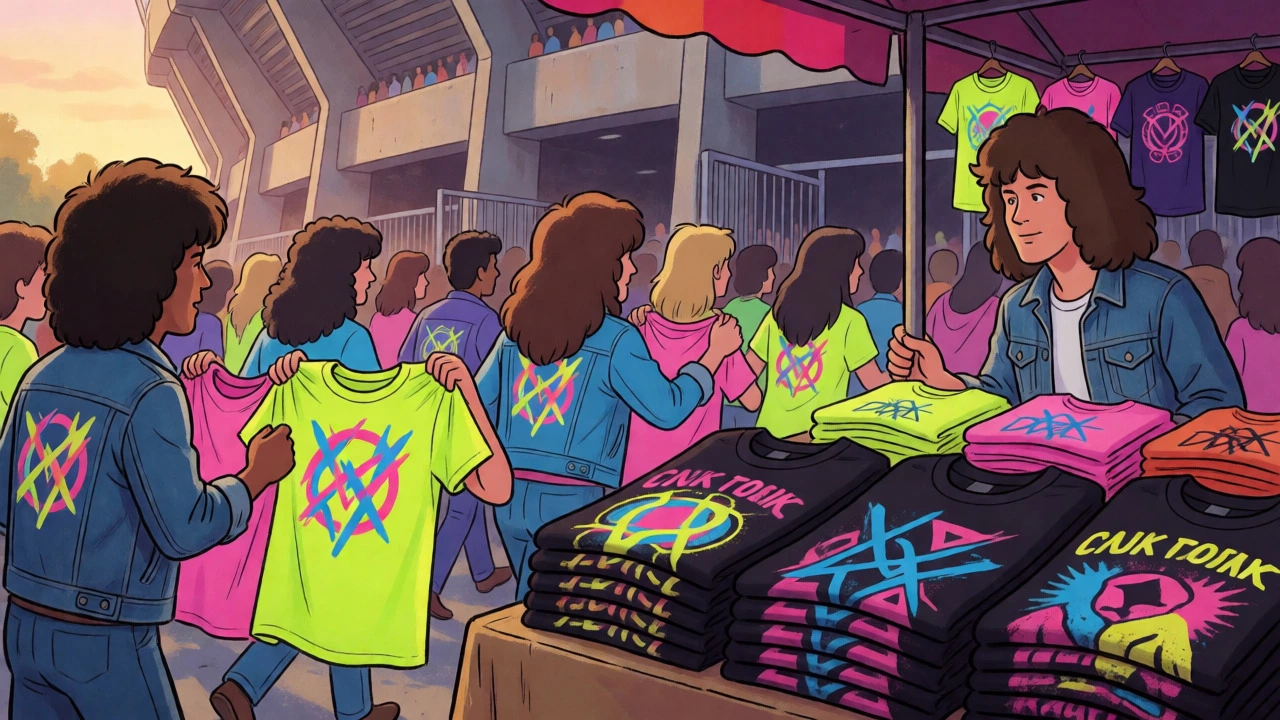

Imagine walking into a stadium in 1985. You just spent $25 on a ticket to see The Rolling Stones. But when you leave, the most valuable thing you carry isn't the ticket stub-it's a black cotton T-shirt with a neon logo that cost another $10. That shirt wasn't just a souvenir; it was a piece of financial strategy. In the 1980s, the humble concert tee transformed from a cheap keepsake into a multi-million dollar industry pillar. This decade marked the shift where merchandise stopped being an afterthought and became a primary driver of tour profitability.
The Birth of Modern Rock Merchandising
Before the 1980s, selling shirts at concerts was messy. Local vendors printed bootleg designs, quality varied wildly, and artists rarely saw a fair share of the profits. That changed dramatically around 1981. Bill Furano, who later became president of Sony Signatures, called the Rolling Stones' 1981 tour "the birth of modern-day rock merchandising." Why? Because that single tour grossed $10 million from merchandise alone. For context, this wasn't pocket change; it established a new template. Artists realized they could control the design, production, and distribution of their brand, turning every fan into a walking billboard.
This professionalization didn't happen overnight. It was a convergence of better logistics, corporate interest, and a cultural shift. By 1983, trade publications like Music Connection reported that arena-rock giants like Journey had sold $11 million in merchandise on tour. These numbers proved that merch was no longer incidental income-it was a core business line item comparable to ticket sales.
T-Shirts as Cultural Artifacts
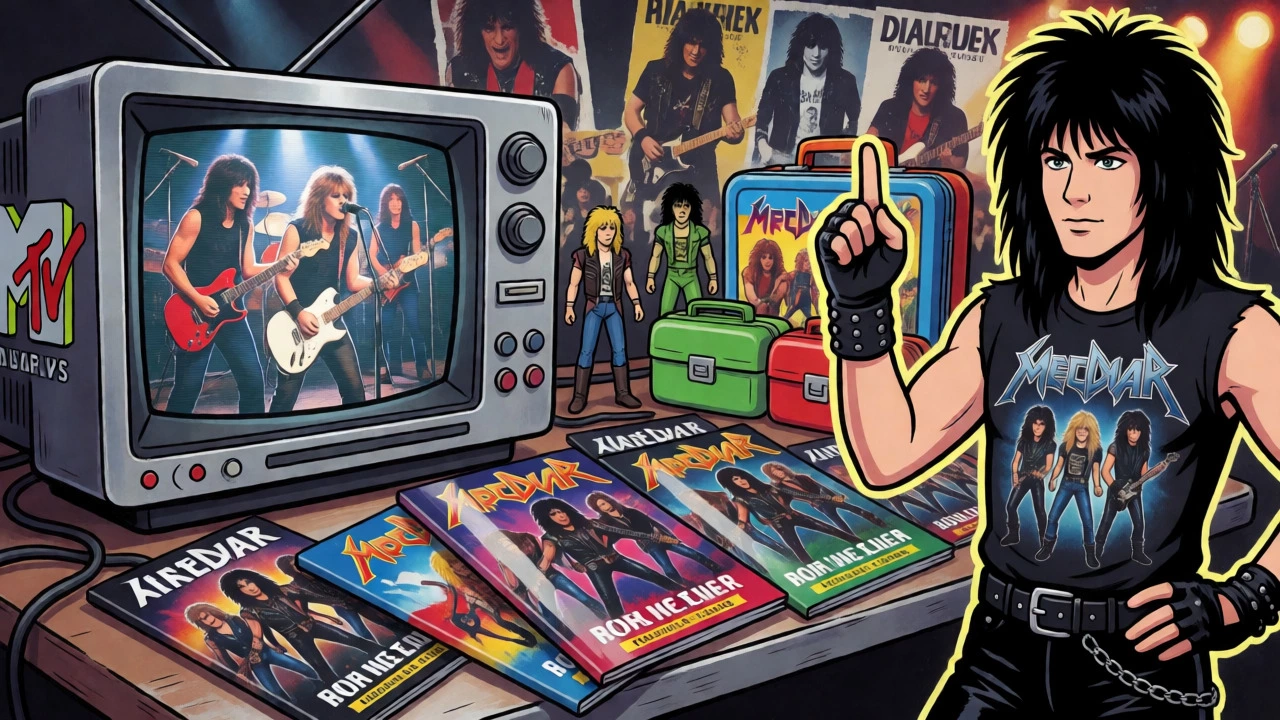
You might wonder why fans were so eager to buy these shirts. The answer lies in identity. By the mid-1980s, wearing a band tee was a social signal. It told people you belonged to a specific tribe-whether that was heavy metal, new wave, or classic rock. Companies like KISS mastered this early, leveraging licensing deals that extended beyond shirts to lunchboxes and action figures. They built a "brand empire" rather than relying solely on venue sales.
MTV, launched in 1981, accelerated this trend. The visual boom made album art and band logos iconic. Shirts featured bold graphics, neon colors, and tour dates printed on the back. These weren't just clothes; they were fashion statements worn long after the encore faded. As noted by cultural historians, the concert tee became a "cultural artifact," valued for its authenticity and connection to live experiences. Fans treated them as collectibles, often preferring worn originals over pristine new ones, laying the groundwork for today's vintage resale market.
The Role of Tour Programs and Print Media
While T-shirts grabbed the headlines, tour programs played a crucial supporting role. These glossy, full-color booklets contained photos, essays, and credits. They offered fans a deeper dive into the artist's world, bridging the gap between the live show and the recorded album. Although precise pricing data from the era is sparse, industry insiders suggest programs contributed 5-15% of total on-site merch revenue.
| Item Type | Primary Function | Estimated Revenue Share | Cultural Impact |
|---|---|---|---|
| Tour T-Shirt | Identity marker, advertising | High (60-70%) | Worn daily, high visibility |
| Tour Program | Informational, collector item | Medium (5-15%) | Preserved memory, archival value |
| Posters/Accessories | Decorative, niche appeal | Low-Medium | Venue-specific collectibility |
Programs also helped extend the tour's reach beyond the venue. By the late 1980s, official merch began appearing in record stores and specialty shops outside major cities. This meant fans who couldn't afford tickets could still participate in the culture. It turned the tour into a broader commercial event, not just a series of one-night stands.
Unit Economics: Where the Money Went
Let's look at the math. Even with lower nominal prices, the margins on 1980s merch were staggering compared to other music revenues. A typical T-shirt cost about $4 to $8 to produce. Sold at venues for roughly $10 to $15, the gross margin hovered between 60% and 80%. After paying venue commissions (which could range from 10% to 25%), the artist kept a significant chunk.
Consider the economics of a large stadium tour. If an act averages one shirt sold per attendee, and attendance is 50,000, that's 50,000 units. At a net profit of $5 per shirt after costs, that's $250,000 in pure profit from one night. Multiply that across a 60-date tour, and you're looking at millions. This cash flow helped cover touring overheads like crew wages, transport, and stage production, which are notoriously expensive. For many acts, merch decided whether a tour closed in the black or red.
Institutionalization and Licensing
The chaos of early merch needed structure. Enter the Licensing Industry Merchandisers’ Association (LIMA), founded in 1985. LIMA formalized practices like royalty rates, territorial rights, and quality control. It marked the "official start" of modern band merchandising, aligning music brands with film and sports licensing standards.
This institutionalization protected artists from unauthorized bootlegs and ensured consistent product quality globally. It also opened doors for international distribution. A fan in London could now buy the same official tour shirt as a fan in Los Angeles, creating a unified global brand experience. This standardization was key to scaling merch revenue from local gigs to worldwide empires.
Legacy and Modern Relevance
Today, the 1980s model is still the blueprint. While streaming has slashed recorded music income, merch remains vital. Recent data shows global music merchandise sales hit approximately $3.1 billion annually, representing nearly 64% of live concert revenue. Bands like Metallica have generated over $122 million from merch since the early '90s, proving the long-term catalog value of strong branding started in the '80s.
For modern artists, the lesson is clear: don't treat merch as an add-on. Design it with intent. Control your supply chain. Understand your margins. The 1980s taught us that a well-placed logo on a cotton tee can do more for an artist's bottom line-and their cultural footprint-than any radio hit.
Why was the 1981 Rolling Stones tour considered a turning point?
It was the first time merchandising was managed professionally on a massive scale, grossing $10 million and setting the standard for branded, controlled sales rather than informal vendor operations.
How much did a typical 1980s tour T-shirt cost?
Prices generally ranged from $10 to $15 depending on the venue and region, though premium items or special editions could cost more. Production costs were low, ensuring high profit margins.
What role did MTV play in 1980s merchandising?
MTV amplified visual identity, making band logos and album art instantly recognizable. This drove demand for apparel featuring these visuals, turning shirts into fashion items rather than just souvenirs.
Did bands make more money from merch than tickets in the 1980s?
For some top-tier acts like AC/DC and The Rolling Stones, yes. Reports indicate that for certain tours, merchandise revenue exceeded ticket gate receipts, highlighting its critical importance to tour profitability.
What was the purpose of tour programs?
Programs provided detailed information, photos, and essays, enhancing the fan experience. They served as high-margin collectibles and helped extend the tour's brand presence beyond the concert itself.