
Think back to the last few Super Bowls. You probably remember the headliners-Rihanna, Usher, Travis Scott. Now rewind to 1985. Did you know that the biggest musical moment wasn't a solo star, but a marching band playing a medley of Bruce Springsteen? It sounds quaint now, but in the 1980s, the Super Bowl was undergoing a quiet revolution. It transformed from a simple football broadcast into a massive pop-culture spectacle. This decade didn't have Michael Jackson or Prince commanding the field. Instead, it had something arguably more fascinating: a mix of experimental TV stunts, legendary commercials, and halftime shows that tried everything from big-band nostalgia to 3D magic tricks.
If you were watching between 1980 and 1989, your experience was shaped by three things: themed variety shows, ads that became household catchphrases, and networks testing the limits of television technology. Let’s look at how this specific ten-year window laid the groundwork for the modern entertainment juggernaut we know today.
The Era of Themed Spectacles and Marching Bands
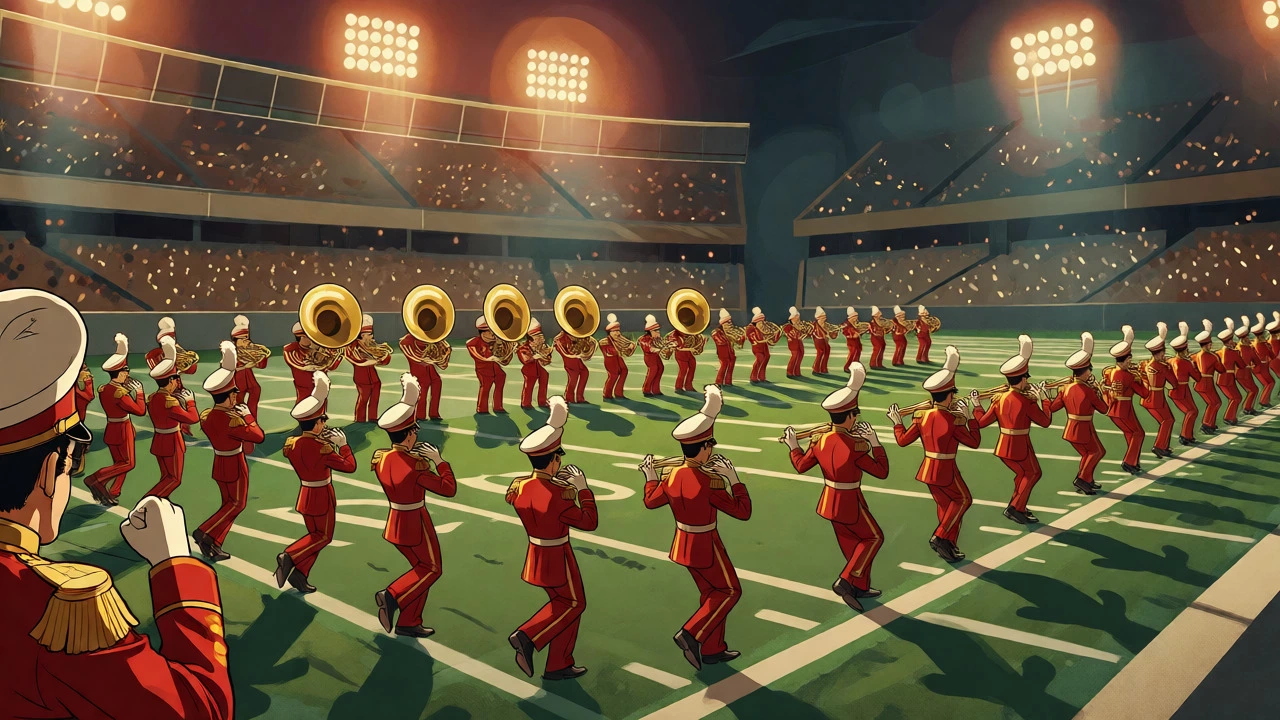
Before the NFL started booking global superstars, halftime was about pageantry. The early 1980s leaned heavily on nostalgia. Take Super Bowl XIV in 1980. Held at the Rose Bowl, the theme was "A Salute to the Big Band Era." It featured Up with People, a traveling performing group known for their upbeat, collegiate-style shows, alongside the Grambling State University Marching Band. There were no pop stars here, just brass instruments and choreographed formations looking back at pre-rock America.
By Super Bowl XVI in 1982, the tone shifted slightly toward local heritage. The show paid tribute to Detroit’s Motown legacy. Again, Up with People took center stage, performing medleys of 1960s soul hits. It was a clever nod to the host city, but still firmly rooted in the past rather than the current radio charts.
The mid-decade brought bigger budgets and corporate partnerships. Super Bowl XVIII in 1984 was produced by The Walt Disney Company. Titled "Salute to the Superstars of the Silver Screen," it turned the field into a Hollywood review. Two university bands played classics like "Hooray for Hollywood" and "Puttin' on the Ritz." It felt less like a sports break and more like a live film festival.
Then came the experiment that defined the era’s transitional nature. In Super Bowl XX in 1986, Up with People returned with "Beat of the Future." This time, they didn’t just play oldies. They performed a medley including "Born in the U.S.A." by Bruce Springsteen, "The Power of Love" by Huey Lewis and the News, and "I Just Called to Say I Love You" by Stevie Wonder. For the first time, current chart-toppers were integrated into the halftime structure. It was awkward compared to today’s seamless concerts, but it signaled that the NFL knew pop music mattered.
The Strangest Moment: 3D Magic and Elvis Presto
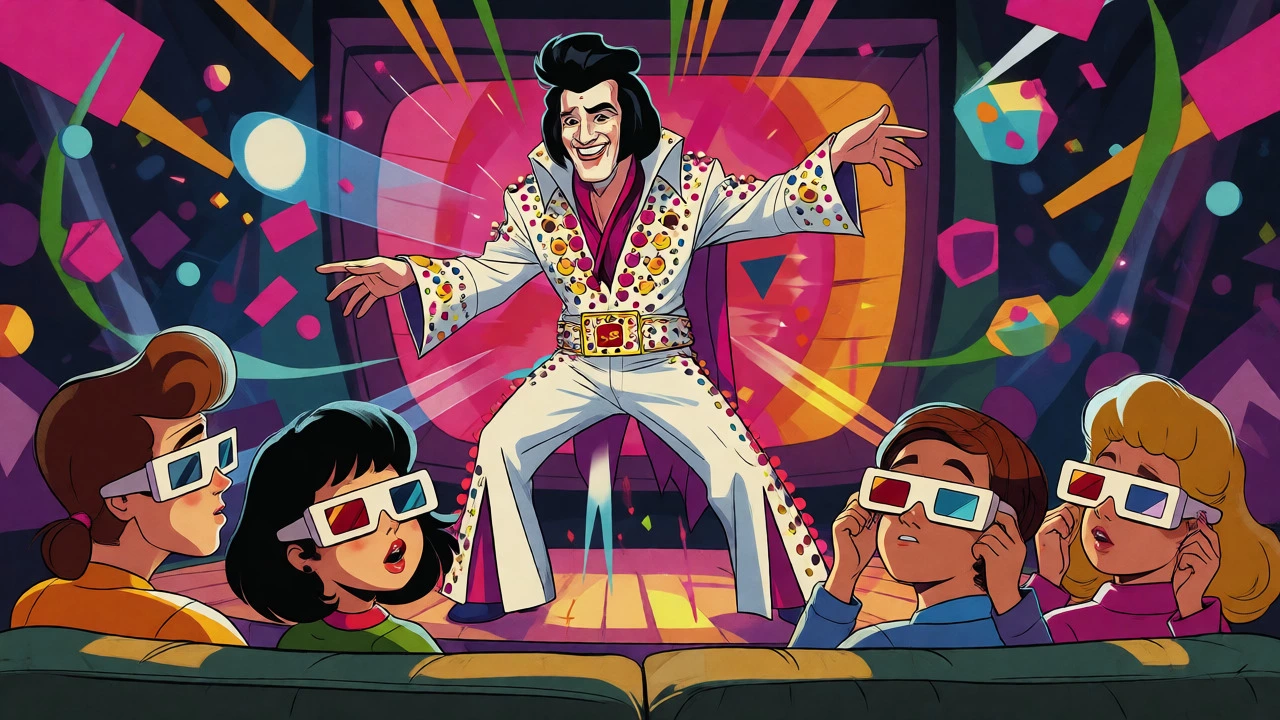
If you want to see how far producers were willing to go before finding their footing, look no further than Super Bowl XXIII in 1989. The halftime show was titled "Be Bop Bamboozled in 3-D." Yes, really.
The performer was Elvis Presto, an illusionist character portrayed by actor Alex Cole, who dressed as an Elvis Presley impersonator. Viewers were sent branded glasses via soft-drink promotions to watch the performance in stereoscopic 3D. The goal was audience participation through a card trick. In practice, it was chaotic. Many viewers missed the glasses or couldn't figure out the mechanics. Retrospectives often cite this as one of the weirdest halftime shows ever, proving that novelty alone isn't enough to sustain attention during a championship game.
| Year | Game | Theme | Key Feature |
|---|---|---|---|
| 1980 | XIV | Big Band Era | Nostalgia; Up with People |
| 1982 | XVI | Salute to Motown | Detroit Heritage; Soul Medleys |
| 1984 | XVIII | Silver Screen | Disney Production; Hollywood Classics |
| 1986 | XX | Beat of the Future | First Current Pop Hits Medley |
| 1989 | XXIII | Be Bop Bamboozled | 3D Technology; Elvis Presto |
When Commercials Outshone the Game
Here is the controversial truth: for many people in the 1980s, the ads were better than the halftime shows. Because there were no mega-star performers, advertisers stepped up to fill the entertainment void. Three campaigns from this decade remain etched in American memory.
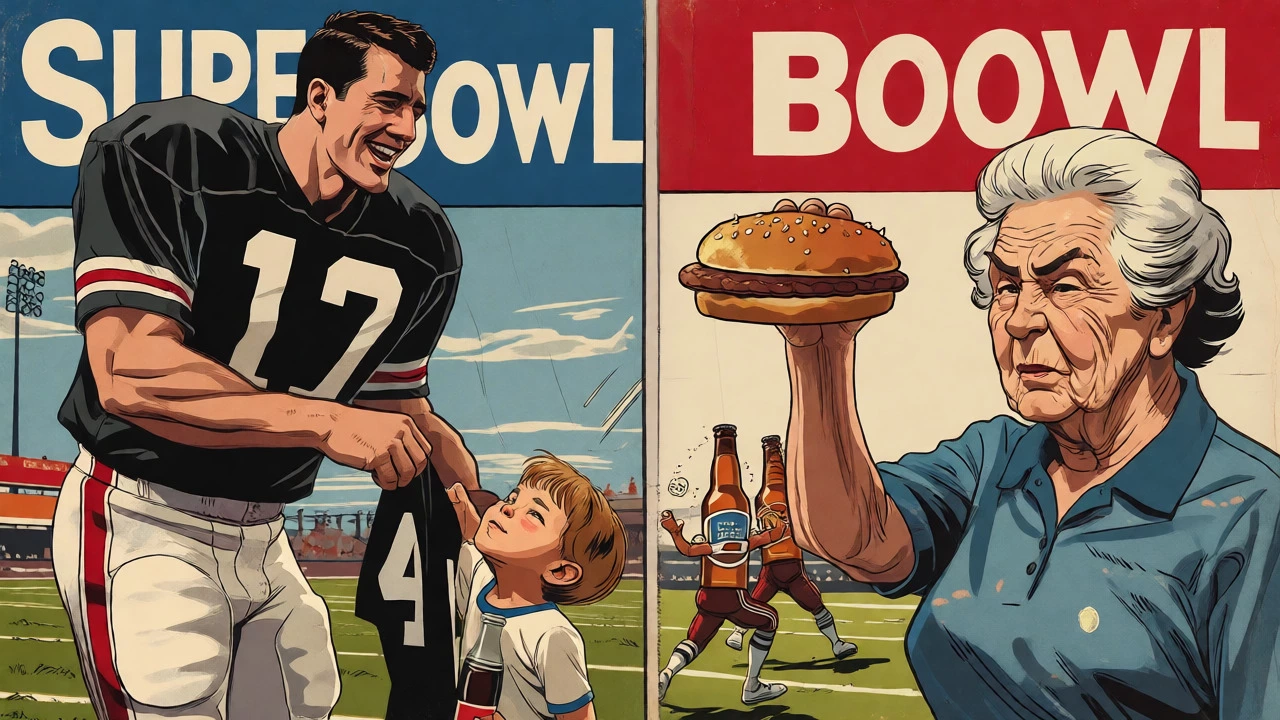
The first is Coca-Cola’s "Mean Joe Greene", a heartwarming spot featuring Pittsburgh Steelers defensive tackle Joe Greene accepting a Coke from a young fan. While it premiered in 1979, its airing during Super Bowl XIV in 1980 cemented its status. It wasn't just selling soda; it was selling humanity. The image of Greene tossing his jersey to the kid became iconic overnight.
Then there was Wendy’s "Where’s the Beef?", a campaign launched in 1984 featuring elderly actress Clara Peller questioning the size of competitor burgers. The phrase entered the national lexicon so quickly that it was used in political debates later that year. During the Super Bowl coverage, the replay of these spots kept the meme alive, showing how powerful a single 30-second clip could be.
Finally, Anheuser-Busch changed the game in 1989 with the Bud Bowl, a fictional mini-game pitting anthropomorphized beer bottles against each other. Aired during Super Bowl XXIII, it felt like a parody of the actual sport. It was funny, self-referential, and instantly popular. These ads proved that creativity could beat celebrity endorsements.
Television Innovations and Network Wars
You can't talk about 1980s Super Bowls without talking about the networks. CBS and NBC alternated rights, and both were trying to push the boundaries of what a broadcast could be. NBC, in particular, experimented with presentation styles that seem radical in hindsight.
Remember the "announcerless game"? In a regular-season matchup between the Jets and Dolphins, NBC stripped away all commentary. No Dick Enberg, no booth chatter. Just stadium noise and graphics. It was a test case for immersion. By the time the Super Bowl rolled around, networks were increasingly treating the event as a visual product. Color TV penetration was high, and home sets were getting larger. Producers knew that visual clarity mattered more than ever.
This era also saw the rise of appointment television. Unlike today, where you can stream ads online weeks before kickoff, 1980s viewers had to tune in live. If you missed the Wendy's spot during the second quarter, you might not see it again until a rerun months later. This scarcity created a shared cultural moment. Everyone was talking about the same jokes, the same tricks, and the same songs on Monday morning.
Why the 1980s Matter for Today’s Super Bowl
It’s easy to laugh at the 3D glasses or the marching bands. But don’t dismiss the decade too quickly. The 1980s solved the problem of how to entertain 100 million people without relying solely on the athletes. They established the template: use themes to tell stories, use ads to create conversation, and use technology to engage the viewer directly.
When Michael Jackson finally took the stage in 1993, he wasn't starting from scratch. He was building on the foundation laid by Up with People’s pop medleys and Disney’s cinematic productions. The transition from "variety show" to "concert" happened because producers realized audiences wanted connection, not just choreography.
So next time you complain about a halftime show being too short or too commercial-heavy, remember the folks in 1989 trying to focus their cardboard glasses. We’ve come a long way, but the core desire-to share a spectacular, unifying moment-hasn't changed.
Who performed at the Super Bowl halftime shows in the 1980s?
No major pop stars headlined the halftime shows in the 1980s. Instead, the performances featured groups like Up with People, university marching bands (such as Grambling State and USC), military ensembles like Tops in Blue, and theatrical troupes like The Rockettes. The closest thing to a pop star appearance was the inclusion of current hit songs in medleys, such as in the 1986 "Beat of the Future" show.
What was the most famous Super Bowl commercial of the 1980s?
Several commercials are tied for this title, but "Mean Joe Greene" for Coca-Cola (aired prominently in 1980) and Wendy's "Where's the Beef?" (1984) are widely considered the most impactful. The 1989 "Bud Bowl" is also frequently cited for its innovative approach to advertising within the context of the game itself.
Why was the 1989 Super Bowl halftime show weird?
The 1989 show, "Be Bop Bamboozled in 3-D," featured an Elvis impersonator named Elvis Presto and required viewers to wear special 3D glasses. The concept was confusing for many audiences, and the technical execution was flawed, making it one of the most criticized and memorable oddities in Super Bowl history.
Did any real musicians perform in the 1980s Super Bowl halftimes?
While no solo recording artists headlined, some shows included singers. Helen O’Connell performed in 1981, and Chubby Checker appeared in 1988. However, the majority of the musical content was delivered by large ensembles, marching bands, or the vocal group Up with People, who covered popular songs rather than performing original material exclusively.
How did TV broadcasting change during the 1980s Super Bowls?
Networks like NBC and CBS began experimenting with immersive techniques, such as removing announcers for parts of games to emphasize stadium atmosphere. The period also saw increased production values, with corporate sponsors like Disney producing halftime shows, marking a shift toward higher-budget, cinematic presentations.