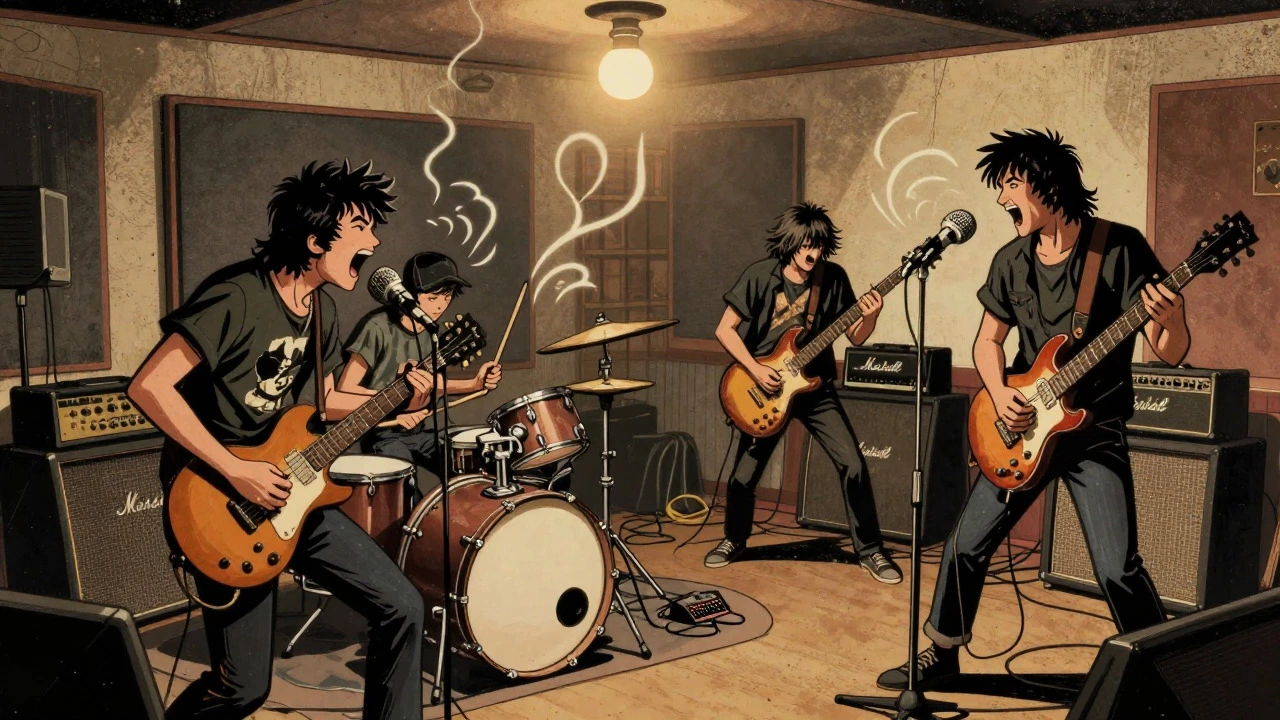

There is a specific feeling to a 1980s punk record that modern software often struggles to replicate. It’s not just the speed or the aggression; it’s the air in the room. When you listen to Black Flag's Damaged or early Hüsker Dü, you hear the band breathing together. You hear the floor bounce under the kick drum. This wasn't an accident born from poverty alone, though budget played a role. It was a deliberate aesthetic choice made by producers who believed that the best sound came from capturing a performance, not constructing one.
In the 1980s, the definition of "production" shifted for punk bands. Instead of layering tracks until the mix was perfect, engineers like Glen "Spot" Lockett and Tommy Ramone focused on two core elements: raw takes and room mics. These techniques prioritize energy over precision, allowing bleed between instruments and using the natural acoustics of the studio space to create depth. For modern engineers looking to capture that same visceral impact, understanding these historical methods offers a blueprint for creating music that feels alive rather than manufactured.
The Philosophy of the Raw Take
A raw take means recording the entire band playing together in real-time, with minimal overdubbing. In the 1980s punk scene, this approach was both a creative constraint and a sonic goal. By limiting track counts and avoiding pitch correction, producers forced musicians to commit to their parts. If a drummer rushed a fill, it stayed in the mix. If a guitarist missed a note, the audience heard the tension.
This method relies on the concept of "bleed," where sound from one instrument leaks into the microphone of another. While classical engineering tries to isolate every source, punk production embraces bleed as a glue that binds the ensemble. When the snare hits, you might hear a faint wash of guitar amp noise. When the bass drops, the room mics catch the physical movement of the air. This creates a cohesive image where the band exists in the same physical space, which is crucial for the genre's authenticity.
- Full Band Tracking: Record drums, bass, and guitars simultaneously to preserve rhythmic interplay.
- Limited Overdubs: Add vocals or double-tracked guitars only if necessary, keeping the core rhythm section live.
- No Pitch Correction: Accept human imperfection as part of the emotional texture.
- Short Sessions: Aim to complete recordings within five days to maintain momentum and freshness.
Glen "Spot" Lockett and the SST Sound
At the heart of the American hardcore explosion was SST Records and its in-house engineer, Glen "Spot" Lockett. Between 1979 and 1985, Lockett produced or engineered over 100 albums, including landmark releases from Minutemen and Meat Puppets. His background in jazz gave him an observational ear that prioritized documenting the band's actual sound rather than reshaping it into something radio-friendly.
Lockett’s approach at studios like The Bunker involved placing the band in a small, untreated room and letting them play. He didn't try to fix poor performances in post-production; instead, he captured the "jet-turbine" intensity of bands like Black Flag as they existed on stage. This methodology aligns with the broader 1980s punk ethos: the recording should reflect the live experience, warts and all. By harnessing the natural reverb of the room and the proximity effect of close-miked amplifiers, Lockett created a dense, immediate sound that defined the era.
Tommy Ramone’s Minimalist Microphone Setup
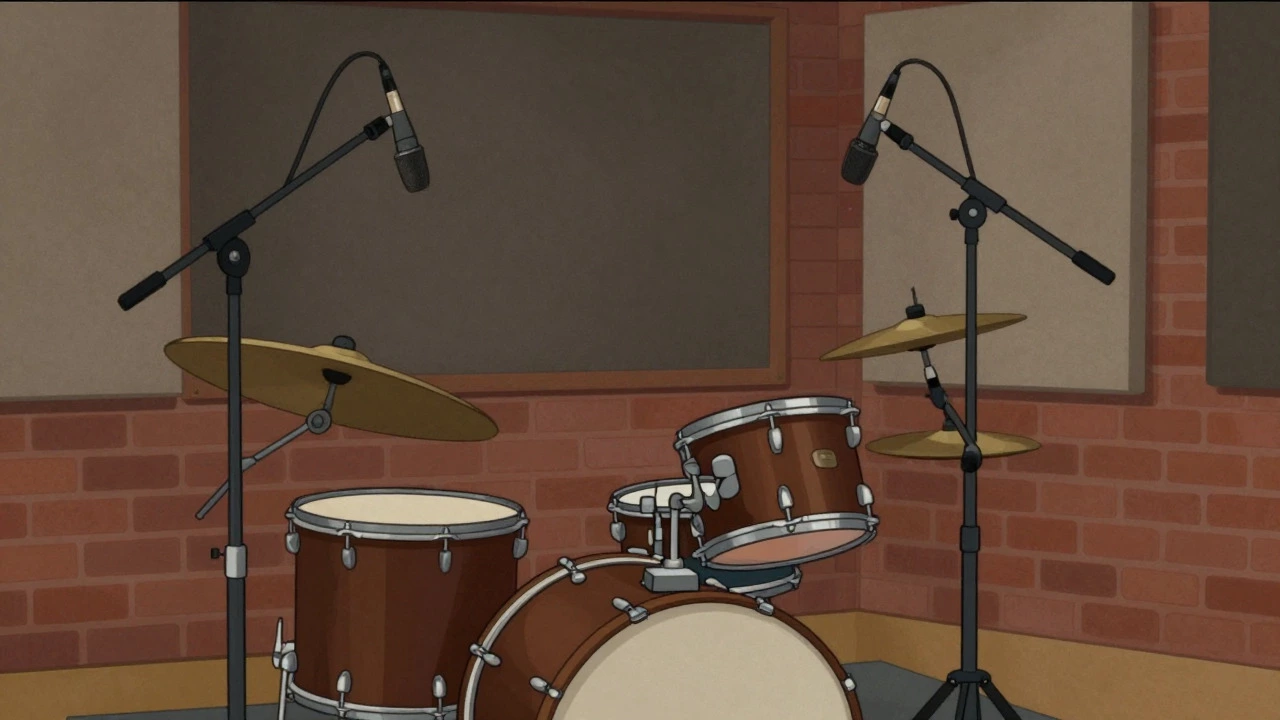
While Lockett worked in the US underground, Tommy Ramone was shaping the New York punk sound with The Ramones. In interviews, Ramone described a philosophy of using as few microphones as possible to avoid phase problems. For early recordings, his drum setup was strikingly simple: an Electro-Voice dynamic mic on the kick, a Shure or AKG on the snare, and a single Neumann U87 overhead. This three-mic configuration forced the engineer to rely on the balance of the kit rather than individual isolation.
As technology and budgets allowed, the setup evolved, but the principle remained. Later sessions included two high overheads (U87s), lower overheads and hi-hat mics (Sony electret condensers), Sennheiser mics on toms, an Electro-Voice RE20 on the kick, and a Shure SM57 on the snare. Even with more mics, the goal was a cohesive, live feel. For guitars, Ramone advised turning Marshall amplifiers up to maximum volume, using no effects, and blending a close Shure SM57 with a distant Neumann U87 placed about six feet away. That distant mic captured the room interaction, adding weight and realism to the tone without digital processing.
| Component | Early Session (Minimal) | Later Session (Expanded) |
|---|---|---|
| Kick Drum | Electro-Voice Dynamic | Electro-Voice RE20 |
| Snare Drum | Shure or AKG Dynamic | Shure SM57 |
| Overheads | Single Neumann U87 | Two High U87s + Two Low Sony Condensers |
| Toms | None (relies on overheads) | Sennheiser Microphones |
| Hi-Hat | None (relies on overheads) | Sony Electret Condenser |
Steve Albini and the Power of Room Acoustics
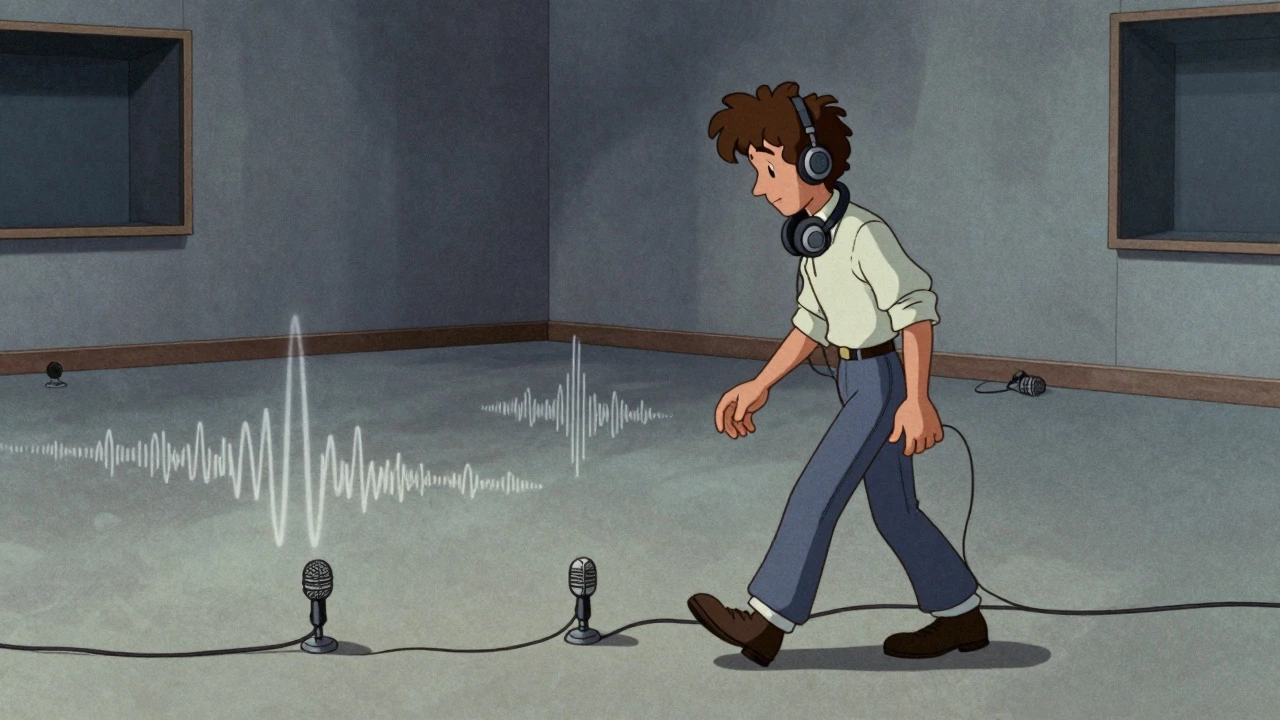
If Lockett and Ramone laid the groundwork, Steve Albini refined the use of room microphones into a precise science. Working out of Electrical Audio in Chicago, Albini treated the room itself as an instrument. His famous technique involves placing ambient microphones on the floor at the opposite end of the room from the drum kit. This placement exploits the boundary effect, where the floor reinforces low frequencies and delays early reflections, creating a natural sense of size and space.
Albini often used small-diaphragm condensers like the Oktava MK-012 or Sontronics STC-1 for these ambient roles. He would walk around the room to find the spot that sounded best, then place the mics on the floor. In some cases, he applied a time delay of approximately 20 milliseconds to the room mics before mixing. This slight delay allows the initial drum transient from the close mics to arrive first, preserving punch, while the delayed room signal adds width and depth without blurring the attack. This technique has become a benchmark for raw rock and punk production, offering a realistic alternative to artificial reverb plugins.
Implementing Raw Techniques in Modern Studios
You don’t need a 1980s analog console to achieve this sound, but you do need to change your workflow. The key is to resist the urge to edit. Here is how to apply these principles in a modern DAW environment:
- Prepare the Room: Choose a space with some natural reverb. Dead rooms can make raw recordings sound thin. If possible, add soft furnishings to tame harsh reflections without killing the ambience.
- Limit Your Mics: Start with a basic kit: kick, snare, two overheads, and one or two room mics. More mics mean more phase issues and more mixing decisions.
- Track Live: Have the band play together. Use click tracks sparingly or not at all, depending on the desired feel. Let the tempo breathe.
- Blend Close and Far: Mix the close mics for detail and the room mics for context. Automate the level of the room mics to follow the dynamics of the performance.
- Embrace Bleed: Don't try to gate out every bit of leakage. The bleed from the amps into the drum mics is part of the glue.
For guitar tones, consider using a combination of a close dynamic mic and a distant condenser. The distant mic captures the speaker cone's movement in the room, adding a midrange warmth that pure close miking often lacks. This technique, championed by Tommy Ramone, remains effective today because it captures the physical reality of the amplifier interacting with the space.
Why Raw Production Still Matters
In an era where loudness wars have pushed productions toward -8 to -10 LUFS integrated levels, raw punk production offers a refreshing contrast. These records are often less loud but more dynamic. They allow quiet passages to be truly quiet and loud moments to hit harder. Listeners associate this dynamic range with authenticity and energy.
The skills required for this approach are different from those needed for polished pop-punk. You need strong musicianship, basic knowledge of microphone placement, and an understanding of phase relationships. You don't need advanced digital editing skills or complex plugin chains. The focus shifts from fixing mistakes to capturing moments. As long as bands value speed, cost-effectiveness, and genuine performance, the legacy of 1980s punk producers will continue to influence how music is made.
What is the main benefit of using room microphones in punk recording?
Room microphones capture the natural ambience and spatial relationship between instruments. They add depth and realism to the recording, making the band sound like they are in the same physical space, which enhances the sense of energy and immediacy associated with punk music.
How many microphones did Tommy Ramone use for early Ramones drum recordings?
Tommy Ramone used a minimalist setup consisting of three microphones: an Electro-Voice dynamic mic on the kick drum, a Shure or AKG dynamic mic on the snare, and a single Neumann U87 as an overhead. This limited number helped avoid phase issues and maintained a cohesive sound.
Why does Steve Albini place room mics on the floor?
Placing room mics on the floor exploits the acoustic boundary effect. The floor reflects low frequencies back to the microphone, reinforcing the bass response, while delaying early reflections from walls and ceiling. This creates a natural, spacious sound without needing artificial reverb.
What is the typical session length for a raw punk recording?
Raw punk recordings are typically completed within five days. This short timeframe encourages efficiency and keeps the performance fresh, preventing the band from overthinking or over-polishing the material. It also helps manage costs and maintains the energetic momentum of the creative process.
Can you use digital tools to achieve a raw punk sound?
Yes, but the mindset matters more than the tools. You can use a DAW to record live takes, limit your track count, and avoid pitch correction. However, achieving the true raw aesthetic requires embracing bleed and relying on room acoustics rather than heavy processing or sample replacement.


