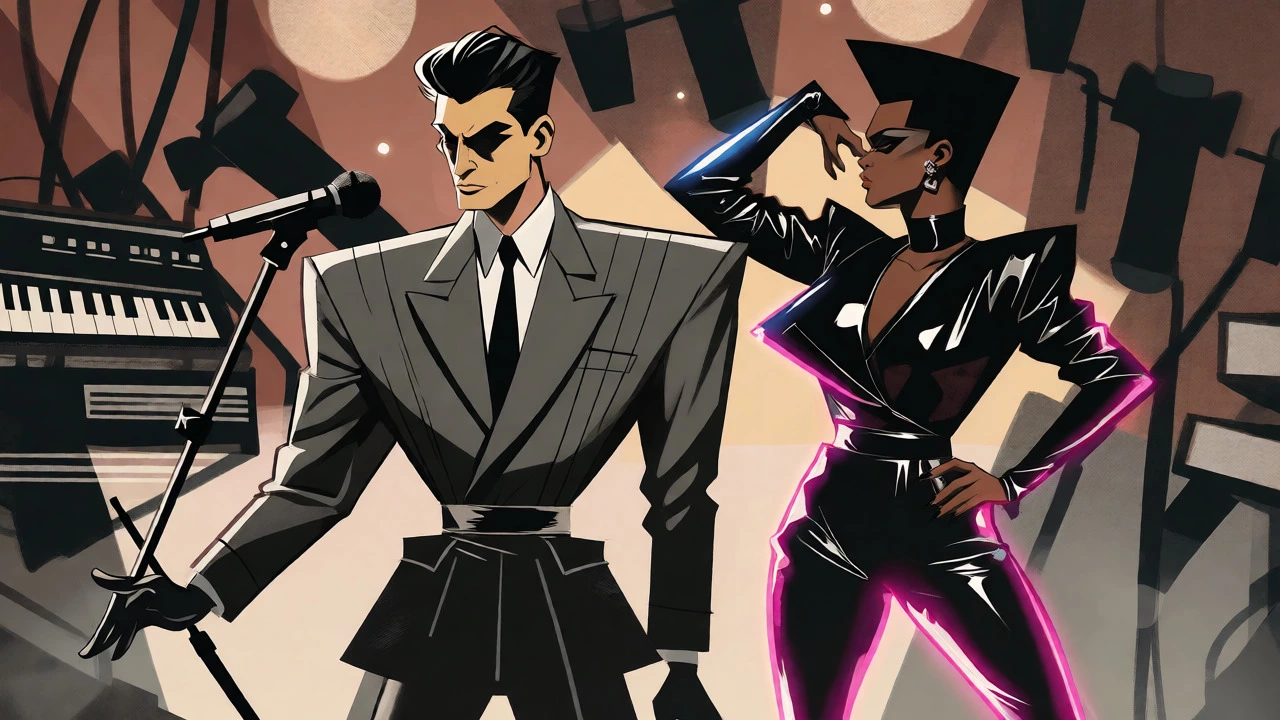

You know that feeling when you see a photo of David Byrne in his oversized gray suit or Grace Jones looking like a futuristic statue? That wasn't just random costume design. It was a deliberate cultural shift where music, gender, and color collided to redefine how we dressed. If you've ever wondered why your closet feels stuck between "corporate drone" and "rave gear," the answer lies in the New Wave movement of the early 1980s.
This era didn't just change what people wore; it changed who could wear what. We're talking about a time when men wore eyeliner without hesitation, women cut their hair into sharp geometric shapes, and neon pink became as acceptable as navy blue. It’s easy to dismiss this as pure excess, but New Wave fashion was actually a clever, art-school rejection of the messy denim-heavy look of the 70s. Let's break down how this aesthetic moved from smoky London clubs to MTV screens and back into modern closets.
The Shift From Punk to Polished Chaos
To understand New Wave, you have to look at what came before it. By 1978, punk rock had burned itself out on ripped jeans and safety pins. The next wave of musicians-bands like Talking Heads, Devo, and Blondie-wanted something cleaner but still weird. They rejected the "unkempt" vibe of classic rock for something sharper, more synthetic, and undeniably artificial.
This wasn't about comfort. It was about image. These artists treated their bodies as canvases. The silhouette changed dramatically. Instead of the loose, flowing fabrics of the disco era, New Wave embraced the inverted triangle: broad shoulders, a narrow waist, and skinny legs. Think of the Big Suit worn by David Byrne around 1983. It looked ridiculous on stage, which was exactly the point. It mocked corporate uniformity while simultaneously adopting its structure.
The materials reflected this obsession with the artificial. Natural fibers like cotton and wool took a backseat to polyester, rayon, PVC, and spandex. These fabrics held bright colors better and gave clothes a shiny, plastic-like finish that caught the club lights perfectly. It was a look that said, "I am constructed, not born."
Androgyny Was the Default Setting
If there is one word that defines New Wave fashion, it’s androgyny. But this wasn't just cross-dressing for shock value. Artists like Prince, Annie Lennox, and Boy George used clothing to create a third category of gender expression.
Men wore lace shirts, ruffled blouses, and heavy eye makeup. Women adopted masculine tailoring, power suits, and short, cropped haircuts. The goal was to blur the lines so completely that you couldn't tell if a performer was male or female until they opened their mouth. Prince, for instance, mixed high-heeled boots with bikini briefs and frilly white shirts. He combined traditionally feminine lingerie details with masculine rock symbolism, creating a persona that refused to fit into a binary box.
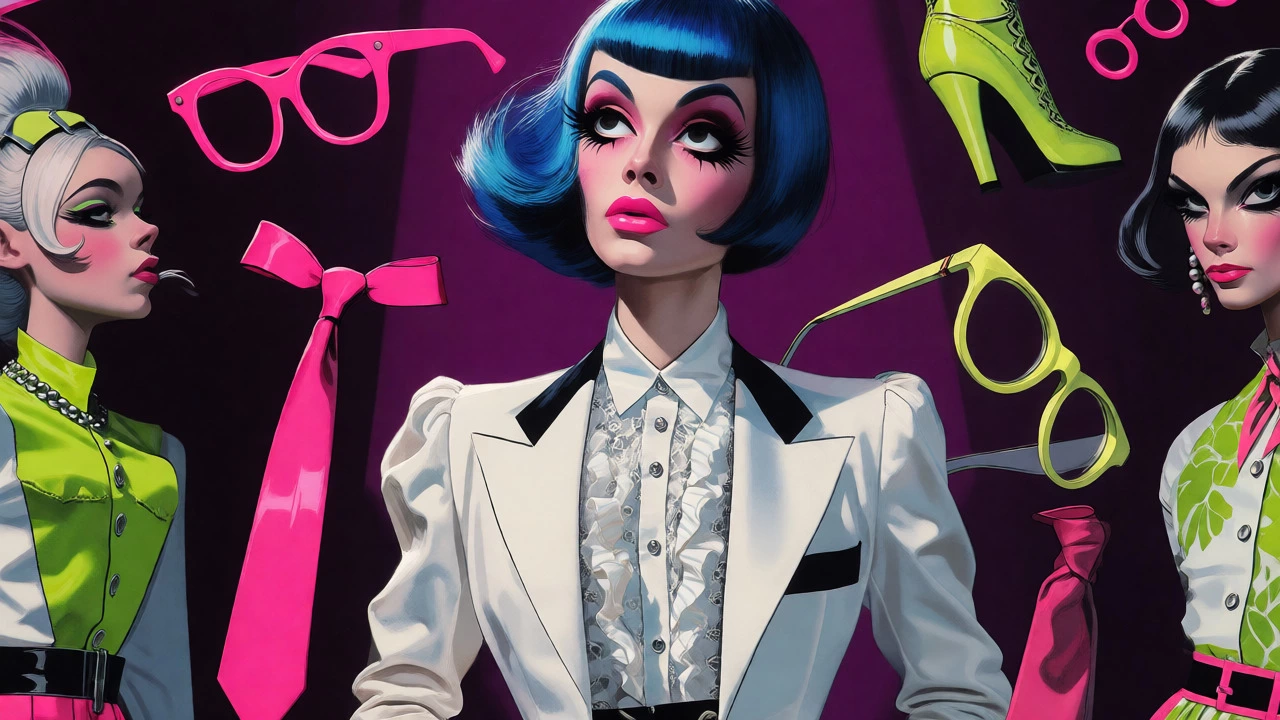
This trend trickled down to everyday youth culture too. In clubs across Austin, New York, and London, guys wore skinny ties and colored glasses, while girls wore oversized blazers and combat boots. Horn-rimmed eyeglasses became a unisex accessory, signaling an "art school" intellect rather than traditional sex appeal. It was a visual language that prioritized creativity over convention.
The Neon Explosion: Color as Weapon
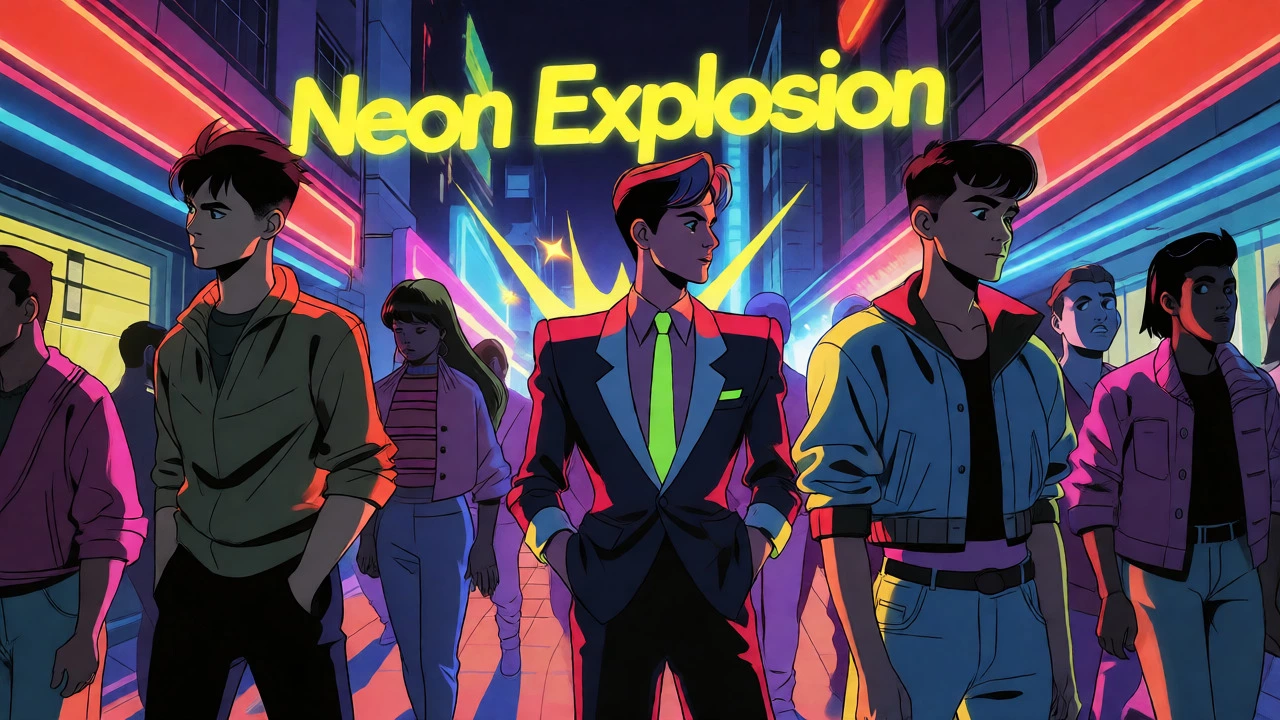
By 1983, the monochrome and pastel tones of the late 70s were gone. In their place arrived an assault on the eyes: neon. This wasn't subtle. We're talking highlighter yellow, electric blue, hot pink, and lime green.
Why did this happen? Two main factors drove the neon craze. First, MTV launched in 1981. Music videos required visuals that popped on low-resolution TV screens. Bright, saturated colors grabbed attention faster than muted tones. Second, the rise of aerobics culture brought spandex into mainstream daytime wear. Suddenly, neon coral leggings and acid-yellow leotards weren't just for dancers; they were for everyone going to the gym or the mall.
Fashion historians note that neon served a specific purpose in New Wave outfits. It added energy and a cartoonish quality that matched the synthesizer-heavy soundtracks of the time. A simple black suit paired with a neon tie or a fluorescent shirt instantly transformed the wearer from boring to bold. It was accessible rebellion-you didn't need custom couture to participate; you just needed a bright T-shirt and the confidence to wear it.
Key Elements of the Look
If you want to recreate this aesthetic today, you don't need to dress like a caricature. The key is picking specific elements that capture the spirit of the era. Here are the core components that defined New Wave style:
- Sharp Tailoring: Slim-fit suits with exaggerated shoulders. The jacket should be structured, even if the rest of the outfit is chaotic.
- Skinny Ties: Often made of leather or featuring bold patterns. They replaced the wide, colorful ties of the 70s.
- Geometric Haircuts: Asymmetric cuts, mullets, and severe bobs. Hair was often dyed unnatural colors like blue, purple, or platinum blonde.
- Statement Accessories: Plastic jewelry, large hoop earrings, and horn-rimmed glasses. The bigger and more plastic, the better.
- Color Blocking: Pairing contrasting bright colors, such as turquoise with red or yellow with blue, to create visual tension.
| Feature | New Wave | Glam Metal | Aerobics/Fitness |
|---|---|---|---|
| Silhouette | Inverted Triangle (Sharp/Angular) | Oversized/Voluminous | Body-Con/Tight |
| Primary Materials | Polyester, Silk, Synthetic Blends | Spandex, Leather, Denim | Lycra, Spandex |
| Gender Expression | Androgynous/Fluid | Hyper-Masculine/Hyper-Feminine | Functional/Unisex |
| Color Palette | Neon + Monochrome Blocks | Bright Patterns + Black | High-Visibility Neons |
| Cultural Icon | David Byrne / Grace Jones | Poison / Mötley Crüe | Jane Fonda |
Why It Still Matters Today
You might think New Wave is dead, buried under layers of grunge flannel and minimalism. But look at current fashion trends. Power shoulders are back. Men are wearing skirts and pearls again. Neon accents appear in every major streetwear drop. The reason these styles keep returning is that New Wave solved a problem that fashion still struggles with: how to be individual without being invisible.
The movement proved that you could mix high culture (tailoring) with low culture (plastic accessories) and serious art (gender theory) with pop entertainment (MTV). It gave permission to experiment. When you see a young person today mixing a vintage blazer with sneakers and bright socks, they are unknowingly continuing the work started by bands like Devo and Talking Heads.
It also paved the way for modern conversations about gender fluidity. Before New Wave, men wearing makeup or women wearing suits were seen as outliers. After New Wave, they were seen as stylish. The aesthetic didn't just change clothes; it expanded the social boundaries of who could wear what.
How to Wear It Now Without Looking Like a Costume
Trying to wear full-on New Wave today can feel like putting on a Halloween costume. The trick is moderation. You don't need head-to-toe neon. Start small.
Try adding one element of the aesthetic to a modern outfit. Swap your standard belt for a thin, patterned one. Wear a blazer with slightly padded shoulders over a plain T-shirt. Use a bold lip color or a sharp eyeliner wing to nod to the makeup trends without going full goth. Keep the rest of your outfit neutral-black trousers, white shirts, or denim-to let the New Wave piece shine.
Thrift stores are your best friend here. Authentic 80s pieces often have the right cut and fabric weight that modern reproductions miss. Look for slim-cut jackets, narrow ties, and unique buttons. Avoid anything too baggy; the essence of New Wave is precision, even if that precision is ironic.
What is the difference between New Wave and Punk fashion?
Punk fashion relied on DIY customization, ripped denim, leather jackets, and safety pins, emphasizing aggression and anti-fashion. New Wave, emerging directly after punk, rejected the unkempt look in favor of clean lines, synthetic fabrics, tailored suits, and artistic self-consciousness. While punk was messy and raw, New Wave was polished, geometric, and deliberately artificial.
Did men really wear makeup in the 1980s?
Yes, particularly within the New Wave, New Romantic, and Goth subcultures. Icons like Boy George, Prince, and members of Duran Duran popularized the use of eyeliner, mascara, and lipstick on men. This trend challenged traditional masculinity and became a significant part of mainstream youth fashion by the mid-1980s.
What colors were most popular in New Wave fashion?
The palette shifted from monochrome black and white in the late 70s to vibrant neons in the mid-80s. Key colors included hot pink, electric blue, lime green, highlighter yellow, and orange. These were often paired with stark black or white to create high-contrast color blocking effects.
Is New Wave fashion making a comeback?
Elements of New Wave fashion frequently cycle back into style. Recent years have seen a resurgence of power shoulders, skinny ties, geometric haircuts, and neon accents in both high fashion and streetwear. The emphasis on gender-fluid styling and synthetic materials also aligns with contemporary sustainable and experimental fashion trends.
Who were the biggest style icons of the New Wave era?
Major style icons include David Byrne (Talking Heads), Debbie Harry (Blondie), Grace Jones, Prince, Annie Lennox (Eurythmics), and Boy George (Culture Club). Each contributed distinct elements, from Byrne's oversized suits to Jones's futuristic minimalism and Prince's flamboyant androgyny.