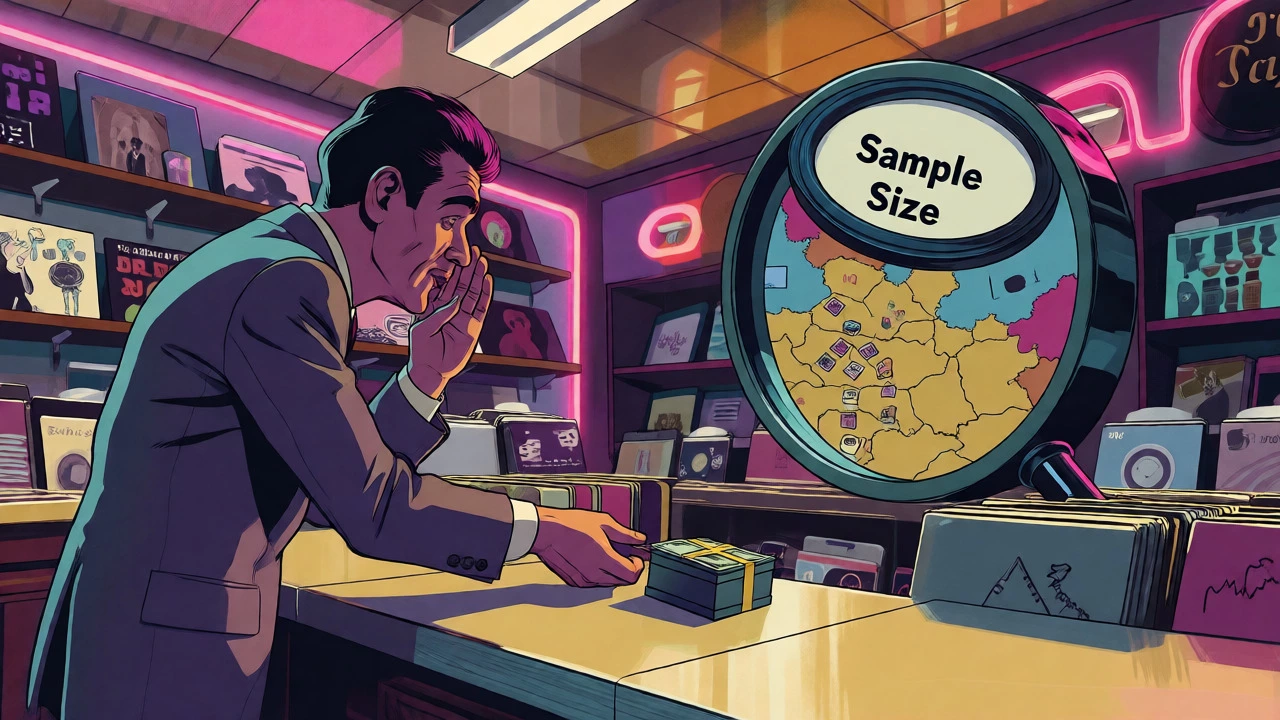

Did your favorite 1980s hit really earn its spot at number one? Or did a record label slip a bribe to the right shop owner? This isn't just a conspiracy theory whispered in bars; it's a complex historical puzzle involving limited data samples, aggressive marketing, and some very expensive gifts. The 1980s music charts, specifically the Official Singles Chart in the UK and Billboard’s Hot 100 in the US, were powerful cultural arbiters that often operated on surprisingly fragile statistical foundations. While we tend to remember the era for synth-pop excess and hair metal, the mechanics behind what made a song "popular" were far messier than most fans realized.
The reality is rarely black and white. It wasn’t that every chart-topper was fake, nor was every single sale purely organic. Instead, the industry existed in a gray zone where the line between clever promotion and outright fraud blurred significantly. To understand this, you have to look at how these charts were actually built. They weren’t real-time digital tallies like they are today. They were surveys. And surveys can be influenced.
The Structural Vulnerability of Early Charts
Think about how difficult it would be to track every vinyl record sold across the entire United Kingdom or the United States in 1980 without computers scanning barcodes at checkout. You couldn’t. So, the industry relied on sampling. In the UK, the British Market Research Bureau (BMRB) compiled the Official Singles Chart by polling a specific subset of retailers. Initially, this sample was tiny. By the mid-1960s, Melody Maker targeted only about 250 shops. Even when the BMRB took over, their survey covered roughly 7% of all record retailers. That means if you knew which 300 stores reported sales, you could theoretically influence the national outcome by sweet-talking those specific owners.
This structural flaw created a target-rich environment. Record companies, managers, and independent agents knew exactly who held the keys to the kingdom. If you wanted your band to break out, you didn’t necessarily need to convince millions of teenagers to buy a record. You just needed to convince a few hundred shopkeepers to report higher numbers. In the US, the system was different but equally vulnerable. Billboard’s Hot 100 combined retail sales with radio airplay. Since airplay was harder to quantify objectively, it became the primary battleground for influence. Independent promoters acted as intermediaries, bridging the gap between labels and radio programmers, often using methods that ranged from persuasive dinners to questionable cash exchanges.
UK Hyping: Gifts, Stock, and the "Cooked" Report
In the UK, the practice was known as "hyping." It wasn’t always illegal, but it was certainly manipulative. The most famous scandal broke in 1980, when BBC Two’s Newsnight and ITV’s World In Action aired investigations alleging widespread corruption. They claimed that chart-return shops received free gifts, alcohol, and promotional stock to encourage them to falsify sales reports. One shop owner reportedly received T-shirts and booze worth £237 in a single week-a significant sum equivalent to nearly £911 today.
Was this enough to rig the chart? Sometimes. A notable example involved the band Shy, who allegedly reached the Top 75 despite retailers ordering only 82 copies. How? Labels supplied free copies to ensure the sales figures looked robust. But here’s the catch: the British record industry launched a six-week investigation following these TV exposés. Their conclusion wasn’t that the charts were entirely rigged, but rather that there was a "very thin dividing line" between aggressive marketing and hyping. They admitted some shops had been induced to "cook" their books but argued it wasn’t systemic enough to invalidate the entire chart.
This nuance matters. Artists like Fleetwood Mac, Gary Numan, Queen, and The Pretenders were named in connection with these allegations. However, being named doesn’t prove complicity. Often, the artists themselves were unaware of the backroom deals their management teams were making. The evidence suggests that while improper conduct occurred, it didn’t mean every hit by these bands was a manufactured lie.

US Payola and the Independent Promoter Economy
Cross the Atlantic, and the game changed. In the US, the focus shifted from retail shops to radio stations. The term "payola"-a portmanteau of "pay" and "Victrola"-had been around since the 1950s, but the 1980s saw it evolve into a sophisticated industrial complex. Direct payments from labels to DJs were risky due to FCC regulations. Enter the independent promoter. These were third-party agents hired by labels to secure radio airplay. Because they weren’t employees of the label, the financial transactions were harder to trace.
The scale was massive. Reports from the Los Angeles Times indicated that a loose network of nine major independent promoters charged the industry collectively about $60 million per year. The incentives offered to radio programmers went beyond simple bribes. Allegations included cash, drugs, and even prostitutes. In 1984, the House Energy and Commerce Committee began an inquiry into this practice after investigative reporting highlighted the growing cost and influence of these promoters. The goal was to get songs onto playlists, which directly impacted Billboard rankings. This wasn’t just about buying a slot; it was about manufacturing momentum. A song added to heavy rotation on key stations would trigger sales, creating a self-fulfilling prophecy of popularity.
| Feature | UK Official Singles Chart | US Billboard Hot 100 |
|---|---|---|
| Primary Mechanism | Retailer influence via gifts/free stock | Radio airplay via independent promoters |
| Data Source | Survey of ~250-500 specific shops | Reported sales + Radio playlist adds |
| Key Players | Shop owners, Label reps, Managers | Independent promoters, Program Directors |
| Regulatory Response | Industry code of conduct updates | FCC inquiries, Grand jury investigations |
| Main Controversy | 1980 Newsnight/World In Action exposés | Jack Isgro Network & Cash Box murder case |
The Cash Box Tragedy and Darker Realities
While UK scandals mostly resulted in policy tweaks, the US story took a darker turn with the Cash Box magazine case. In 1989, Kevin Hughes, the magazine’s 23-year-old chart director, was murdered in Nashville. His death wasn’t just a random act of violence; prosecutors alleged it was linked to his role in verifying chart data. Hughes had reportedly questioned radio stations whose reported airplay didn’t match his own research, threatening the integrity of purchased placements.
Witness testimony suggested that promoters paid Cash Box personnel between $1,500 and $2,000 per single for favorable treatment on independent country charts. The prosecution theory posited that Hughes’ interference with a lucrative payola scheme led to his demise. While the legal proceedings focused on the murder, the underlying narrative exposed how deeply entrenched corruption was. It wasn’t just about getting a song played; it was about protecting the financial flows generated by chart positions. This case remains a stark reminder that for some, the stakes of chart manipulation were literally life-and-death.
Myths vs. Realities: What Actually Happened?
It’s easy to fall into the trap of thinking the entire 1980s was a sham. Let’s debunk the biggest myths.
- Myth: Every hit was bought. Reality: No. Massive hits like Michael Jackson’s "Thriller" or Whitney Houston’s "I Wanna Dance with Somebody" had genuine, overwhelming consumer demand. Manipulation might help a record cross the initial threshold, but sustaining a number-one spot required actual people buying the record.
- Myth: You could simply buy number one. Reality: Rarely. Most manipulation helped records enter the lower reaches of the chart (e.g., number 39). Once there, radio and press attention could drive genuine sales. It was a catalyst, not a substitute for quality or appeal.
- Myth: Multi-formatting was illegal. Reality: Releasing multiple versions of a single (like Frankie Goes to Hollywood’s "Two Tribes") was legal exploitation of chart rules. Fans bought ten different remixes, inflating sales counts. This wasn’t fraud; it was smart business until rules changed in the 1990s to limit formats.
The reality is more subtle. Chart systems were commercially powerful but statistically imperfect. They were susceptible to targeted manipulation, especially for emerging artists needing a breakthrough. Established stars didn’t need to bribe shopkeepers because they already had brand recognition. The manipulation was most effective at the margins, helping unknown acts gain visibility.
The Shift to Data Integrity
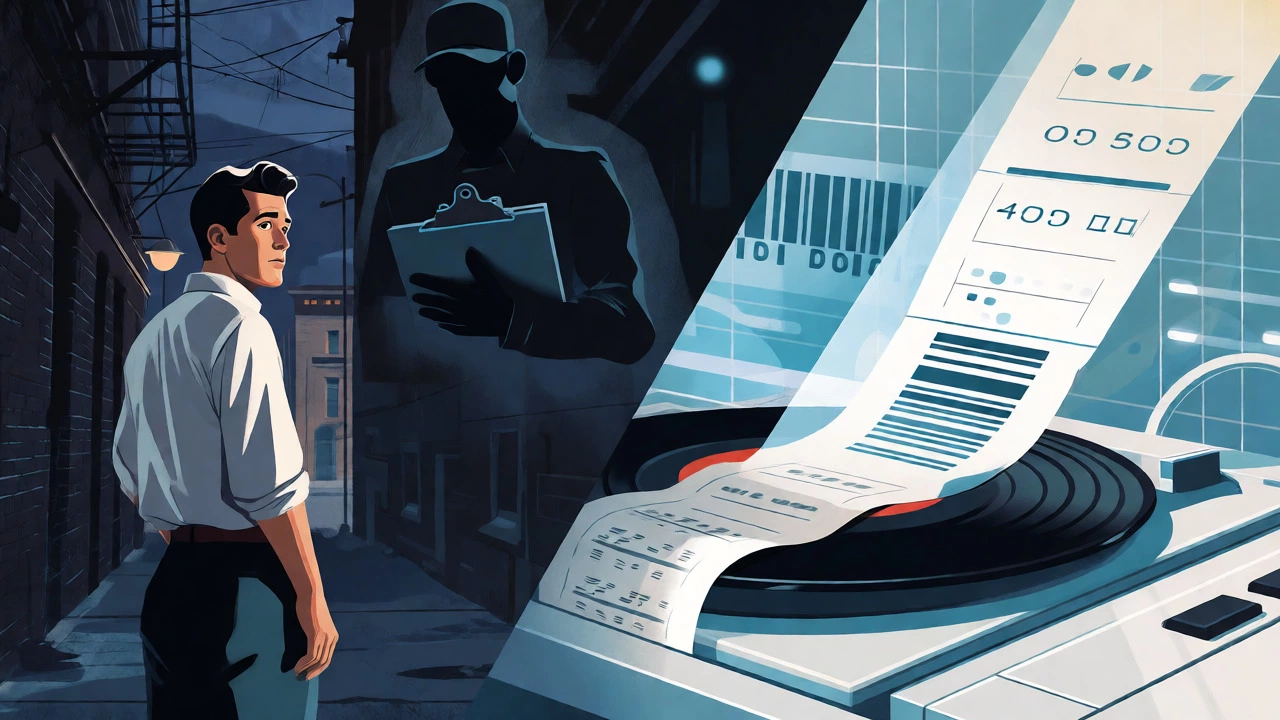
So, how did things change? Technology eventually caught up with the industry. In the UK, the Gallup Organization took over chart compilation, expanding the survey to approximately 500 stores and introducing barcode scanners in 1987. This made it exponentially harder to manipulate results through small-sample bribery. In the US, increased scrutiny on independent promoters and stricter FCC enforcement reduced the blatant payola culture. The era of handing a DJ an envelope of cash under the table faded, replaced by more transparent, albeit still competitive, promotional budgets.
Today, we take real-time streaming data for granted. We assume the charts reflect what people are actually listening to. But looking back at the 1980s reveals that "popularity" was often a negotiated outcome between art, commerce, and statistics. The myths suggest a total fabrication of culture; the realities show a flawed system trying to measure taste in an analog world. Understanding this helps us appreciate the resilience of true classics-they survived the noise, the bribes, and the bad data to become part of our collective memory anyway.
Were 1980s music charts completely rigged?
No, they were not completely rigged. While vulnerabilities existed and instances of manipulation were documented, major hits generally required genuine consumer demand to sustain their success. The charts reflected a mix of organic sales and strategic promotion.
What was "hyping" in the UK music industry?
Hyping referred to practices where record companies influenced chart-reporting retailers through gifts, free stock, or payments to inflate sales figures artificially. It was distinct from standard marketing because it involved falsifying or exaggerating reported data.
How did independent promoters affect US charts?
Independent promoters acted as middlemen between record labels and radio stations. They secured airplay by offering incentives to programmers, which indirectly boosted sales and Billboard chart positions. This system often operated in a legal gray area regarding payola laws.
Did barcode technology stop chart manipulation?
Barcode technology significantly reduced manipulation by providing accurate, automated sales data. Introduced in the UK by Gallup in 1987, it made it much harder to falsify reports compared to the previous manual survey methods.
Why was the Cash Box murder case significant?
The murder of Kevin Hughes highlighted the severe consequences of chart corruption. Prosecutors alleged his death was linked to his efforts to verify chart accuracy against purchased placements, exposing deep-rooted payola schemes within the industry.