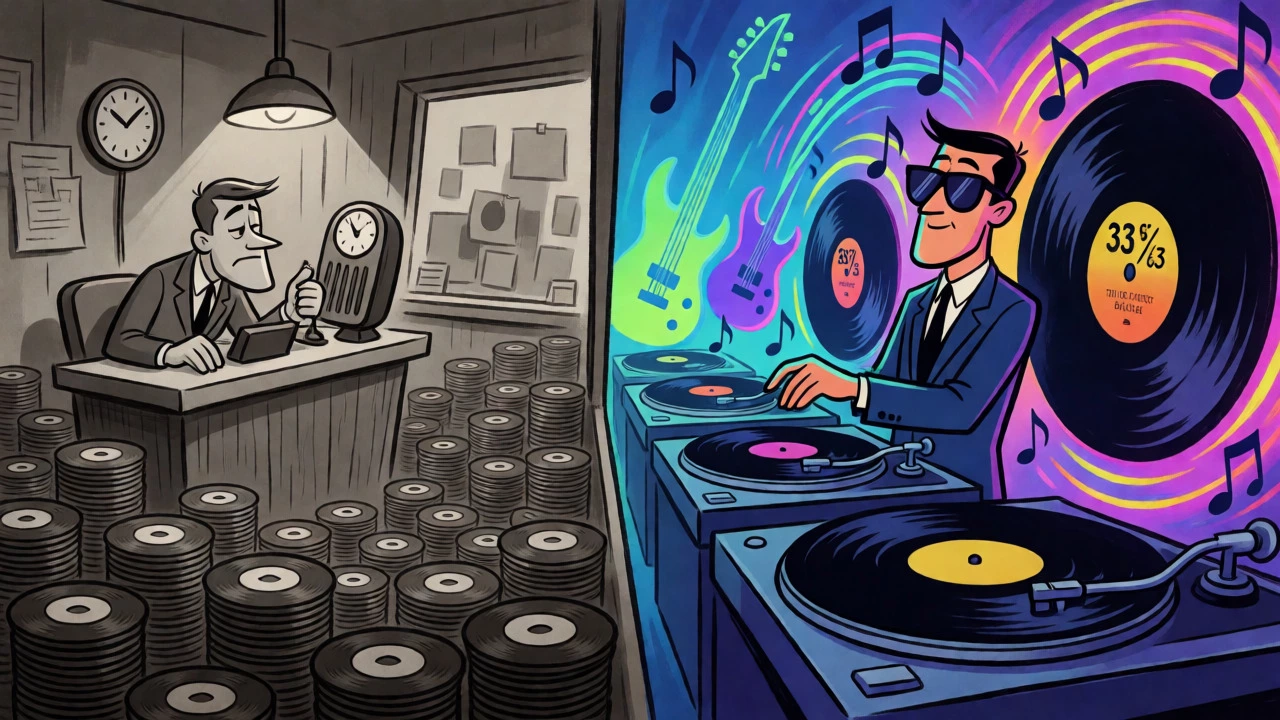

Imagine turning on the radio in 1974 and hearing a seven-minute track with a scorching guitar solo that never made it to the AM charts. That wasn't an accident; it was by design. The rise of Album-Oriented Rock (AOR) transformed how we consume heavy guitar music, shifting power from single-hit pop stations to FM broadcasters who treated albums as art. If you've ever wondered why bands like Led Zeppelin or Black Sabbath got massive airplay despite having few radio-friendly singles, the answer lies in the specific FM formats that emerged in the early 1970s.
The Shift From AM Singles To FM Albums
Before the 1970s, radio was dominated by AM Top 40 stations. These stations played short, three-minute singles designed for quick consumption. If your song didn't fit that mold, you didn't exist on the dial. But a cultural shift was brewing. Young listeners wanted more depth, and record labels realized they could sell full albums if they had a platform to promote them. This created a perfect storm for FM radio.
In the late 1960s, progressive rock stations began experimenting with freeform programming. DJs had total autonomy, playing entire sides of vinyl records without interruption. It was chaotic but exciting. However, station owners and advertisers craved consistency. They needed a format that kept listeners engaged but allowed for predictable ad breaks. The solution was AOR, a structured approach that used data to curate album tracks rather than just singles.
How AOR Actually Worked
AOR wasn't just about playing long songs. It was a rigorous system. Program directors used audience research to identify which tracks from best-selling LPs resonated most with young adults. Instead of playing every song on an album, they picked one or two "power cuts"-tracks with strong hooks, memorable riffs, or impressive solos-and put them on heavy rotation.
This method required a different kind of library management. Stations stocked hundreds of 33 1/3 rpm LPs, not just 45 rpm singles. Consultants like Ron Jacobs at KGB-FM in San Diego helped formalize this process, applying Top 40-style rotation logic to album tracks. The result? Listeners heard deep cuts repeatedly. A song might not have been released as a single, but if it appeared on a popular album, it could become a staple of the local soundscape.
| Feature | AM Top 40 | Progressive FM | AOR (Album-Oriented Rock) |
|---|---|---|---|
| Primary Media | 45 rpm Singles | Full Sides of LPs | Selected Tracks from LPs |
| DJ Control | Low (Scripted) | High (Freeform) | Medium (Curated Rotation) |
| Song Length | < 3 Minutes | Unrestricted | 3-8 Minutes (Typical) |
| Heavy Guitar Focus | Rare | Common | Strategic & High Volume |
| Commercial Model | Ad-driven | Niche/Underground | Mass Market Album Sales |
Key Stations That Built The Sound
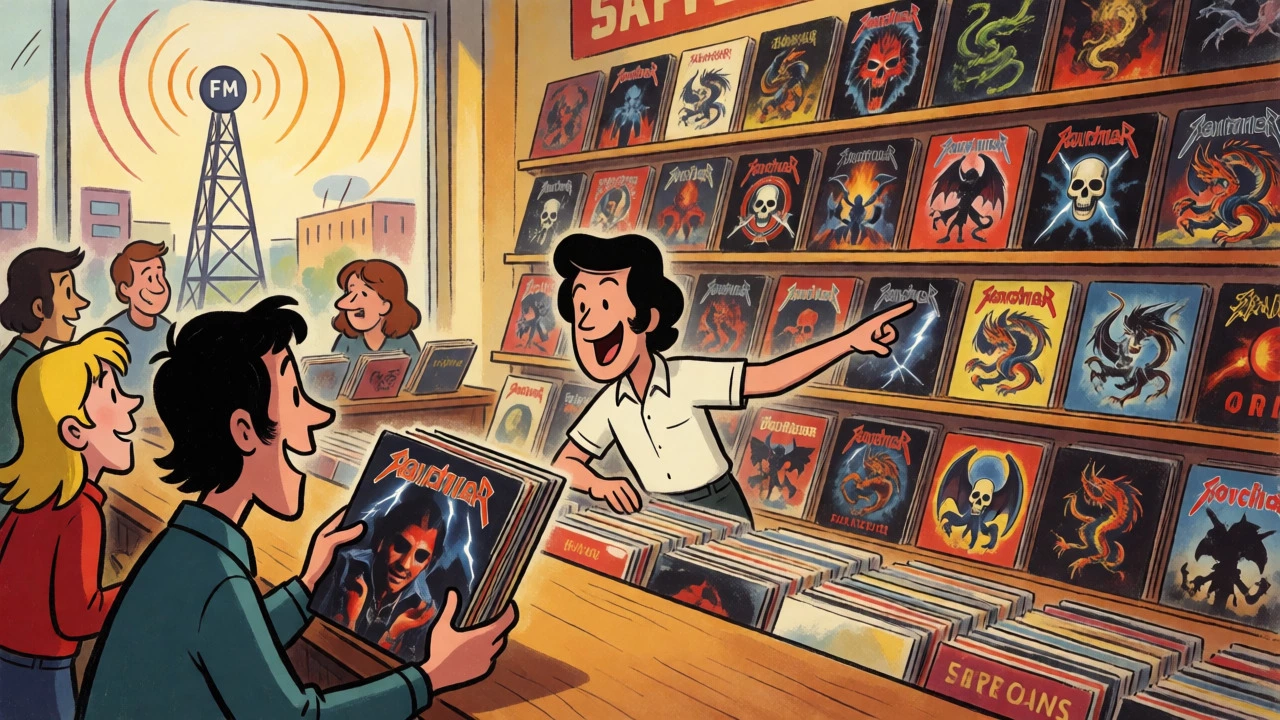
You can't talk about 1970s hard rock radio without mentioning the stations that defined it. In New York, WPLJ made a pivotal move in October 1971. They shifted from a loose progressive format to a tighter, hit-oriented rock configuration. This change signaled the end of the freeform era and the beginning of commercialized AOR. Similarly, WRIF in Detroit became a powerhouse for hard rock, giving massive exposure to local and national acts with heavy guitar tones.
On the West Coast, KLOS in Los Angeles set the standard for polished, high-quality rock broadcasting. These weren't just random playlists; they were carefully constructed identities. By focusing on artists like Deep Purple, Pink Floyd, and The Who, these stations created a feedback loop. Bands wrote longer, more complex songs because they knew FM radio would play them. Listeners bought albums because they heard their favorite deep cuts on repeat.
Why Heavy Guitar Music Thrived On FM
Hard rock and early heavy metal relied on technical proficiency and extended instrumental passages. AM radio hated this. A five-minute guitar solo doesn't fit between ads easily. FM AOR embraced it. The format allowed for what critics called "muscular arrangements." You heard the distortion, the sustain, and the complexity that defined the genre.
This exposure was crucial for the evolution of metal. Before specialized metal stations existed, AOR was the primary gateway. It introduced mainstream audiences to the heavier end of the spectrum. J.D. Considine famously described AOR as "hard pop," sitting right between mainstream chart-toppers and full-blown heavy metal. This positioning meant that bands like Aerosmith or Van Halen could cross over into the mainstream while retaining their edge, thanks to FM's willingness to air non-single tracks.
The Decline And Legacy Of AOR
By the late 1970s, the landscape changed. Disco, new wave, and later, college rock, began to fragment the audience. AOR lost its cutting-edge status. Many stations rebranded as "Classic Rock" in the 1980s, preserving the 1970s catalog but framing it as nostalgia rather than current events.
However, the infrastructure built during the AOR era remained. The concept of promoting album tracks survived. When Z Rock launched in 1986, it dedicated itself entirely to heavy metal, building directly on the foundation laid by AOR programmers who proved that there was a market for heavy guitar music on the airwaves. Today's classic rock stations are direct descendants of those 1970s FM experiments, still spinning the same riffs that defined a generation.
Frequently Asked Questions
What is the difference between Progressive Rock radio and AOR?
Progressive Rock radio, common in the late 1960s, gave DJs complete freedom to play eclectic, long-form music with little structure. AOR (Album-Oriented Rock), which emerged in the early 1970s, used strict playlist rotations based on audience research. While both played album tracks, AOR was commercially driven and focused on repeating specific high-performing cuts, whereas Progressive radio was more artistic and unpredictable.
Did AOR stations only play hard rock?
No. While hard rock and heavy guitar music were core components, AOR stations also played blues rock, southern rock, folk-rock, and progressive rock. The unifying factor was the use of album tracks rather than singles, targeting a young adult demographic interested in deeper musical engagement.
Why did FM radio favor album tracks over singles?
FM technology offered better sound quality than AM, making it ideal for complex studio productions found on albums. Additionally, record labels pushed FM stations to play album tracks to drive LP sales, which had higher profit margins than singles. This economic incentive aligned with listener desires for more substantial content.
When did AOR radio start declining?
AOR peaked in popularity in the mid-1970s. Its decline began in the late 1970s due to the rise of disco, punk, and new wave, which fragmented the rock audience. By the 1980s, many AOR stations had rebranded as Classic Rock, focusing on archival material from the previous decades.
How did AOR influence the development of heavy metal?
AOR provided the first mass-media platform for heavy guitar music. By airing deep cuts from bands like Black Sabbath and Led Zeppelin, it normalized distorted guitars and long solos for a mainstream audience. This exposure paved the way for specialized heavy metal formats in the 1980s.


