
Key Takeaways
- The transition from mono PA systems to stereo DJ mixers enabled seamless blending.
- The Bozak CMA-10-2DL set the industry standard for channel layouts and cueing.
- The invention of the crossfader shifted DJing from simple fading to rhythmic performance.
- Audiophile-grade turntables like Thorens and Technics defined the era's sound quality.
- Custom sound manipulation tools transformed the DJ from a selector into a producer.
The Birth of the DJ Mixer
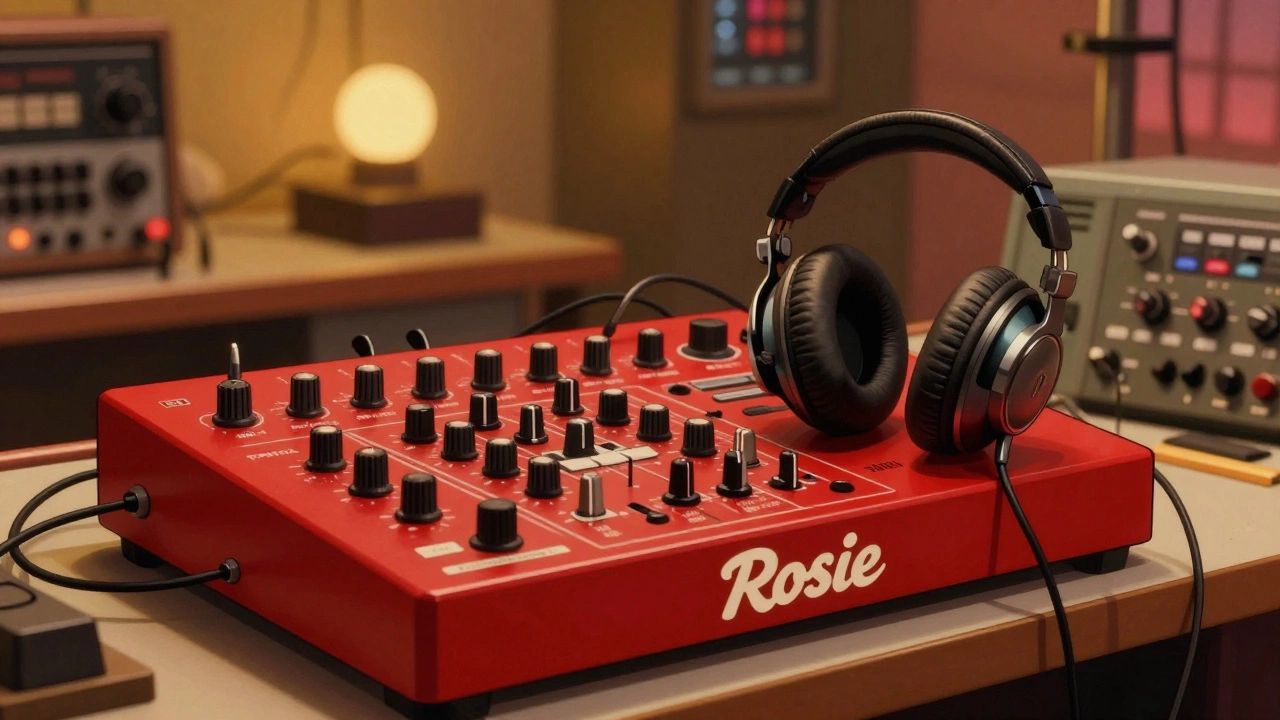
In the early part of the decade, the gear was mostly improvised. Enter Alex Rosner, a soundsystem designer who realized DJs needed a way to hear what was coming next without the crowd hearing it too. He built a custom stereo mixer nicknamed "Rosie" because of its bright red paint. This machine introduced independent cueing-the ability to listen to a separate track through headphones while the main speakers kept the party going. It was a game-changer. Without this, the concept of a "seamless mix" was nearly impossible.
Rosner didn't stop there. He teamed up with engineer Rudy Bozak to move away from mono systems and create a true stereo experience. A key addition came from Richard Long, who suggested adding sends and returns. This allowed the DJ to route audio out to external gadgets, like echo boxes, before bringing it back into the mix. This flexibility turned the mixer into an instrument rather than just a volume knob.
The Industry Gold Standard: The Bozak CMA-10-2DL
By the mid-70s, the Bozak CMA-10-2DL had become the undisputed king of the DJ booth. If you were a serious pro in New York or beyond, you had a Bozak. It wasn't just about the sound; it was about the layout. The mixer featured six stereo channels-two for phono (turntables), two for line-level auxiliary inputs, and two for microphones. Each channel had its own balance control, and the audio was routed through a master level control and a two-band equalizer.
This design was so effective that it basically mapped out how every DJ mixer would look for the next few decades. While it eventually gave way to the UREI 1620 in the early 80s (which swapped discrete components for integrated circuits), the Bozak's logic remained. It gave DJs like Walter Gibbons and Nicky Siano the tools to blend records so smoothly that the crowd couldn't tell where one song ended and the next began.
| Model | Key Innovation | Core Technology | Primary Use |
|---|---|---|---|
| Bozak CMA-10-2DL | Multi-channel stereo mixing | Discrete Components | High-end Disco/Clubs |
| Citronic SMP101 | First commercial crossfader | Analog Slider | UK Market/Early Transitioning |
| UREI 1620 | Standardized circuit reliability | Integrated Circuits | House Music/80s Clubs |
The Revolution of the Crossfader
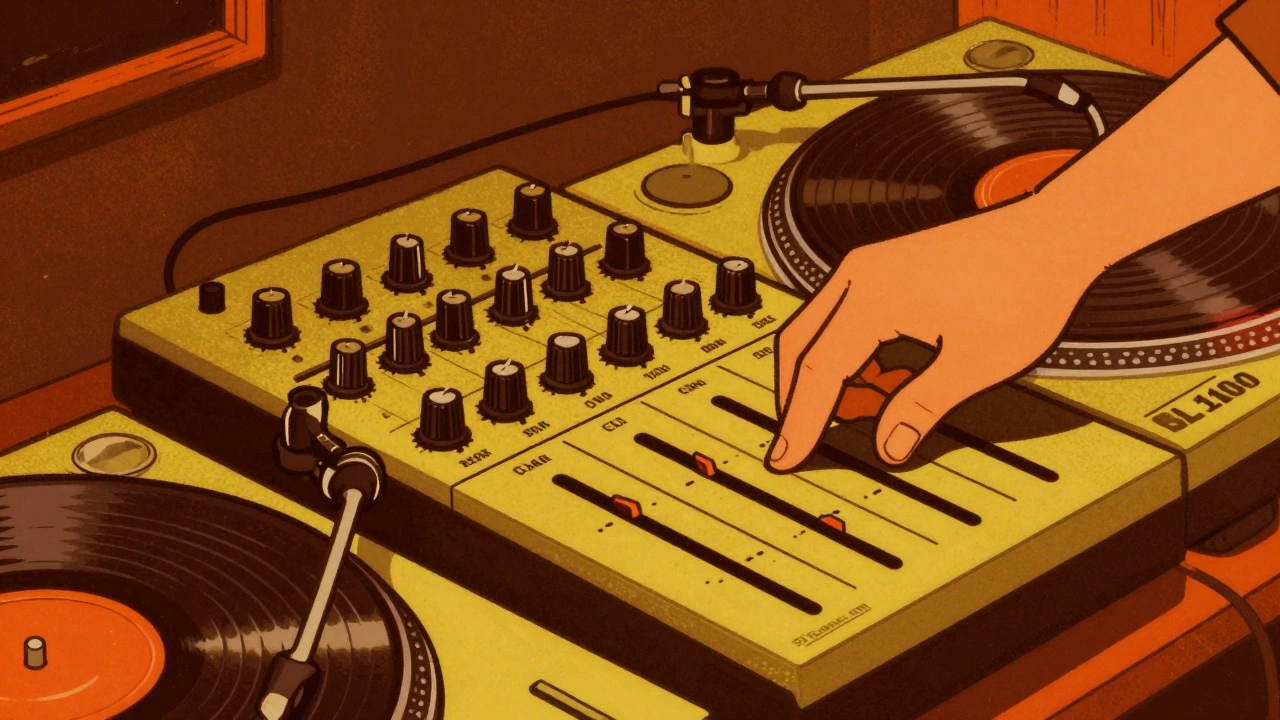
For a while, switching between two records meant sliding two separate volume faders up and down. It was a clunky process. Then came the crossfader. This single horizontal slider allowed a DJ to blend between two channels with one finger. The Citronic SMP101 brought this to the UK in 1977, and shortly after, the GLI PMX 7000 brought it to the US.
Why does this matter? Because the crossfader is the heartbeat of hip-hop origins. Once DJs could snap between two identical records instantly, they could isolate the drum break and loop it indefinitely. This technical ability gave birth to turntablism. Instead of just playing a song, DJs started using the platter as a percussion instrument, moving the record back and forth to create the rhythmic "scratching" sound. Without the rapid-fire switching enabled by the crossfader, scratching would have sounded like a messy accident rather than a musical art form.
Turntables: Precision vs. Power
Not all turntables were created equal in the 70s. You had two main camps: the audiophiles and the party-rockers. For the high-end rooms, like the legendary Paradise Garage, Larry Levan and David Mancuso leaned toward Thorens T125 belt-drive turntables. Belt drives were prized for their sonic purity and lack of motor noise, making them perfect for a crowd that treated the club like a temple of sound.
On the other side, you had the Technics SL-1200 series. While the 1100 and 1200 were used by block party DJs, the SL-1200 eventually became the industry standard. Why? Because it was a tank. It had high torque, a direct-drive motor that started instantly, and a stability that allowed DJs to physically manipulate the record without the needle skipping wildly. This ruggedness was exactly what the emerging hip-hop scene needed to push the boundaries of what a record player could do.
Beyond the Basics: The Custom Booth
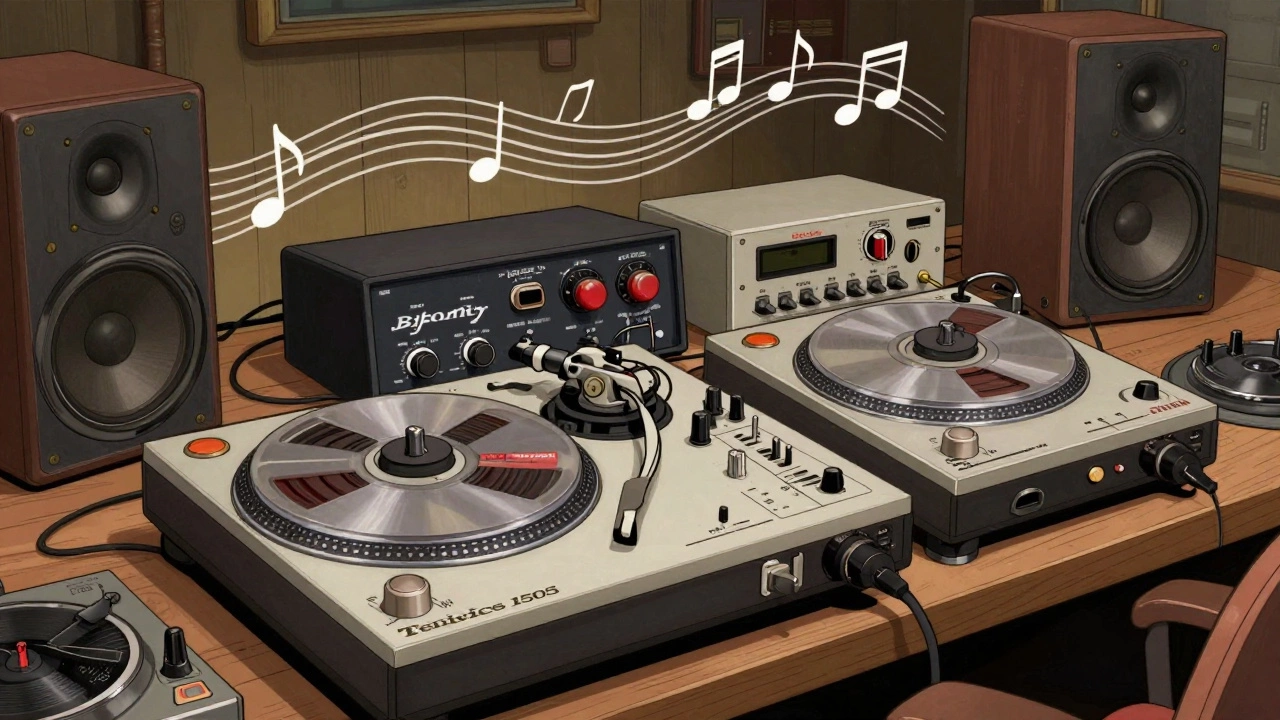
A 1970s DJ booth wasn't just a table; it was a sonic cockpit. DJs didn't just rely on the mixer; they used a suite of external tools to sculpt the sound. For example, at the Paradise Garage, Levan used a custom-designed crossover to cut specific frequencies that might clash with the room's acoustics. If the bass was too boomy in the corners, he could tweak it on the fly.
Other essential tools included:
- DBX Boom Box: Used for massive bass reinforcement to shake the floor.
- Acoustilog image enhancer: This allowed the DJ to manipulate the stereo field, making the music feel wider or more centered.
- Deltalabs Acoustic Computer: A device used to add delay and reverb, giving tracks a more atmospheric, ethereal feel.
- Technics 1505 reel-to-reel: This is where the real magic happened. DJs spent hours splicing magnetic tape to create extended versions of songs, essentially inventing the "remix' before digital software existed.
From Selection to Performance
The intersection of these technologies-the Bozak's routing, the Technics' stability, and the crossfader's speed-transformed the role of the DJ. They were no longer just "selectors" who picked a good song; they became performers. By manipulating the platter, touching the vinyl to slow down a beat, or using the crossfader to chop a vocal, they were creating new music in real-time.
This era proved that the hardware defines the art. The desire for a cleaner transition led to the stereo mixer; the desire for a more rhythmic switch led to the crossfader; and the desire for a more durable player led to the direct-drive turntable. Every time you see a modern DJ using a controller or a digital mixer today, they are using a simplified version of the innovations that happened in those sweaty, smoke-filled 1970s clubs.
What was the most important mixer innovation of the 1970s?
The introduction of independent cueing by Alex Rosner and the subsequent standardization of the multi-channel stereo layout by the Bozak CMA-10-2DL were the most critical. This allowed DJs to preview and beat-match tracks in their headphones without the audience hearing the preparations, making seamless transitions possible.
Why did the Technics SL-1200 become more popular than belt-drive turntables?
While belt-drive tables like the Thorens T125 offered slightly higher audio fidelity, the Technics SL-1200 used a direct-drive motor. This provided higher torque and faster start times, which were essential for the physical manipulation of records, such as cueing and scratching, which became central to hip-hop and electronic music.
How did the crossfader contribute to the birth of hip-hop?
The crossfader allowed DJs to switch between two identical records instantly. This enabled them to isolate and loop drum breaks (the "breakbeat") and eventually perform scratching by rapidly cutting between the record and a silent channel or another sound, turning the turntable into a rhythmic instrument.
What was the role of reel-to-reel tape players in 70s DJing?
DJs used reel-to-reel players, such as the Technics 1505, to create custom edits. By physically cutting and splicing the tape, they could extend a song's instrumental section or bridge two different tracks together, creating the long-form extended mixes that defined the disco era.
Who were the key engineers behind early DJ tech?
Alex Rosner and Rudy Bozak were the primary architects of the early professional DJ mixer. Rosner developed the initial cueing concepts and the "Rosie" mixer, while Bozak refined these into the CMA-10-2DL, the first true industry-standard DJ console.
Next Steps for Gear Enthusiasts
If you're looking to recreate this vintage sound, start by researching "discrete component" mixers; they have a warmth that modern digital boards lack. For those interested in the physical side of the art, practicing on a direct-drive turntable is the only way to truly understand the tactile feel that 70s pioneers used to develop scratching. If you're a producer, try experimenting with tape-style splicing (even via software) to understand how early DJs structured their extended dancefloor edits.


