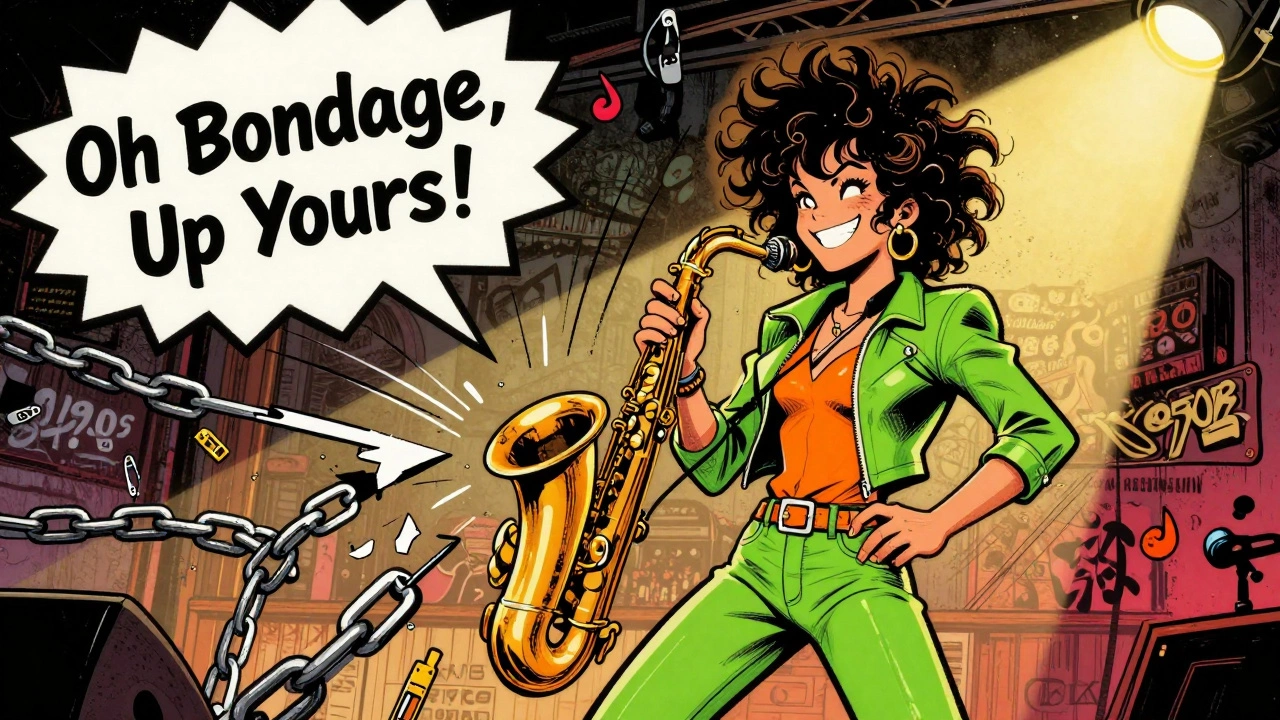

When you think of punk rock in the late 1970s, images of leather jackets, safety pins, and angry men screaming into microphones often come to mind. But the truth is, punk didn’t just happen around women-it was shaped by them. In a scene that prided itself on rebellion, the most radical acts weren’t always the loudest guitars or the most shredded vocals. Sometimes, they were a mixed-race teenager screaming "Oh bondage, up yours!" or a pale, dark-eyed woman turning the Lord’s Prayer into a sonic nightmare. These were women who didn’t wait for permission. They picked up instruments, wrote their own rules, and forced the world to pay attention.
Poly Styrene: The Voice That Shattered the Mold
Poly Styrene wasn’t just a punk singer. She was a walking contradiction. Born Marianne Joan Elliott-Said in 1957 to a Scotch-Irish mother and a Somali father, she was one of the first Black British women in punk-a fact that made her stand out even before she opened her mouth. She didn’t start out as a punk. She’d already released a ska single under her real name. But everything changed after she saw the Sex Pistols live on her 18th birthday. That night, she knew what she had to do.
She placed an ad in a music paper: "Young punx who want to stick it together." Out of that came X-Ray Spex. Their first single, "Oh Bondage, Up Yours!" (1977), wasn’t just a song-it was a manifesto. The opening line-"Some people think little girls should be seen and not heard but I think, oh bondage, up yours!"-cut through the noise like a razor. It wasn’t angry for the sake of it. It was smart. It was funny. It was personal. She didn’t just sing about rebellion; she sang about being the rebellion.
The music itself was unlike anything else. Lora Logic’s saxophone tore through the distorted guitars like a siren. The rhythm was tight, almost mechanical, but Poly’s voice-high, breathy, wild-made it feel alive. Critics called it a feminist version of Roxy Music. She called it a middle finger to consumer culture. Her stage name? "Poly Styrene." A plastic, disposable product. That was the point. She was mocking the very system that tried to box her in.
Her album Germfree Adolescents cracked the UK Top 30. That’s not a fluke. That’s proof that people listened. And not just because it was loud. Because it was true. She sang about racism, about boredom, about being a girl who refused to be quiet. Decades later, riot grrrl bands like Bikini Kill and Sleater-Kinney would cite her as a direct influence. She didn’t call herself a feminist. But her music screamed it louder than anyone else.
Siouxsie Sioux: The Dark Architect of Post-Punk
If Poly Styrene was punk’s loud, colorful rebel, Siouxsie Sioux was its shadowy prophet. She didn’t form a band because she wanted to shout. She formed one because she wanted to haunt.
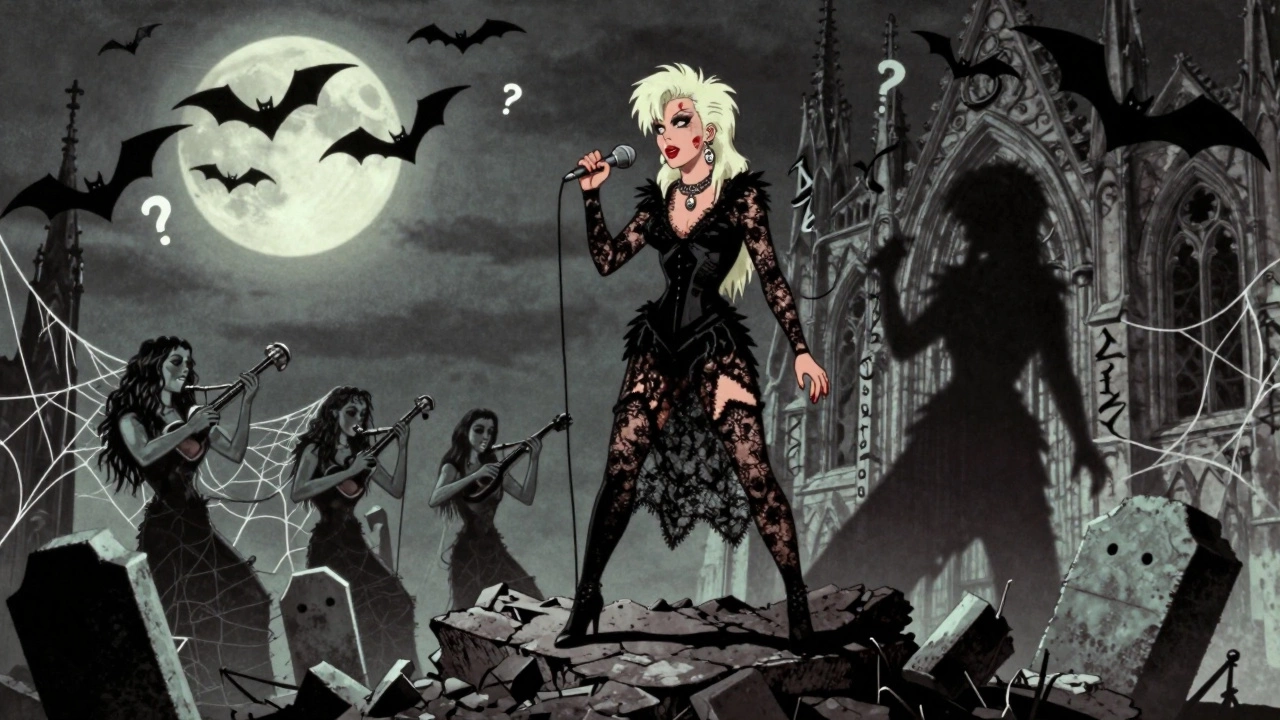
Siouxsie and the Banshees started as an accident. In September 1976, Malcolm McLaren needed a last-minute act for the 100 Club Punk Festival. Siouxsie and bassist Steve Severin threw together a band in two days. Their first show? A 20-minute mess of the Lord’s Prayer, "Twist and Shout," and "Knockin’ on Heaven’s Door," with Sid Vicious on drums. It wasn’t polished. It wasn’t supposed to be. It was raw. It was terrifying. And it worked.
Unlike X-Ray Spex, Siouxsie didn’t use lyrics to spell out her politics. She didn’t need to. Her voice did it for her. High, controlled, dripping with menace, it sounded like a ghost whispering in a cathedral. Her look-black lace, smeared lipstick, wild hair-wasn’t just fashion. It was armor. She didn’t dress like a girl. She dressed like a force of nature. And in a world where women in rock were either sex symbols or background singers, she was something else entirely: a leader.
The Banshees didn’t stay punk for long. By 1978, they were already moving beyond it. Their sound grew darker, slower, more atmospheric. They didn’t abandon punk-they evolved it. And in doing so, they birthed goth. The way Siouxsie held a note, the way she let silence hang in the air before crashing in with a chord… that became the blueprint for bands like The Cure, Joy Division, and later, Nine Inch Nails.
She didn’t need to scream "equality." She showed it. By refusing to be cute. By refusing to be silent. By refusing to be anything but completely, unapologetically herself. She wasn’t just a woman in a punk band. She was the reason punk could grow into something deeper. Something more lasting.
The Slits and the Other Women Who Changed Punk
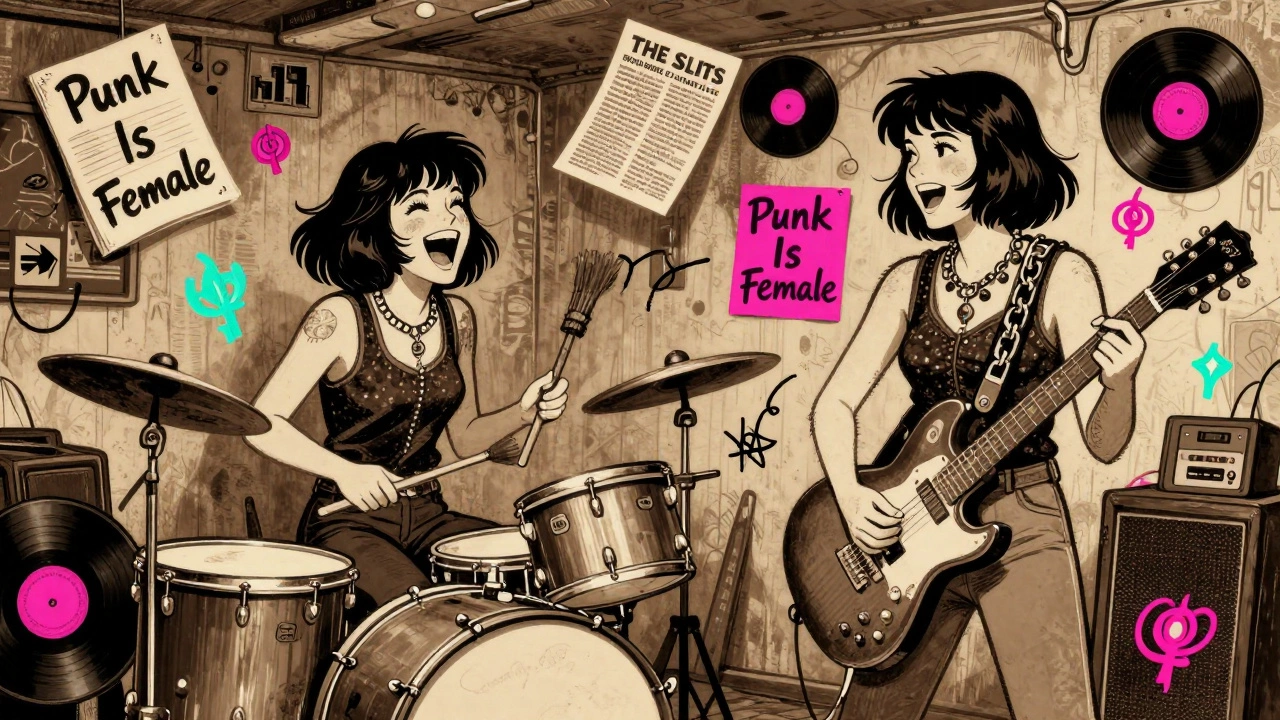
Poly and Siouxsie weren’t alone. There were others, just as vital, just as bold. The Slits-Ari Up on vocals, Palmolive on drums, Viv Albertine on guitar-were punk’s wild card. Their debut album, Cut (1979), didn’t sound like anything else. It was loose, messy, rhythmic. Critics called it "tribal rock." They called it punk reggae. The truth? It was just music made by women who didn’t care what anyone thought.
Ari Up didn’t sing like a pop star. She sang like someone who’d just woken up from a nightmare and decided to laugh about it. Palmolive, the first woman to play drums in a major UK punk band, didn’t have formal training. She just hit things until they sounded right. Viv Albertine wrote lyrics about boredom, about being ignored, about being a girl who refused to be pretty. Their music wasn’t perfect. But it was honest.
And here’s the thing no one talks about: these women didn’t just play in bands. They were part of the scene’s brain. Glen Matlock of the Sex Pistols and Paul Simonon of the Clash both went to art school alongside women who were writing zines, designing flyers, and organizing gigs. Punk wasn’t just about the music. It was about the ideas. And women were at the center of those ideas.
Why It Mattered
Punk was sold as a boys’ club. But the women who walked into it didn’t ask to be included. They walked in and took over.
Poly Styrene gave punk its most direct feminist anthem. Siouxsie Sioux gave it its most enduring aesthetic. The Slits gave it its most unexpected sound. Together, they proved that rebellion doesn’t look one way. It doesn’t sound one way. It doesn’t even have to be loud to be powerful.
Before them, women in rock were either ornaments or exceptions. After them? They were essential. Riot grrrl didn’t come out of nowhere. Goth didn’t appear from a vacuum. They were built on the foundation these women laid.
And here’s the quiet truth: punk didn’t need women to make sense. But punk became something greater because of them.
The Legacy That Still Echoes
Poly Styrene died in 2011. Siouxsie Sioux still performs. The Slits broke up. But their music? It’s louder than ever.
Look at today’s indie rock. Look at the rise of female-fronted bands in genres once dominated by men. Look at how many young musicians cite Poly’s voice or Siouxsie’s stage presence as their inspiration. That’s not nostalgia. That’s legacy.
They didn’t wait for the world to be ready. They made the world listen.
Who was Poly Styrene and why is she important in punk history?
Poly Styrene was the lead singer of X-Ray Spex, one of the first major punk bands fronted by a woman. Born Marianne Joan Elliott-Said, she was mixed-race and brought a unique perspective to punk, blending anti-consumerist lyrics with raw, emotional vocals. Her 1977 single "Oh Bondage, Up Yours!" became a feminist anthem that directly inspired later movements like riot grrrl. She was one of the first Black British women in punk and helped redefine what a punk frontwoman could be.
How did Siouxsie Sioux influence post-punk and goth music?
Siouxsie Sioux’s haunting vocals, dark aesthetic, and control over her band’s artistic direction set the tone for post-punk and goth. Siouxsie and the Banshees moved beyond punk’s raw energy into moody, atmospheric soundscapes. Her vocal style-dramatic, controlled, intense-became a model for artists in The Cure, Joy Division, and beyond. She didn’t just sing; she created a whole world of sound and image that defined an entire genre.
Were there other important women in the early punk scene besides Poly Styrene and Siouxsie Sioux?
Yes. The Slits-Ari Up, Palmolive, Viv Albertine, and Tessa Pollitt-were crucial. Their debut album Cut fused punk with reggae and created a raw, rhythmic sound that defied expectations. Women like Palmolive (the first major female punk drummer) and Viv Albertine (a self-taught guitarist who wrote about female boredom and frustration) helped expand punk’s sound and message. They weren’t just participants-they were innovators.
Did women in punk face more challenges than men?
Absolutely. Women were often dismissed as novelties or told to "stick to singing" while men played instruments. Many were denied equipment, booking opportunities, or serious press coverage. Poly Styrene faced racism and sexism. Siouxsie was mocked for her appearance. The Slits were called "unmusical" simply because they didn’t play like men. But they kept going anyway. Their persistence forced the scene to change.
How did punk women influence later music movements?
Poly Styrene’s direct, angry lyrics inspired riot grrrl bands like Bikini Kill and Le Tigre. Siouxsie’s vocal style and dark imagery shaped goth and alternative rock. The Slits’ experimental rhythms influenced indie and post-punk revival acts. These women didn’t just play music-they rewrote the rules, and their influence is still heard in bands today, from Haim to Phoebe Bridgers.


