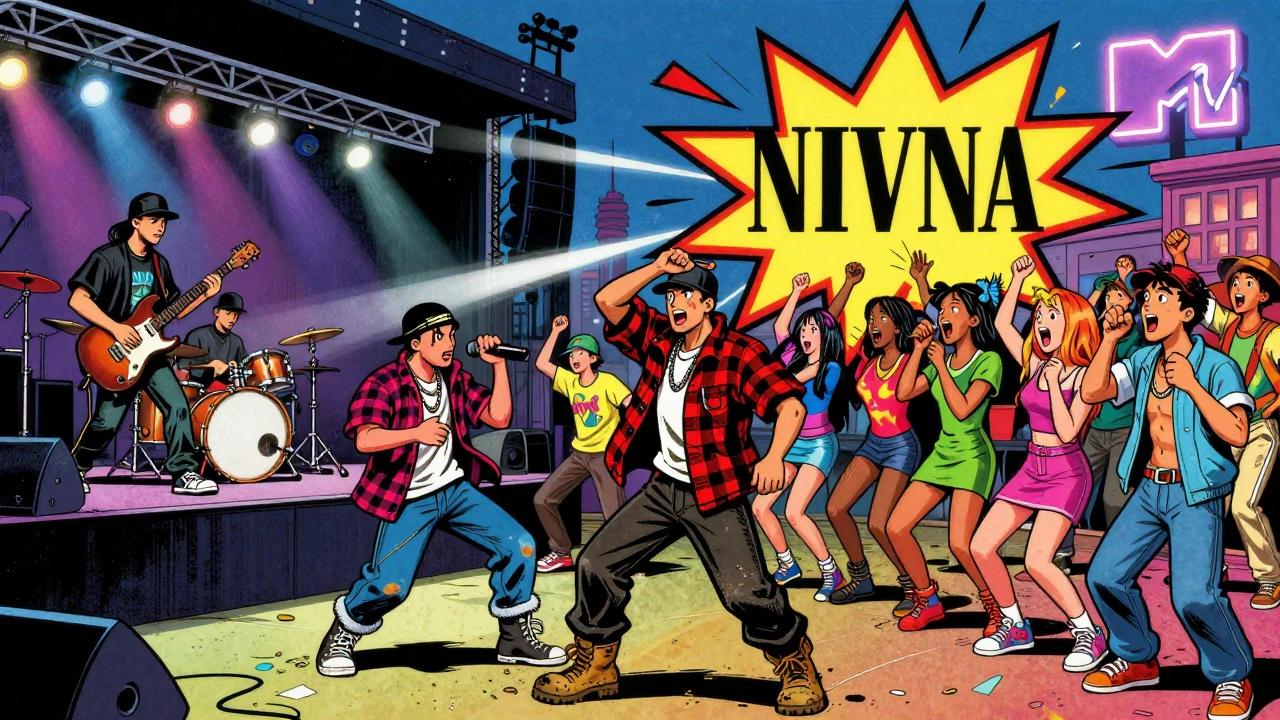

The 1990s didn’t just have music-it redefined what music could do. It wasn’t just about hits on the radio. It was about flannel shirts on college kids in Ohio, kids in Tokyo learning to rap like Nas, teens in London singing along to Oasis, and ravers in Berlin dancing until sunrise. This wasn’t a trend. It was a full-blown cultural earthquake, and its aftershocks are still felt today.
Music That Broke the Rules
Before the 1990s, music genres mostly stayed in their lanes. Rock was for rebellious teens. Hip-hop was underground. Electronic music? That was for clubs in Detroit and Chicago. Then, everything exploded at once.
Grunge didn’t just come out of Seattle-it ripped through the mainstream like a storm. Nirvana’s Nevermind in 1991 didn’t just sell millions. It made slacker culture cool. Suddenly, ripped jeans, muddy boots, and uncombed hair weren’t signs of laziness-they were rebellion. Even bands like Soundgarden and Pearl Jam became household names. And it wasn’t just the sound. It was the attitude: raw, honest, tired of polish. That’s what made it stick.
Meanwhile, hip-hop went from block parties to global domination. The East Coast-West Coast rivalry wasn’t just drama-it fueled creativity. Dr. Dre’s The Chronic in 1992 turned G-Funk into a movement. Snoop Dogg, Tupac, Nas, and Jay-Z all dropped classics that didn’t just sell-they defined a generation. By 1999, hip-hop was the #1 genre on American radio. It wasn’t just music anymore. It was storytelling, protest, fashion, and identity rolled into one.
Festivals Changed Everything
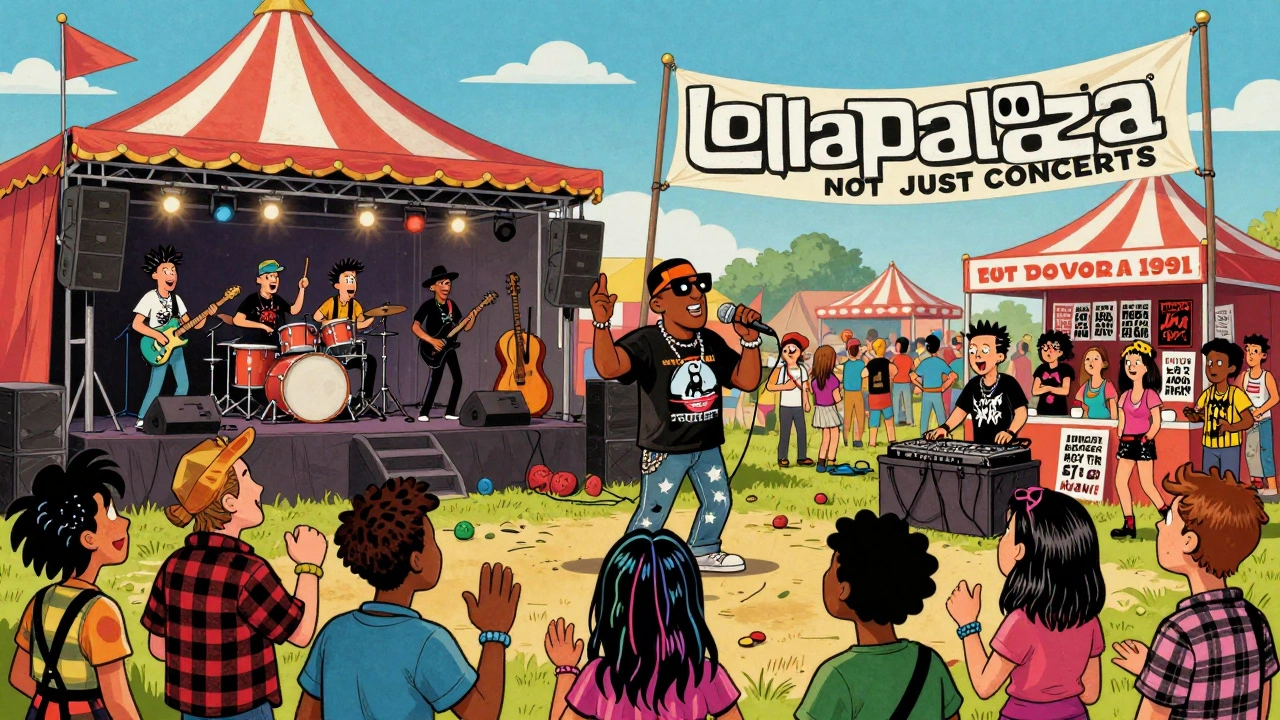
Before Lollapalooza, concerts were simple: band on stage, crowd in front. Perry Farrell changed that in 1991. What started as Jane’s Addiction’s farewell tour became a traveling carnival of chaos and culture. Lollapalooza didn’t just book bands-it booked movements.
You could see a punk band one hour, then Ice-T rapping about police brutality the next. Then a DJ spinning techno, followed by a spoken-word poet. It wasn’t just music. It was art, politics, fashion, and community. People came not just to hear songs-but to feel something. That’s why zines, activist booths, and handmade patches became as important as the headliners.
And then came Lilith Fair. In 1997, Sarah McLachlan launched a festival with only women artists. Critics said it wouldn’t work. They were wrong. It sold out arenas. Missy Elliott, Erykah Badu, and the Dixie Chicks didn’t just get stage time-they got careers. Lilith Fair proved that female-led lineups weren’t a niche. They were a powerhouse. And that changed how labels booked tours forever.
Britpop, Pop, and the World Took Notice
While America was lost in grunge and hip-hop, Britain was having its own moment. Oasis and Blur weren’t just bands-they were national symbols. The rivalry between “Roll With It” and “Country House” in 1995 wasn’t just about sales. It was about identity. Who were you? The working-class swagger of Oasis? Or the clever, artsy wit of Blur?
Oasis didn’t just win. They broke America. Two nights at Knebworth Park in 1996 drew 250,000 people. That’s the largest outdoor concert in British history. And it wasn’t just UK. Their albums cracked the U.S. top 5. Suddenly, British rock wasn’t a relic-it was the future.
At the same time, pop exploded in a way it never had before. The Spice Girls didn’t just sing-they became a phenomenon. “Girl Power” wasn’t just a slogan. It was a movement. They sold more records in the U.S. than any British group since the Beatles. Backstreet Boys followed, turning teen fandom into a global industry. Celine Dion’s “My Heart Will Go On” became the second-best-selling single by a female artist ever. And it wasn’t just sales. It was cultural saturation. You couldn’t escape it.
Electronic Music Goes Mainstream
House music came from Chicago. Techno from Detroit. But in the 1990s, they didn’t stay there. Raves exploded across Europe. Germany, Italy, and the UK turned warehouse parties into massive events. The government tried to shut it down with the 1994 Criminal Justice Act. Instead of killing it, it made it smarter.
Superclubs like Ministry of Sound and Cream became temples of dance. People didn’t just go out to party-they went to belong. Moby’s Play in 1999 was a game-changer. Eight singles from one album? All over TV, radio, and ads. Madonna’s Ray of Light didn’t just use synths-it made electronic music feel spiritual. This wasn’t background noise anymore. It was the soundtrack to a new way of living.
How MTV Built the World’s Playlist
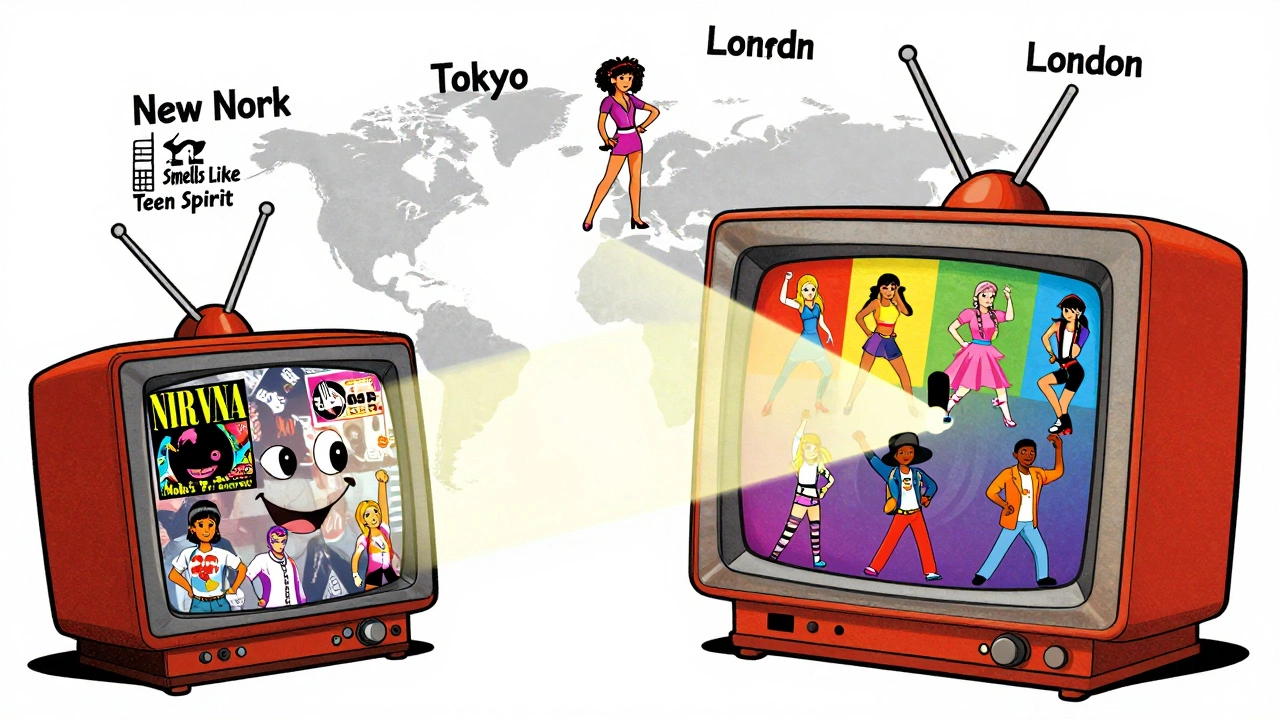
If you didn’t have MTV in the 1990s, you were behind. It wasn’t just a channel. It was your teacher, your trendsetter, your connection to the world. A music video wasn’t just promotion-it was a mini-movie that shaped how you dressed, moved, and thought.
When Nirvana played “Smells Like Teen Spirit” on MTV, it didn’t just go viral-it went viral before the internet. Kids in Brazil, Japan, and South Africa saw that video and thought, “That’s me.” MTV didn’t just broadcast music. It broadcast identity. And it made sure every genre-grunge, hip-hop, pop, electronic-got equal time. That’s why the 1990s were the last decade where TV ruled pop culture.
The Legacy: Why It Still Matters
Today’s festivals? They’re Lollapalooza’s kids. Coachella, Bonnaroo, Glastonbury-they all copied the formula: multiple stages, art installations, activism, food trucks, merch stalls. The idea that a concert should be an experience? That started in the 1990s.
Modern pop stars? They owe their branding to the Spice Girls and Backstreet Boys. The mix of fashion, personality, and music? That’s the 1990s playbook.
Even the way we stream music today? It’s built on the idea that genres don’t need to stay separate. You can listen to hip-hop, then Britpop, then trance-all in one playlist. That freedom? That came from the 1990s.
And the most important thing? The 1990s proved that music doesn’t need to be perfect to be powerful. It just needs to be real. Grunge was messy. Hip-hop was raw. Raves were chaotic. But they were honest. And that honesty? It’s what made the decade unforgettable.
Why was Lollapalooza so important to 1990s music culture?
Lollapalooza was the first major festival to mix genres like grunge, hip-hop, punk, and electronic music on one stage. Before it, concerts were genre-specific. Lollapalooza didn’t just book bands-it created a cultural experience with art booths, zines, political messages, and fashion. It proved that music festivals could be more than concerts-they could be movements. Today’s festivals like Coachella and Bonnaroo follow its exact blueprint.
How did hip-hop go from underground to global in the 1990s?
The East Coast-West Coast rivalry between Bad Boy and Death Row Records created intense competition that pushed artists to innovate. Dr. Dre’s The Chronic introduced G-Funk to the world. Snoop Dogg, Tupac, Nas, and Jay-Z all dropped defining albums. MTV and radio played their music nonstop. By 1998, hip-hop was the top genre on U.S. radio. Its influence spread globally because it spoke to real struggles-poverty, racism, identity-and did it with unmatched energy and creativity.
What role did MTV play in the 1990s music explosion?
MTV was the world’s biggest music broadcaster in the 1990s. It didn’t just play videos-it shaped fashion, language, and attitudes. When Nirvana’s "Smells Like Teen Spirit" aired, it turned grunge into a global trend overnight. MTV gave equal airtime to hip-hop, pop, and electronic acts, breaking down genre barriers. For millions, MTV was their only window into global music culture, making it the most powerful cultural engine of the decade.
Why did Britpop succeed in the U.S. when other British acts didn’t?
Britpop succeeded because it wasn’t trying to sound American. Oasis and Blur were proudly British-lyrically, musically, and visually. Their rivalry created media buzz, and their anthems like "Wonderwall" and "Song 2" were catchy enough to cross borders. Unlike 1980s British pop, Britpop had grit, guitar riffs, and working-class pride. Oasis’ Knebworth concerts in 1996 proved they could draw massive crowds. They didn’t just get noticed-they changed how American audiences saw British rock.
How did Lilith Fair change the music industry?
Lilith Fair proved that all-female lineups could sell out arenas and make millions. Before it, labels assumed women couldn’t headline tours. Sarah McLachlan’s festival gave breakthroughs to Erykah Badu, Missy Elliott, and the Dixie Chicks. It showed that gender didn’t limit success-quality and connection did. After Lilith Fair, labels started investing in female artists with the same budgets as male acts. It didn’t just change festivals-it changed how the whole industry viewed women in music.


