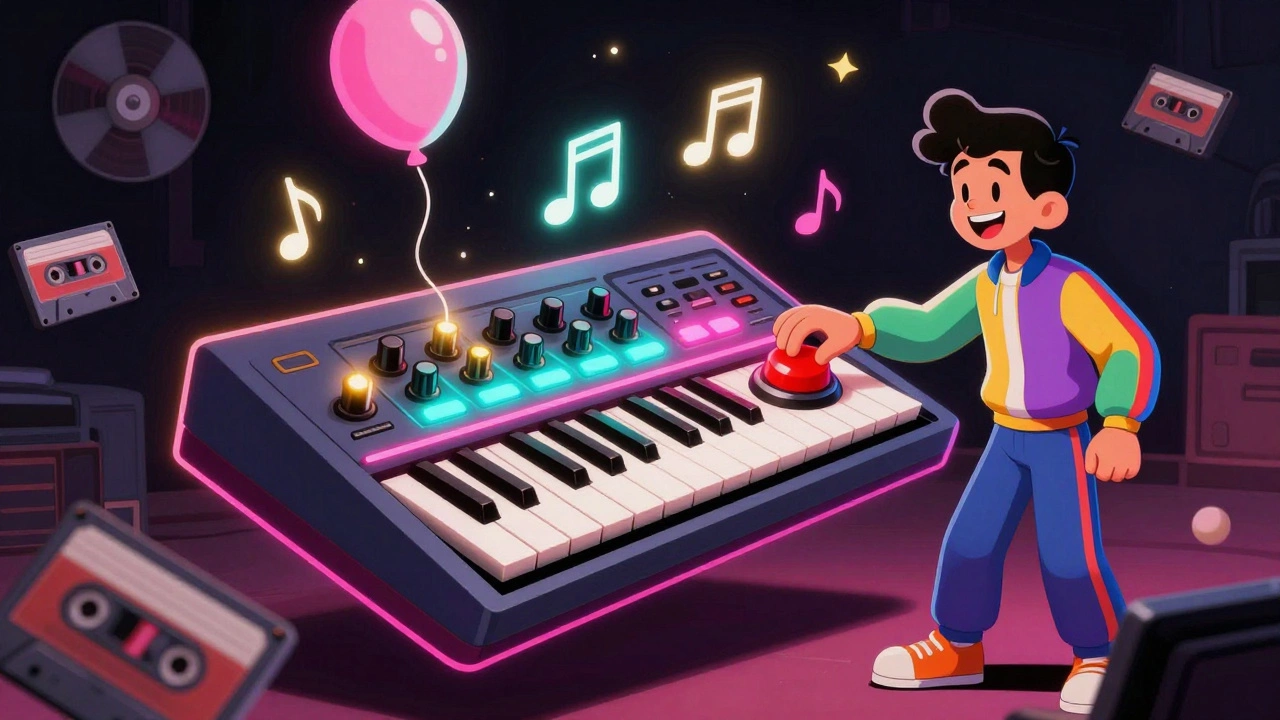

There’s something about an 1980s melody that doesn’t just play in your head-it takes over. You hear the opening synth line of "Don’t You Want Me" or the pulsing bass of "Billie Jean," and suddenly you’re not just listening. You’re remembering. Maybe it was your first dance, your dad’s old cassette, or that one scene in a movie that made you feel like you were part of something bigger. These songs weren’t just hits. They were events.
How Synths Changed Everything
In the late 1970s, music was still mostly guitars, drums, and vocals. Then came the 1980s-and with them, synthesizers that cost less than a new TV. Suddenly, a bedroom producer in Manchester or a studio in Los Angeles could build a whole song out of glowing buttons and blinking lights. No need for a full orchestra. No need to wait for a session player. Just press play, layer a beat, and let the machine sing.
Artists like Depeche Mode, The Human League, and Eurythmics didn’t just use synths-they made them the heart of their songs. The melodies weren’t just catchy; they were engineered to stick. Think of the rising arpeggio in "Take On Me" or the staccato pulse in "Sweet Dreams (Are Made of This)." These weren’t accidents. They were calculated, brilliant, and designed to be unforgettable. The sound was clean, bright, and full of energy-like a neon sign in a dark room.
MTV Didn’t Just Play Music-It Made Stars
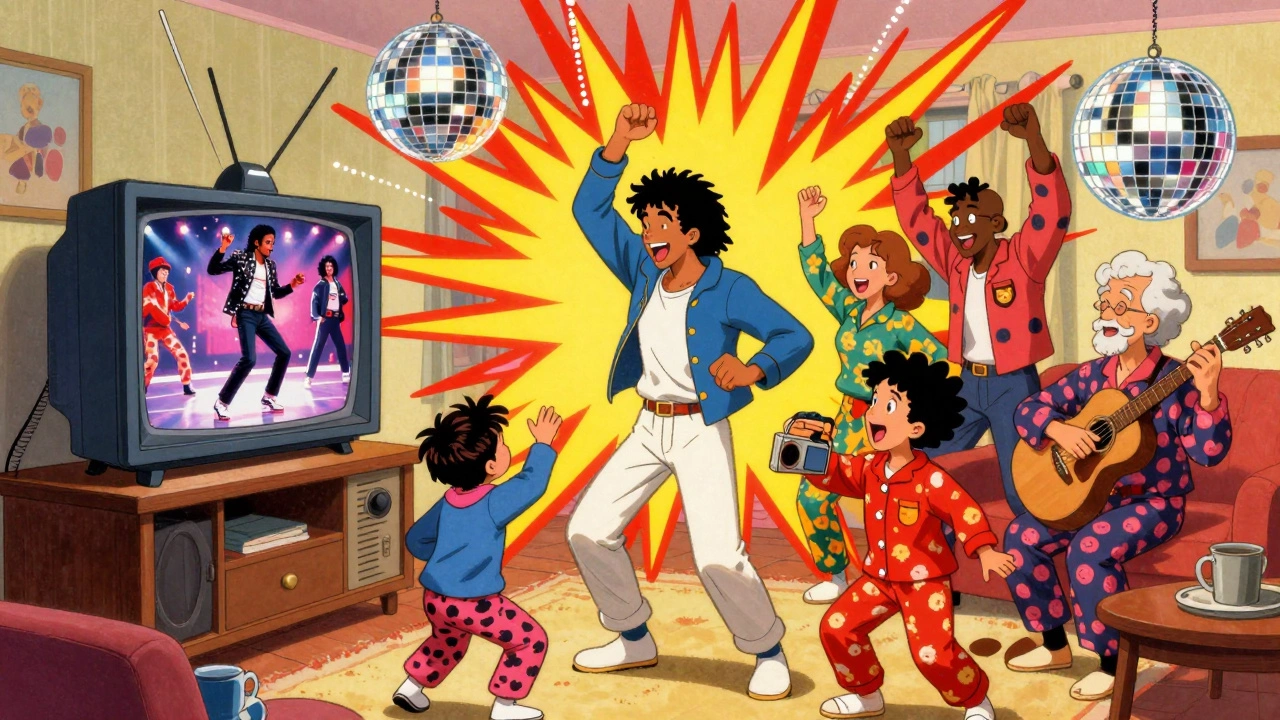
Before MTV, a song could be a hit on the radio and fade away. In the 1980s, if you didn’t have a music video, you didn’t exist. And suddenly, every hit needed a story, a look, a costume. Michael Jackson’s "Thriller" wasn’t just a song-it was a 14-minute horror movie with a dance break. Madonna turned fashion into a weapon. Duran Duran looked like they stepped out of a James Bond film. And it all worked because the melodies were strong enough to carry the visuals.
MTV turned pop into spectacle. But it also made melodies universal. A kid in rural Ohio could watch a video from London and feel like they knew the people behind it. The visuals made the music feel personal. And the hooks? They were built to survive even the most chaotic, over-the-top video. That’s why you can still hear "Like a Virgin" in a gym locker room or "Take On Me" at a wedding-and everyone sings along.
The Sound That Broke Barriers
The 1980s didn’t just make music-it broke walls. Before 1983, MTV refused to play videos by Black artists. Then came Michael Jackson’s "Billie Jean." The label threatened to pull ads if the network didn’t air it. The song hit number one. And suddenly, the rules changed. Prince, Lionel Richie, and Whitney Houston followed. The melodies didn’t care about skin color. They only cared about feeling.
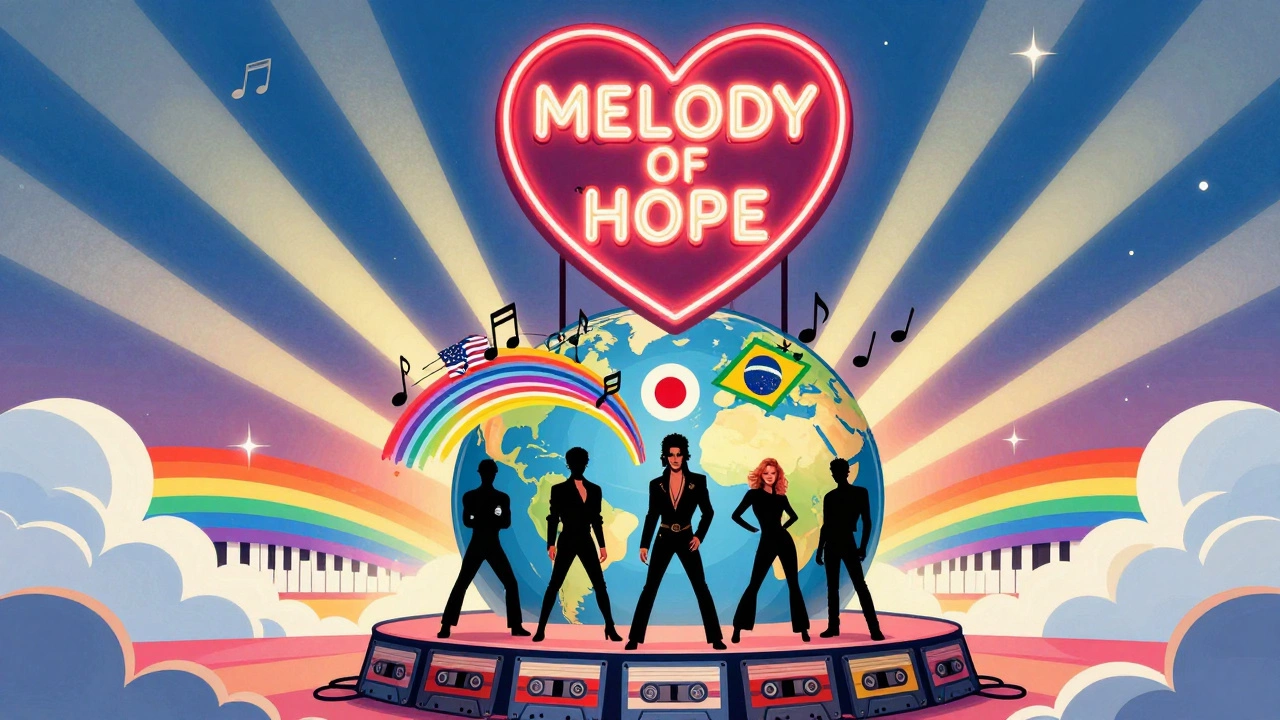
And it wasn’t just race. The charts in 1985 were a global mix: British bands ruled the U.S. Top 10, American rockers dominated Europe, and dance tracks from Detroit found fans in Tokyo. The Human League, U2, Wham!, and Prince all shared the same charts. There was no genre war. No "real music" vs. "pop trash." Just melodies that worked-no matter who made them.
Why These Hooks Still Work
Modern pop often tries to sound minimal. Clean. Quiet. But 1980s music went all in. Big drums. Thick synths. Layered harmonies. A chorus that screamed to be shouted. There was no shame in being loud, flashy, or over-the-top. In fact, that was the point.
These melodies were built on what musicians call "consensus pop"-songs that felt deep but were easy to sing. They borrowed from disco, funk, rock, and even classical, but never got lost. Every note had a purpose. The bassline in "Karma Chameleon"? Instantly recognizable. The vocal run in "I Want to Know What Love Is"? Still gives chills. These weren’t just songs. They were emotional architecture.
And here’s the thing: they still work. Why? Because they were made for feeling, not just charts. They were made for dancing alone in your room. For crying in the car. For holding someone close under a strobe light. That emotional truth doesn’t age.
The Legacy Lives in Today’s Hits
Look at Dua Lipa’s "Levitating" or The Weeknd’s "Blinding Lights." They don’t sound like 1980s songs-they feel like them. Same pulsing bass. Same shimmering synths. Same chorus that climbs and explodes. Modern producers didn’t just copy the sound. They studied the formula: make it big, make it bright, make it unforgettable.
Even hip-hop artists now sample 1980s hooks. Kanye West used "I’m Your Man" by Leonard Cohen (a song with an 80s vibe) on "Power." Lana Del Rey’s "Ultraviolence" channels the moody synths of Depeche Mode. The decade’s influence isn’t nostalgia. It’s inheritance.
The Perfect Storm
Why did this happen in the 1980s and not before or after? It wasn’t luck. It was timing.
Sony Walkmans made music personal. MTV made it visual. Synths made it affordable. Record labels poured millions into production because sales were exploding. Thriller became the best-selling album of all time. Back in Black was right behind it. Madonna sold out stadiums. Prince released 19 albums in 10 years.
And underneath it all? People needed escape. The Cold War was still hot. AIDS was spreading. The economy was shaky. But in a song, you could be anyone. You could dance like nobody was watching. You could believe in a future that was shiny, loud, and full of color.
That’s why these melodies still matter. They weren’t just music. They were hope with a beat.
Why do 1980s melodies feel so different from today’s pop?
Today’s pop often leans into minimalism-sparse beats, whispered vocals, and subtle production. 1980s melodies were the opposite: loud, layered, and designed to overwhelm. Synths, gated reverb drums, and massive choruses created a sense of spectacle. There was no fear of being too much. In fact, being bigger was the goal. The production was expensive, intentional, and meant to be felt in your chest, not just your ears.
Did only British artists dominate the 1980s music scene?
No-but British acts had a massive impact. Between 1983 and 1985, UK artists scored nine number-one hits on the Billboard Hot 100. Bands like Duran Duran, The Human League, and Eurythmics led the "Second British Invasion." But American artists like Michael Jackson, Prince, Madonna, and Bruce Springsteen were just as dominant. The 1980s was the first time global pop truly merged-no single country owned the charts.
How did MTV change how melodies were written?
Before MTV, songs were built for radio-three minutes, strong hook, clear structure. MTV forced artists to think visually. That meant melodies needed to be even more memorable to hold attention during a video. The chorus had to land hard in the first 15 seconds. The intro had to grab you before the visuals even started. Songs like "Take On Me" and "Billie Jean" were crafted with video in mind-each note timed to a visual cue. Melodies became cinematic.
Are 1980s melodies still used in advertising today?
Absolutely. Companies like McDonald’s, Apple, and Nike use 1980s hits in ads because they instantly connect across generations. A 70-year-old recognizes "Sweet Dreams," a 20-year-old knows it from TikTok. That shared cultural moment makes the product feel timeless. The melodies act as "generational glue," linking people who never lived through the decade but still feel its energy.
Why do younger listeners love 1980s music now?
It’s not just nostalgia. Younger listeners are drawn to the energy, the creativity, and the lack of restraint. In an era of algorithm-driven playlists, 1980s music feels bold and human. It was made by people who took risks-dressing up, singing loudly, using weird synths. That authenticity stands out. Plus, platforms like YouTube and Spotify make discovery easy. What was once a memory is now a new favorite.


