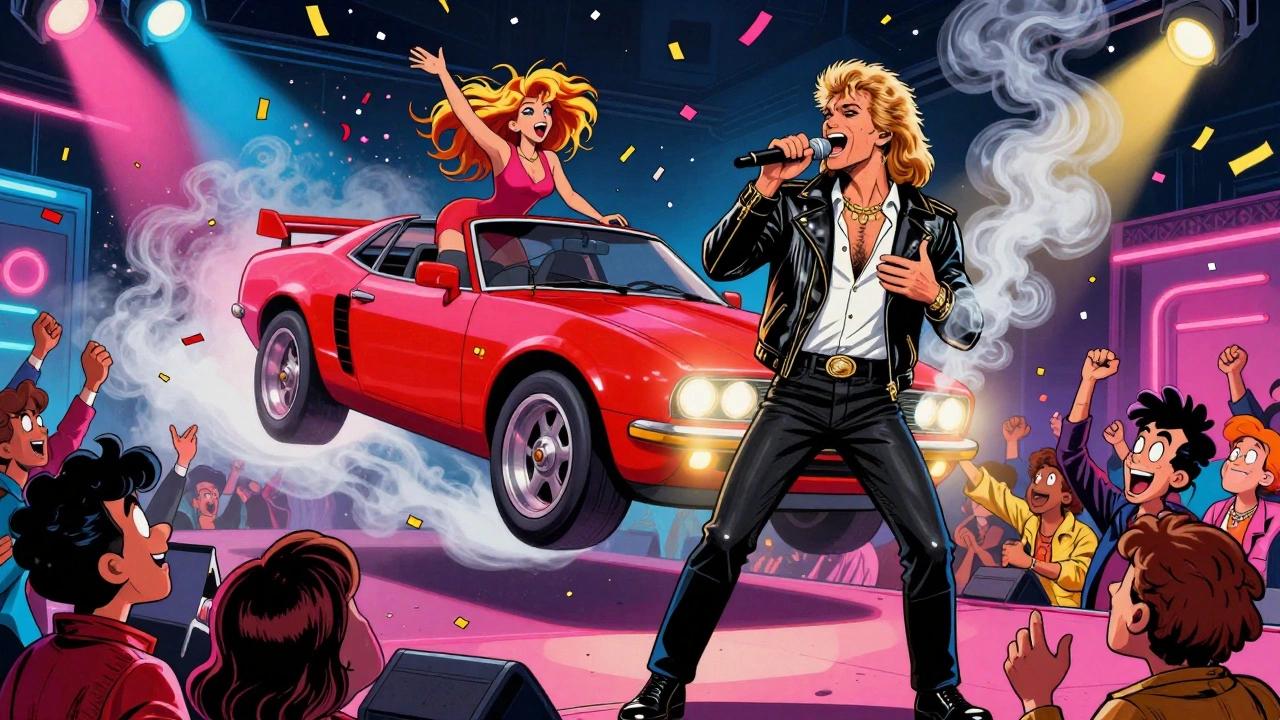

Here I Go Again didn’t just climb the charts-it rewrote the rules of what a rock song could be. Released in 1987, this track wasn’t even new. It was a re-recording of a song from 1982, buried on an album most people had forgotten. Yet somehow, it became Whitesnake’s first No. 1 hit in the U.S., topping the Billboard Hot 100 on October 10, 1987. It wasn’t just a hit. It was a phenomenon. And it changed everything for the band.
The Song That Almost Didn’t Make It
The original version of "Here I Go Again" came out on Whitesnake’s 1982 album Saints & Sinners. It was slower, bluesier, and darker. David Coverdale sang about being a "hobo," wandering alone, with a gritty, soulful tone that matched the band’s early sound. Bernie Marsden, the guitarist who co-wrote it, said the riff came to him in his Buckingham home during late-night sessions. Coverdale took the demo, disappeared for an hour, and came back with the lyrics. That version only made it to No. 34 in the UK. In the U.S., it barely registered. By 1987, the band had changed. Coverdale had fired half the lineup. He brought in John Sykes, a guitarist known for his sharp, modern tone. The new Whitesnake was slicker, louder, and built for MTV. They re-recorded "Here I Go Again"-and changed everything. The word "hobo" became "drifter." The slow blues shuffle turned into a driving, anthemic rocker. The guitar solo? Soaring. The chorus? Made for stadiums. The production? Polished to a mirror shine. Why the change? Coverdale later said he feared "hobo" would be misheard as "homo"-a real concern in the conservative radio climate of the late '80s. But deeper down, he knew the song needed to speak to a new audience. The original was for bar crowds. The new version? It was for the whole world.MTV, Music Videos, and the Tawny Kitaen Effect
This wasn’t just a song. It was a visual event. The music video showed Coverdale singing in a dark, smoke-filled room while Tawny Kitaen, then his girlfriend, danced on top of two sports cars. She spun, flipped, and grinned like she owned the whole thing. The cars? They were red. The lighting? Sultry. The vibe? Pure '80s excess. MTV played it nonstop. At a time when the channel was the only way to break a rock band in America, this video was gold. It wasn’t just about the music-it was about the image. And that image sold. The video made the song unforgettable. Fans didn’t just hear "Here I Go Again"-they saw it. They remembered it. They played it again and again. The video’s cultural impact was real. Even today, YouTube comments mention Kitaen’s performance as a reason they fell in love with the song. One fan wrote: "I married a woman who looks like Tawny because of this video-25 years later and I still thank David Coverdale." It wasn’t just rock. It was pop culture.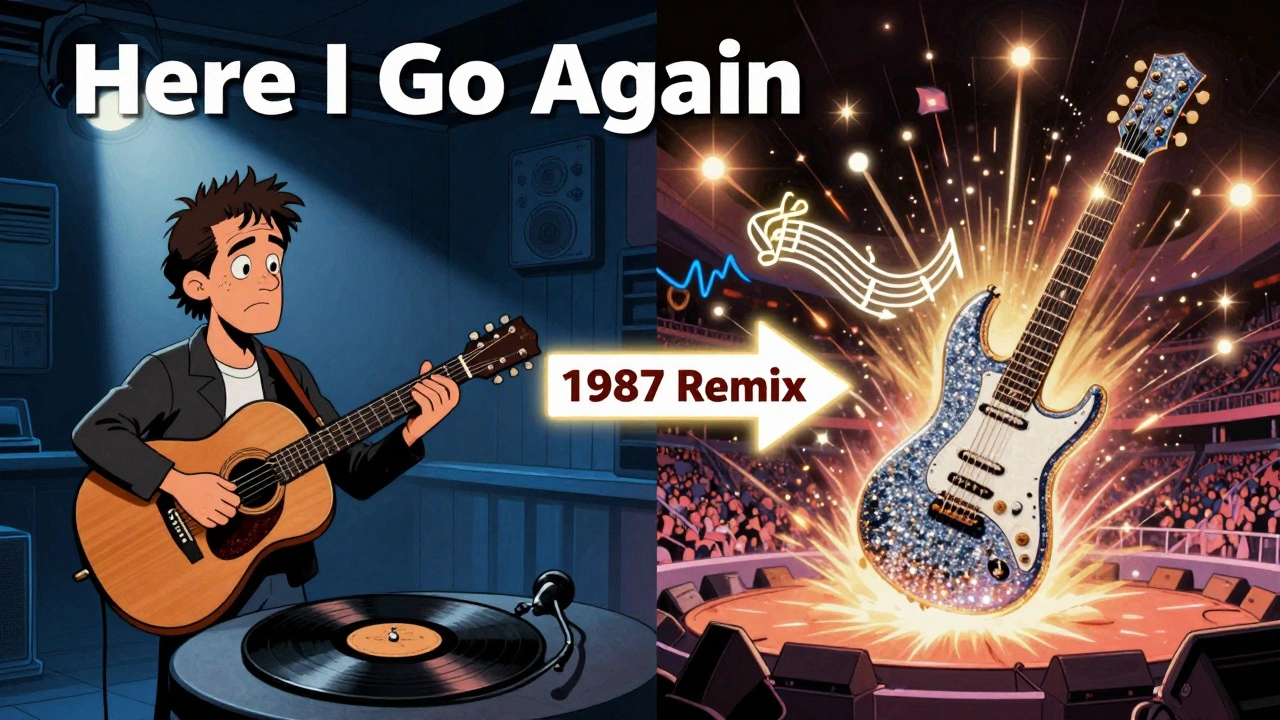
How It Beat the Competition
1987 was stacked with hard rock hits. Bon Jovi’s "Livin’ on a Prayer" was dominating. Guns N’ Roses’ "Sweet Child o’ Mine" was about to explode. Yet "Here I Go Again" didn’t just compete-it won. It hit No. 1 on the Billboard Hot 100 while also climbing to No. 2 on the Mainstream Rock chart. That’s rare. Most rock songs either made it big on rock radio or pop radio-not both. Why? Because it had something no other song had: duality. It was hard rock with a pop hook. It had a blues heart but a radio-ready body. It appealed to fans who loved the grit of Led Zeppelin and those who just wanted to sing along in the car. It was the perfect bridge between two worlds. And it sold. The 1987 Whitesnake album went 8x Platinum in the U.S. alone. In the week after the song hit No. 1, 750,000 copies were sold. That’s not just success-that’s a cultural takeover.The Purists vs. The Masses
Not everyone loved the 1987 version. Die-hard fans of the original called it overproduced. Critics from Rolling Stone and AllMusic said it lost the soul of the bluesy original. One Reddit user summed it up: "The 1982 version feels like a man alone in a room. The 1987 version feels like a man on a stage with 50,000 people cheering. Both are beautiful. But one is real, and one is spectacle." That divide still exists. Vinyl collectors still hunt the original pressing. Audiophiles argue over which version has better dynamics. But the numbers don’t lie. The 1987 version has over 347 million Spotify streams. The 1982 version? Less than 12 million. The world chose the anthem.
Why It Still Plays Today
It’s 2026. You still hear "Here I Go Again" in bars, at tailgates, in gym playlists, and during halftime shows. It’s been used in Stranger Things, Family Guy, and even a Super Bowl commercial. Why? Because it’s simple, powerful, and timeless. The chord progression? Easy. E minor, G major. The riff? Instantly recognizable. The vocal range? Challenging, but not impossible. That’s why guitar teachers use it as a benchmark. GuitarTricks.com has over 1,200 tutorials for it. The "Whitesnake Riff Society" Facebook group has nearly 15,000 members. It’s not just a song-it’s a rite of passage for guitarists. And the streaming numbers prove it’s not just nostalgia. Spotify says 38% of its listeners are under 25. Young people are discovering it. Not because their parents played it-but because it still hits hard.Legacy: More Than a Hit
In 2024, the Library of Congress added "Here I Go Again" to the National Recording Registry. They called it "culturally, historically, or aesthetically significant." That’s not something they give out lightly. Only 25 songs get added each year. This one made the cut. It’s ranked No. 87 on Rolling Stone’s list of the 100 Greatest Heavy Metal Songs. VH1 named it the 17th best song of the 1980s. It’s the most-streamed Whitesnake track by far-28% of all their streams. It didn’t just define a band. It defined an era. It showed that a song could be reborn. That rock could be both raw and polished. That a music video could turn a track into a legend. Today, when you hear that opening riff, you don’t just hear a song. You hear the sound of the '80s-loud, proud, and impossible to ignore.Was 'Here I Go Again' originally a hit when it was first released in 1982?
No, the original 1982 version of 'Here I Go Again' from the album Saints & Sinners only reached No. 34 on the UK Singles Chart and had minimal impact in the U.S. It was the 1987 re-recording-updated with a new lineup, polished production, and a music video-that turned it into a global No. 1 hit.
Why did David Coverdale change 'hobo' to 'drifter' in the 1987 version?
Coverdale changed 'hobo' to 'drifter' because he worried radio listeners might mishear 'hobo' as 'homo,' especially in conservative markets. While some sources suggest he first switched to 'hobo' to avoid sounding too much like other songs that used 'drifter,' he ultimately returned to 'drifter' in the 1987 version for clarity and broader appeal.
How did the music video impact the song’s success?
The music video, featuring Tawny Kitaen dancing on two red sports cars, became a staple on MTV. Its visual style-glamorous, sensual, and over-the-top-perfectly matched the '80s aesthetic and helped the song reach mainstream audiences who might not have listened to hard rock otherwise. It turned a rock song into a cultural moment.
Is the 1987 version considered better than the original by critics?
Critics are split. Rolling Stone called the 1987 version 'overproduced' and said it lost the blues authenticity of the original. But AllMusic praised its emotional resonance, and industry analysts credit it with bridging the gap between hard rock and pop. Commercially, the 1987 version is the definitive one-it’s the version that sold millions and reached No. 1.
Why is 'Here I Go Again' still popular with younger listeners today?
Despite being from the '80s, the song’s simple structure, powerful melody, and universal theme of independence resonate across generations. Its use in modern media like Stranger Things introduced it to new audiences. Spotify data shows 38% of its current listeners are under 25, proving its staying power isn’t just nostalgia-it’s timeless appeal.
What’s the significance of the song being added to the Library of Congress?
Being added to the National Recording Registry means the Library of Congress considers 'Here I Go Again' culturally, historically, or aesthetically important. It joins only 25 other recordings each year, including works by Elvis, Nina Simone, and Nirvana. This recognition confirms the song’s impact beyond charts-it’s part of America’s musical heritage.


