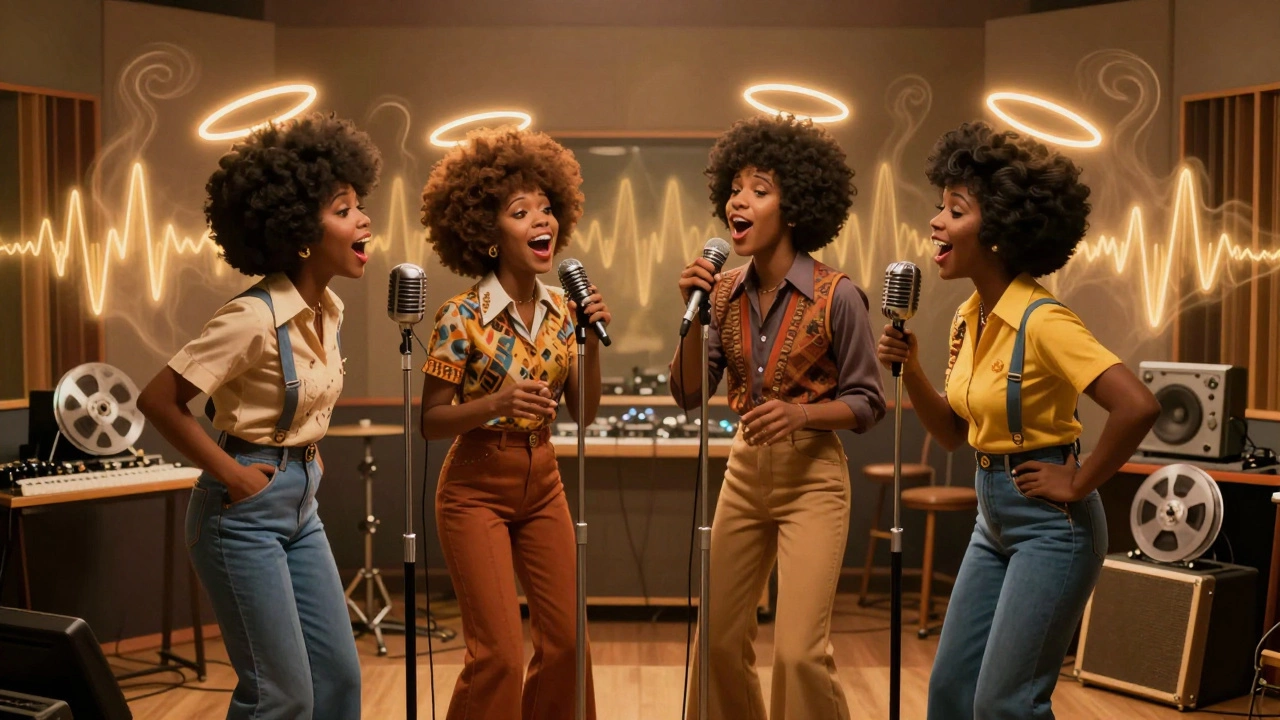

When you hear a 1970s R&B song like Lean on Me or This Christmas, what pulls you in isn’t just the groove or the lyrics-it’s the voices. Not just one voice, but layers of them, weaving together like threads in a quilt. These weren’t random backups. They were carefully built, emotionally charged, and technically precise arrangements that turned simple songs into timeless moments. The background harmonies of that era didn’t just support the lead singer-they carried the feeling, deepened the ache, and lifted the joy into something you could feel in your chest.
Where It All Came From
The vocal magic of 1970s R&B didn’t appear out of nowhere. It grew from decades of Black American vocal traditions. Think doo-wop groups from the 1940s and 50s, singing on street corners with no instruments, using their voices to mimic basslines and drums. The Ravens’ Count Every Star from 1950 didn’t use a bass guitar-it used a singer’s voice to growl out a low “doomph, doomph.” That’s where the idea of vocal instrumentation began. The Orioles, formed in 1947, cracked the code for what would become the standard R&B vocal setup: one high tenor out front, two midrange voices blending underneath, and a deep, anchoring bass. This wasn’t random. It mirrored gospel choirs, where voices stacked to create a wall of sound that moved people. By the time the 1970s rolled around, groups like the Drifters and the Impressions had taken this structure and polished it into something smoother, richer, and more sophisticated. Even before that, groups like the Mills Brothers-singing tight four-part harmonies like barbershop quartets-had shown how voices could sound like instruments. Their influence rippled through doo-wop, into Motown, and finally into the lush arrangements of 1970s soul. You can hear it in the way a harmony shifts subtly beneath a lead vocal-like a breath held just a second too long.The Structure Behind the Sound
Most 1970s R&B hits followed a simple chord pattern: I-vi-IV-V. It’s the same progression used in “Blue Moon” from 1934 and “Heart and Soul” from 1938. But in the hands of 1970s arrangers, it became something deeper. They didn’t just play the chords-they sang them. And they sang them in ways that made you feel every shift. A typical background harmony stack might look like this:- Lead: The main voice, clear and emotional, often in the upper register.
- High Harmony: One voice singing a third or fifth above the lead, adding sparkle.
- Mid Harmony: Two voices blending in the middle range, creating a warm, full body of sound.
- Bass: A low, steady voice, sometimes singing root notes, sometimes sliding in with subtle melodic lines.
How They Made It Sound So Rich
The recording technology of the 1970s changed everything. Before, groups recorded live, all in one room. But by the mid-70s, studios had multi-track tape machines. That meant producers could record each harmony part separately. A singer could lay down their high harmony on Tuesday, then come back on Thursday to tweak the timing, add a breath, or stretch a note just a little longer. That’s why the harmonies on songs like “I Will Survive” or “Love’s Theme” feel so alive. They’re not flat. They breathe. You can hear the slight delay between the lead and the harmony-like two people finishing each other’s sentences. That’s not a mistake. That’s intention. Engineers also used reverb and echo to make voices sound bigger. Not the kind of echo that makes you feel like you’re in a cave. The kind that makes you feel like you’re wrapped in a blanket made of sound. That’s why listening to these songs on headphones feels intimate. The harmonies aren’t distant-they’re right there, hugging the lead.Call and Response: The Soul of the Song
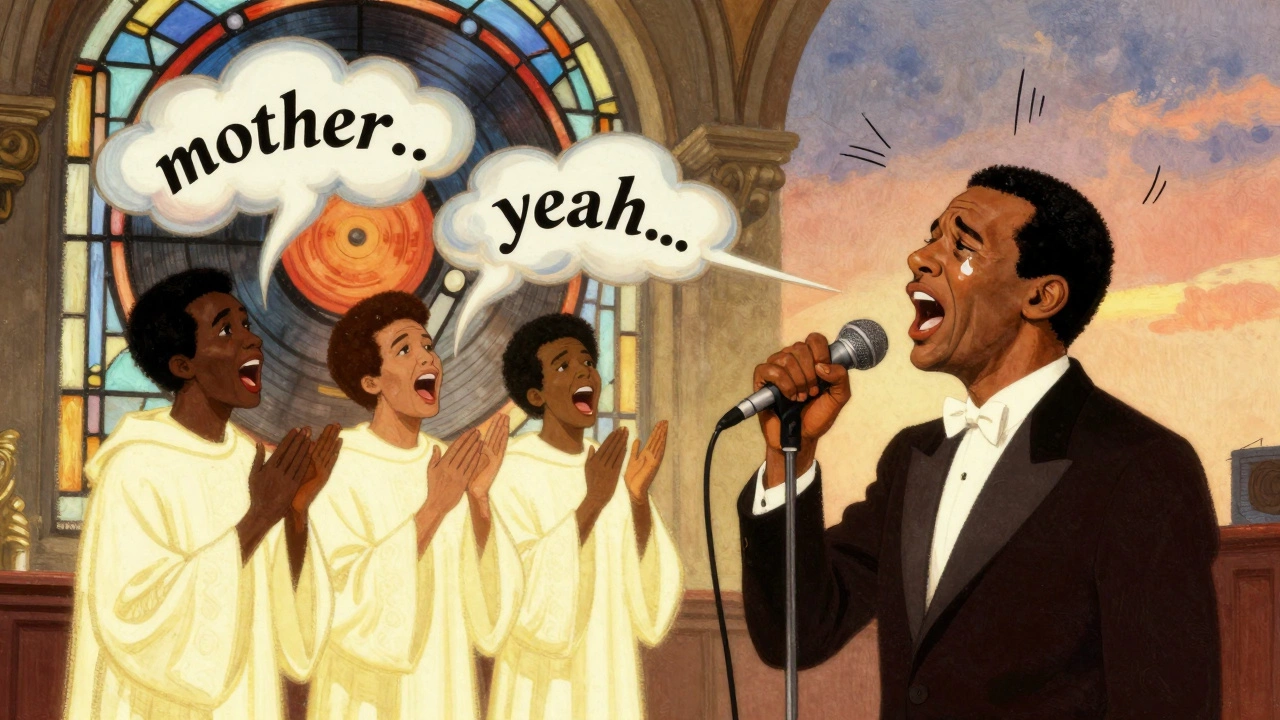
One of the most powerful tools in 1970s R&B was call and response. It came straight from African American church traditions, where a preacher says something and the congregation answers. In music, it became a conversation. In Isaac Hayes’ Theme from Shaft, the background singers don’t just sing-they chant. “Shaft!” they cry out after each line. In The Spinners’ I’ll Be Around, the harmonies answer the lead with a soft “yeah” or “ooh,” turning a simple lyric into a moment of shared emotion. This wasn’t just decoration. It was storytelling. When the lead sings “I’m gonna be there for you,” the background voices don’t repeat it-they confirm it. They become the voice of the listener. The friend. The lover. The community.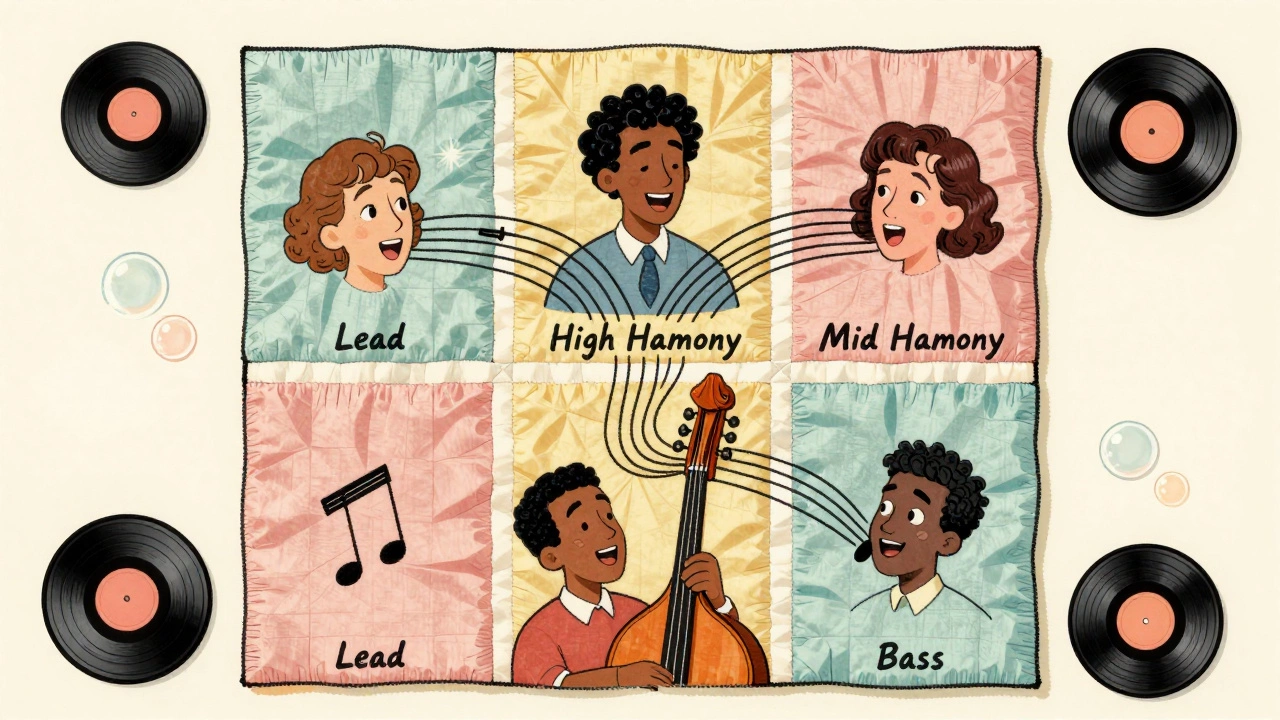
Who Did It Best
Some groups didn’t just use harmonies-they redefined them.- The Stylistics: Their arrangements, led by producer Thom Bell, used lush strings and layered harmonies that felt like velvet. Their high tenor, Russell Thompkins Jr., sang with such clarity, the harmonies beneath him sounded like a cloud lifting.
- The O’Jays: On Back Stabbers, the harmonies are sharp, tense, almost aggressive. They don’t just support the message-they amplify it. The song’s betrayal isn’t just in the lyrics; it’s in the way the voices clash and resolve.
- The Three Degrees: Female harmony at its finest. Their voices didn’t blend to sound uniform-they blended to sound powerful. Each voice had its own color, and together, they created something richer than any single voice could.
- The Isley Brothers: Their 1975 hit That’s the Way Love Is uses harmonies like punctuation. A single “yeah” in the background turns a line into a punchline. A held note in the midrange makes a pause feel like a heartbeat.
Why It Still Matters
Today, you can still hear these harmonies in modern R&B. Look at H.E.R.’s Best Part or Giveon’s For Certain. The background voices are still stacked, still breathing, still answering. They’re not using tape machines anymore, but the emotional logic is the same. Even hip-hop producers sample these harmonies. When Kanye West used the intro of “I’ll Be Around” in Flashing Lights, he didn’t just lift a melody-he lifted a feeling. That’s the power of 1970s R&B vocal arrangements. They weren’t just about technique. They were about trust. About connection. About saying, “I’m here with you,” without saying a word. If you want to understand why these songs still move people, don’t just listen to the lead. Listen to what’s behind it. The harmonies are where the soul lives.What made 1970s R&B background harmonies different from earlier doo-wop?
Early doo-wop harmonies were often simple, a cappella, and built around a single chord progression with wordless syllables like “doo-wop” or “shoo-be-doo.” In the 1970s, those harmonies became more complex, layered with studio techniques, and integrated with orchestral arrangements. The vocal parts were no longer just rhythm or texture-they became melodic counterpoints, with jazz-influenced extensions and dynamic shifts that responded directly to the lead vocal. The emotional depth increased, and the arrangements were designed to complement the song’s lyrical mood rather than just support it.
Did all 1970s R&B songs use background harmonies?
No, but the biggest hits did. Ballads, slow jams, and group-driven tracks almost always featured layered harmonies. Up-tempo dance tracks or solo-driven funk songs sometimes used fewer or no background vocals. But when harmonies were present, they were intentional. Even in songs like Donna Summer’s early disco cuts, background vocals were used to create a sense of community-like a crowd singing along. The absence of harmonies was rare in true R&B; their presence was a sign of authenticity.
How did gospel music influence these arrangements?
Gospel music gave R&B its emotional language. The call-and-response structure, the soaring high tenors, the use of melisma (stretching a single syllable over multiple notes), and the way voices would swell and drop-all came from Black church choirs. Artists like Sam Cooke and Aretha Franklin came from gospel backgrounds, and they brought that intensity into secular R&B. Background harmonies in gospel often served as a spiritual response; in 1970s R&B, they became a human one-comforting, consoling, and deeply personal.
Can modern vocal groups still learn from 1970s R&B harmonies?
Absolutely. Modern groups like Boyz II Men, SWV, and even contemporary a cappella acts study these arrangements closely. The key lessons are: don’t over-sing, let silence breathe, and make every harmony serve the emotion of the lyric. Many producers today use analog-style reverb and tape saturation to recreate the warmth of 1970s recordings. The real takeaway? It’s not about how many voices you have-it’s about how well they listen to each other.
Why do these harmonies feel so warm and cozy?
Because they’re human. The slight imperfections-the breath before a note, the tiny delay between voices, the way a harmony wobbles just a bit-make them feel alive. Modern auto-tuned harmonies are perfect. But perfection feels cold. The 1970s harmonies were imperfect in the right ways. They had texture, warmth, and a sense of physical presence. You don’t just hear them-you feel them, like a hand on your shoulder in a crowded room.