
The Sound of Broken Systems
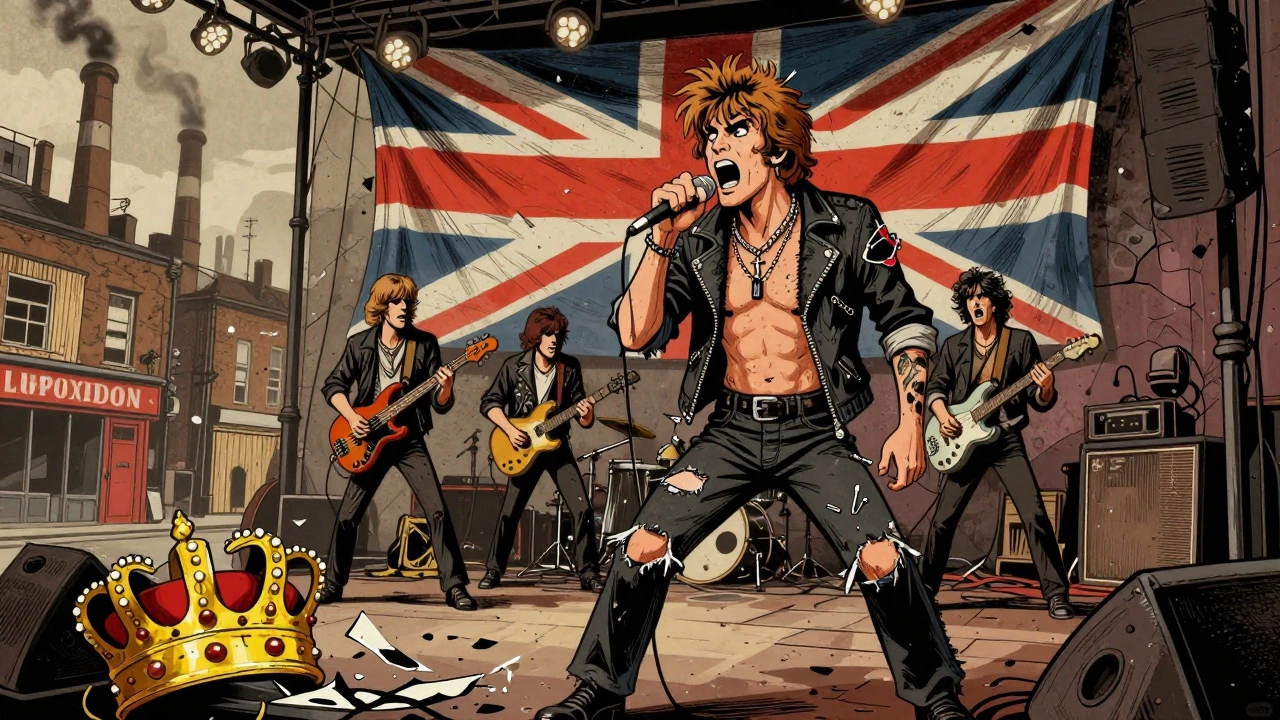
In 1976, two cities became ground zero for a musical explosion that would redefine rebellion. In London, the Sex Pistols screamed through a broken public address system at a tiny club, their lyrics aimed straight at the monarchy. In New York, the Ramones blasted through a set in a basement venue, playing 14 songs in under 30 minutes, no solos, no pretense. Both scenes called themselves punk. But they weren’t the same. One was a class war with a power chord. The other was a middle finger to boredom, wrapped in leather and eyeliner.
They didn’t copy each other. They didn’t even really understand each other at first. But they both felt the same thing: the system was rigged, the music was dead, and no one was listening. So they picked up guitars and made noise. Loud, fast, ugly noise. And the world had to pay attention.
British Punk: Rebellion With a Blueprint
UK punk didn’t just sound angry-it was built on anger. The mid-70s in Britain were a mess. Unemployment hit young people hardest. Factories shut down. The monarchy was still treated like divine. And the music industry? It was selling stadium rock to people who couldn’t afford rent. Punk was the sound of kids who had nothing left to lose.
The Sex Pistols were never meant to be musicians. They were a marketing stunt turned real. Malcolm McLaren, the manager of a clothing shop called Sex, handpicked them to sell his ripped clothes and safety pin fashion. But the band had a voice. Johnny Rotten didn’t just sing-he spat. His infamous live F-bomb on Thames Television in 1976 wasn’t shock value. It was a declaration: the rules don’t apply to us.
Their songs weren’t abstract. "Anarchy in the U.K." wasn’t poetry. It was a call to arms. "God Save the Queen," released during the Queen’s Silver Jubilee in 1977, was banned by the BBC. It didn’t just criticize the monarchy-it mocked it. And that was the point. British punk didn’t whisper dissent. It shouted it from the rooftops, with a working-class accent.
And it wasn’t just about politics. British bands started blending in reggae and ska because of the large Jamaican communities in cities like London and Birmingham. Bands like The Clash covered Bob Marley. The Specials came out of this mix. The sound was raw, but structured. Tight. Almost surgical in its aggression. It wasn’t sloppy-it was calculated chaos.
American Punk: Attitude Over Agenda
Across the Atlantic, punk didn’t start with a manifesto. It started with boredom.
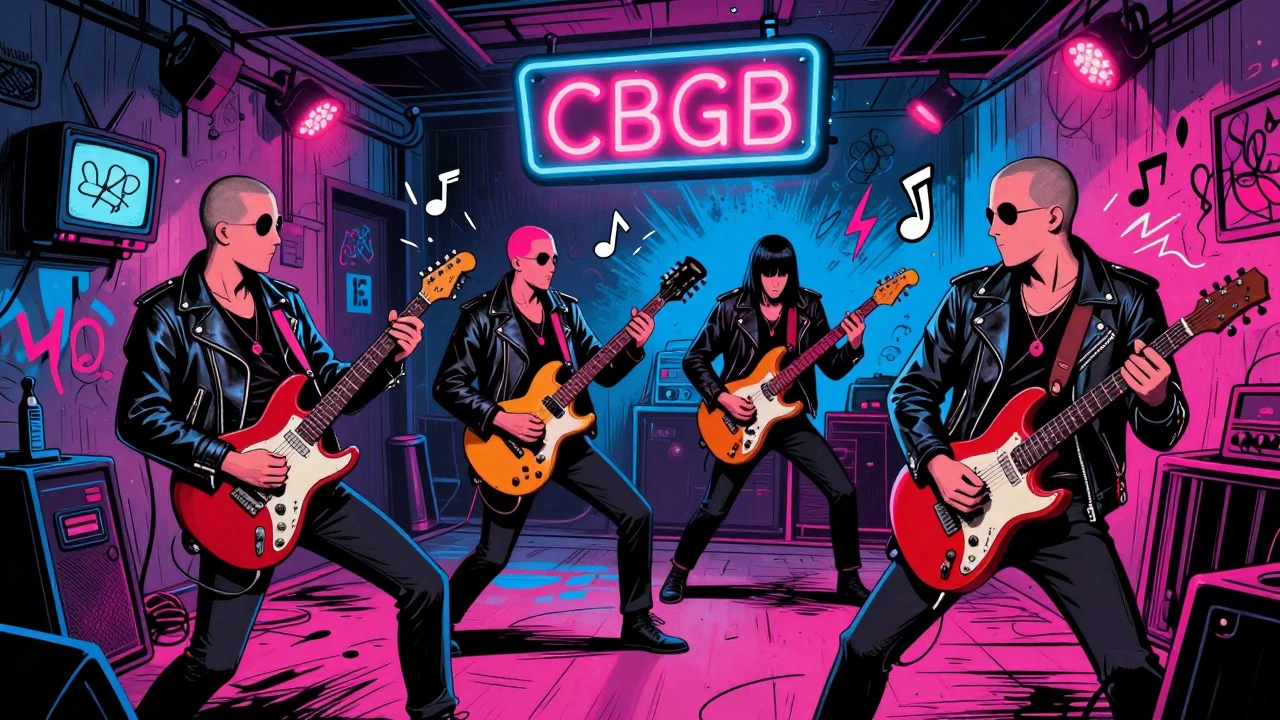
In New York’s Lower East Side, kids were hanging out in abandoned buildings, making art, listening to garage rock, and watching the city decay. The New York Dolls had already laid the groundwork with their glam-trash energy. Then came the Ramones. Their debut album in April 1976 was a lightning strike. Four guys. Three chords. Songs that lasted 2 minutes. No solos. No intros. Just: boom, bang, done.
They didn’t talk about politics. They sang about teenage angst, bad dates, and TV. "I wanna be sedated." "Blitzkrieg Bop." It wasn’t revolutionary-it was relatable. American punk wasn’t about overthrowing the government. It was about not caring what the government thought of you.
That’s why it felt different. It came from garage bands in Michigan, basement shows in Ohio, and art schools in Cleveland. Bands like MC5 and The Stooges were already doing it before the UK scene even formed. American punk was rooted in blues, old rock and roll, and a DIY ethic that said: you don’t need a record deal to be heard. You just need a broken amp and a reason to scream.
There were exceptions. The Dead Kennedys were political. But even they used satire. Their song "Holiday in Cambodia" wasn’t a protest-it was a joke wrapped in razor wire. American punk didn’t need to be serious to be powerful. It just needed to be real.
The Sound of Two Worlds
Listen to a Sex Pistols track and a Ramones track side by side. You’ll hear the difference.
British punk sounds tighter. More controlled. Even when it’s loud, it’s precise. The drums hit like a hammer. The bass is thick, almost industrial. The guitars are sharp, not messy. It’s punk as a weapon.
American punk? It’s messy. It’s sloppy. It’s the sound of a kid learning to play guitar in their bedroom and deciding to just go for it. The Ramones didn’t tune their guitars perfectly. They didn’t care. The energy was the point. That rawness became the foundation for American hardcore punk in the 80s-bands like Black Flag and Minor Threat turned up the speed and turned down the polish. Their songs were shorter. Louder. More aggressive. But still, the focus was on personal frustration, not national revolution.
Meanwhile, British punk didn’t die-it evolved. After the Sex Pistols imploded, bands like Joy Division, Gang of Four, and Siouxsie and the Banshees took the energy and turned it inward. They added synths. They experimented with rhythm. They made music that was darker, moodier, more artistic. That became post-punk. It wasn’t rebellion against the system anymore. It was rebellion against the idea that rebellion had to sound a certain way.
And the Buzzcocks? They were the bridge. Manchester’s answer to both scenes. Their songs were fast, catchy, and full of heartbreak. "Ever Fallen in Love" wasn’t about politics. It was about loneliness. And that emotional honesty made them beloved on both sides of the ocean.
Why the Divide Lasted
It wasn’t just music. It was culture.
British punks were working-class kids with no future. American punks were often middle-class kids with too much time on their hands. That shaped everything. UK punks didn’t have the luxury of making music for fun. They were screaming because they had nothing else. American punks could afford to be ironic. They could wear ripped shirts because they were a fashion statement, not a survival tactic.
That’s why UK punk didn’t catch on in the U.S. at first. American audiences found it too violent, too political, too weird. And vice versa. British fans thought American punk was too tame, too self-indulgent, too obsessed with being "cool."
When the Sex Pistols toured America in 1977, they got booed, arrested, and nearly killed. The Ramones played London and were treated like rock gods-but they didn’t understand why everyone was so angry. They thought they were just playing rock and roll.
But here’s the twist: the influence went both ways. American bands like Black Flag and The Minutemen took the UK’s raw energy and turned it into something even faster. UK bands like The Clash borrowed from American soul and funk. The lines blurred-but the core differences stayed.
The Legacy That Still Screams
Forty years later, you can still hear both sides in modern music.
When a band like IDLES screams about class inequality, they’re channeling the Sex Pistols. When a band like Parquet Courts plays a 90-second song about existential dread, they’re channeling the Ramones. When a kid in Berlin picks up a guitar and plays three chords because they’re tired of the system, they’re standing in the same room as Johnny Rotten and Joey Ramone.
Punk didn’t need to be perfect. It didn’t need to be popular. It just needed to be honest. The UK version said: the system is broken, and we’re not going to pretend it’s not. The American version said: I don’t care what you think. I’m doing this because I need to.
Today, punk isn’t about the music. It’s about the attitude. It’s about refusing to be silent. Whether you’re shouting about rent hikes in London or about alienation in a small-town Ohio basement, you’re part of the same tradition.
That’s why, no matter who you ask, the answer is always the same: it doesn’t matter which side was better. What matters is that both sides refused to back down.
Frequently Asked Questions
Was American punk really less political than UK punk?
Yes, generally. American punk focused more on personal expression-teenage boredom, alienation, and raw emotion. Bands like the Ramones didn’t write protest songs. They wrote about TV, bad relationships, and wanting to be sedated. There were exceptions, like the Dead Kennedys, but even they used satire instead of direct political calls. UK punk, by contrast, was built on class struggle. The Sex Pistols attacked the monarchy. The Clash sang about racism and unemployment. Their lyrics were weapons, not just noise.
Why did British punk sound more "refined" than American punk?
British punk bands often had more formal musical training or were influenced by art school backgrounds. They aimed for intensity with precision-tight rhythms, clear basslines, sharp guitar attacks. American punk came from garage bands with no formal training. Their sound was raw because they were learning as they went. It wasn’t about being better-it was about being real. The British sound was more like a controlled explosion. The American sound was more like a broken-down car racing down a dirt road.
Did American punk influence UK punk, or was it all one-way?
It went both ways. The Ramones and New York Dolls inspired the early UK scene. But after 1977, British punk pushed back. Bands like Joy Division and Gang of Four introduced darker, more experimental sounds that influenced American post-punk and hardcore. The Buzzcocks, with their catchy melodies, were adopted by American indie bands. So while the UK scene started with American roots, it quickly grew its own voice-and then fed it back across the ocean.
Why did UK punk incorporate reggae and ska?
The UK had a large Jamaican population, especially in London and Birmingham. Reggae and ska were already part of the cultural landscape. Bands like The Clash and The Specials didn’t "borrow" the sound-they grew up with it. That authenticity made their fusion feel natural. American bands later tried to copy ska in the 80s and 90s, but without that cultural connection, it often felt forced or gimmicky.
Is punk still alive today?
Not as a genre with a uniform sound-but as a mindset. Punk lives in the DIY ethic of indie bands recording in basements. It’s in the zines, the protests, the street art, the bands that refuse to sign with major labels. It’s in the kid who starts a band because they’re angry, not because they want fame. The music changes, but the refusal to be silent? That never died.


