
In 1987, U2's The Joshua Tree a landmark album that fused biblical spirituality with stadium-rock grandeur, selling over 25 million copies and winning the Grammy for Album of the Year hit the airwaves. This wasn't just another rock record-it was a spiritual journey disguised as a concert. Picture this: a band from Dublin, Ireland, recording in an old Dublin mansion while wrestling with questions of faith, injustice, and hope. The result? A timeless masterpiece that still moves people today. Let's unpack how U2's The Joshua Tree turned desert imagery into a spiritual anthem for a generation.
The Spiritual Roots of a Desert Album
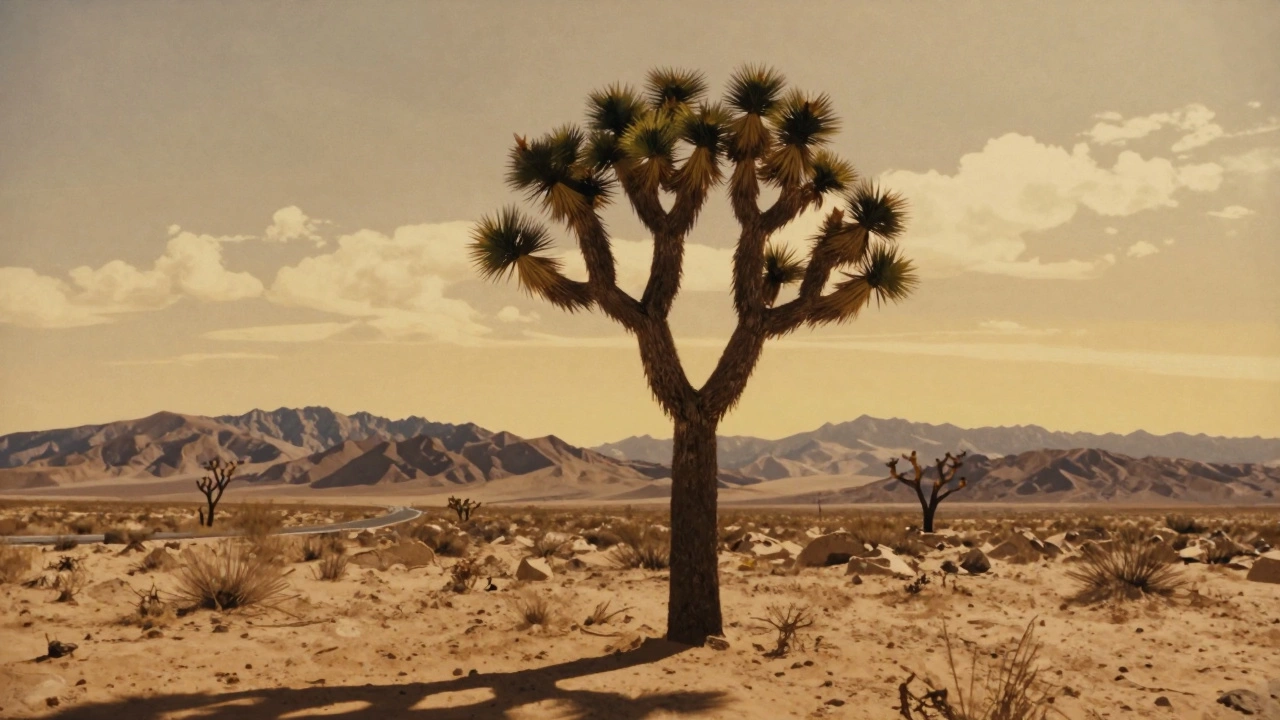
Everything started with Bono's 1985 trip to Ethiopia. Standing in a famine-stricken landscape, he realized: "They may have a physical desert, but we've got other kinds of deserts." This insight became the album's heartbeat. The title came from Joshua 1:6 in the Bible: "Be strong and of good courage: for unto this people shalt thou divide for an inheritance the land which I sware unto their Fathers to give them." But the album's visual identity was shaped in Death Valley. On October 29, 1986, photographer Anton Corbijn captured a lone Joshua tree a Yucca brevifolia plant that Mormon settlers named after the biblical prophet Joshua for its prayer-like branches along Route 190. That single tree became the album's symbol-representing resilience in barren places. The gatefold sleeve featured more desert photos, and liner notes included the full Joshua 1:6 quote. This wasn't accidental; U2 wanted listeners to feel the spiritual tension between hope and despair.
How U2 Merged Faith with Stadium Rock
Back in the 1980s, stadium rock was dominated by anthems about American dreams (like Bruce Springsteen's Born in the USA) or abstract soundscapes (like Pink Floyd's A Momentary Lapse of Reason). But U2 did something different. While Springsteen sang about working-class struggles without religious context, U2 openly referenced biblical stories. Take "I Still Haven't Found What I'm Looking For"-lyrics like "climbing highest mountains" and "scaling city walls" echo Ecclesiastes' search for meaning. Unlike Christian rock bands like Petra or Stryper, who operated in niche markets, U2 brought spiritual themes to mainstream stadiums. In May 1987, the album topped both Billboard's Top Christian Albums chart and the mainstream Billboard 200 simultaneously. As CCM Magazine a leading Christian music publication noted, it was "a rare Christian album that starts in Heaven and then descends to Earth rather than vice versa." This balance of faith and rock made it revolutionary.
The Sound of Spirituality: Production Secrets
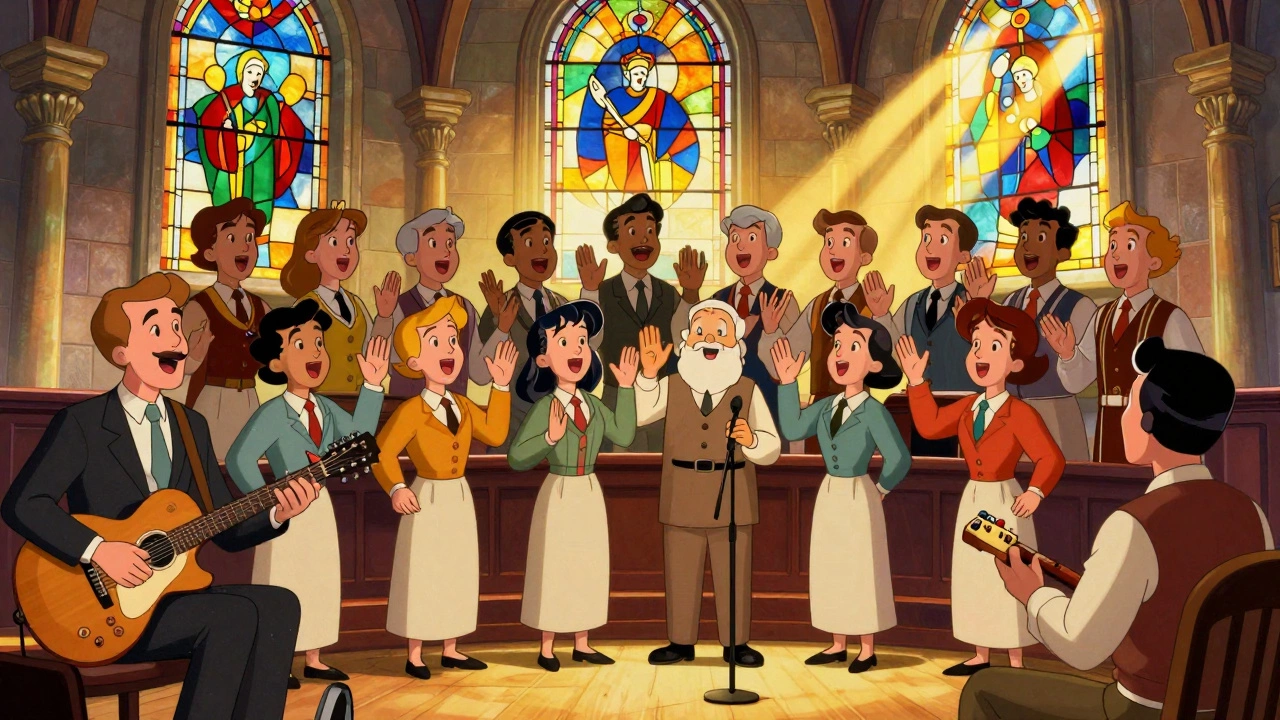
The Edge's guitar work defined the album's spiritual atmosphere. He used multiple TC Electronic 2290 Digital Delay units set at 500ms, 620ms, and 750ms intervals to create expansive, echo-filled soundscapes. For "With or Without You," he recorded through a 1960s Vox AC30 amplifier and Neumann U47 microphone at 15 ips tape speed. Why? To achieve a "church-like reverberation," as he explained in a 2017 Sound on Sound a professional audio magazine interview. The album also featured the first mainstream rock use of a full gospel choir. On January 14, 1987, The New Voices of Freedom sang "I Still Haven't Found What I'm Looking For" at New York's Church of St. Paul the Apostle under Rev. James Moore's direction. These choices weren't just technical-they were spiritual. The delays mimicked prayerful echoes, and the choir's harmonies carried the weight of collective faith.
Controversy and Cultural Impact
"Bullet the Blue Sky" wasn't just a song-it was a protest. The track directly condemned U.S. military intervention in El Salvador, referencing Jacob wrestling the Angel from Genesis. During recording, Bono channeled anger into his vocals, shouting "I see you in the dark" while The Edge's guitar screamed like machine guns. This political-spiritual blend struck a nerve. In 1987, campus radio stations played the album 12,743 times across 687 stations, second only to R.E.M.'s Document. Meanwhile, televangelism scandals (like Jim Bakker's in March 1987) made people distrust organized religion. U2's raw honesty about doubt and injustice resonated deeply. By the end of 1987, the album had sold over 10 million copies worldwide. Its dual success on Christian and mainstream charts proved spiritual rock could be both meaningful and massively popular.
Legacy: Why It Still Matters Today
Decades later, U2's The Joshua Tree remains a spiritual touchstone. At the 2017-2019 Joshua Tree 30th Anniversary Tour, 68% of attendees said spiritual themes were their primary connection to the album. On Reddit, users like "DesertSoul87" share how the album accompanies their faith journey: "As a seminary student, I return to this weekly for 15 years-it mirrors my own doubts and hopes." Amazon reviews (2023 data) show 4.8/5 stars from 1,847 ratings, with one reviewer calling it their "spiritual touchstone" after their father's death. Even churches use it: CCLI's 2025 Worship Report lists "I Still Haven't Found What I'm Looking For" as the #3 song in church services. Spotify data shows 1.2 million monthly listeners as of December 2025. Bono himself called the songs "prayers" during his 2023 NPR interview, saying the Songs of Surrender project returned them to their "devotional essence." This album wasn't just a product of the 1980s-it's a living, breathing conversation about faith that continues to evolve.
| Album | Spiritual Themes | Commercial Success | Unique Elements |
|---|---|---|---|
| U2's The Joshua Tree | Biblical references, existential questioning | #1 Billboard 200, 25+ million sold | Gospel choir, desert-themed production |
| Born in the USA | Social commentary, secular | #1 Billboard 200, 15 million sold | Working-class narratives |
| A Momentary Lapse of Reason | Minimal spiritual elements | #3 Billboard 200, 4 million sold | Electronic rock experimentation |
What biblical references are in U2's The Joshua Tree?
The album draws heavily from the Book of Joshua, especially Joshua 1:6, which inspired the title. "I Still Haven't Found What I'm Looking For" echoes Ecclesiastes' search for meaning, while "Bullet the Blue Sky" references Jacob wrestling the Angel from Genesis. Bono's lyrics often use biblical metaphors to explore faith, doubt, and social justice. For example, "Where the Streets Have No Name" reflects the biblical idea of a promised land beyond earthly struggles.
How did U2's spiritual themes differ from other rock bands?
Unlike Christian rock bands like Petra or Stryper, which operated within the Christian music industry bubble, U2 brought spiritual themes to mainstream stadiums. While Bruce Springsteen's Born in the USA focused on secular working-class stories, U2 openly engaged with biblical narratives without limiting themselves to religious audiences. They balanced political critique (like "Bullet the Blue Sky") with personal faith questions, making their spirituality feel universal rather than preachy.
Why did U2 choose the Joshua tree for the album cover?
Photographer Anton Corbijn discovered the Joshua tree during the Death Valley shoot on October 29, 1986. Mormon settlers named the Yucca brevifolia plant after the biblical Joshua because its upturned branches looked like a man "raising his arms to pray." For U2, this symbolized resilience in harsh environments-mirroring the album's themes of finding hope in desolation. The single tree in a barren landscape perfectly captured the tension between physical and spiritual "deserts."
What role did gospel choirs play in the album?
The New Voices of Freedom gospel choir recorded "I Still Haven't Found What I'm Looking For" at New York's Church of St. Paul the Apostle on January 14, 1987. This was the first mainstream rock use of a full gospel choir. Their harmonies added a layer of communal faith to the song, transforming it from a personal search for meaning into a collective cry. Bono described the choir's vocals as "the sound of hope," and their presence helped bridge rock music with spiritual traditions.
How does The Joshua Tree remain relevant today?
Spotify data shows 1.2 million monthly listeners as of December 2025, and CCLI's 2025 Worship Report lists "I Still Haven't Found What I'm Looking For" as the #3 song in church services. At U2's 30th-anniversary tour, 68% of attendees cited spiritual themes as their connection to the album. Artists like Coldplay and The Killers cite it as an influence. Even Bono's 2023 Songs of Surrender project reimagined tracks as stripped-down prayers, proving these songs were always meant to be spiritual reflections, not just rock anthems.


