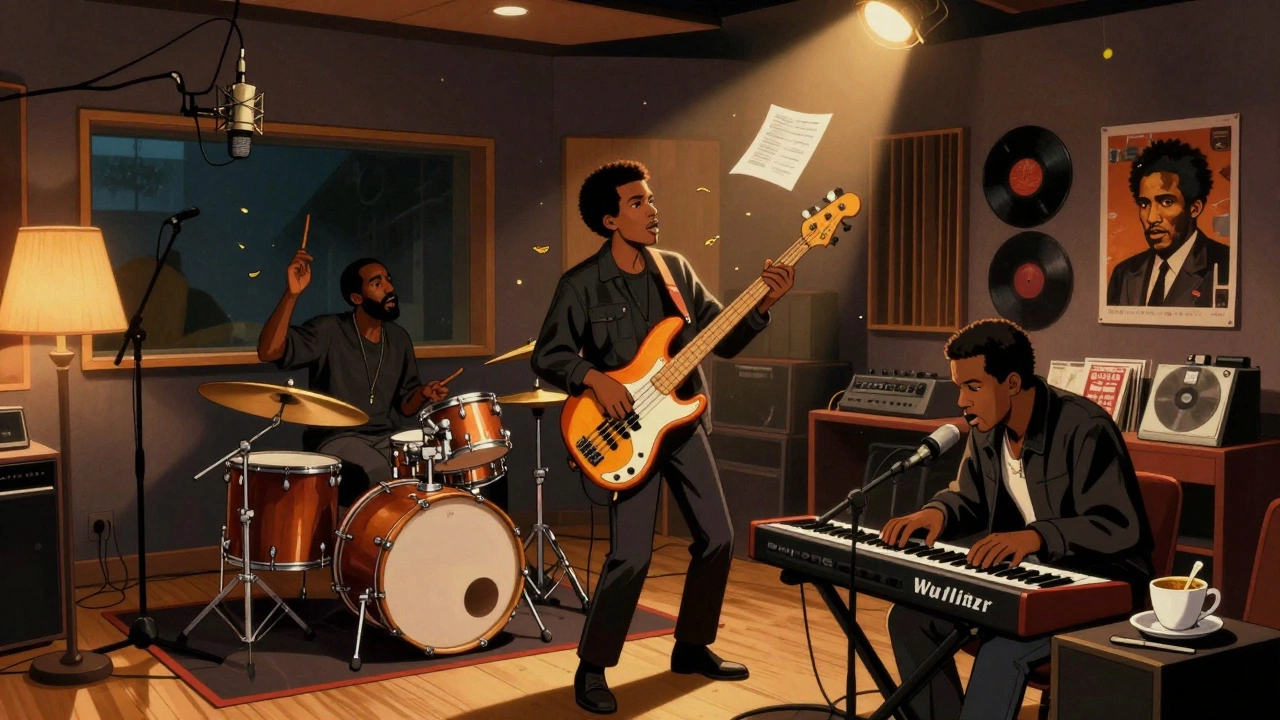

The 1990s didn’t just birth a new sound in R&B-it resurrected a whole way of making music. While mainstream pop and hip-hop leaned harder into drum machines and synthesizers, a quiet revolution was happening in recording studios across New York, Atlanta, and Los Angeles. Behind the smooth vocals of D’Angelo, Erykah Badu, Maxwell, and Lauryn Hill were real people playing real instruments. No loops. No presets. Just hands, fingers, sticks, and soul.
Live Instruments Over Digital Noise
In the late 1980s and early 1990s, R&B was dominated by programmed beats and synthetic strings. Then came neo-soul-a movement that looked back to the 1970s for inspiration. Marvin Gaye’s What’s Going On, Stevie Wonder’s Songs in the Key of Life, and Curtis Mayfield’s funk-laced grooves became the blueprint. But this wasn’t just nostalgia. It was a rebellion against the cold, overproduced sound of the time.
Artists like Tony! Toni! Toné! led the charge with their 1996 album House of Music. They mixed live bass, real horns, and analog keyboards with digital recording tools. That hybrid sound-warm and human, yet polished-became the template. By 1997, when Erykah Badu dropped Baduizm, the world heard something different: no Auto-Tune, no quantized drums. Just a drummer, a bassist, and a piano player locking into a groove that felt like it had been brewing for years.
The Soulquarians: A Brotherhood of Sound
At the heart of this movement was a loose group of musicians and producers known as the Soulquarians. Led by Questlove (Ahmir Khalib Thompson) of The Roots, this collective didn’t just work together-they lived together in the studio. Sessions at Electric Lady Studios in Greenwich Village often lasted all night. Musicians would show up, grab coffee, and start playing without a script.
The group included D’Angelo, Erykah Badu, Bilal, Common, Mos Def, Q-Tip, and producers like J Dilla and James Poyser. Their chemistry wasn’t accidental. It came from years of playing jazz clubs, hip-hop sessions, and gospel choirs. Questlove’s drumming became the backbone of neo-soul-not because he played fast or loud, but because he played feel. His snare cracks were loose. His hi-hats swung. His kick drum didn’t just hit-it breathed.
James Poyser, the keyboardist for The Roots, played Wurlitzers and Fender Rhodes like they were extensions of his body. On Erykah Badu’s “Tyrone,” his piano riff isn’t just a melody-it’s a conversation. Listeners who’ve tried to replicate it say it’s impossible to copy note-for-note. The magic is in the slight delays, the subtle pushes and pulls of timing. That’s what live players do. Machines can’t.
The Bass Players Who Made the Groove Walk
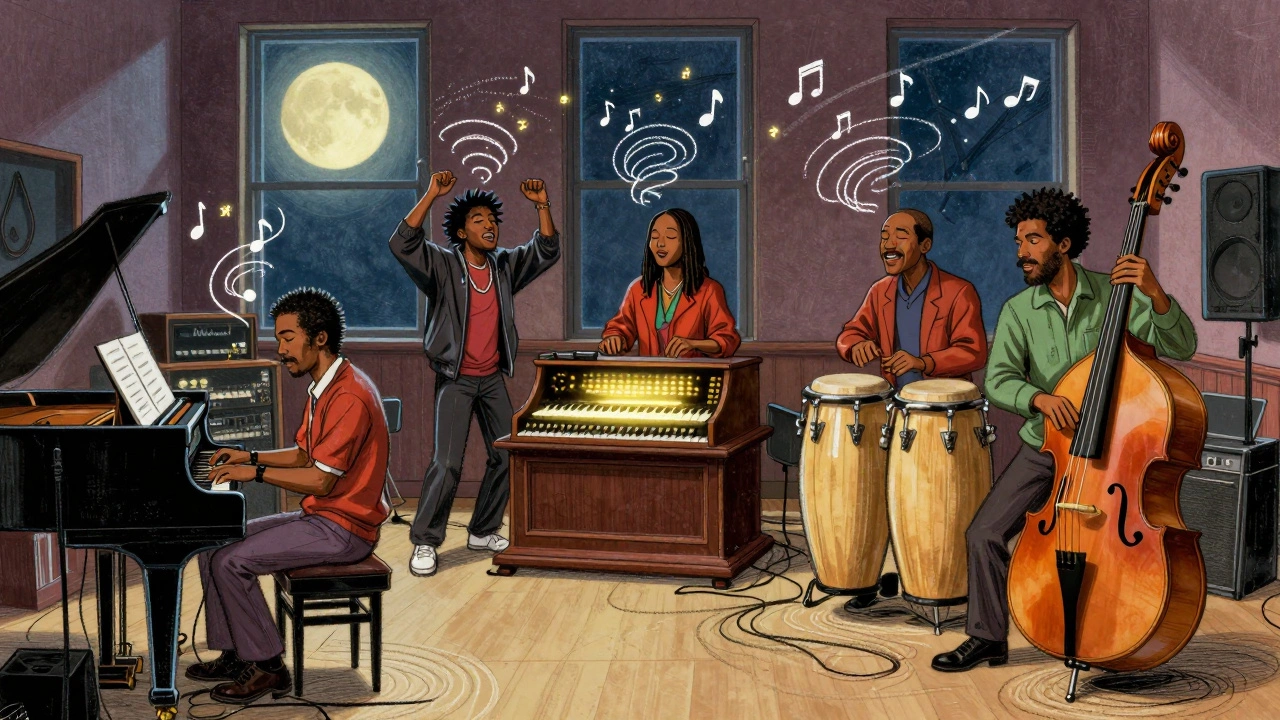
If Questlove was the heartbeat, then the bassists were the pulse. Pino Palladino, a Welsh session legend, played bass on D’Angelo’s Brown Sugar and Voodoo. His lines weren’t just root notes and fifths-they danced. On “Cruisin’,” he locks with Questlove’s drums like two old friends who don’t need words. His tone? Thick, round, and warm. No effects. Just a Fender Precision Bass plugged straight into an amp.
On Erykah Badu’s debut, legendary jazz bassist Ron Carter laid down double bass tracks. That’s right-acoustic bass, not electric. In a time when most R&B records used synth bass, Carter’s upright gave “On and On” a deep, wooden resonance that still gives listeners chills. You can hear the wood of the instrument, the scrape of fingers on strings, the quiet breath between notes.
The Guitarists Who Played Silence Like a Note
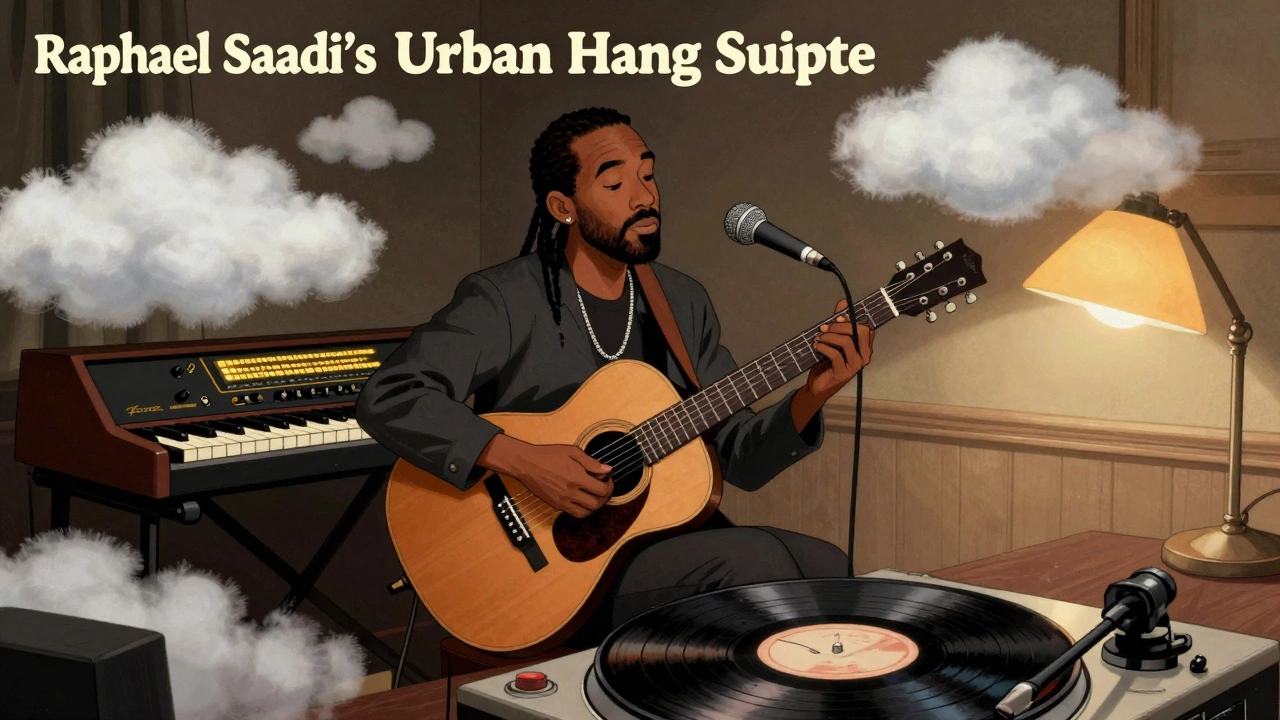
Guitars in neo-soul weren’t about solos. They were about texture. Wah-Wah Watson (Melvin Ragin), a veteran session guitarist who played on Marvin Gaye’s Let’s Get It On, returned in the 1990s to work with Maxwell. His playing on Urban Hang Suite is sparse but devastating. A single chord, held just long enough. A muted strum that fades into the next phrase. He didn’t play to show off. He played to make space-for the voice, for the drums, for the silence.
Raphael Saadiq, formerly of Tony! Toni! Toné!, brought a similar approach. His guitar work on “Stay” and “Cruisin’” is all about feel. He used a clean, slightly chorused tone, never distortion. Every note had a purpose. He didn’t need six strings to say everything.
The Keyboards That Kept the Soul Alive
Neo-soul’s sound lived in the keys. The Fender Rhodes, the Wurlitzer electric piano, the Hammond B3 organ-they weren’t just instruments. They were emotional conduits. James Poyser, Leon Ware, and even D’Angelo himself played these like they were talking.
On “Your Precious Love” from D’Angelo’s Voodoo, the Rhodes doesn’t just play chords. It sighs. It sways. It breathes. That’s because D’Angelo recorded it live, with the whole band in one room. No overdubs. No fixes. One take. The room’s acoustics, the creak of the stool, the slight buzz of the amp-all part of the song.
Leon Ware, who helped shape the sound of Marvin Gaye and Michael Jackson in the 1970s, brought that same philosophy to Maxwell’s debut. He didn’t just write chords-he wrote moods. His arrangements made Maxwell’s voice feel like it was floating in a warm bath of sound.
Why This Still Matters Today
The neo-soul movement didn’t just change R&B-it changed what people expected from studio musicians. Before the 1990s, session players were often invisible. Now, fans know their names. They post YouTube breakdowns of Questlove’s fills. They transcribe Poyser’s piano parts. They debate whether Pino’s bassline on “Cruisin’” is the greatest groove ever recorded.
And it’s not just nostalgia. Modern artists like Robert Glasper, Anderson .Paak, SiR, and Lucky Daye all cite these 1990s sessions as their foundation. .Paak once said he studies Questlove’s drumming “like sacred texts.” That’s how deep the influence runs.
In 2024, Grammy-nominated R&B albums like Mr. Morale & the Big Steppers and Black Radio III still use live drums, analog synths, and real bass players. That’s not a trend. It’s a legacy.
The musicians behind these records didn’t just play music. They reminded the world that soul isn’t a genre-it’s a way of listening. And as long as someone hears the space between the notes, that sound will never die.
Who were the key studio musicians behind D’Angelo’s ‘Brown Sugar’?
D’Angelo’s debut album Brown Sugar (1995) was recorded with a tight group of musicians who later became the core of the Soulquarians. Key players included Questlove on drums, Pino Palladino on bass, James Poyser on keyboards, and Raphael Saadiq on guitar. The sessions were done live at Sound on Sound Studios in New York, with minimal overdubs. D’Angelo himself played piano and sang, often recording full takes with the whole band in one room. This approach created the album’s organic, groove-heavy sound that defined early neo-soul.
What made the Soulquarians different from other studio collectives?
The Soulquarians weren’t just a group of session players-they were a creative family. Unlike typical studio teams hired for one album, they lived and worked together for years. They recorded at Electric Lady Studios and the Cookie Jar, often jamming for hours without a plan. Their music blended soul, jazz, funk, and hip-hop, and they treated every session like a communal experiment. Questlove acted as the rhythmic anchor, but everyone contributed ideas. This collaborative, improvisational spirit set them apart from the more transactional studio culture of the time.
Why did neo-soul rely on live instrumentation instead of drum machines?
Neo-soul emerged as a reaction to the synthetic, over-programmed R&B of the late 1980s. Artists wanted to reconnect with the warmth and imperfection of 1970s soul music. Live drums, real bass, and analog keyboards brought a human feel that machines couldn’t replicate. Questlove’s loose, swinging grooves and Pino Palladino’s conversational bass lines created a pocket that made listeners feel the music in their chest-not just hear it. This wasn’t just a stylistic choice-it was a philosophical one: soul music had to be played, not programmed.
How did the recording process for neo-soul differ from mainstream R&B at the time?
Mainstream R&B in the early 1990s relied on layered, isolated tracks-drums programmed first, then bass, then vocals. Neo-soul flipped that. Musicians recorded live in one room, often with no headphones. The goal was to capture the natural interaction between players. If the drummer pushed a beat slightly ahead, the bassist would follow. If the keyboardist added a subtle chord variation, the guitarist would respond. This created a dynamic, breathing sound. Producers like Bob Power and D’Angelo insisted on minimal overdubs, believing the first take often held the most emotion.
Did neo-soul musicians influence modern R&B production?
Absolutely. Artists like Anderson .Paak, Robert Glasper, and Lucky Daye openly credit 1990s neo-soul studio players as their biggest influences. .Paak has said he studies Questlove’s drumming on Baduizm like sacred texts. Glasper’s Black Radio (2012) directly channels the Soulquarians’ collaborative spirit, featuring Erykah Badu and Bilal. Even today, Grammy-nominated albums use live bass, analog keys, and real drums-not because it’s retro, but because it sounds alive. The demand for skilled session musicians spiked in the 1990s, and that demand never fully disappeared.


