
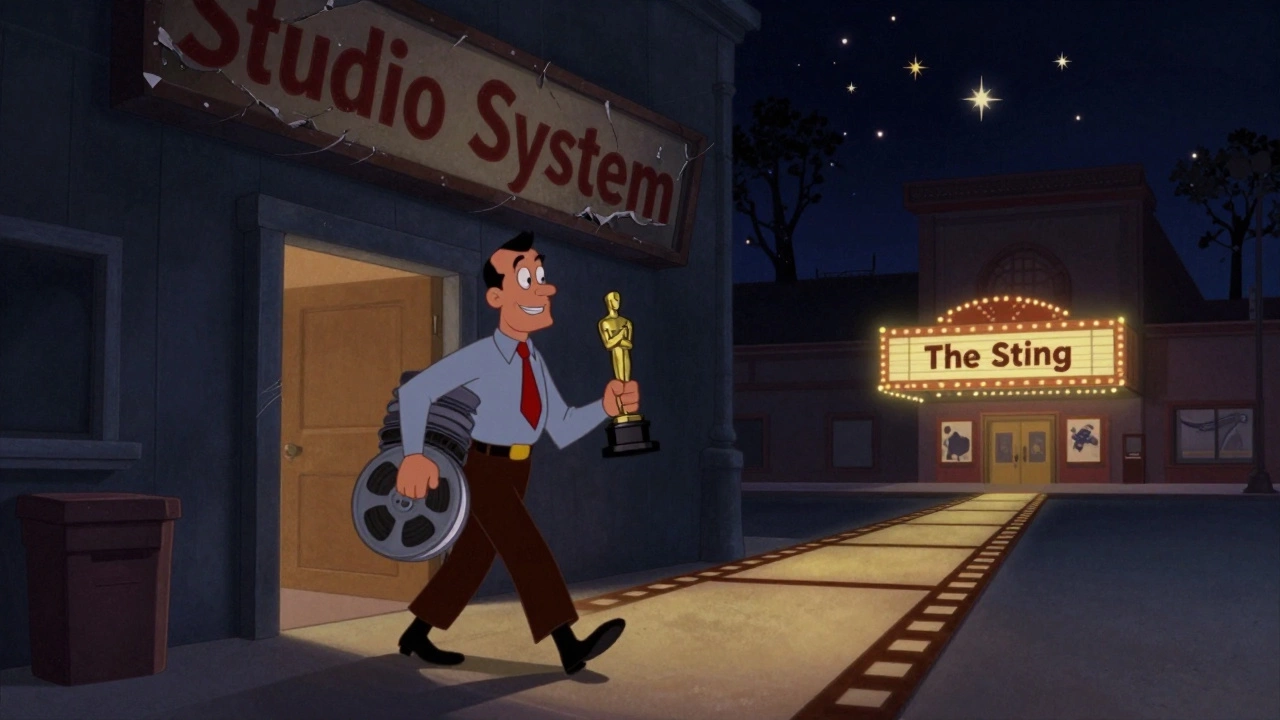
The 1970s weren't just about disco, bell-bottoms, and gas shortages. They were the last true golden age of film producer power - when one person could walk into a studio with a script, a vision, and a handful of unknowns, and walk out with an Oscar. This wasn't corporate filmmaking. It wasn't committee-driven. It was personal, risky, and wildly creative. And at the center of it all was the producer - not as a financier or a middleman, but as the architect of the movie itself.
Who Was the Producer, Really?
In the 1970s, a producer wasn't just someone who signed checks. They were the ones who found the story, picked the director, convinced the studio to take a chance, and then fought like hell to protect the film from getting ruined. Michael Phillips, who won the Best Picture Oscar for The Sting in 1974, put it plainly: "The producer was the entrepreneur who came up with either the idea or the material and got the ball rolling." That meant reading dozens of scripts, cold-calling agents, tracking down talent no one else wanted, and sometimes even paying people out of pocket just to get a film made.
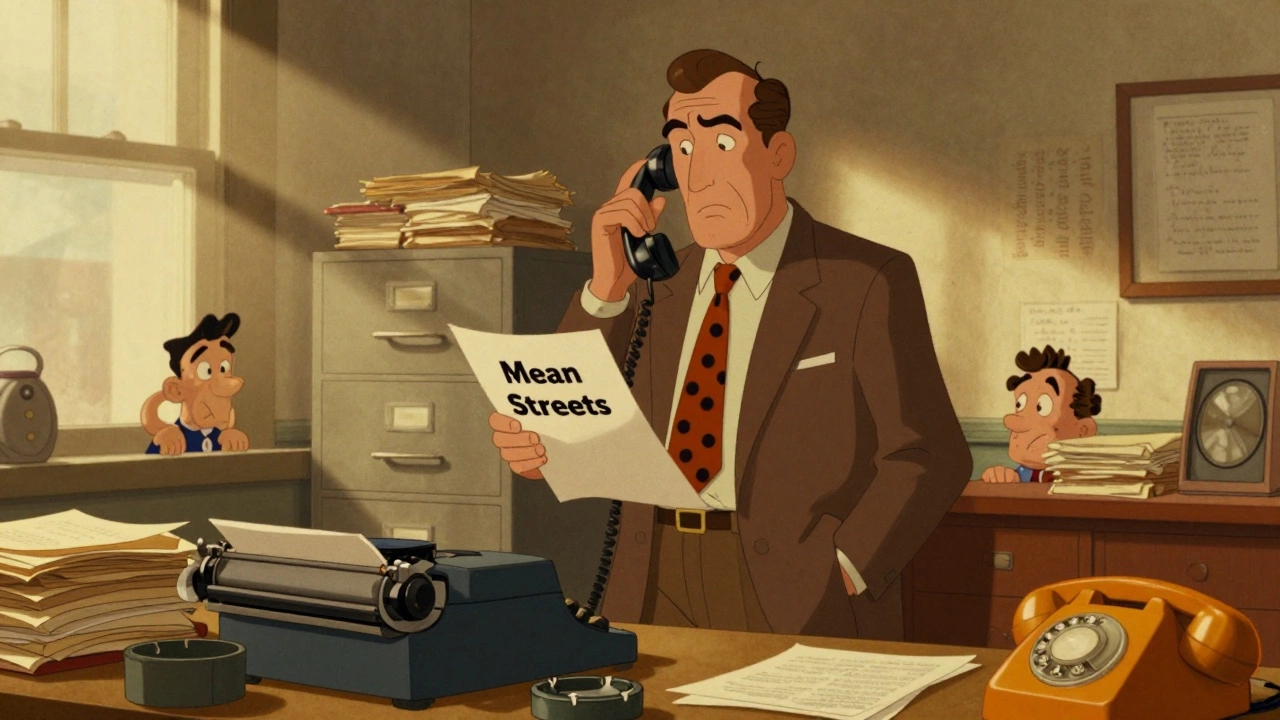
Take the case of Martin Scorsese and Robert De Niro. Neither had a hit to their name when Phillips and his team decided to back them for Mean Streets. The budget? Around $600,000. The total fee for the entire team - director, writer, star, and producers combined? Roughly $150,000. That’s not a typo. Today, that’s what a lead actor’s per diem might cost. But in 1973, it was enough to make a film that changed cinema forever. The producer didn’t just fund it - they believed in it when no one else did.
The Art of the Match
Producers in the 1970s were matchmakers. They didn’t just hire directors and actors - they engineered chemistry. Phillips recalls how he and his team watched a rough cut of Mean Streets and knew instantly: "This is our guy. That’s our actor." It wasn’t about box office names. It was about raw talent, urgency, and a voice that hadn’t been heard yet.
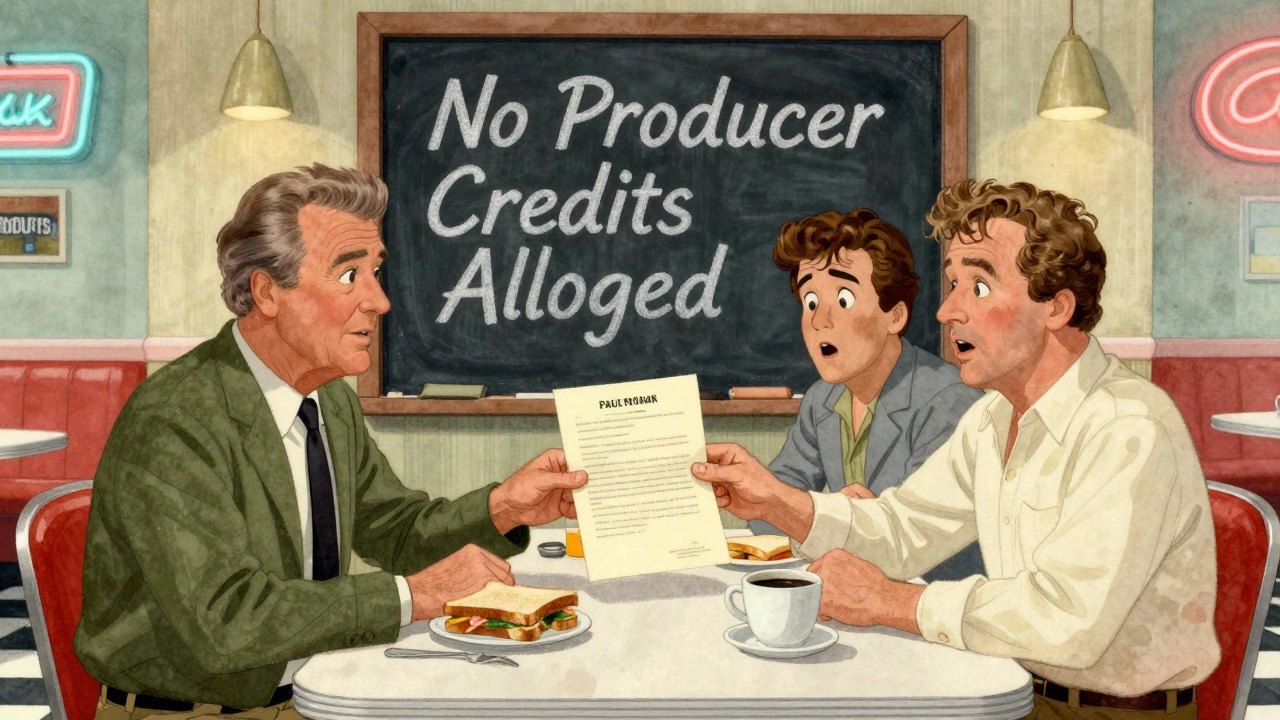
George Roy Hill got The Sting because his producer had an overall deal with Universal. Paul Newman and Robert Redford were attached because Phillips knew their names would open doors - but he also knew they’d drown out the film if they took too much control. So he said no when they asked to become producers. "We can’t agree to that," he told them. "You have such high profiles that will get lost in the shuffle." That kind of quiet authority - the ability to say no to stars - was rare then, and nearly extinct now.
Budgets, Not Bureaucracy
Forget the 10-person development committee. In the 1970s, if a producer liked a script, they could greenlight it in two weeks. Phillips says he went from optioning a script to filming Steelyard Blues in less than two months. No pitch decks. No focus groups. No streaming metrics. Just a deal signed over lunch and a camera rolling.
That freedom came with a price. The average budget in 1970 was $2.5 million. By 1979, it had jumped to $5.9 million - still less than what modern blockbusters spend on VFX alone. But here’s the twist: those films made money. The Sting cost $5.5 million and grossed over $160 million worldwide. Chinatown cost $6 million and became a cultural landmark. The producer didn’t need to justify every dollar - they just needed to make something unforgettable.
The Rise of the Independent
The old studio system had collapsed after the 1948 Paramount Decree, which banned studios from owning theaters. By the 1970s, that meant producers could operate independently. They weren’t employees of Warner or Paramount - they were freelancers with a vision. Michael Phillips, Robert Evans, and Julia Phillips (yes, the Oscar-winning woman behind The Sting) built companies out of hotel rooms and coffee shops. They didn’t have HR departments. They had phone books.
That’s why so many of the era’s defining films came from small teams: Five Easy Pieces, Taxi Driver, One Flew Over the Cuckoo’s Nest. These weren’t studio mandates. They were producer passions. And because the studios were desperate to compete with TV and keep audiences in theaters, they gave these producers room to breathe.
The Cracks in the System
But this wasn’t paradise. The 1970s producer was a high-wire act. One flop could wipe out years of work. Phillips admits he was already filming another movie when Steelyard Blues tanked. "By the time it flopped, we were already in production on one of the... films with the two biggest stars." That’s the gamble. No safety net. No corporate cushion.
And let’s not forget who got left out. Women like Julia Phillips were exceptions - not norms. Only 8.7% of producer credits went to women. People of color? Barely 3.2%. The system was open to talent, but not to everyone. As producer Scott Rudin later pointed out, the romanticized version of the 1970s ignores how exclusionary it really was. The freedom was real - but it wasn’t universal.
Why It Couldn’t Last
Then came Jaws in 1975. Then came Star Wars in 1977. Suddenly, studios realized movies could make $500 million. And they didn’t want risk-takers anymore - they wanted predictable returns. The producer who could make art on a shoestring budget? That model became a relic. By the 1980s, executives with MBA degrees took over. The producer became a middleman between marketing and legal. The artist? Just another vendor.
Today, the average studio film costs over $100 million. No one can afford to gamble on unknowns. No one can wait two months to make a film. The producer’s role has fragmented into a dozen jobs: development, finance, marketing, distribution. The soul of the job - the gut instinct, the personal risk, the quiet belief in someone no one else saw - is mostly gone.
What’s Left?
There are echoes of the 1970s in today’s indie films. A producer in Nashville backing a first-time director. A filmmaker in Texas self-funding a script because no studio would touch it. But those are exceptions, not the rule. The system that once let a producer walk into a studio with a script and walk out with an Oscar? That’s a ghost now.
Maybe that’s why Quentin Tarantino calls the 1970s "the last golden age of producer-driven cinema." Maybe that’s why film scholars still study The Godfather Part II as proof that taste could override calculation. Maybe that’s why, when you watch The Sting today, you don’t just see a movie - you see what happens when one person believes hard enough to change the world.
What made the 1970s producer different from producers today?
In the 1970s, producers were entrepreneurial visionaries who found scripts, picked directors, and fought for creative control - often with budgets under $10 million. Today, producers are often part of a corporate chain, managing multiple departments, legal approvals, and marketing campaigns. The modern producer rarely has final say on creative decisions. Back then, one person could make or break a film. Now, it takes a committee.
How did producers find new talent in the 1970s?
Producers relied on personal networks, film festivals, and word-of-mouth. Michael Phillips learned about Martin Scorsese and Robert De Niro after friends told him, "You gotta go see Mean Streets." They watched rough cuts, read scripts, and trusted instinct over resumes. No LinkedIn profiles. No IMDb pages. Just a film that moved them. That’s how Scorsese got his first major break - not because he had credits, but because a producer believed in what he was trying to say.
Why did budgets stay low in the 1970s?
The studio system had collapsed, and studios were desperate to compete with TV. They gave producers freedom in exchange for lower upfront costs. Plus, there was no VFX industry yet. No CGI. No green screens. A film could be shot on location with natural light and a small crew. A $5 million budget in 1973 could make something that today would require $100 million. The lack of technology forced creativity - and that’s what made the films so powerful.
Who were the most influential producers of the 1970s?
Michael Phillips (The Sting), Robert Evans (Chinatown), and Julia Phillips (The Sting) were among the most impactful. Evans, a former studio head, used his insider knowledge to protect directors like Roman Polanski. Julia Phillips, one of the first women to win an Oscar for producing, broke barriers despite being fired from Taxi Driver because she was pregnant. Their work defined the era - not just for the films they made, but for the way they fought for artists.
Did the 1970s producer model disappear completely?
Not entirely. Independent filmmakers today still use the 1970s model - raising money privately, working with unknown talent, and shooting on tight budgets. Films like Little Miss Sunshine and Whiplash followed that path. But they’re outliers. The studio system now demands predictable ROI. The producer as a lone visionary is rare. Still, every time a new director breaks through, it’s because someone remembered how to take a chance - just like they did in the 1970s.