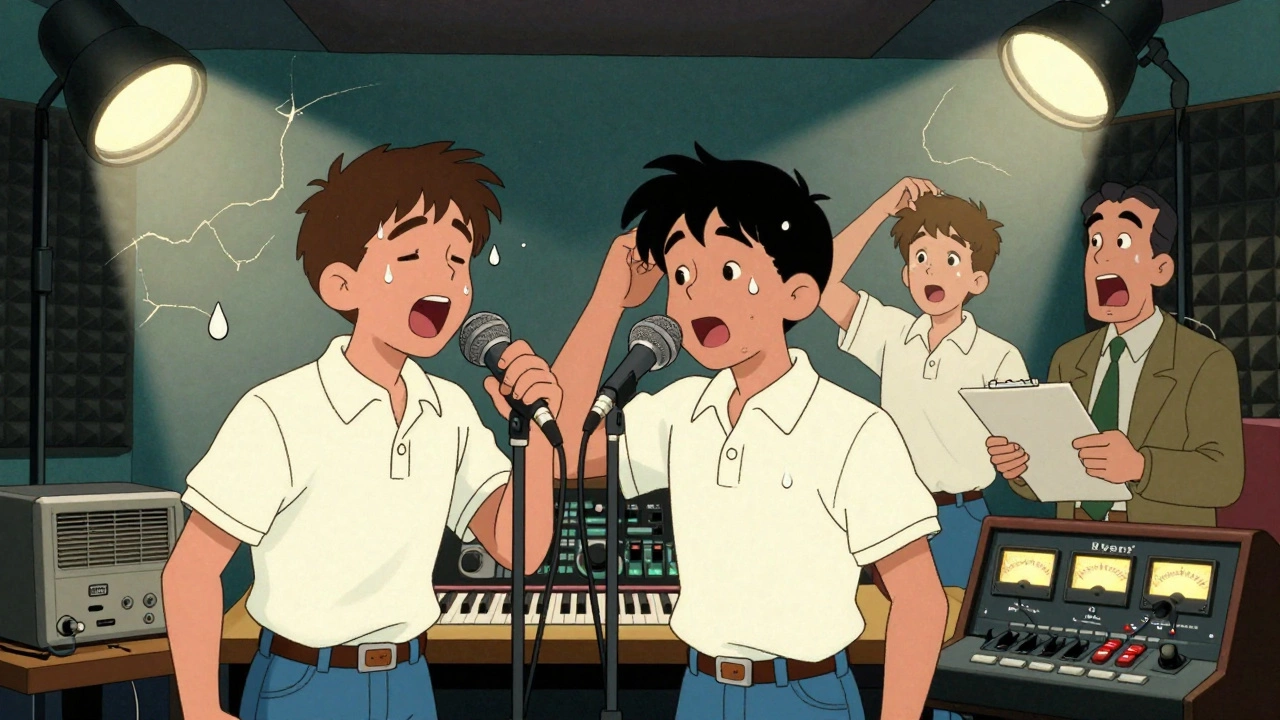

Orlando in the 1990s wasn’t just about theme parks. While tourists lined up for roller coasters, a quiet music revolution was happening just a few miles away - in recording studios, rehearsal rooms, and cramped apartment complexes where teenage boys were being molded into global pop stars. There wasn’t an official company called The Orlando Pop Factory, but that’s exactly what it felt like to everyone who lived through it. The term stuck because it described a real, relentless machine: a system of studios, managers, vocal coaches, and choreographers that churned out boy bands like a生产线 on auto-pilot.
Where It All Happened: The Studios
The heart of Orlando’s pop machine wasn’t one building. It was a network. The most famous was Nickelodeon Studios on the Universal lot. Though best known for shows like Clarissa Explains It All and GUTS, it also hosted early recordings for teen acts. Its 24-track digital studio, built in 1990, became a go-to for producers who needed professional gear without New York or L.A. prices. But the real magic happened elsewhere - in smaller studios like The Magic House in Winter Park and Studio 13 near the Orlando International Airport.
These weren’t fancy places. Studio 13 had cracked acoustic foam, a broken AC, and a couch that doubled as a sleeping spot for trainees. But it had a $15,000 Neve console, a 16-track tape machine, and a producer named Steve Lacy - a former session guitarist who’d worked with R&B acts in Atlanta. He didn’t care if you were 14 or 24. If you could hold a note and didn’t flinch when he yelled, you got in.
Backstreet Boys recorded their first demos here in 1993. *NSYNC’s early tracks? Cut in a converted garage behind a Pizza Hut in Altamonte Springs. The sound wasn’t polished. It was raw, sometimes off-key, but always energetic. That’s what made it sell. Labels didn’t want perfection. They wanted chemistry. And Orlando had the space to make it happen.
The Managers: Who Pulled the Strings
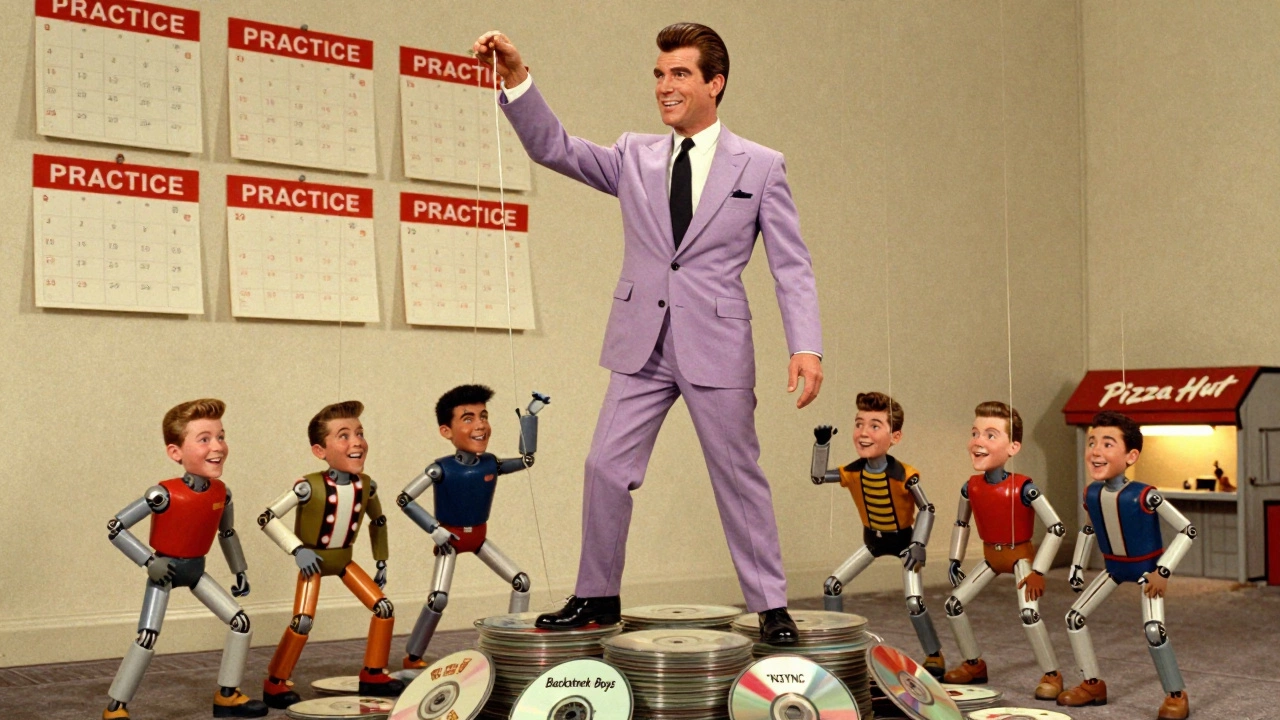
Behind every boy band in Orlando was a manager who looked more like a high school coach than a music executive. The most influential? Lou Pearlman. He wasn’t a producer. He wasn’t even a musician. He was a former travel agent from Florida who saw a pattern: kids who sang well, looked clean-cut, and didn’t ask too many questions. He started by managing local acts, then signed a group of five boys from Orlando in 1993 - the Backstreet Boys. He promised them fame. He delivered contracts.
He didn’t own studios. He didn’t write songs. But he controlled everything else: schedules, budgets, even what they ate. He hired a team of handlers - one for hair, one for wardrobe, one for behavior. Each boy had a personal manager who tracked their sleep, their weight, and their emotional state. They were told not to date. Not to drink. Not to talk to reporters unless approved. It wasn’t just management. It was surveillance.
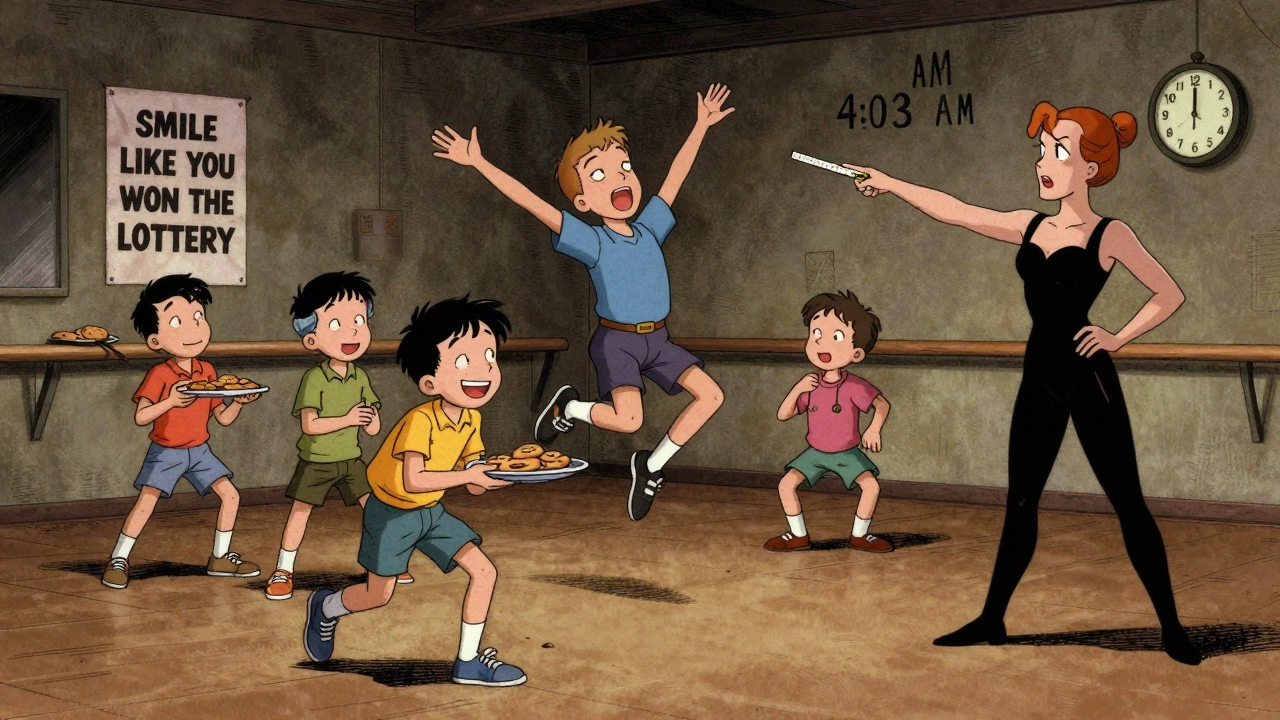
Other managers followed his model. Johnny Wright, who later managed *NSYNC, came from a talent agency in Nashville. He didn’t care about music theory. He cared about marketability. He’d test boys by making them sing in front of a mirror while holding a tray of cookies - to see if they’d smile while sweating. If they did, he signed them. If they didn’t, they were out.
Training: No School, Just Sweat
There was no official curriculum. No textbooks. No classes. Just repetition.
Trainees woke up at 5 a.m. for vocal warm-ups. By 6 a.m., they were in a studio with a coach who’d spent years working with gospel choirs. They’d sing scales for an hour, then move to choreography. A former dancer from the Joffrey Ballet ran the dance sessions. He taught them to move like robots - sharp, synchronized, emotionless. Then he’d say, “Now smile like you just won the lottery.”
They trained six days a week. Sundays were for rest - unless there was a photo shoot. Then they’d be up at 4 a.m. again. They learned to fake fatigue. To fake hunger. To fake happiness. One former trainee, who asked to stay anonymous, told me: “They didn’t teach us how to sing. They taught us how to look like we were singing.”
Some kids cracked. One 15-year-old from Tampa stopped speaking for three weeks after being told his voice was “too raspy.” Another quit after being told his nose was “too wide” for the group photo. The ones who stayed? They learned to adapt. To become what the market wanted. And that’s what made them sell.
The Sound: Why It Worked
The music wasn’t groundbreaking. But it was engineered. Producers used a formula: three-part harmonies, a high tenor lead, a deep bass anchor, and a middle voice that could scream on cue. The lyrics? Always about love, longing, or loyalty. Never about rebellion. Never about anger. Never about real life.
The production was simple. No guitars. No drums. Just synths, programmed beats, and layered vocals. The goal wasn’t to impress musicians. It was to make a 12-year-old girl in Ohio feel like the boy singing to her was singing just to her. That’s why they used autotune before it was cool - not to fix pitch, but to erase individuality. Every voice had to sound like it belonged to the same person.
And it worked. By 1997, Orlando was producing one new boy band every four months. The Backstreet Boys sold 20 million albums. *NSYNC sold 18 million. O-Town, formed in 2000, was the last of the wave - and they were all trained in the same system.
Why Orlando? Why Then?
Why didn’t this happen in New York? Because New York had attitude. L.A. had ego. Orlando had space - cheap space. Rent for studio time was half the cost of L.A. A four-bedroom house could house six trainees and two managers for $800 a month. The city had no major music industry presence, so there were no gatekeepers. No old-school A&R men telling them “it won’t sell.”
And the timing? Perfect. MTV was still king. CD sales were peaking. Parents didn’t mind their kids buying albums because the boys looked clean, polite, and safe. They were the anti-grunge. They were the opposite of Kurt Cobain. And that’s exactly what the market needed.
Legacy: What Happened After
The factory didn’t shut down. It just moved. By 2002, the model was copied in Atlanta, Toronto, and even London. The names changed. The faces changed. But the system stayed the same.
Some former trainees became producers. One, now in his 40s, runs a vocal coaching studio in Nashville. He doesn’t work with boy bands anymore. He works with singers who want to find their own voice. “I used to be told to sound like everyone else,” he told me. “Now I tell my students: don’t be a copy. Be a signal.”
Orlando’s pop factory didn’t last. But it changed music. It proved that pop could be manufactured - and that millions would buy it. The studios are gone. The managers are retired or in court. But if you listen closely to any boy band from the last 20 years, you’ll still hear the echoes of a place where teenagers were taught to sing, dance, and smile - even when they had nothing left to give.


