
Before the beat dropped in hip-hop or the synths lit up dance floors, there was a moment when funk music changed forever-not with a new chord progression, but with a box of wires, knobs, and a single, singing oscillator. In the early 1970s, African American musicians didn’t just pick up synthesizers. They reclaimed them. And what they built with those machines became the heartbeat of a new kind of black expression: electronic funk.
Back then, synthesizers weren’t common. They were bulky, expensive, and mostly used in college labs or psychedelic rock studios. The Moog modular systems, which filled entire rooms, cost tens of thousands. But in 1970, everything shifted with the release of the Minimoog Model D a portable, monophonic analog synthesizer with three oscillators, a resonant filter, and a noise generator that could scream, moan, or groan like no instrument before it. It weighed 45 pounds. It didn’t need patch cables. And for the first time, a musician could carry it on stage.
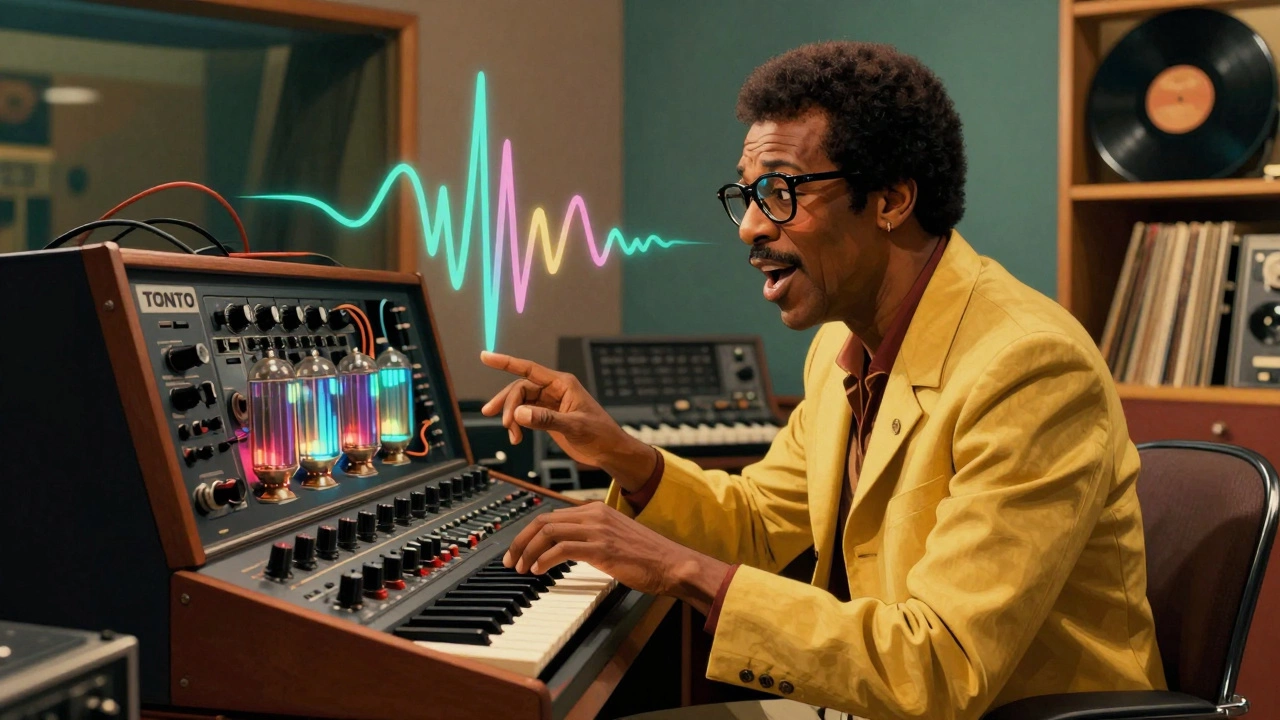
Stevie Wonder was one of the first to grab one. Not because he was chasing trends. He was chasing sound. By 1972, he spent months inside New York’s Record Plant studio, learning how to program the massive TONTO The Original New Timbral Orchestra-a sprawling, multi-module synthesizer system built by two engineers and used by only a handful of artists. He didn’t just play it-he rewired it. On Music of My Mind, he used it to mimic horns, create basslines, and layer voices that didn’t exist in nature. That album didn’t just sound futuristic. It felt like a protest.
And then there was Bernie Worrell.
As the keyboardist for Parliament-Funkadelic, Worrell didn’t just play synths-he turned them into characters. On Chocolate City (1975), he didn’t just sing about urban decay. He sounded like it. The squelching, sliding bassline? That was the ARP 2600 a semi-modular synth with built-in speakers and a filter that could be modulated in real-time, perfect for live experimentation. On Flash Light (1977), he created one of the most sampled basslines in history-not with a bass guitar, but with a Minimoog, its filter opening and closing like a breath, a moan, a cry. That sound wasn’t an effect. It was a voice.
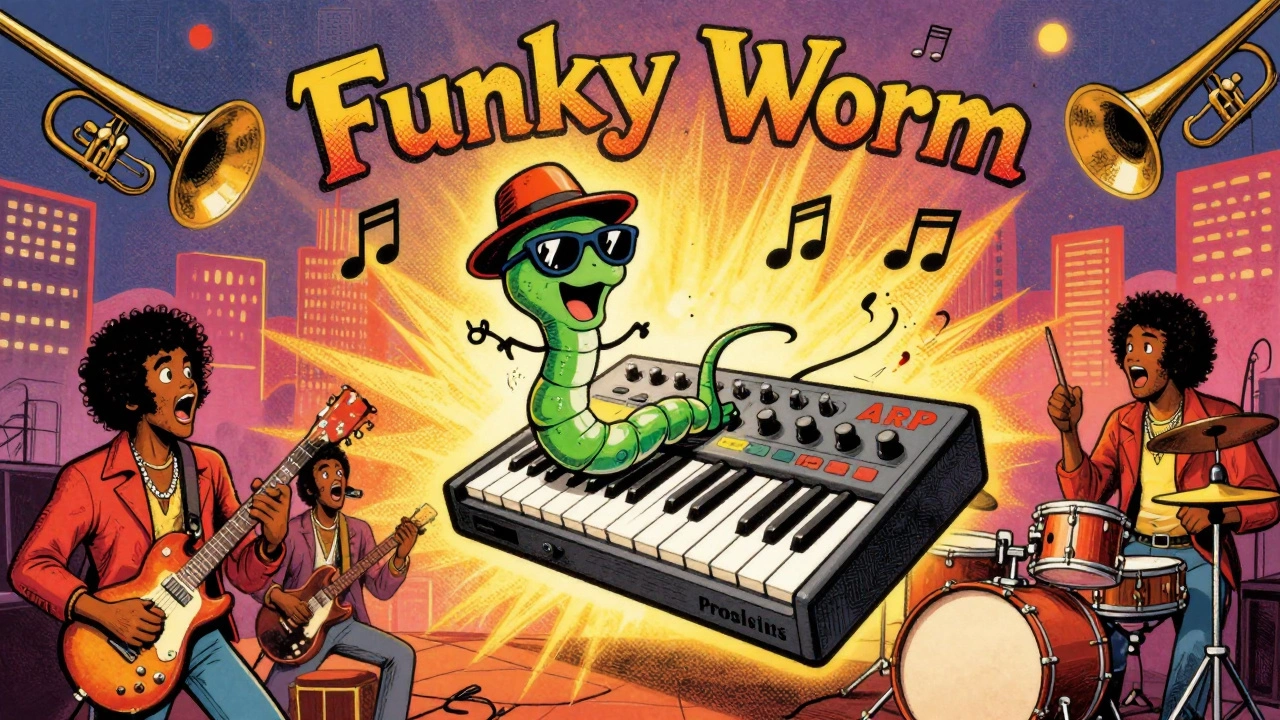
Meanwhile, Ohio Players took a different path. Their 1973 hit Funky Worm was built around a single, bouncy, alien melody. It came from the ARP Pro Soloist a preset-based analog synth with a distinctive lead tone that could cut through a full horn section. The sound was so unique, so unnatural, that listeners didn’t know if it was a horn, a voice, or something from outer space. It didn’t matter. It made you move.
Why did this happen in funk, and not rock? Because rock saw synths as gimmicks. Funk saw them as tools. While rock bands used synths for spacey solos or studio tricks, funk musicians used them to replace, extend, and transform the very foundation of their music: the groove. The electric bass held down the low end. The drums locked in the beat. And the synthesizer? It became the third leg of the stool-adding texture, tension, and emotion where none existed before.
And here’s the thing: these synths were monophonic. Only one note at a time. Most musicians thought that was a flaw. Funk musicians turned it into genius. A single, sliding note could carry more emotion than a full chord. A staccato stab could hit harder than a snare. A filtered sweep could mimic a trumpet’s cry. They didn’t need harmony. They needed movement.
There was no manual. No YouTube tutorial. No online forum. Musicians learned by ear, by trial, by breaking things. Worrell once said he’d spend hours just twisting knobs until the machine screamed back. Stevie Wonder taught himself programming by listening to the sound of his own heartbeat. And in places like the Record Plant in New York or the studio at Electric Lady in Chicago, musicians would gather after hours, swapping tricks like secret spells. One guy showed another how to make the Minimoog growl. Another showed how to use the envelope generator to create a percussive ‘chuck’ that mimicked a cowbell. This wasn’t just music. It was a movement.
And it wasn’t cheap. A Minimoog cost $1,495 in 1970. That’s over $10,500 today. Most funk bands didn’t have that kind of money. So they rented. Studios started offering synth rentals. Bands pooled money. One keyboardist would bring the synth to a session, and everyone else would learn how to use it. By 1973, 40% of top-charting funk albums featured synthesizers. In rock? Only 15%. The difference wasn’t taste. It was vision.
Some critics called it fake. Lester Bangs of Rolling Stone wrote in 1973 that the synthesizer was a “dangerous alienation from the body-based tradition of black music.” He thought it was cold. Soulless. But he was wrong. The imperfections made it human. Synths drifted out of tune. Filters clicked. Knobs slipped. Those glitches weren’t mistakes-they were feel. The slight pitch wobble in a bassline wasn’t a flaw. It was a heartbeat. The way the filter on ‘Flash Light’ wavered as it opened? That wasn’t programming. That was expression.
Dr. Nina Sun Eidsheim, a musicologist at UCLA, put it best: “The synthesizer’s ability to create sounds that defied categorization mirrored the African American experience of existing between categories in American society.” The sound wasn’t just electronic. It was political. When Stevie Wonder sang “Living for the City” and layered a synth line that sounded like sirens, traffic, and a heartbeat all at once, he wasn’t making a song. He was making a map. A map of pain, resilience, and survival.
By the late 1970s, the blueprint was set. The Minimoog bassline. The ARP lead. The filter sweep that opened like a door. These sounds didn’t disappear. They got sampled. They got looped. They got replayed. The 2020 Grammy tribute to Parliament-Funkadelic wasn’t nostalgia. It was recognition. The ARP Pro Soloist used on ‘Funky Worm’ and other hits now sits in the Smithsonian’s National Museum of African American History and Culture. Why? Because it’s not just an instrument. It’s a relic of resistance.
Today, when you hear a trap beat with a filtered synth stab, or a D’Angelo track with a moaning bassline, or Anderson .Paak’s live shows with analog synths weaving through the horns-you’re hearing 1970s funk. Over 1,200 samples from ‘Flash Light’ alone have been used in hip-hop, R&B, and EDM. The sound didn’t fade. It multiplied.
These machines didn’t replace the groove. They deepened it. They didn’t make funk less black. They made it more black. Because in the hands of Stevie Wonder, Bernie Worrell, and others, the synthesizer became more than a tool. It became a trumpet for the unheard. A voice for the unseen. A sound that said: We built this. We own this. And we’re not done yet.
How Early Synthesizers Changed Funk Music
The three main synthesizers that defined early electronic funk each had unique traits that shaped the genre:
| Model | Key Features | Used By | Signature Sound |
|---|---|---|---|
| Minimoog Model D | 3 oscillators, noise generator, resonant filter, portable (45 lbs) | Stevie Wonder, Bernie Worrell | Warm, fat basslines; expressive filter sweeps |
| ARP 2600 | Semi-modular, built-in speakers, real-time modulation | Bernie Worrell, Parliament-Funkadelic | Growling bass, vocal-like leads, live performance flexibility |
| ARP Pro Soloist | Preset-based, monophonic, bright lead tone | Ohio Players | ‘Funky Worm’ melody; piercing, alien lead lines |
Each of these instruments solved a different problem. The Minimoog brought portability. The ARP 2600 brought flexibility. The Pro Soloist brought instant, iconic tones. Together, they gave funk musicians the tools to build a new sonic language.
Why Synthesizers Fit Funk Perfectly
Traditional funk relied on tight, interlocking rhythms: bass, drums, guitar, horns. Synthesizers didn’t compete with that. They enhanced it.
- Timbral contrast: While horns and bass occupied mid and low frequencies, synths carved out space in the upper mids and highs-creating clarity without clutter.
- Dynamic control: A single knob could turn a bassline from a whisper to a roar, something no electric bass could do.
- Live improvisation: Unlike tape-based instruments like the Mellotron, synths responded instantly to touch, allowing musicians to bend notes, slide, and modulate on the fly.
- Emotional depth: The instability of analog circuits-slight pitch drift, filter noise-added a human, imperfect quality that matched the raw emotion of funk lyrics.
It wasn’t about replacing instruments. It was about expanding the language of rhythm.
Legacy That Still Moves the World
Modern producers don’t just sample ‘Flash Light.’ They study it. The way the filter opens slowly, then cuts off sharply? That’s now called a ‘funk sweep.’ The way the bassline locks with the kick drum, but doesn’t overlap? That’s called ‘synth-bass spacing.’ These aren’t just techniques. They’re rules.
When D’Angelo layers a Minimoog bass under ‘Untitled (How Does It Feel),’ he’s not being retro. He’s being faithful. When Anderson .Paak uses a live ARP 2600 in concert, he’s not doing a tribute. He’s continuing a lineage.
The same sounds that once defined ‘Chocolate City’ now pulse through trap beats, future bass, and neo-soul. The synthesizer didn’t kill funk. It gave it wings. And those wings are still beating.
What was the first funk song to use a synthesizer?
While earlier experiments existed, Stevie Wonder’s 1972 album Music of My Mind is widely considered the first major funk/soul release to feature synthesizers as central instruments rather than background textures. Tracks like ‘Superwoman (Where Were You When I Needed You)’ and ‘Love’s in Need of Love Today’ used the TONTO synthesizer to create layered, evolving soundscapes that defined the album’s futuristic feel.
Why did funk musicians prefer analog synths over digital ones?
Digital synths like the RMI Keyboard Computer (1974) were cold, precise, and lacked the warmth and unpredictability of analog circuits. Funk thrived on imperfection-slight pitch wobbles, filter drift, and tactile control. Analog synths responded to touch and pressure in ways digital ones couldn’t, making them ideal for expressive, groove-based music. The ‘human’ feel of analog was non-negotiable.
How did Bernie Worrell create the bassline for ‘Flash Light’?
Worrell used a Minimoog Model D with a custom patch that combined a low-frequency oscillator with a resonant filter. He played a simple root-note line, then modulated the filter cutoff with his hand on the knob during performance, creating a ‘wah’ effect that mimicked a muted trumpet. The result was a bassline that moved like a living thing-tight, groovy, and unmistakably human.
Were synthesizers accepted by the black music community?
Initially, no. Some critics and elders dismissed them as ‘white tech’ or ‘not real music.’ But pioneers like Wonder and Worrell pushed back by using synths to express black experiences-urban struggle, political anger, futuristic hope. Within a few years, the sound became so powerful, so unmistakably rooted in black expression, that resistance faded. The instrument didn’t change. The perception did.
Is the Minimoog still used in modern funk?
Absolutely. Modern funk revivalists like The Internet, Leon Bridges, and even Beyoncé’s live band use vintage Minimoogs or software emulations of them. The sound is so iconic that producers often seek out original 1970s units for their unique circuitry and warmth. Software can mimic it-but it can’t replicate the history.