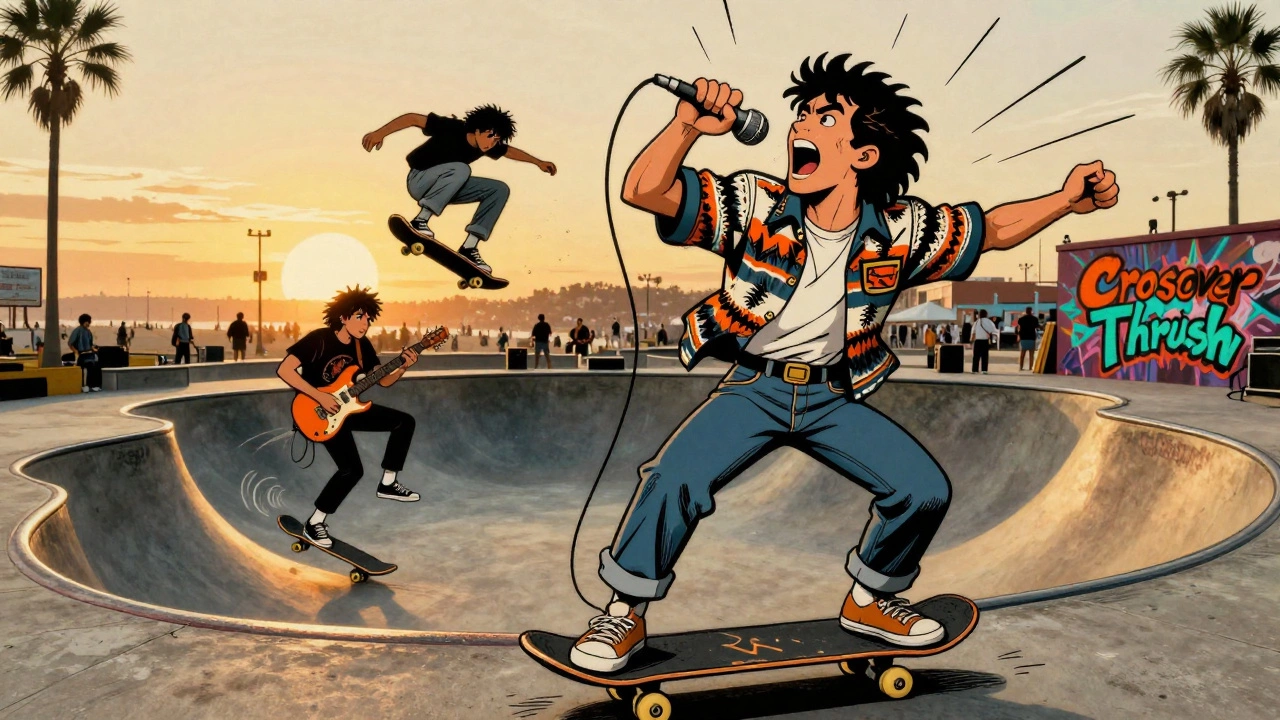

Before there was Metallica playing with skate kids or Slayer headlining punk clubs, there was Suicidal Tendencies an American band that fused the raw energy of hardcore punk with the heavy riffs of thrash metal, creating a new sound called crossover thrash. Their 1983 self-titled debut didn’t just drop an album-it dropped a bomb on the music scene. No one expected a band from Venice Beach, California, to change the game. But they did.
Back then, punk was all about safety pins, shaved heads, and DIY ethics. Metal was loud, flashy, and distant. Suicidal Tendencies refused to pick one. They wore Pendleton shirts and Dickies, not leather jackets. They skated. They fought. They didn’t care if you called them thugs. Their music didn’t either.
The Venice Beach Roots That Shaped a Sound
Mike Muir didn’t start the band to be famous. He started it because he was bored. A student at Santa Monica College, he grew up in Dogtown-the gritty, sun-baked stretch of Venice where skateboarding, surfing, and street life collided. His older brother, Jim Muir, was one of the original Z-Boys, the crew that invented modern skate culture. That meant Suicidal Tendencies wasn’t just a band. It was a lifestyle.
The early lineup was rough: Mike Ball on guitar, Carlos "Egie" Egert on drums, Mike Dunnigan on bass. They played house parties, skate parks, and dive bars. No one took them seriously. Flipside magazine even voted them "Worst Band/Biggest Assholes" in 1982. But a year later? They won "Best New Band." Why? Because people couldn’t look away.
Concerts were chaos. Fights broke out. Police showed up. Rumors spread that the band had gang ties. Some members did have connections to local street groups. But the band never claimed any affiliation. They just lived like the kids around them-no filters, no apologies. That honesty stuck. It made their music feel real.
The Album That Broke the Rules
Frontier Records, a punk label known for Circle Jerks and Adolescents, took a chance on them in 1983. The result? Suicidal Tendencies, a 12-track explosion that sounded like nothing else.
Most hardcore punk bands stuck to fast, simple songs with shouted lyrics. Suicidal Tendencies did that-but they added something else: groove. Bass lines moved. Guitars chugged with weight. The drums didn’t just blast-they locked in. It wasn’t pure punk. It wasn’t metal yet. It was something new.
The standout? "Institutionalized." A seven-minute epic that started as a rant about being misunderstood by your parents and ended with a full-on scream: "I’m not crazy! I’m just not like you!" The song was raw, funny, and terrifying. It spoke to every kid who felt trapped-by school, by family, by society.
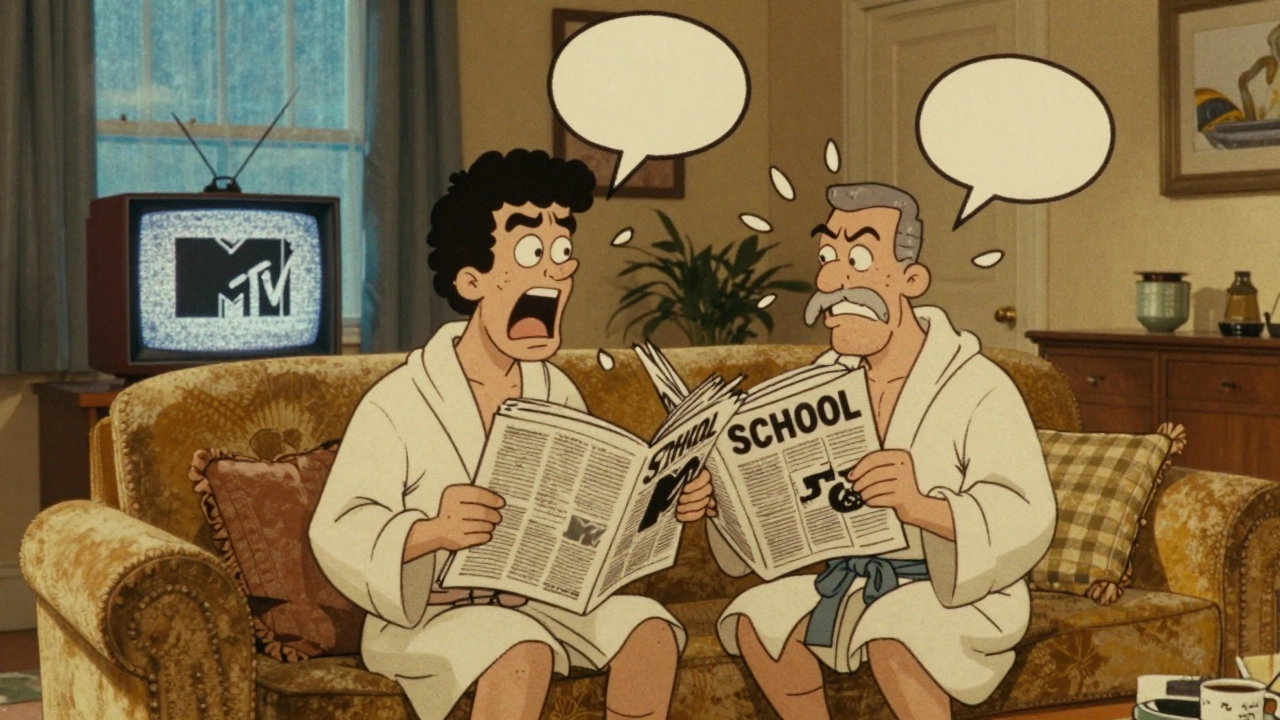
And then it went on MTV. Not because it was polished. But because it was real. The video showed Muir in a white shirt, sitting on a couch, yelling at his dad. No fancy effects. No lights. Just truth. It got heavy rotation. Suddenly, kids who’d never listened to punk were watching it. Metal fans started noticing too.
The Shift: When Punk Met Metal
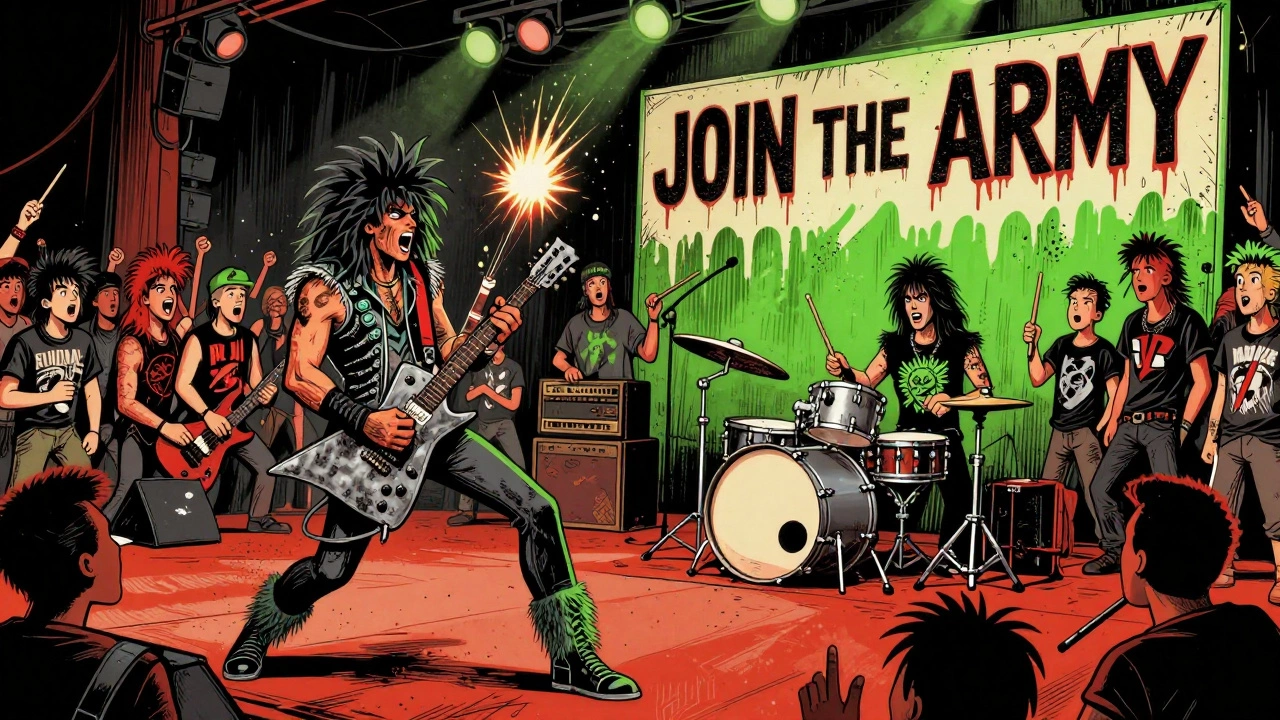
By 1987, the original band was gone. Only Muir remained. The new lineup? Rocky George on guitar and R.J. Herrera on drums. George didn’t play punk. He played metal. Fast, technical, shredding solos. He made the guitars scream.
Their second album, Join the Army, dropped with a thud. Longtime punk fans were furious. "This isn’t punk!" they yelled. But the metalheads? They loved it. The title track had a crushing riff. "War Inside My Head" was a mosh pit anthem. "Possessed to Skate"? A skate video dream.
That album didn’t just change the band-it changed music. For the first time, a hardcore punk band had fully embraced metal without losing its soul. The fusion wasn’t a gimmick. It was natural. George’s solos didn’t feel out of place. They felt inevitable.
By then, Suicidal Tendencies had become the bridge between two worlds. Punk kids came for the energy. Metal kids came for the riffs. And both sides started showing up at each other’s shows.
The Crossover That Changed Everything
Before Suicidal Tendencies, punk and metal were enemies. Punk saw metal as sellouts. Metal saw punk as amateurs. The band didn’t care. They played fast, heavy, and loud. They didn’t need approval.
When they signed with Epic Records in 1987, it was a sign: this wasn’t underground anymore. Their 1988 album, How Will I Laugh Tomorrow When I Can’t Even Smile Today, was pure thrash. Complex structures. Double bass drums. Harmonized leads. But Muir’s voice still screamed like a kid on the edge. The punk heart was still there.
They weren’t the first to mix genres. But they were the first to make it stick. Other bands noticed. Exodus, Anthrax, and later Sepultura all took notes. The genre got a name: crossover thrash. And Suicidal Tendencies? They were the blueprint.
Why They Still Matter
Today, bands like Trivium, Lamb of God, and even early Slipknot owe something to this band. Not because they copied the sound. But because they proved you didn’t have to choose.
You could be angry. You could be smart. You could skate and still headbang. You could wear Dickies and shred a solo. You could be from the streets and still make a record that changed music.
Suicidal Tendencies didn’t just make music. They made a movement. They showed that rebellion doesn’t come from a uniform. It comes from being yourself-even if that means being called a mess, a freak, or a thug.
"Institutionalized" is still played at punk shows. Metal festivals still close sets with "Join the Army." And every time a kid picks up a guitar and blends speed with soul, they’re channeling what this band started in a garage in Venice in 1980.
Was Suicidal Tendencies really a gang-affiliated band?
No. While rumors claimed band members had gang ties, none officially belonged to any gang. The violence at their shows came from fans, not the band. Their image-Pendleton shirts, Dickies, and skate culture-was rooted in Venice Beach street life, not organized crime. The media amplified the rumors because it made a better story. The band always denied any formal affiliation.
What made "Institutionalized" so popular?
"Institutionalized" struck a nerve because it was brutally honest. It wasn’t about politics or rebellion-it was about being misunderstood. The song’s structure was unusual: slow, spoken-word verses building to a screaming chorus. The MTV video, showing Muir arguing with his dad in a living room, made it relatable. It wasn’t glam. It wasn’t polished. It was real. That’s why it went viral before viral was a thing.
Did Suicidal Tendencies invent crossover thrash?
They didn’t invent the idea, but they perfected it. Bands like D.R.I. and Cryptic Slaughter mixed punk and metal earlier. But Suicidal Tendencies made the blend work on a massive scale. With Rocky George’s metal guitar work and Muir’s intense delivery, they created songs that appealed to both punk and metal crowds. Their 1987 album Join the Army is widely credited as the moment crossover thrash became a real genre.
Why did Frontier Records sign them despite their reputation?
Frontier Records had a history of signing raw, controversial punk acts like Circle Jerks. They didn’t care about image-they cared about energy. Suicidal Tendencies had that in spades. Their demo, especially "I Saw Your Mommy," showed a unique sound. Even with the violence and rumors, the music was undeniable. Frontier saw potential, not problems.
How did Suicidal Tendencies influence later bands?
They gave permission to blend genres. Bands like Pantera, Lamb of God, and even early Slipknot took cues from their mix of punk aggression and metal precision. Their success proved you could be heavy and still have a message. Their influence shows in bands that don’t fit neatly into one category-those that scream, groove, and shred all in the same song.


