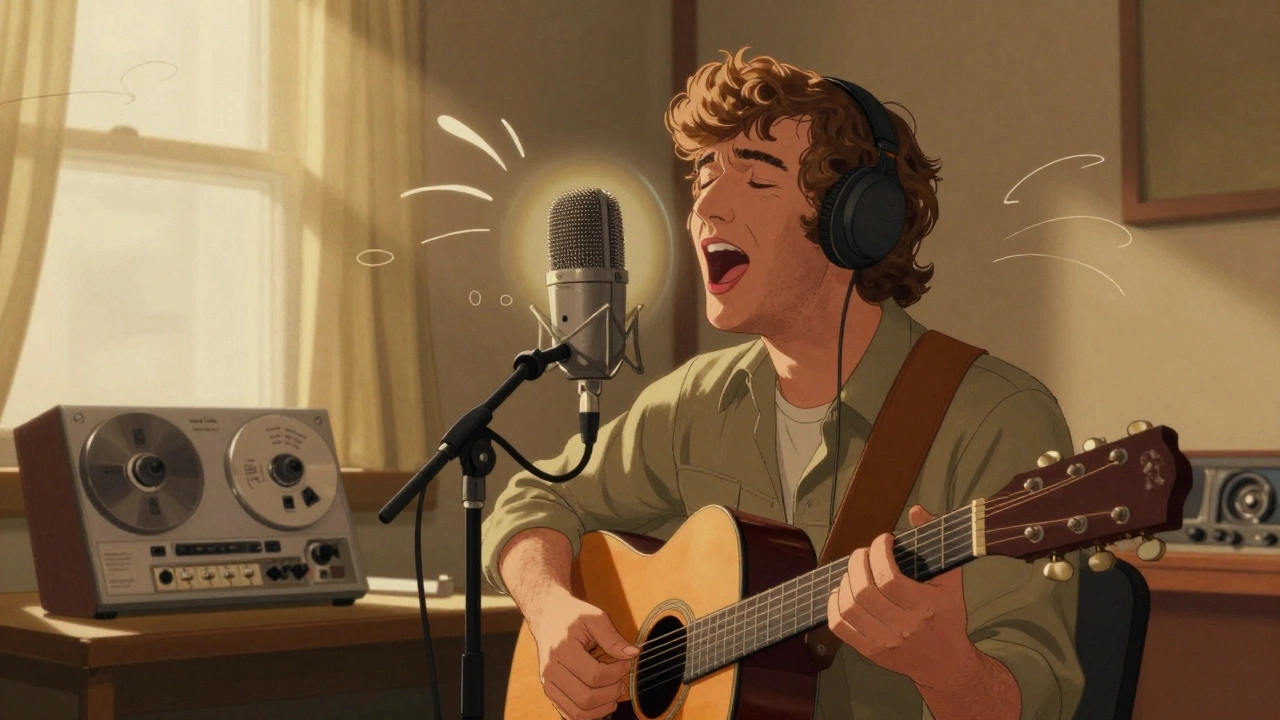

Back in the 1970s, a solo artist didn’t need a full band, fancy software, or 100 vocal takes to make something unforgettable. They just needed a microphone, a tape machine, and the courage to sing like no one was listening-even when the whole world was. The magic wasn’t in the gear. It was in the intimacy.
Why Intimacy Was the Point, Not the Problem
Today, we think of recording as a process of fixing things: comping takes, tuning pitches, stacking harmonies, automating volume. In the 1970s, if you wanted to fix something, you had to sing it again. There was no undo button. No clip gain. No pitch correction. What you got was what you gave-and if you gave emotion, it stuck. Artists like Joni Mitchell, James Taylor, and Nick Drake didn’t record because they had unlimited time or money. They recorded because they had to. Studio time at places like Sound Techniques in London or The Record Plant in L.A. cost $150 an hour in 1975-that’s over $850 today. You didn’t waste it. You showed up ready. You sang until it felt true. And when it did, the tape captured it all: the breath between phrases, the crack in the voice when the memory hit too hard, the way a finger slid off a guitar string just a little too late.The Gear Was Simple. The Constraints Were Powerful.
Most solo artists worked on 4-track or 8-track tape machines. The Sony TC-800B, one of the most respected 8-tracks of the era, cost $12,500 in 1971-roughly $85,000 today. That’s a lot for one person. So they made every track count. A typical setup for a singer-songwriter might look like this:- One Neumann U47 or U67 microphone-placed 6 to 12 inches from the singer’s mouth
- One acoustic guitar, recorded with the same mic or a second one
- One track for light percussion-handclaps, tambourine, or a single brush on a snare
- One track for harmony vocals, recorded live with the lead
The Sound Wasn’t Engineered. It Was Grown.
Modern producers chase “warmth” with plugins. Back then, warmth came from tape. At 15 inches per second, analog tape naturally saturated. It didn’t just compress-it softened transients, rounded off harsh frequencies, and added subtle even-order harmonics. That’s why Nick Drake’s voice on Pink Moon sounds so close, so alive. It wasn’t processed. It was captured. Tape saturation added 0.3% to 0.5% harmonic distortion. That’s less than what your phone adds when you record a voice memo. But in the context of a quiet room, a single mic, and a singer pouring everything out, that tiny bit of analog grit made all the difference. Engineers didn’t use compression to control dynamics-they trained singers to. If a line was too quiet, the singer moved closer. Too loud? They pulled back. No plugins. No automation. Just breath, body, and intention.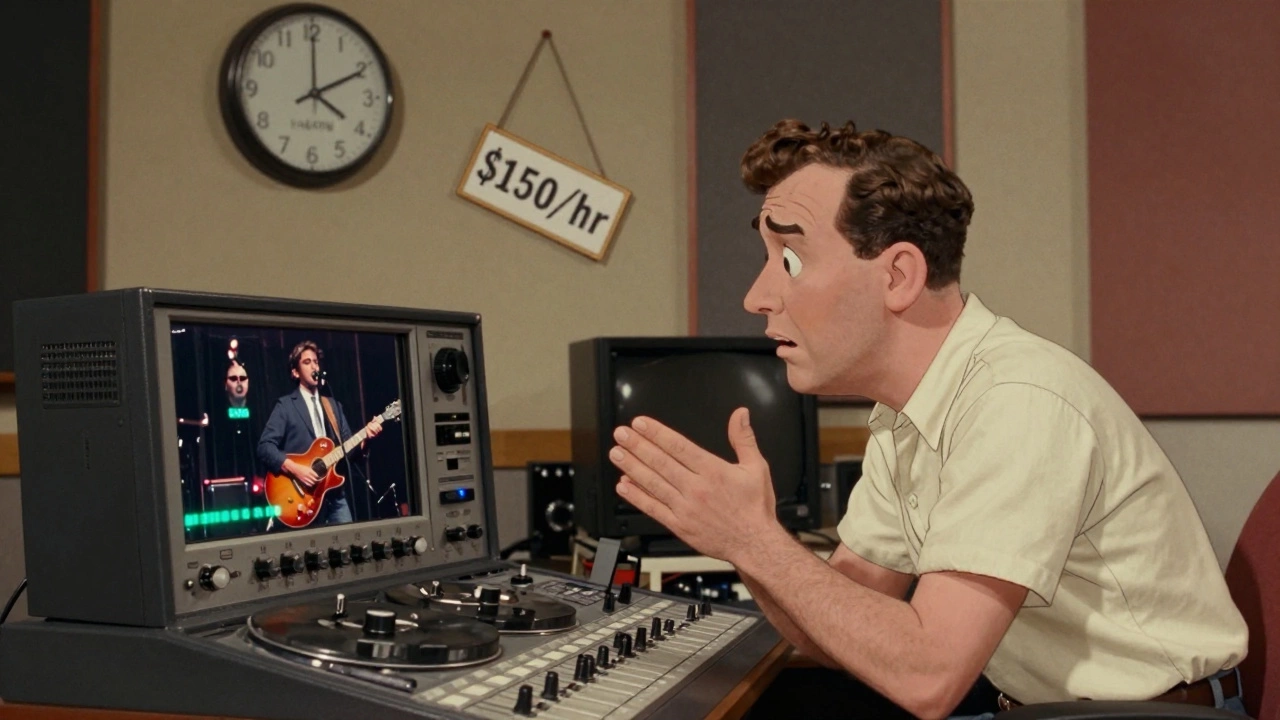
Why It Feels Different Today
Try this: listen to Joni Mitchell’s Blue and then listen to a modern indie pop track with the same acoustic guitar and vocal setup. The difference isn’t in the notes. It’s in the silence. On Blue, you hear the creak of the chair she’s sitting on. You hear the rustle of her sleeve as she shifts. You hear the air move before she sings. Modern recordings often remove all of that. They clean it up. They make it perfect. But perfection doesn’t connect. Authenticity does. A 2020 study from the Journal of the Audio Engineering Society found that 73% of listeners preferred 1970s-style vocal recordings for emotional connection-even when the technical quality was lower. Why? Because the voice sounded human. Not polished. Not corrected. Just real.What Modern Artists Get Right (and Wrong)
Today, you can buy a plugin that emulates a Neumann U47, a Helios console, and a Studer A800 tape machine for under $300. Universal Audio’s 70s Studio Collection, released in 2024, uses machine learning to replicate the non-linear distortion of analog gear. It sounds good. Really good. But here’s the catch: most people use these tools to fix their recordings, not to change their approach. They still record 50 vocal takes. They still comp the best 3. They still use noise gates to kill every breath. They still EQ the life out of the vocal to make it sit “perfectly” in the mix. That’s not 1970s production. That’s digital production with vintage filters. The real lesson? Stop trying to recreate the sound. Start recreating the mindset.How to Try It Yourself (Without a $20,000 Mic)
You don’t need a U47. You don’t need tape. But you do need to change how you record. Here’s how to start:- Use one microphone. Any decent condenser will do. Place it 8 inches from your mouth.
- Record the whole song in one take. No stopping. No retakes. If you mess up, keep going.
- Don’t use compression. Don’t use EQ. Just record the raw signal.
- Let the room breathe. Don’t isolate the mic. Record in a quiet room with some natural reverb-like a bathroom or a carpeted bedroom.
- After recording, listen back. If you feel something, you’re on the right track.
The Real Cost of the 70s Approach
Let’s be honest: this wasn’t magic. It was pressure. Studio time was expensive. Union rules limited how long you could record. If you didn’t deliver, you lost the session. That’s why so many artists were terrified. Critic Jim Aikin pointed out in 2022 that these methods excluded most working-class musicians. A $150/hour studio was out of reach for 92% of aspiring artists. The “intimate” sound wasn’t born from artistic purity-it was born from necessity. But here’s the twist: that necessity created something beautiful. It forced artists to focus on what mattered: the song, the feeling, the moment. Today, we have unlimited time. Unlimited takes. Unlimited tracks. And yet, so many recordings feel empty.Why This Still Matters in 2026
The music market is flooded. Every day, thousands of songs are uploaded. Algorithms decide what gets heard. Trends change faster than seasons. In that noise, the only thing that stands out is authenticity. A 2023 survey by Audiofanzine found that 68% of independent producers now use at least one 1970s-style technique in their solo vocal work. Why? Because listeners can tell the difference. They don’t care if your vocal is perfectly tuned. They care if it makes them feel something. The analog revival isn’t about nostalgia. It’s about rebellion. Rebellion against perfection. Against overproduction. Against the idea that music has to be flawless to be meaningful. The 1970s taught us that the most powerful instrument isn’t the mic, the tape machine, or the console. It’s the human voice when it’s not afraid to break.Final Thought: Don’t Copy the Gear. Copy the Courage
Veteran engineer Tom Dowd once said: “It wasn’t a technique-it was a necessity. We did what we had to with what we had, and sometimes magic happened. Don’t confuse our limitations with your choices.” You don’t need a 1970s studio to make a 1970s record. You just need to stop trying to fix everything. Stop hiding behind edits. Stop waiting for the perfect take. Sing like you’re alone in the room. Sing like no one will ever hear it. Then press record. That’s the only trick that ever worked.Can I replicate 1970s intimate recording with modern gear?
Yes, but not with plugins alone. You need to change how you record. Use one mic, limit your tracks, record live takes, and avoid over-processing. Plugins can add warmth, but they can’t replace the emotional commitment that defined the era.
Do I need a Neumann U47 to get that 70s vocal sound?
No. While the U47 and U67 were iconic, many artists used cheaper mics like the Shure SM57 or even ribbon mics. What mattered was proximity, performance, and room acoustics. A decent modern condenser mic placed 8 inches from your mouth will do more than a $20,000 mic used poorly.
Why do 70s recordings sound warmer than modern ones?
Tape saturation. Analog consoles. Minimal processing. The signal chain was simple: mic → preamp → tape → console. Each stage added subtle harmonic distortion and natural compression. Modern digital recordings are cleaner, but that cleanliness removes the organic texture that makes voices feel alive.
Was this approach only for folk and singer-songwriters?
Mostly. Singer-songwriters made up 78% of solo releases using 8-track or fewer recorders between 1975 and 1979. Pop and disco artists used more tracks and more musicians. The intimate approach thrived where emotion outweighed spectacle.
Is this approach practical for today’s home studio?
Absolutely. You don’t need tape machines or vintage consoles. You need discipline. Record one take. Use one mic. Don’t fix it. Let it be imperfect. That’s where the soul lives. Many modern indie artists are finding success this way because listeners are tired of overproduced music.