
Three Labels, Three Sounds, One Legacy
When you think of classic soul music, you don’t just hear songs-you hear a story. The sound of Motown is polished, bright, and made to move across radio waves into white living rooms. Stax is raw, sweaty, and rooted in the back pews of Memphis churches. Philadelphia International? That’s velvet strings, layered harmonies, and a groove so smooth it feels like silk on your skin. These weren’t just record labels. They were factories of culture, each with its own rules, its own rhythm, and its own way of turning Black art into national obsession.
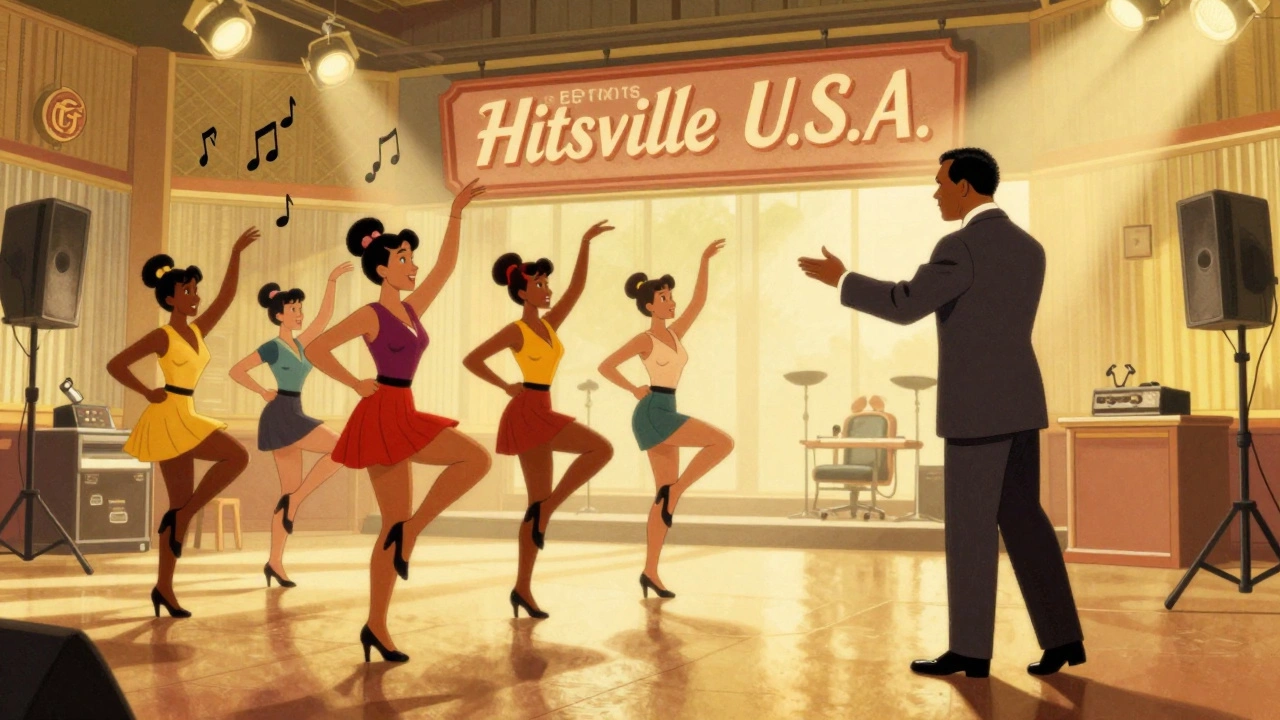
Motown Records didn’t just release music. It built a machine. Berry Gordy started it in 1959 with $800 from his family, turning a small Detroit house into Hitsville U.S.A. He didn’t want artists to just sing-he wanted them to perform, to move, to look perfect. Artists like The Supremes and Marvin Gaye went through daily training: three hours of choreography, two hours of vocal coaching, public speaking lessons, even etiquette drills. Gordy didn’t just produce hits-he produced icons. Between 1960 and 1969, Motown scored 110 top 10 hits on the Billboard Hot 100. Seventy-nine of those crossed over into the pop charts. That kind of dominance didn’t happen by accident. It happened because Gordy controlled everything: songwriting, production, image, even who got to sing lead.
But that control came at a price. Songwriters Holland-Dozier-Holland, who wrote nearly a quarter of Motown’s biggest hits between 1963 and 1967, walked away in 1967 after fighting for higher royalties. The Supremes clashed over billing. Artists weren’t allowed to choose their own material. Gordy’s system worked-brilliantly-but it felt like a cage. One fan put it simply on a soul music forum: “Motown felt like a factory. You didn’t just make music-you followed a manual.”
Stax: The Sound That Didn’t Care About the Rules
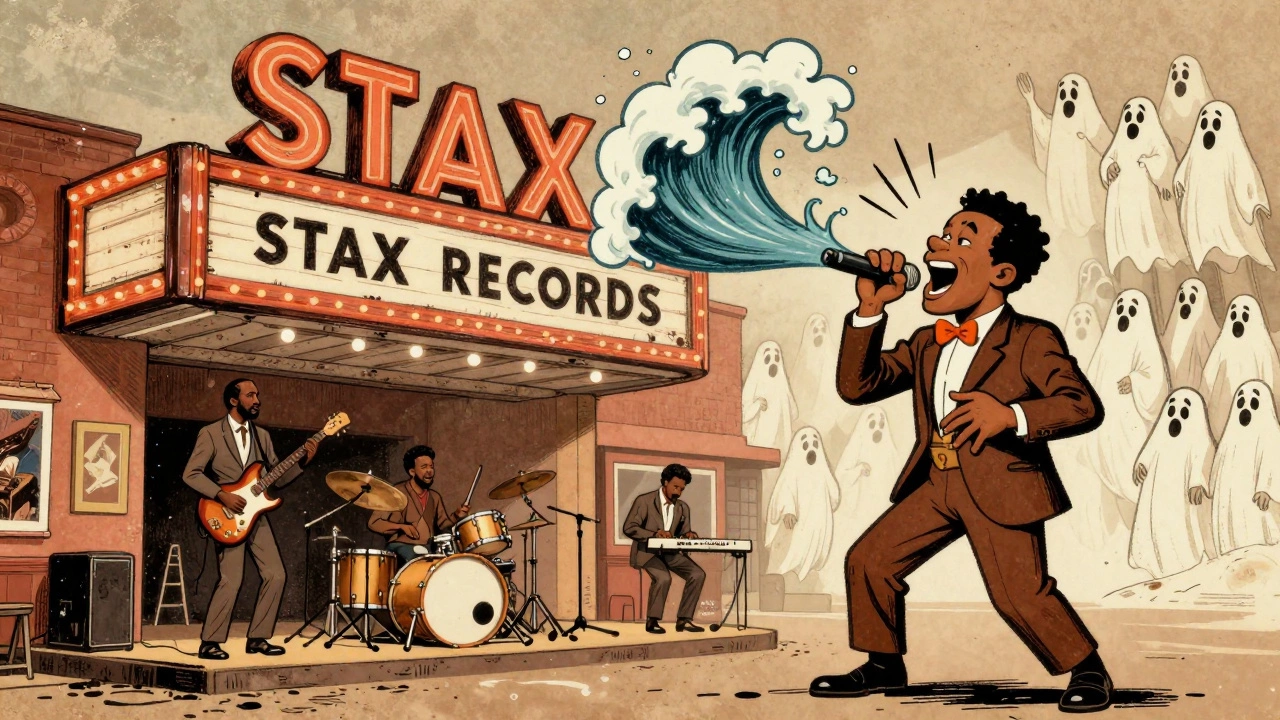
Just a few hundred miles south, in a converted movie theater in Memphis, Stax Records was doing something completely different. Founded in 1957 by Jim Stewart and his sister Estelle Axton, Stax didn’t have fancy studios or corporate backing. It had a house band-Booker T. and the MGs-who played on about 70% of its releases. Steve Cropper’s guitar, Donald “Duck” Dunn’s bass, Al Jackson Jr.’s drums-they didn’t just back up singers. They *were* the soul. Otis Redding, Isaac Hayes, Sam & Dave-they didn’t need polish. They needed feeling. And Stax gave them room to breathe.
The music was gritty. It had the ache of the Delta, the punch of gospel, and the swing of R&B. You could hear the sweat on Otis’s voice in “Try a Little Tenderness.” You could feel the church in Eddie Floyd’s “Knock on Wood.” There was no corporate filter. No choreography team. No image consultants. Just musicians playing together in the same room, live, often in one take. One Reddit user summed it up: “Stax felt like family-no fancy studios, just raw talent in a converted movie theater.”
But that authenticity came with a dark side. After Atlantic Records cut off their distribution deal in 1968, Stax signed a $4 million deal with Gulf & Western-a move that seemed like salvation but turned into a trap. Corporate oversight replaced creative freedom. By 1975, Stax was bankrupt after being found guilty of 13 counts of tax fraud and misuse of funds. The label’s downfall wasn’t because it made bad music. It was because it didn’t have the business structure to survive.
Philadelphia International: The Sophisticated Successor
By the time Kenneth Gamble and Leon Huff launched Philadelphia International Records in 1971, Motown’s shine was fading, and Stax was crumbling. But PIR didn’t try to be either. It wanted to be better. With Thom Bell’s lush orchestral arrangements, Gamble and Huff’s tight songwriting, and Sigma Sound Studios’ live-tracking method, they created what became known as Philly Soul: smooth, sophisticated, and deeply emotional.
Where Motown was about control and Stax was about chaos, PIR was about balance. Artists like The O’Jays, Teddy Pendergrass, and The Stylistics weren’t forced into molds. They were treated like partners. Royalties were fair-12 to 15%, compared to Motown’s 3%. Artists were given creative input. Pendergrass didn’t just sing “If You Don’t Know Me by Now”-he helped shape it. And because PIR was distributed by CBS Records, they didn’t have to fight for shelf space. They just made hits.
Between 1972 and 1973, PIR had 16 consecutive top 10 R&B hits. They dominated the charts. But here’s the strange part: even though they outsold Motown in the 1970s, they never got the same cultural reverence. Why? Because Motown had to break barriers. It had to force white America to listen. PIR walked in after those doors were already open. As one analyst put it: “Motown paved the road. PIR just drove faster.”

Who Won? No One-And Everyone
It’s easy to rank them: Motown had the most hits. Stax had the deepest soul. PIR had the best arrangements. But that’s not how legacy works.
Motown didn’t just sell records. It changed how the world saw Black artists. Before Motown, Black musicians were often confined to niche markets. Gordy made them undeniable. He made Diana Ross a star, not just a singer. He made Marvin Gaye a poet. He made Black excellence non-negotiable on pop radio.
Stax didn’t need radio dominance. It had authenticity. In a time when Black music was being sanitized for mass appeal, Stax kept the fire alive. Its music spoke to the real struggles, the real joys, the real church and street life of Black America. Even today, when hip-hop producers sample “(You Make Me Feel Like) A Natural Woman” or “Soul Man,” they’re reaching back to Stax’s raw energy.
Philadelphia International? It proved soul could be both elegant and powerful. Its sound lives in today’s R&B-think D’Angelo, Maxwell, even The Weeknd. The layered harmonies, the string swells, the emotional delivery-those didn’t come from nowhere. They came from Gamble and Huff’s studio.
Today, their catalogs still move millions. Motown generates 1.2 billion annual streams on Spotify. Stax clocks 850 million. PIR sits at 720 million. That’s not nostalgia. That’s influence.
Legacy in the Present
The Stax Museum in Memphis draws 100,000 visitors a year. The Stax Music Academy teaches kids in the same building where Otis Redding once recorded. Gamble and Huff still perform. In 2022, Huff released “Together Again” with The O’Jays-proof that the Philly Soul sound hasn’t aged a day. Motown’s catalog, now under Universal, still appears in films, commercials, and TV shows. Every time a hip-hop track lifts a bassline from “Papa Was a Rollin’ Stone” or a vocal hook from “I Heard It Through the Grapevine,” those labels are still alive.
They didn’t just make music. They built worlds. One told the world how to see Black art. One reminded it where that art came from. The other showed what it could become. You don’t have to pick a favorite. You just have to listen.
Why is Motown more famous than Stax or Philadelphia International?
Motown became more famous because it broke into mainstream pop culture first. Berry Gordy designed his label to cross over-to make Black music palatable to white audiences in the 1960s. He controlled everything: image, sound, marketing. That strategy worked. Motown had 79 top 10 pop hits between 1960 and 1969. Stax and PIR didn’t have that same level of corporate backing or crossover focus. Stax was more rooted in Southern Black communities, and PIR, though hugely successful, entered the scene after Motown had already set the standard. Motown’s legacy is tied to cultural breakthroughs, not just music.
Did Stax artists get paid fairly?
Early on, yes. Stax artists were paid better than many other labels at the time, and many were given creative freedom. But after Gulf & Western bought Stax in 1969, things changed. The label’s financial management collapsed. Founders Jim Stewart and Al Bell received $75,000 annual salaries, but the company misused funds, leading to tax fraud charges and bankruptcy by 1975. Many artists were left without royalties. So while Stax treated artists well creatively, its business practices ultimately failed them.
What made Philadelphia International’s sound different?
Philly Soul was defined by orchestration. Producer Thom Bell used full string sections, horn arrangements, and layered backing vocals to create a lush, cinematic feel. Unlike Motown’s tight, punchy rhythm sections or Stax’s raw, bluesy grooves, PIR recordings were often tracked live in one take at Sigma Sound Studios, giving them a warm, natural sound. Gamble and Huff’s songwriting focused on emotional storytelling-songs like “Love Train” and “Backstabbers” felt like mini-movies. This sophistication appealed to urban audiences and set a new standard for R&B production.
How did Motown’s royalty system compare to the others?
Motown paid artists only 3% of record sales-about $0.08 per album when albums sold for $2.69. That was far below industry standards. Stax offered better terms early on, and PIR paid 12-15%, which was considered fair and transparent. Motown’s low royalties were part of a larger control system: artists signed away rights in exchange for training, promotion, and exposure. But many, like Holland-Dozier-Holland, left because they felt exploited. PIR’s higher pay and creative freedom made it more artist-friendly.
Are these labels still active today?
None operate as independent labels anymore. Motown is owned by Universal Music Group. Stax’s catalog is managed by Concord, and its legacy is preserved through the Stax Museum and Music Academy in Memphis. Philadelphia International’s catalog is under Sony Music. But their music is more alive than ever. All three labels are heavily sampled in hip-hop, featured in films, and streamed in the millions. Gamble and Huff still perform. The Stax Music Academy trains new generations. Their influence isn’t in the business-it’s in the sound.


