

Imagine a sound that doesn’t shout. It doesn’t rush. It lingers - like mist over a fjord at dawn, or the echo of a single piano note in an empty church. This is the sound ECM Records made famous. Not because it was loud. Not because it was trendy. But because it was honest.
Founded in 1969 by German producer Manfred Eicher, ECM wasn’t built to chase charts. It was built to capture silence as much as sound. The label’s motto - "the most beautiful sound next to silence" - wasn’t poetic fluff. It was a recording philosophy. And nowhere did this philosophy take root more deeply than in Scandinavia.
The Quiet Revolution
In the 1970s, jazz was either swinging hard in New York or exploding into fusion with electric guitars and drum machines. ECM did neither. Instead, it found musicians in Norway and Sweden who were already moving differently. They weren’t rejecting jazz - they were reimagining it. With space. With stillness. With emotion that didn’t need to scream to be felt.
Terje Rypdal, a Norwegian guitarist, recorded his first album for ECM in 1971. His playing wasn’t flashy. It was atmospheric. Long, singing lines that bent like wind through pine trees. He didn’t play to impress. He played to reveal. By the time he released his final ECM album in 2013, he had made twelve. Each one deeper, quieter, more haunting than the last.
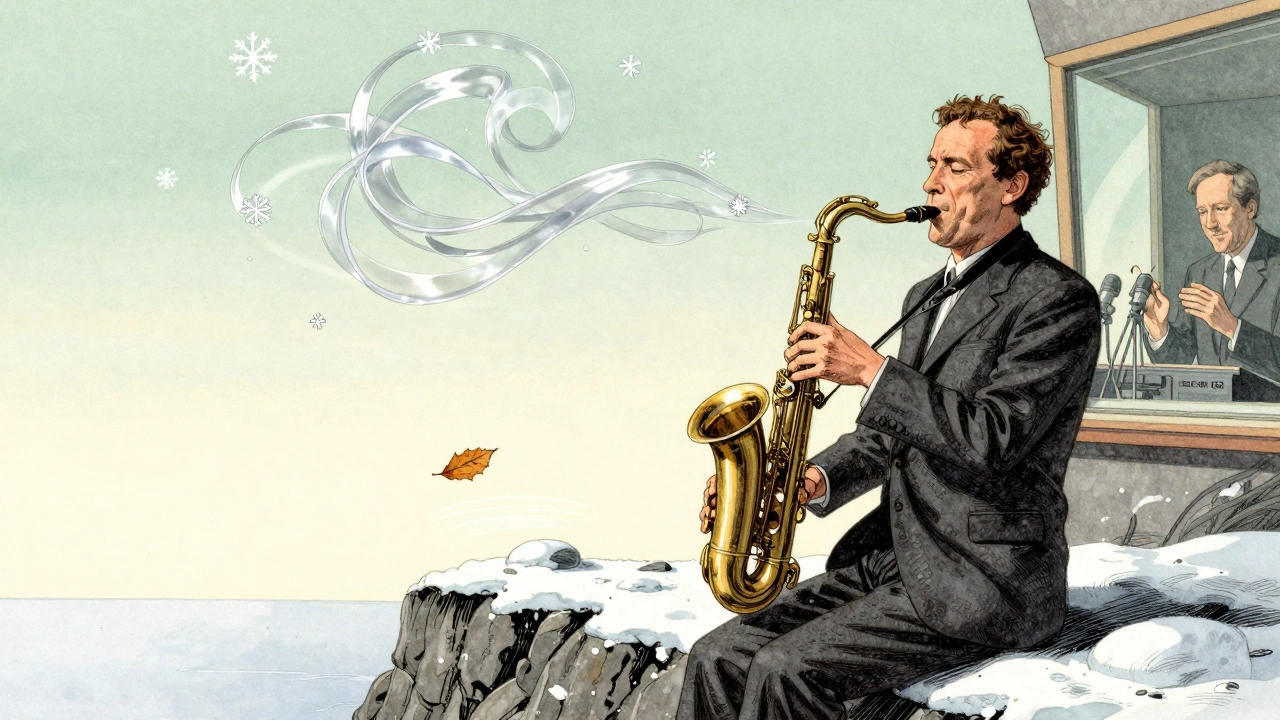
Then there was Jan Garbarek. The Norwegian saxophonist didn’t sound like Coltrane or Coleman. He sounded like snow falling on stone. His tone was thin, breathy, almost fragile - but never weak. On albums like Arborescence and Dis, he mixed jazz improvisation with medieval folk melodies. The result? Music that felt ancient, even when it was new.
The Sound of the North
ECM’s signature sound didn’t come from fancy gear. It came from a studio in Oslo. Talent Studios. Later, Rainbow Studios. There, sound engineer Jan Erik Kongshaug worked like a sculptor. He didn’t just record musicians - he recorded the space around them. Reverb wasn’t added. It was captured. The room’s natural echo became part of the music. A cymbal didn’t just ring - it faded into the air like a sigh.
Kongshaug recorded Keith Jarrett’s The Köln Concert in 1975. That album sold over 3.5 million copies. It made ECM famous. But it wasn’t the first. Before that, Gary Burton and Chick Corea’s Crystal Silence (1973) had already set the tone. Their duets shimmered. Notes hung in the air like droplets. It wasn’t jazz as dance music. It was jazz as meditation.
These recordings didn’t just sound different. They felt different. They came from a cultural place - one where silence isn’t empty. It’s sacred. Where nature isn’t just scenery. It’s a teacher. Scandinavian musicians grew up with long winters, quiet forests, and a tradition of understatement. That’s not just background. It’s the blueprint.
The Scandinavian Core
ECM didn’t just work with Scandinavian artists. It became a home for them.
Bobo Stenson, the Swedish pianist, recorded eight albums for ECM. His 1996 album Reflections - with bassist Anders Jormin and drummer Jon Christensen - is a masterclass in restraint. No solos for show. No drums that pound. Just three musicians listening. Listening so deeply, you can hear the spaces between the notes.
Then came Ketil Bjørnstad. A classically trained Norwegian pianist, he released The Sea in 1995. With cellist David Darling, guitarist Terje Rypdal, and Jon Christensen again, the album felt like a poem. Twelve movements. No lyrics. Just tone, texture, and time. It wasn’t jazz. It wasn’t classical. It was something else entirely.
And Tord Gustavsen - the quiet giant of the 2000s. His eight ECM albums are built on slow, deliberate harmonies. His trio recordings feel like candlelight in a Nordic living room. No hurry. No flash. Just presence. He’s the heir to Garbarek and Stenson - not because he copies them, but because he continues their belief: that less is more, and silence speaks loudest.
Beyond Jazz
ECM didn’t stop at jazz. In 1984, it launched the New Series - a branch dedicated to contemporary classical music. Arvo Pärt’s Tabula Rasa was the first release. The Estonian composer’s tintinnabuli style - simple, repetitive, spiritually resonant - fit perfectly with ECM’s aesthetic. So did Steve Reich’s minimalism. John Adams’ Harmonielehre. Meredith Monk’s vocal experiments.
These weren’t afterthoughts. They were natural extensions. The same values that shaped ECM’s jazz recordings - clarity, space, emotional honesty - applied to notated music too. The label didn’t care if you called it jazz, classical, or ambient. It cared if it moved you.
And then there was Nils Petter Molvær. His 1997 album Khmer fused jazz with electronica, glitchy beats, and sampled textures. It shocked some. But it made sense. Because ECM had always been about crossing borders. Jazz wasn’t a box. It was a doorway. And Molvær walked through it - not to rebel, but to expand.

Why It Still Matters
Today, over 1,700 albums bear the ECM logo. Most of them still sound like no other label. Why?
Because Manfred Eicher didn’t just sign musicians. He signed a worldview. A way of listening. A belief that music doesn’t need to be loud to be powerful. That beauty lives in the quiet. That the Nordic aesthetic - patient, reflective, nature-bound - isn’t just regional. It’s universal.
Modern artists from Iceland to Japan to the U.S. still cite ECM as a touchstone. Not because it’s old. But because it’s timeless. You don’t hear ECM records to feel energized. You hear them to feel seen.
It’s not about scales or chords. It’s about space. About breath. About the silence between notes - and how much truth can hide there.
The Legacy
ECM didn’t change jazz. It changed how we hear it. And in doing so, it gave the world a new way to feel.
Scandinavian musicians didn’t invent this sound. But they gave it its soul. And ECM gave it a home.
Now, decades later, you can still find that sound - in the quiet moments between songs. In the stillness after a concert ends. In the space between your thoughts, if you’re lucky enough to pause long enough to listen.
What makes ECM Records different from other jazz labels?
ECM doesn’t chase trends. It prioritizes sonic purity, space, and emotional depth over commercial appeal. While other labels focused on live energy or technical virtuosity, ECM recorded in carefully chosen spaces - often in Scandinavia - to capture natural reverb and silence. Producer Manfred Eicher treated albums like art objects, with meticulous attention to sound engineering, cover design, and sequencing. The result? A catalog that feels more like a collection of poems than a series of recordings.
Who are the key Scandinavian artists on ECM Records?
Terje Rypdal (Norwegian guitarist), Jan Garbarek (Norwegian saxophonist), Bobo Stenson (Swedish pianist), Ketil Bjørnstad (Norwegian pianist), Tord Gustavsen (Norwegian pianist), and Nils Petter Molvær (Norwegian trumpeter) are central figures. Each brought a distinct Nordic sensibility - calm, introspective, nature-infused - that helped define ECM’s sound. Drummer Jon Christensen and bassist Anders Jormin were also essential collaborators across multiple albums.
How did ECM influence American jazz musicians?
Before ECM, American jazz was largely shaped by New York’s urban energy. But in the 1970s and 80s, musicians like Keith Jarrett, Chick Corea, and John Abercrombie began working with Scandinavian artists on ECM. Their recordings introduced a new aesthetic - one of stillness, space, and emotional restraint. This shifted how American players approached improvisation, composition, and even recording. Musician Ethan Iverson noted that ECM made it possible for American jazz to embrace Scandinavian influence - something unimaginable just a few years earlier.
What role did Jan Erik Kongshaug play in shaping ECM’s sound?
Kongshaug was the sonic architect of ECM’s signature style. As the primary engineer at Talent and Rainbow Studios in Oslo, he recorded nearly all of ECM’s Scandinavian sessions from the 1970s onward. He didn’t use heavy processing. Instead, he placed microphones to capture the natural acoustics of the room - letting reverb, air, and silence become part of the music. His work on albums like The Köln Concert and Garbarek’s Dis created a sonic signature so distinct, it became synonymous with ECM itself.
Is ECM still relevant today?
Yes. While it doesn’t release hundreds of albums a year, ECM still operates with the same philosophy. New artists like Marcin Wasilewski, Joachim Kühn, and the trio of Tord Gustavsen continue to release music under the label. Its New Series still records contemporary classical composers. And its catalog - over 1,700 albums - remains a touchstone for musicians and listeners who value depth over noise. In an age of algorithm-driven playlists, ECM’s quiet consistency feels more radical than ever.


