
When hip-hop producers in the 1980s dug through dusty vinyl crates looking for drum breaks and horn stabs, they weren’t stealing-they were building something new. But by the early 1990s, what felt like creative sampling turned into legal nightmares. The 1970s tracks they loved-funk grooves, soul vocals, disco basslines-became the center of lawsuits that changed music forever.
The Day Sampling Became Stealing
Before 1991, most producers didn’t think they needed permission to use a few seconds of a song. It was common practice. Biz Markie’s 1991 track Alone Again sampled Gilbert O’Sullivan’s 1972 ballad of the same name without asking. The court didn’t see it as homage. Judge Kevin Thomas Duffy ruled it was theft. "Sampling is stealing if no copyright licenses were acquired," he wrote. That one sentence turned the hip-hop world upside down. Suddenly, every producer with a sampler had to worry. Record labels started demanding clearance for every sample before an album could be released. De La Soul’s second album, De La Soul Is Dead, got delayed for a year because they couldn’t clear every sample. The cost? It wasn’t just money-it was creativity. Producers who once built songs from 10 different 1970s records now had to cut back to one or two, or risk lawsuits.The 1970s Were the Goldmine
Why did so many samples come from the 1970s? Because that’s where the beats lived. Funk bands like Parliament-Funkadelic, soul acts like James Brown, and disco groups like Chic created tracks with punchy drums, tight basslines, and wild horn hits-perfect for looping. Dr. Amanda Sewell’s research shows that 63% of all sampled material in golden age hip-hop (1986-1994) came from 1970s records. Tracks like Chic’s Good Times and Funkadelic’s Get Off Your Ass and Jam became the backbone of hip-hop. But those records weren’t just music-they were legal minefields. The 1976 Copyright Act required two separate licenses: one for the composition (the song itself) and one for the master recording (the actual performance). That meant if you sampled a drum break from a 1973 James Brown track, you needed permission from both the publisher who owned the songwriting rights and the record label that owned the original recording. Most producers didn’t know this. And when they found out, it was too late.The Bridgeport Ruling: No More Tiny Samples
In 2005, the legal hammer came down again. The Sixth Circuit Court ruled in Bridgeport Music, Inc. v. Dimension Films that even a two-second sample from Funkadelic’s Get Off Your Ass and Jam-used by N.W.A in 100 Miles and Runnin’-required a license. The court didn’t care how short it was. Didn’t matter if you couldn’t even hear it. "If you cannot pirate the whole, you cannot pirate the part," the judge wrote. This ruling killed the "de minimis" defense-the idea that tiny, unnoticeable samples were legally harmless. Before Bridgeport, some courts allowed it. After? No exceptions. Even a single note from a 1978 funk record could trigger a lawsuit. Producers started avoiding sampling altogether. Some switched to live instrumentation. Others turned to AI tools to recreate the sound without using the original recording.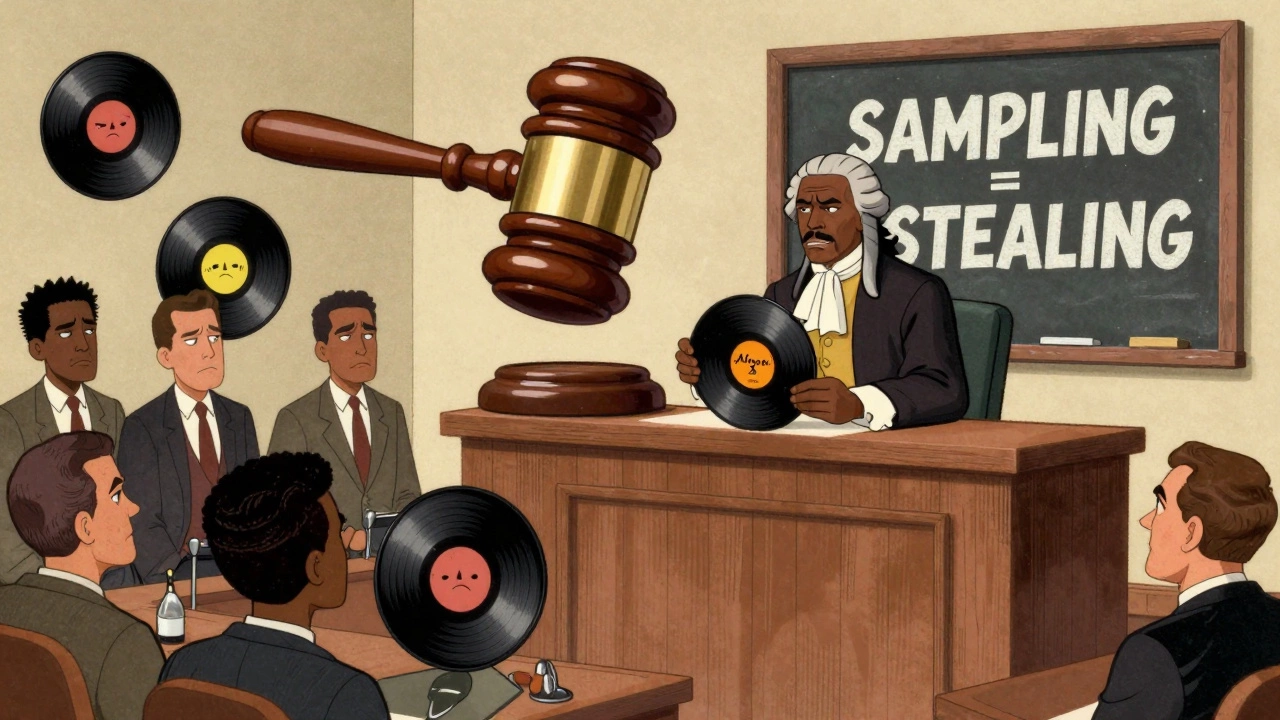
The Real Cost of a Sample
Clearing a sample isn’t just filling out paperwork. It’s a negotiation, often with people you’ve never met. Rights to 1970s tracks are scattered across companies that have been bought, sold, and merged. Some labels are gone. Some publishers don’t answer emails. One producer on Reddit spent eight months and $12,000 to clear a three-second jazz sample from 1973. Another got a $50,000 cease-and-desist for using a half-second drum break. For major artists, it’s still possible. Kanye West cleared 37 samples for The College Dropout in 2004, spending around $350,000. But that’s not an option for most. Mario Caldato Jr., a producer who worked with Beck and the Red Hot Chili Peppers, said one album he engineered cost over $250,000 just in sample clearances. That’s more than most indie artists make in a year.How the Industry Changed
After 1991, sampling in commercial hip-hop dropped by 74%, according to the Journal of Intellectual Property Law. The golden age of sampling-where producers layered five or six samples per track-ended. Labels started requiring clearance before recording even began. Independent artists either avoided sampling or risked it, hoping no one would notice. The Music Modernization Act of 2018 made things easier for mechanical licenses (like streaming royalties), but it did nothing for sampling. The dual-license requirement stayed. Today, major labels clear 98% of their samples. Independent artists? Only 37% do. The rest rely on luck, obscurity, or outright ignoring the law.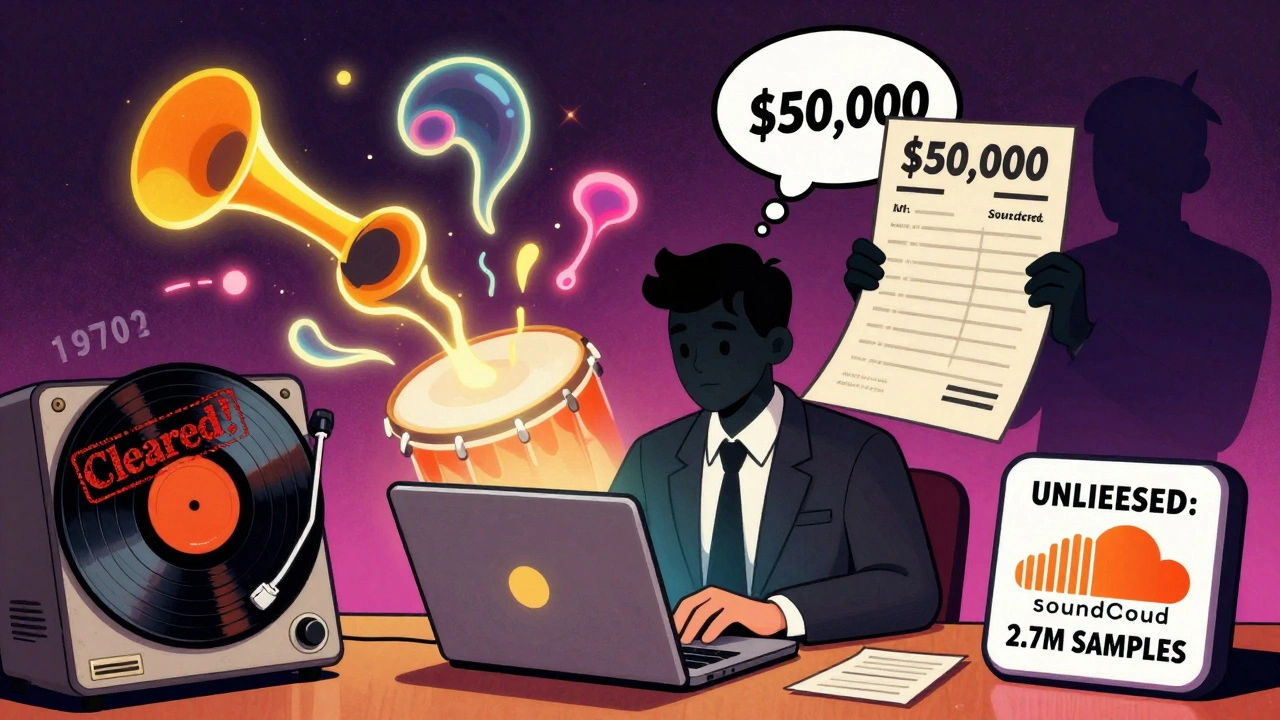
New Workarounds: AI and Pre-Cleared Libraries
The cost and risk have pushed producers to find alternatives. AI tools now let you recreate a 1970s soul sample without touching the original. Metro Boomin told Billboard in 2023 that he paid under $5,000 to recreate a sample using AI-compared to $50,000 for clearance. It’s not perfect, but it’s cheaper and legal. Platforms like Tracklib.com have also changed the game. Launched in 2017, Tracklib offers over 15,000 pre-cleared 1970s samples. You pay a flat fee, download the track, and use it without fear. BMG partnered with them in 2023 to add more classic funk and soul records. For producers who want authenticity without the legal risk, it’s the best option yet.What’s Next?
The legal mess isn’t fixed. A circuit split still exists: while the Sixth Circuit says even one note needs a license, the Ninth Circuit ruled in 2016 that Madonna’s 0.23-second horn sample in Vogue was too small to matter. That inconsistency means your legal fate depends on where you live. A sample that’s legal in California could get you sued in Tennessee. Some experts predict blockchain-based licensing systems will take over-smart contracts that automatically pay rights holders when a sample is used. Startups like Audius are already testing this. But for now, the system is broken. The 1970s tracks that gave hip-hop its heartbeat are now locked behind legal walls.What Producers Are Doing Today
Independent producers still sample. You can find thousands of uncleared 1970s loops on SoundCloud-2.7 million as of early 2023. Many don’t expect to get caught. But when they do, the cost can be devastating. Some hire clearance attorneys for $300-$500 an hour. Others use services like Coalmine Records, which handles over 200 clearances a year. The truth? Sampling isn’t dead. It’s just more expensive. And the 1970s tracks that once fueled creativity are now more valuable as legal assets than as music.Is it legal to sample a 1970s song without permission?
No. Under U.S. copyright law, using even a tiny portion of a 1970s recording without a license is illegal. The 2005 Bridgeport ruling eliminated the "de minimis" defense, meaning there’s no legal threshold for how short a sample can be. You need two licenses: one for the sound recording and one for the underlying composition. Skipping either can lead to lawsuits, fines, or album recalls.
Why are 1970s tracks so commonly sampled?
The 1970s produced a massive amount of funk, soul, and disco music with tight drum breaks, punchy basslines, and rich horn sections-perfect for looping. Artists like James Brown, Parliament-Funkadelic, and Chic created tracks that were rhythmically dense and emotionally powerful. Hip-hop producers in the 1980s and early 1990s found these records ideal for sampling because they were widely available on vinyl and had clear, isolated beats. Today, these tracks remain the most sampled in hip-hop history.
How much does it cost to clear a sample from a 1970s track?
Costs vary widely. For a minor sample, you might pay $250-$1,000 upfront plus 50% of publishing royalties. For well-known tracks, it can be $25,000 to $50,000 or more. Major label artists like Kanye West spent $350,000 clearing 37 samples for one album. Independent producers often spend more than their entire album budget just on clearances. Some reports show $12,000 for a single three-second sample.
Can I use a sample if I can’t find the rights holder?
Technically, no. But in practice, many independent producers do. About 30% of 1970s master rights are in legal limbo because labels have gone out of business or ownership records are lost. If you use a sample from an obscure record and never release it widely, you might never get caught. But if your track becomes popular, the rights holder can come forward years later and demand payment-or sue. It’s a gamble.
Are there services that help clear samples legally?
Yes. Services like Tracklib.com offer over 15,000 pre-cleared 1970s samples for a flat fee. Coalmine Records has an in-house clearance team that handles hundreds of requests yearly. Some entertainment attorneys specialize in sample clearance and can negotiate on your behalf. These services reduce risk and save time, though they’re not cheap. For producers serious about staying legal, they’re the best option.
What’s the difference between sampling and interpolation?
Sampling means using a direct digital copy of a recording. Interpolation means re-recording the melody or rhythm yourself, like playing a bassline or horn part live. Sampling requires two licenses (master + composition). Interpolation only requires a composition license, since you’re not using the original recording. Many producers now choose interpolation to avoid the cost and complexity of clearing master rights.
Why hasn’t the law changed to make sampling easier?
The music industry is built on protecting revenue streams. Record labels and publishers see sampling as a direct threat to their control over intellectual property. Even though hip-hop creators argue sampling is transformative, courts have consistently sided with rights holders. The Music Modernization Act of 2018 didn’t address sampling at all. Without a major legal challenge or public pressure, the current system is likely to stay.
Is AI recreation a legal alternative to sampling?
Yes-if you don’t copy the original recording. AI tools that generate new audio based on style (not direct copies) don’t require clearance because they don’t use the original master. Producers like Metro Boomin have used AI to recreate 1970s funk sounds for under $5,000, avoiding the $50,000+ cost of clearance. But if the AI output is too close to the original, rights holders could still claim infringement. The line between inspiration and imitation is blurry, but legally, you’re safer if you’re not using the original audio.